Why Your Dog Is Breathing Heavy: The Science Behind Canine Panting
Why your dog is breathing heavy, the science of canine panting, evolutionary origins, physiological mechanisms, and when heavy breathing signals a vet visit.
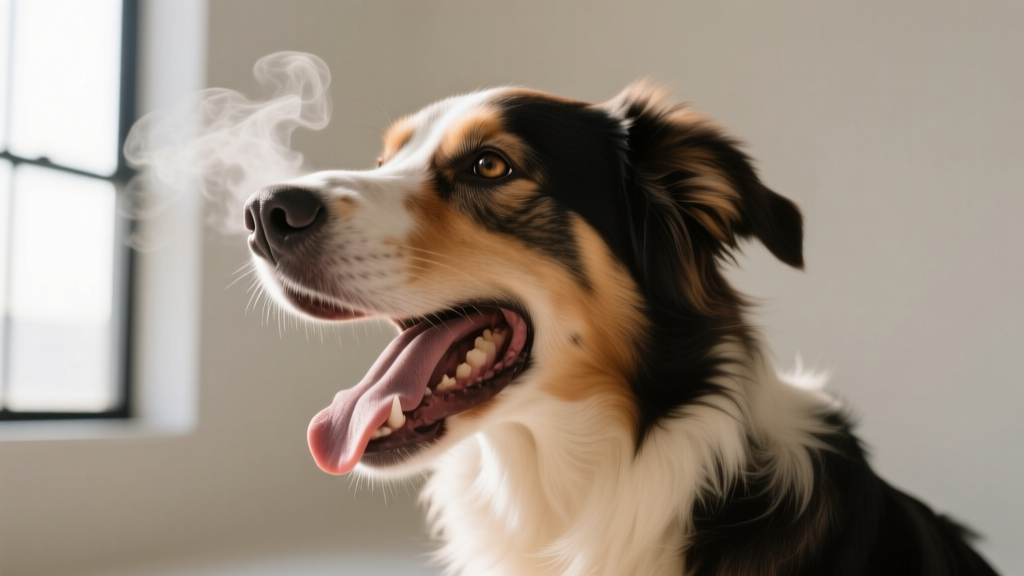
Quick Answer: Why Is My Dog Breathing Heavy?
Most heavy breathing in dogs is panting — a thermoregulatory mechanism where rapid, shallow breaths (200–400 breaths per minute) evaporate moisture from the tongue, mouth, and upper airways to dissipate heat. Dogs lack widespread sweat glands, so panting replaces sweating as their primary cooling strategy. Normal panting occurs after exercise, in warm environments, or during excitement. However, heavy breathing at rest, in cool conditions, or accompanied by blue-tinged gums, coughing, or lethargy can signal respiratory distress, cardiac disease, pain, or heatstroke and requires immediate veterinary evaluation.
The Physiology of Canine Panting: How Dogs Cool Down Without Sweat
Key Physiological Facts
- Resonant frequency panting: Dogs pant at approximately 200–400 breaths/min — their thoracic resonant frequency — minimizing the muscular energy cost of rapid breathing (source: Merck Veterinary Manual).
- Sweat gland distribution: Dogs possess merocrine (eccrine) sweat glands only on their paw pads. These contribute negligibly to heat dissipation — less than 5% of total thermoregulatory output.
- Tidal volume during panting: Each breath during panting moves only 1–3 mL/kg of air (compared to 10–15 mL/kg during normal respiration), meaning panting is shallow and rapid rather than deep.
- Evaporative cooling site: The primary heat exchange surfaces are the tongue (which engorges with blood during panting, increasing surface area), oral mucosa, and upper trachea.
Unlike humans, who rely on millions of eccrine sweat glands distributed across the skin surface to cool via evaporation, dogs evolved a respiratory-based cooling system. When a dog's core body temperature rises above the normal range of 101.0–102.5°F (38.3–39.2°C), the hypothalamus triggers the panting reflex. The dog begins rapid, shallow inspirations and expirations that move air across the moist surfaces of the tongue and airway lining.
As air passes over these wet surfaces, water evaporates, pulling heat energy away from the blood circulating through the tongue's extensive vascular network. This cooled blood then returns to the body core, lowering overall temperature. Research published in the Journal of Applied Physiology demonstrated that panting dogs can increase respiratory evaporative heat loss by up to 60-fold compared to resting respiration rates.
The efficiency of this system depends on ambient humidity. In high-humidity conditions (above 70–80%), the air is already saturated with moisture, reducing evaporation rates and making panting significantly less effective. This is why dogs are at much higher heatstroke risk in humid climates even at moderate temperatures — a 80°F (27°C) day at 90% humidity can be more dangerous than a 90°F (32°C) day at 20% humidity.
The Evolutionary Basis: Why Ancestral Canids Developed Panting
Evolutionary Origin
Wolves and wild canids evolved as persistence hunters across open terrain in temperate and arid climates. Unlike prey species that sprint and hide, wolves pursued prey over distances of 20–30 miles, often at moderate speeds for hours. This hunting strategy generated enormous metabolic heat that needed continuous dissipation without stopping.
A fur-covered body with sweat glands would have been counterproductive — moisture trapped against the skin under dense fur would impair thermoregulation and promote fungal/bacterial growth. Instead, the respiratory cooling system allowed wolves to shed heat efficiently while maintaining their insulating coat, which also served critical functions in cold-climate survival. This dual-purpose coat (insulation in winter, solar radiation barrier in summer) paired with panting gave canids a thermoregulatory advantage across extreme temperature ranges — from -40°F to 100°F+ (-40°C to 38°C+).
The panting mechanism is shared across virtually all Canidae family members — wolves, coyotes, foxes, and wild dogs all pant as their primary cooling strategy. This trait predates domestication by millions of years. What domestication has changed is the context: modern dogs often live in environments their ancestors never encountered — hot cars, unventilated apartments, brachycephalic skull conformations that physically obstruct the airway, and obesity rates exceeding 50% in some populations (per the AVMA). These factors can transform a highly effective evolutionary adaptation into a liability.
Normal vs. Abnormal Heavy Breathing: A Decision Framework
One of the most common questions I encounter from dog owners is whether their dog's heavy breathing is "normal." The answer depends on context, timing, and accompanying signs. Use this framework to assess the situation:
| Scenario | Likely Cause | Action |
|---|---|---|
| Heavy panting immediately after vigorous exercise (fetch, running, agility) | Normal thermoregulatory panting | Provide water, shade, and allow 10–30 min recovery. Panting should decrease progressively. |
| Panting during car rides, vet visits, or thunderstorms | Stress/anxiety panting (cortisol-triggered) | Use counter-conditioning techniques. Offer high-value treats. Consider calming supplements (L-theanine, 100–200 mg for medium dogs). |
| Panting at rest in a cool room (below 72°F / 22°C) | Potential red flag — pain, cardiac, respiratory, or metabolic issue | Monitor closely. If persistent beyond 15–20 min, contact your veterinarian. |
| Labored breathing with extended neck, open mouth, blue/purple gums | Respiratory distress / hypoxia — EMERGENCY | Go to emergency vet immediately. Do not wait. Transport with windows partially down for airflow. |
| Heavy breathing with coughing, especially at night or after lying down | Possible congestive heart failure, tracheal collapse, or kennel cough | Schedule vet appointment within 24–48 hours. Record video of coughing episodes to show your vet. |
| Excessive panting with increased thirst, urination, and pot-bellied appearance | Possible Cushing's disease (hyperadrenocorticism) | Schedule vet appointment. Expect bloodwork including ACTH stimulation test ($200–$400). |
🚨 Emergency Red Flags — Seek Immediate Veterinary Care
- Respiratory rate above 60 breaths/min at rest (count chest rises for 15 seconds, multiply by 4)
- Gums or tongue turning blue, purple, or pale white (cyanosis — indicates oxygen deprivation)
- Dog standing with elbows abducted (pushed away from body) and neck extended — this posture maximizes airway diameter and signals severe respiratory compromise
- Stridor (high-pitched wheezing sound on inspiration) — indicates upper airway obstruction
- Heavy breathing after known toxin ingestion — call ASPCA Animal Poison Control at (888) 426-4435 (24/7, consultation fee applies)
- Heavy breathing in a brachycephalic breed that doesn't resolve within 10 minutes of rest in a cool environment
- Any heavy breathing accompanied by collapse, disorientation, or vomiting
Emergency vet visit costs: Expect $150–$300 for the examination, plus $200–$600 for diagnostics (chest radiographs, bloodwork, pulse oximetry). Oxygen therapy runs $100–$200/day. Total emergency stabilization typically ranges from $500–$2,500 depending on severity.
Breed Variations: Which Dogs Are Predisposed to Heavy Breathing?
Not all dogs pant equally. Skull conformation, body size, coat type, and genetic predispositions create significant breed-level variation in respiratory function:
Brachycephalic Breeds (Highest Risk)
Dogs with shortened skulls — including French Bulldogs, English Bulldogs, Pugs, Boston Terriers, Shih Tzus, and Boxers — suffer from Brachycephalic Obstructive Airway Syndrome (BOAS). Their compressed skulls create narrowed nostrils (stenotic nares), an elongated soft palate that partially blocks the trachea, and often a hypoplastic (narrowed) trachea. These anatomical abnormalities mean that every breath requires more effort, and panting is significantly less efficient.
A 2023 study in the Journal of Veterinary Internal Medicine found that over 50% of French Bulldogs exhibit clinically significant BOAS, yet many owners consider noisy breathing "normal" for the breed. This normalization of respiratory distress is one of the most dangerous misconceptions in dog ownership. If your brachycephalic dog snores loudly, breathes heavily at rest, or tires quickly during moderate exercise, consult your veterinarian about BOAS assessment — surgical correction (nares widening, soft palate resection) costs $1,500–$4,000 and can dramatically improve quality of life.
Giant and Large Breeds
Great Danes, Saint Bernards, Newfoundlands, and Mastiffs generate more metabolic heat due to their body mass and have a lower surface-area-to-volume ratio, making heat dissipation inherently more difficult. These breeds are at elevated heatstroke risk and often pant heavily even in mildly warm conditions (above 75°F / 24°C). Additionally, large breeds are predisposed to dilated cardiomyopathy (DCM), which can cause heavy breathing as a secondary symptom of cardiac insufficiency.
Arctic and Double-Coated Breeds
Siberian Huskies, Alaskan Malamutes, Samoyeds, and Chow Chows possess dense double coats evolved for subzero temperatures. In warm climates, these breeds pant more frequently and for longer durations because their insulation traps heat. Never shave a double-coated dog — the coat actually provides a barrier against solar radiation, and removing it increases heat gain and sunburn risk. Instead, provide cooling mats ($20–$60), air-conditioned environments, and exercise during early morning or evening hours.
Common Misconceptions About Dog Breathing Debunked
| Myth | Fact |
|---|---|
| "Dogs sweat through their tongues." | Dogs don't sweat through their tongues. Panting cools via evaporation from the tongue's moist surface, but the tongue itself is not a sweat gland. The only canine sweat glands are merocrine glands on the paw pads, which produce minimal cooling. |
| "If my dog is panting, they must be hot." | Panting is triggered by heat, excitement, stress, pain, nausea, certain medications (opioids, corticosteroids), and diseases (Cushing's, heart failure, laryngeal paralysis). Context matters — a panting dog in a 68°F (20°C) room may be in pain, not overheated. |
| "My Bulldog breathes loudly because that's just how Bulldogs are." | Loud, labored breathing in brachycephalic breeds is BOAS — a pathological condition, not a breed trait. Normalizing it delays treatment. Surgical correction can reduce airway resistance by 60–80%. |
| "A dog's normal breathing rate is the same as a human's." | Human resting respiratory rate: 12–20 breaths/min. Dog resting respiratory rate: 15–30 breaths/min. Puppy rate: up to 40 breaths/min. Rates consistently above 40/min at rest warrant veterinary investigation. |
| "Ice water is dangerous for panting dogs and causes bloat." | No peer-reviewed evidence supports the claim that ice water causes gastric dilatation-volvulus (bloat). Offering small amounts of cool water to an overheated dog is safe and recommended. The risk is allowing a severely overheated dog to gulp large volumes of any water too quickly — offer small sips at 2–3 minute intervals. |
How Dogs Process Heat Differently From Humans
Understanding the fundamental physiological differences between canine and human thermoregulation helps explain why dogs are more vulnerable to heat-related illness:
- Sweat gland coverage: Humans have 2–4 million eccrine sweat glands across nearly the entire body surface. Dogs have eccrine glands only on paw pads — approximately 0.1% of body surface area.
- Core temperature threshold: Human core temperature: 98.6°F (37°C). Dog core temperature: 101.0–102.5°F (38.3–39.2°C). Dogs operate at a higher baseline, meaning the gap between "normal" and "dangerously overheated" is smaller. Canine heatstroke begins at approximately 105°F (40.6°C) — only 2.5–4°F above normal.
- Cooling speed: Humans can dissipate up to 600 watts of heat through sweating during exercise. Dogs, relying solely on respiratory evaporation and limited paw pad sweating, dissipate heat at a fraction of that rate — making them far slower to cool down after exertion.
- Fur insulation paradox: A dog's coat provides thermal insulation in both directions — it slows heat gain from the environment but also slows heat loss from the body. This is why heavily coated dogs overheat faster in summer but also why shaving them is counterproductive (removes the solar radiation barrier while not meaningfully improving convective cooling).
Practical Takeaways: Managing Your Dog's Breathing in Daily Life
What This Means for You as a Dog Owner
- Know your dog's resting respiratory rate (RRR). Count chest rises while your dog is sleeping or calmly resting. Multiply by 4 to get breaths per minute. Record this baseline 3–5 times over a week. Post this number on your refrigerator. Any sustained increase of 20%+ above baseline warrants a vet check. This single metric is one of the most valuable early-warning indicators for cardiac and respiratory disease.
- Use the "pant test" during walks. If your dog is panting with a wide-open mouth, tongue hanging far out, and the pant sounds harsh or raspy — they are working too hard. Slow down, find shade, and offer water. A comfortable pant has a relatively closed mouth with the tongue visible but not fully extended.
- Invest in cooling infrastructure for at-risk dogs. For brachycephalic, giant, or double-coated breeds:
- Cooling mat (Arf Pets Self-Cooling Mat, $30–$50 for large sizes)
- Elevated cot for airflow (Coolaroo Elevated Pet Bed, $35–$55)
- Portable fan for crate/bed area ($15–$25)
- Thermometer in your dog's primary resting area — keep below 75°F (24°C) for at-risk breeds
- Never leave any dog in a parked vehicle. Interior temperatures can reach 120°F (49°C) within 20 minutes on an 80°F (27°C) day, even with windows cracked. Dogs cannot sweat effectively and will overheat rapidly. Heatstroke mortality in dogs is approximately 39–50% according to veterinary emergency data.
- Manage anxiety-triggered panting proactively. If your dog pants heavily during storms, fireworks, or vet visits, work with a certified fear-free trainer or veterinary behaviorist. Options include:
- Counter-conditioning with high-value treats (freeze-dried liver, $8–$15/bag)
- Adaptil pheromone diffuser ($25–$40, lasts 30 days)
- Thundershirt or compression wrap ($30–$50)
- Prescription anxiolytics from your vet (trazodone, 5–10 mg/kg, $15–$30/prescription)
- Maintain ideal body condition. Excess fat deposits compress the thoracic cavity, reducing lung expansion capacity and increasing the metabolic cost of breathing. According to the AKC, dogs at ideal body condition score (BCS 4–5 on a 9-point scale) have significantly lower respiratory effort than overweight dogs (BCS 7+). A 50 lb dog carrying 10 extra pounds is functionally carrying a 20% weight burden — equivalent to a 150 lb human carrying 30 lbs constantly.
Related Behaviors and Cross-References
Heavy breathing and panting connect to several other canine behaviors and physiological responses:
- Reverse sneezing: A rapid, forceful inhalation through the nose that sounds like snorting. Common in small breeds and brachycephalics. Usually benign — gently massage the throat or briefly cover the nostrils to trigger a swallow reflex.
- Sighing and groaning: Dogs often sigh when settling down — this is a normal contentment behavior involving a deep exhalation. Groaning while lying down can be normal in large breeds but may also signal joint pain (hip dysplasia, arthritis). Note the context: groaning when rising vs. when settling.
- Yawning as a calming signal: Dogs yawn not only when tired but also as a displacement behavior during stress. If your dog yawns repeatedly in a novel or tense situation, they may be communicating discomfort. This is distinct from panting but often co-occurs with stress-related heavy breathing.
- Exercise-induced collapse (EIC): Found primarily in Labrador Retrievers and related breeds, EIC causes weakness, dragging hind legs, and sometimes heavy breathing after 5–15 minutes of intense exercise. Genetic testing ($65–$120 via Embark or UC Davis) can identify carriers.
Frequently Asked Questions
Why do dogs breathe heavy while sleeping?
Dogs cycle through REM and non-REM sleep stages, much like humans. During REM sleep (which comprises approximately 12% of a dog's sleep cycle), you may observe irregular breathing, twitching, whining, and even brief panting episodes. This is normal dream-state activity. However, if your dog consistently breathes above 40 breaths per minute while sleeping, or if you notice labored abdominal effort, this could indicate early-stage heart disease (particularly mitral valve disease in small breeds or DCM in large breeds). Record a sleeping respiratory rate for 3 consecutive nights and share the data with your veterinarian.
Can dogs overheat from panting too much?
Yes — paradoxically, excessive panting can become counterproductive. When a dog pants at extreme rates for prolonged periods, the muscular effort of panting itself generates metabolic heat, and the dog can lose excessive moisture from the respiratory tract, leading to dehydration. Dehydration thickens blood viscosity, reducing the efficiency of circulatory heat transfer. This creates a dangerous positive feedback loop: the dog pants harder to cool down, generates more heat from effort, and becomes more dehydrated. This is why intervention (moving to a cool environment, offering small sips of water, applying cool — not ice-cold — water to the paw pads and groin) is critical when panting persists beyond 30 minutes.
How do dogs sense when they need to pant?
The panting reflex is controlled by the hypothalamus, the brain's thermoregulatory center. Thermoreceptors in the skin, spinal cord, and hypothalamus itself detect increases in core and peripheral temperature. When the hypothalamus registers a rise of approximately 0.5–1.0°F (0.3–0.6°C) above the dog's set point, it activates motor neurons controlling the diaphragm and intercostal muscles to initiate panting. This is an involuntary reflex — your dog doesn't "decide" to pant, just as you don't decide to sweat.
What does it mean when my dog breathes heavy but hasn't been exercising?
Non-exercise heavy breathing has several potential causes: pain (dogs pant when in pain because stress hormones elevate heart rate and metabolic rate), anxiety, fever (infection or inflammation raising the body's temperature set point), medication side effects (corticosteroids like prednisone commonly cause increased panting), Cushing's disease, cardiac insufficiency, or respiratory conditions such as laryngeal paralysis (common in older Labrador Retrievers and Golden Retrievers). If your dog is panting heavily at rest for more than 15–20 minutes without an obvious trigger, consult your veterinarian. A basic exam ($60–$120) and chest radiographs ($150–$300) can identify or rule out most serious causes.
Is heavy breathing normal for puppies?
Puppies have higher resting respiratory rates than adult dogs — typically 15–40 breaths per minute compared to 15–30 for adults. Puppies also pant readily after play because their small bodies generate heat quickly and have less thermal mass to buffer temperature changes. However, persistent heavy breathing in a puppy, especially with coughing, nasal discharge, or reduced appetite, could indicate a congenital heart defect, pneumonia, or parasitic infection (roundworms can migrate through the lungs). Puppies with suspected respiratory issues should be seen by a veterinarian promptly — their smaller airways and less developed immune systems make them more vulnerable to rapid deterioration.
Sources and Further Reading
- Merck Veterinary Manual — Overview of Respiratory Disorders in Dogs
- AVMA — Heatstroke in Dogs
- AKC — Overweight Dogs: Risks and Management
Disclaimer: This article provides educational information based on current veterinary science. It does not replace professional veterinary diagnosis or treatment. If your dog is experiencing respiratory distress, consult your veterinarian or visit an emergency veterinary clinic immediately.
Aaron Whyte
All our authors care for dogs every day — read more of their work on the authors page.


