Do Dogs Think Humans Are Dogs? What Canine Science Reveals
Do dogs think humans are dogs? Canine science reveals how dogs actually perceive us — as a unique social partner, not a fellow canine.
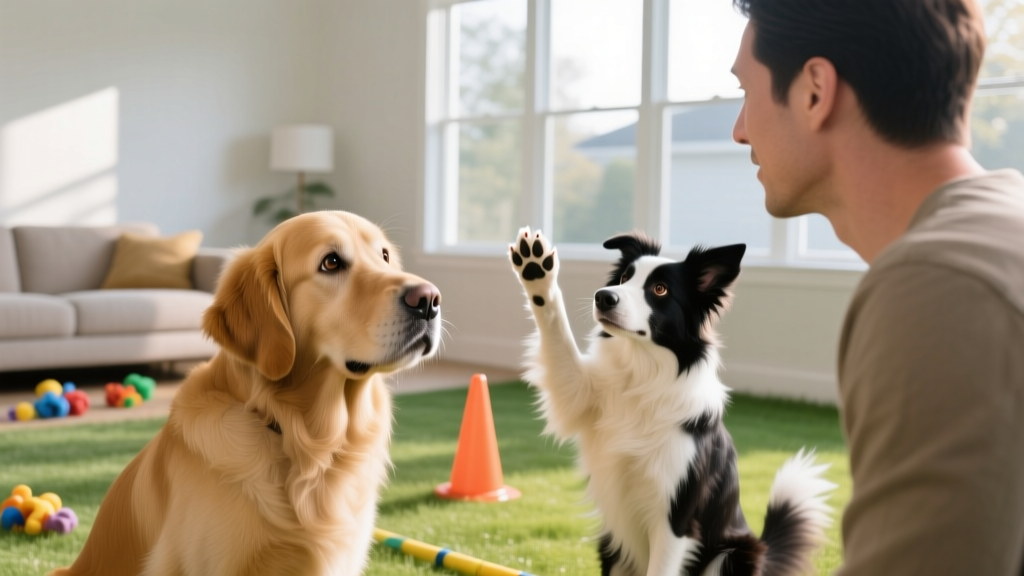
The Science of How Dogs Perceive Humans
The question "do dogs think humans are dogs" has fascinated researchers for over two decades, and modern canine cognition science has delivered a nuanced answer. Dogs don't categorize us as large, awkward pack members. Instead, they've evolved a specialized social cognition system that treats humans as a unique category of social partner — one that warrants its own behavioral repertoire.
Key Research Findings
A landmark 2013 study published in PLOS ONE by researchers at Eötvös Loránd University in Budapest found that dogs behave differently around humans than around other dogs in critical ways. When faced with an unsolvable task — such as food trapped inside a container they cannot open — dogs will turn and look at their human caregiver, alternating their gaze between the human and the problem. Dogs do not display this "referential gaze" with other dogs, even familiar canine housemates.
Research from the DogStudies lab at the Max Planck Institute further demonstrated that dogs modify their communicative behavior based on whether a human is paying attention. They're more likely to steal food when a human's eyes are closed or their back is turned — a level of social reasoning that indicates dogs understand humans have independent mental states, something they don't necessarily attribute to other dogs.
Neuroimaging research from Emory University's canine fMRI project, led by Dr. Gregory Berns, has shown that dogs' brains respond to human faces in the same temporal cortex region that processes dog faces — but the activation patterns differ. Dogs recognize human faces as socially significant, but they process them differently than canine faces, confirming a separate neural category for our species.
The Evolutionary Basis: From Wolves to Human-Oriented Dogs
Why did this ability evolve? The domestication of dogs began roughly 20,000–40,000 years ago, according to genetic analyses published in Nature Communications. During this process, wolves that were less fearful of humans gained access to food scraps near human settlements. Over generations, natural selection favored individuals with enhanced abilities to read and respond to human social cues.
This wasn't simply about becoming tamer. Dogs underwent what researchers call "convergent evolution" with humans in the social cognition domain — developing skills like gaze following, pointing comprehension, and emotional attunement that parallel human infant abilities, while retaining their canine social intelligence for interactions with other dogs.
A critical piece of evidence comes from comparative studies between dogs and wolves. Research from the Wolf Science Center in Austria demonstrated that even hand-raised wolves who are deeply bonded with their human caregivers do not spontaneously look to humans for help with unsolvable tasks the way dogs do. Wolves will persist independently, while dogs will engage the human as a social tool. This difference, documented in studies published in journals like Current Biology, suggests that the human-directed social behavior in dogs is not simply learned through individual experience — it has a genetic basis shaped by domestication.
However, wolves can form strong attachments to individual humans and will follow human pointing gestures in some contexts. The difference is one of degree and automaticity, not an absolute binary. Dogs inherited a wolf-like social flexibility and amplified the human-directed components through thousands of years of selective breeding.
Physiological Mechanisms: The Oxytocin Loop and Canine Brain Science
The physiological basis for the dog-human bond involves measurable neurochemical changes in both species. A 2015 study published in Science by Takefumi Kikusui and colleagues at Azabu University in Japan revealed a remarkable oxytocin-mediated positive feedback loop between dogs and their owners.
When a dog and owner engage in mutual gaze — looking into each other's eyes — both the dog's and the human's urinary oxytocin levels rise significantly. Oxytocin, often called the "bonding hormone," is the same neurochemical involved in human mother-infant attachment. Critically, this oxytocin increase does not occur during dog-to-dog gaze, suggesting the dog-human bond activates a specialized physiological pathway.
| Behavior / Response | With Humans | With Other Dogs |
|---|---|---|
| Referential gaze (looking back for help) | Frequent — especially in unsolvable tasks | Rare to absent |
| Oxytocin increase from mutual gaze | Yes — significant rise in both species | Not demonstrated |
| Response to pointing gestures | Spontaneous comprehension (even as puppies) | Not applicable (dogs rarely point) |
| Vocalizations directed at partner | Whining, trained "talking" buttons, alert barks | Growls, play bows, bark sequences |
| Attachment behavior (secure base effect) | Strong — owner serves as secure base for exploration | Present but less pronounced |
| Facial expression variety | More expressions when human is watching | Fewer facial movements |
The fMRI research from Emory University also revealed that the caudate nucleus — a brain region associated with reward anticipation and positive expectation — activates strongly in dogs when they smell their owner's scent, more so than with unfamiliar human scents or even familiar dog scents. This neural evidence suggests dogs don't just behave differently around us; they feel differently about us at a fundamental neurological level.
How Dogs Actually See Us: A Dual Social System
Current canine cognition research, including work reviewed in the Merck Veterinary Manual's behavior section, supports a "dual social system" model. Dogs maintain their species-typical canine social cognition for interactions with other dogs — including scent-marking communication, hierarchical signaling, play bow sequences, and canine body language reading. Simultaneously, they operate a parallel, human-adapted social cognition system that includes:
- Cross-species gaze following: Dogs follow human gaze and pointing, even when the indicated location contains no food reward, suggesting they understand the communicative intent behind the gesture.
- Audience effects: Dogs produce more facial expressions when a human is facing them compared to when the human is turned away — indicating they understand that humans need visual access to receive their signals.
- Emotional contagion: Dogs catch human emotions through tone of voice, facial expression, and even scent. A 2018 study in Animal Cognition showed dogs exhibited stress behaviors when exposed to human "fear sweat" samples.
- Name recognition and word learning: Border Collies like the famous Chaser learned over 1,000 human words, demonstrating that dogs can map human vocal labels to objects — a skill with no parallel in dog-to-dog communication.
This dual system explains why a dog can seamlessly switch from a rough-and-tumble wrestling match with a canine playmate to a gentle, gaze-heavy interaction with their human. They're not confused about who's who — they're fluent in two social languages.
Practical Implications for Dog Owners
What This Means for Your Daily Life With Your Dog
1. Your dog is reading your emotional state constantly. Because dogs have evolved to monitor human cues, they pick up on stress, sadness, and anger through your voice, posture, and even chemical signals. If you're anxious, your dog likely will be too. Managing your own emotional regulation — especially during training sessions — directly impacts your dog's ability to learn. Take 3-5 deep breaths before working with your dog if you've had a stressful day.
2. Pointing and gaze are powerful training tools. Dogs are hardwired to follow human pointing gestures. When teaching "go to your mat" or directional cues, combine your verbal command with a clear point. Research shows puppies as young as 6-8 weeks respond to human pointing without prior training — this is an innate skill, not a learned one.
3. Mutual gaze strengthens your bond measurably. The oxytocin loop means that spending quiet time making gentle eye contact with your dog has real neurochemical benefits for both of you. Try 2-3 minutes of calm, soft eye contact during evening relaxation. Don't force it — let your dog initiate or reciprocate naturally.
4. Dogs need both canine and human social interaction. Because dogs operate a dual social system, depriving them of either type of social contact creates deficits. A dog who only interacts with humans may struggle with canine social skills; a dog who only sees other dogs misses the cognitive enrichment of human engagement. Aim for structured playdates with compatible dogs 2-3 times per week alongside daily human-focused activities like training, walking, and cooperative games.
5. Your dog knows when you're paying attention — and uses that knowledge. Studies confirm dogs are more likely to engage in "forbidden" behaviors (counter-surfing, stealing items) when they believe you aren't watching. This isn't guilt or sneaky deception — it's sophisticated social cognition. Manage your environment with baby gates and counter-clearing rather than relying on your dog to "know better" when unsupervised. A quality baby gate like the Regalo Easy Step Walk Through ($40-$55) provides reliable environmental management.
Common Misconceptions Debunked
| Myth | Fact |
|---|---|
| "Dogs see their owners as the alpha of the pack." | The "alpha/dominance" model has been thoroughly debunked by veterinary behaviorists. Dogs don't view humans through a canine hierarchy lens. The American Veterinary Society of Animal Behavior recommends against dominance-based training methods. Dogs respond to humans as attachment figures and cooperative partners, not pack leaders. |
| "When my dog licks my face, they're grooming me like another dog." | While licking has roots in canine behavior (puppies lick adult dogs' muzzles to solicit food), face-licking directed at humans has been amplified through domestication as an affiliative, attention-seeking behavior. Dogs learn quickly that face-licking gets a human response — it's more of a cross-species communication tool than a mistaken grooming attempt. |
| "My dog is jealous when I pet another dog because they think I'm 'their' pack member." | A 2014 study in PLOS ONE did demonstrate jealousy-like behavior in dogs — but it's directed at maintaining access to a valued social resource (you), not defending pack territory. Dogs form individual attachment bonds and react when those bonds seem threatened, similar to human infant jealousy, independent of any "pack" concept. |
| "Dogs think we're just big, clumsy dogs who are bad at hunting." | Dogs demonstrably treat us as a different category of social partner. They don't try to hunt with us, perform canine mating displays at us, or communicate with us exclusively through scent marking. They use a specialized set of behaviors reserved for human interaction that they never deploy with other dogs. |
| "My dog feels guilty when they chew my shoes — they know it's wrong." | The "guilty look" (ears back, lowered posture, averted gaze) is actually an appeasement behavior triggered by the owner's angry tone and body language — not an internal sense of wrongdoing. A 2009 study by Dr. Alexandra Horowitz at Barnard College confirmed dogs display the "guilty look" more when scolded, regardless of whether they actually committed the misdeed. They're reading your emotional state, not confessing. |
Breed Variations in Human-Directed Cognition
While all domestic dogs share the foundational ability to read human social cues, breed differences do influence the intensity and style of human-oriented behavior:
- Herding breeds (Border Collies, Australian Shepherds, Shetland Sheepdogs) tend to show the highest levels of human-directed gaze and responsiveness to pointing. These breeds were selected for centuries to work in close partnership with human handlers, amplifying their attentiveness to human cues. Expect a Border Collie to watch your body language with an intensity that can feel almost unnerving.
- Retrievers and sporting breeds (Labrador Retrievers, Golden Retrievers, Flat-Coated Retrievers) show strong human social orientation combined with a cooperative working style. A 2022 study in Scientific Reports found that retrievers were among the breeds most likely to seek human help during unsolvable tasks.
- Ancient and spitz breeds (Shiba Inu, Alaskan Malamute, Basenji) tend to be more independent and may show less spontaneous human-directed gaze. This doesn't mean they can't read human cues — they simply may be less motivated to engage. These breeds diverged earlier in the domestication timeline and retain more wolf-like behavioral independence.
- Toy and companion breeds (Cavalier King Charles Spaniels, Pugs, Bichon Frise) were selected specifically for human social engagement and often show extremely high levels of attachment behavior and proximity-seeking. Cavaliers, for example, frequently follow owners room-to-room and maintain near-constant physical contact.
- Livestock guardian breeds (Great Pyrenees, Anatolian Shepherd, Maremma Sheepdog) were selected to work independently of humans, making decisions about flock protection without human direction. These breeds may show less human-directed gaze and less responsiveness to pointing, though they form deep bonds with their families.
Individual variation within breeds is significant. A specific Labrador may be less human-oriented than a specific Shiba Inu. Genetics set a range, but early socialization, training history, and the individual dog's temperament all shape the final behavioral profile.
When Human-Directed Behavior Might Signal a Problem
While strong human attachment is normal and healthy, certain patterns can indicate underlying issues that warrant professional attention:
Behavioral Red Flags — When to Consult a Professional
- Separation anxiety with destructive behavior: If your dog destroys furniture, injures themselves trying to escape, or vocalizes continuously (recorded on camera) when left alone for even 10-15 minutes, this goes beyond normal attachment. Consult a veterinary behaviorist or a certified separation anxiety trainer (CSAT). Treatment may involve behavior modification protocols and, in some cases, anti-anxiety medication prescribed by your veterinarian.
- Sudden clinginess in a previously independent dog: A rapid increase in shadowing behavior, panting, pacing, or inability to settle can signal pain, illness, or cognitive dysfunction (especially in dogs over 8 years old). Schedule a veterinary exam to rule out medical causes before assuming it's purely behavioral.
- Aggression when others approach the owner: Resource guarding of a human — growling, snapping, or biting when another person or dog approaches the owner — is not "loyalty." It's a treatable behavioral issue. Work with a certified professional dog trainer (CPDT-KA) or veterinary behaviorist using positive reinforcement and counter-conditioning protocols. Never use punishment-based methods, which typically escalate guarding behavior.
- Failure to engage with other dogs entirely: A dog who shows zero interest in canine social interaction and becomes distressed around other dogs may have been under-socialized during the critical 3-14 week developmental window. A structured desensitization program with a qualified behavior professional can help.
Always consult your veterinarian first to rule out medical causes for sudden behavioral changes. Pain, thyroid dysfunction, and neurological conditions can all manifest as behavioral shifts.
Frequently Asked Questions
Why do dogs follow humans from room to room?
Following behavior stems from the attachment bond dogs form with their owners — similar to the secure attachment human infants form with caregivers. Your dog views you as their secure base, and staying close provides emotional regulation. It's also reinforced by thousands of years of selection for dogs who stayed near humans. Breeds like Cavalier King Charles Spaniels and German Shepherds tend to be particularly prone to "velcro dog" behavior, but it's normal across all breeds in varying degrees.
Can dogs tell the difference between humans and other dogs?
Yes, definitively. Dogs process human faces differently from dog faces in fMRI scans, they behave differently around humans than around dogs, and they deploy human-specific communication behaviors (like referential gaze) that they never use with other dogs. Dogs can also distinguish human photographs from dog photographs in touchscreen experiments, confirming visual species recognition.
How do dogs process human emotions compared to dog emotions?
Dogs read human emotions through a multi-modal system: facial expressions, vocal tone, body posture, and even olfactory cues (stress hormones in sweat). Research published in Biology Letters showed dogs can match a photograph of an angry human face with the sound of an angry human voice, demonstrating cross-modal emotional recognition. With other dogs, they rely more heavily on body posture, tail position, ear orientation, and scent. Dogs appear to use a broader sensory toolkit when reading other dogs but depend more on visual and auditory cues with humans.
What does it mean when my dog looks at me then looks at something else?
This is called "referential gaze" or "gaze alternation," and it's one of the strongest pieces of evidence that dogs don't think humans are dogs. Your dog is intentionally communicating with you — they want you to look at what they're looking at, or they want your help with something. This behavior emerges spontaneously in puppies as young as 8 weeks without training and is essentially absent in dog-to-dog interactions. When your dog does this, they're treating you as a cooperative social partner with complementary abilities.
Is it normal for my dog to prefer humans over other dogs?
Yes, this is common and generally normal, especially in breeds selected for close human cooperation (retrievers, herding breeds, companion breeds). However, a complete disinterest in or fear of other dogs can indicate a socialization deficit. Most dogs benefit from at least some positive canine social interaction throughout their lives, even if they clearly prefer human company. If your dog shows fear or aggression toward all other dogs, consult a certified professional dog trainer or veterinary behaviorist for a structured socialization plan.
How is the dog-human bond different from human-to-human relationships?
The dog-human bond shares features with human attachment relationships — including proximity-seeking, separation distress, secure base effects, and oxytocin-mediated bonding — but it differs in important ways. Dogs don't hold complex expectations about reciprocity or future plans the way humans do. The bond is more present-moment and sensory-driven. Dogs bond primarily through shared activities (walking, training, play), physical contact, and routine predictability rather than through verbal communication and abstract shared experiences. This simplicity is arguably what makes the relationship so restorative for humans — it's attachment without the cognitive overhead of human social complexity.
Related Canine Cognition Topics to Explore
Understanding that dogs perceive humans as a unique social category opens the door to several fascinating areas of canine science:
- Dog theory of mind: Emerging research suggests dogs may have a rudimentary understanding that other beings have independent mental states — a capacity once thought unique to primates.
- Canine emotional contagion: How dogs "catch" human emotions through scent, sound, and visual cues, and what this means for multi-pet households.
- Cross-species communication through button training: Dogs like Bunny the Sheepadoodle have demonstrated the ability to use sound buttons to communicate abstract concepts, raising new questions about canine language capacity.
- The role of breed in cognitive style: How selective breeding for different working purposes shaped the way various breeds think, learn, and problem-solve.
The science is clear: your dog knows you're not a dog, and that's precisely why the relationship works so well. Dogs didn't evolve to see us as imperfect pack members — they evolved to partner with us as something entirely different, creating one of the most successful cross-species relationships in the natural world. Every time your dog looks to you for help, gazes into your eyes, or follows your pointing finger, they're demonstrating a cognitive adaptation that took tens of thousands of years to refine. They see you as a human, and they've become experts at being dogs who live alongside one.
Marcus Aldridge
All our authors care for dogs every day — read more of their work on the authors page.


