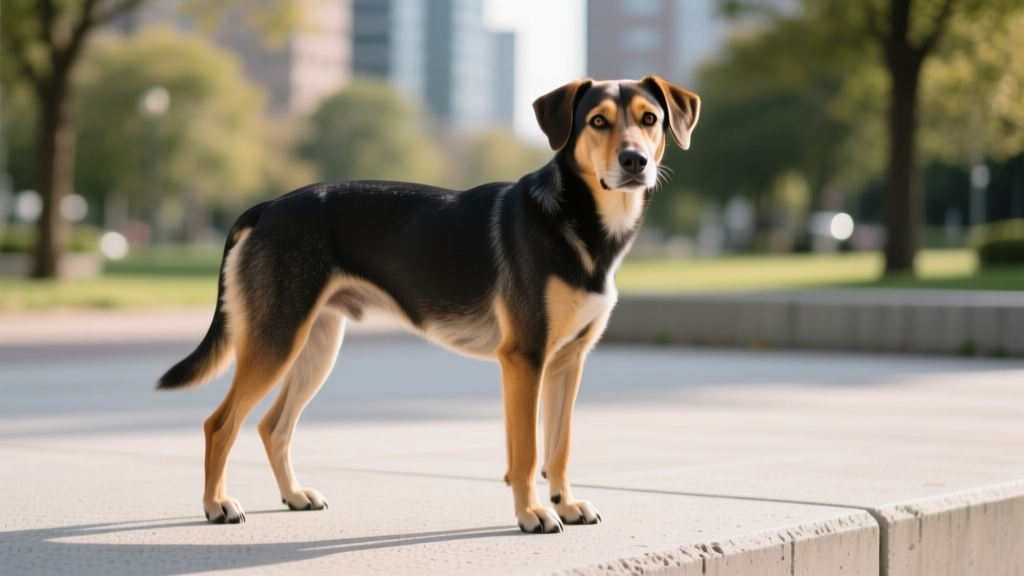
Do Dogs Smile? The Science Behind Canine Facial Expressions
Do dogs smile the way humans do? Explore the science of canine facial expressions, evolutionary origins, and what your dog's mouth shape really means.

Direct Answer: Do dogs smile? Dogs do not smile in the human emotional sense — they lack the neurological wiring to pull their lips into a genuine "Duchenne smile" linked to happiness. However, dogs do produce a relaxed, open-mouth expression that closely resembles a human smile. Researchers call this the "relaxed open-mouth display" (ROMD). It typically appears during play, greeting, and positive social interactions. A separate expression sometimes called a "submissive grin" involves pulling lips back to expose teeth, which signals appeasement rather than joy. So yes, dogs make smile-like faces — but the underlying mechanism and meaning differ fundamentally from human smiling.
The Science of Canine Facial Expressions
In 2017, researchers at the University of Portsmouth's Dog Cognition Centre published a landmark study in Scientific Reports demonstrating that dogs produce significantly more facial expressions when a human is paying attention to them than when they are alone or facing another dog. The study, led by Dr. Juliane Kaminski, tracked 24 dogs using the DogFACS (Dog Facial Action Coding System) — a standardized method adapted from the human Facial Action Coding System developed by psychologist Paul Ekman.
The findings were clear: dogs increased their facial movement frequency by roughly 40% when a human was looking at them versus when the human was distracted. The most frequently produced expression was AU101 — the "inner brow raise," which makes dogs appear wide-eyed and puppy-like. The relaxed open-mouth display was the second most common expression directed at attentive humans.
This research suggests that canine facial expressions are not purely involuntary emotional reflexes. Dogs appear to modulate their facial movements based on their audience — a form of intentional communication that was once thought to be uniquely human and primate.
A 2019 follow-up study published in Current Biology found that dogs raised in human homes produce different facial expressions than shelter dogs, further supporting the idea that these expressions are shaped by social learning rather than being purely instinctual.
Evolutionary Origins: Why Dogs Developed Smile-Like Expressions
Evolutionary Context: Wolves do not smile. The closest wolf equivalent is a relaxed, open-mouth posture during social play — but wolves produce far fewer facial expressions overall than domestic dogs. Over approximately 15,000-30,000 years of domestication, dogs evolved enhanced facial musculature specifically for human communication.
A pivotal 2019 anatomical study by Dr. Bridget Waller and colleagues, published in the Proceedings of the National Academy of Sciences (PNAS), revealed that dogs possess a small facial muscle called the levator anguli oculi medialis (LAOM) — responsible for raising the inner eyebrow — that wolves lack entirely. This muscle allows dogs to produce the "puppy dog eyes" expression that triggers a nurturing response in humans.
The relaxed open-mouth display likely evolved through a different pathway. During domestication, dogs that showed less fear-aggression and more affiliative behavior were preferentially tolerated and fed by humans. The open-mouth, relaxed-jaw posture is a low-threat signal in canine body language. Dogs that displayed this posture more frequently would have received more positive human attention, food, and shelter — a selection pressure that gradually amplified the behavior.
This is an example of self-domestication combined with neoteny — the retention of juvenile traits into adulthood. Wolf puppies play with open mouths and relaxed faces far more than adult wolves. Dogs essentially never "grew out" of these juvenile social signals, which made them perpetually appealing to human caretakers.
The Physiology: How a Dog's "Smile" Actually Works
Understanding the mechanics requires looking at canine facial anatomy, which differs significantly from ours.
Muscle structure: Dogs have approximately 18 facial muscles involved in expression (compared to roughly 43 in humans). The key muscles producing the smile-like expression include:
- Levator anguli oris — lifts the corners of the mouth upward and laterally
- Zygomaticus — pulls the lip backward and upward (less developed in dogs than humans)
- Depressor labii inferioris — lowers the lower lip, exposing teeth in some expressions
- Orbicularis oris — the sphincter muscle around the mouth that controls lip tension
Neurological pathway: In humans, a genuine "Duchenne smile" involves two separate neural circuits — the voluntary motor cortex pathway (when you deliberately smile for a photo) and the involuntary limbic system pathway (when you spontaneously smile at something funny). Dogs lack the same voluntary facial control humans have. Their facial expressions are primarily driven by the limbic system and brainstem nuclei, meaning they are largely emotional and reflexive rather than deliberately posed.
The relaxed open-mouth display (ROMD): When a dog is in a positive emotional state — low cortisol, moderate dopamine, elevated oxytocin from social bonding — the jaw muscles relax. The mouth opens slightly, the tongue may loll, and the corners of the lips pull back due to the natural resting tension of the levator anguli oris. This creates the visual appearance of a smile. It is not a posed expression; it is a byproduct of physical relaxation combined with positive arousal.
The submissive grin: This is a different expression entirely. The lips are pulled back horizontally (not upward) to expose the front teeth, often accompanied by a lowered body posture, squinted eyes, and sometimes a low whine. This is an appeasement signal — the dog is communicating "I am not a threat" rather than "I am happy." It is mediated by a different set of motor patterns and typically occurs in contexts of social uncertainty rather than play.
What Does It Mean When My Dog "Smiles"?
Context determines meaning. Here is how to interpret the most common smile-like expressions:
| Expression | Physical Description | Context | Likely Meaning |
|---|---|---|---|
| Relaxed Open-Mouth Display (ROMD) | Mouth open, lips slightly pulled back, tongue visible, soft eyes, loose body | Play, greeting, after exercise, during positive interaction | Contentment, positive arousal, social engagement |
| Submissive Grin | Lips pulled back horizontally, front teeth exposed, squinted eyes, lowered posture | Meeting new people, being scolded, uncertain social situations | Appeasement, "I'm not a threat," social deference |
| Play Face | Wide open mouth, exaggerated movements, bouncing body, play bows | During play with dogs or humans | "This is play, not aggression" — meta-communication signal |
| Panting with Lip Retraction | Mouth wide open, rapid breathing, lips pulled far back, tense facial muscles | After exercise, in heat, during stress | Thermoregulation or stress — NOT a smile |
| Lip Curl / Snarl | Lips pulled up vertically, gums and teeth exposed, wrinkled muzzle, hard stare | Resource guarding, fear, territorial defense | Aggressive warning — back off |
Practical tip: Look at the eyes and body, not just the mouth. A genuinely relaxed, happy dog will have soft, almond-shaped eyes (not wide or whale-eyed), a loose wagging body, and ears in a neutral or relaxed position. If the body is stiff and the eyes are hard, an open mouth does not indicate happiness regardless of how much it resembles a smile.
Breed Variations in Smile-Like Expressions
Not all dogs "smile" equally. Facial structure, breeding history, and individual personality all influence how visible and frequent these expressions are.
Brachycephalic breeds (French Bulldogs, Pugs, Boston Terriers, Shih Tzus) have shortened muzzles that limit the range of lip movement. Their facial anatomy makes it physically difficult to produce a pronounced smile-like expression. However, these breeds compensate with exaggerated eye expressions and body language.
Dolichocephalic breeds (Collies, Greyhounds, Borzois) have elongated muzzles with greater lip mobility. Collies and Shetland Sheepdogs are particularly noted for producing a visible "smile" — lips pulled back to show teeth in what owners often describe as a grin. In these breeds, the submissive grin is especially common and is sometimes bred into the line as a breed-characteristic greeting behavior.
Retrievers and spaniels (Golden Retrievers, Labrador Retrievers, Cocker Spaniels) tend to produce the classic ROMD more frequently than other groups. Their breeding history as cooperative working dogs selected for affiliative facial expressions that maintained positive human-dog bonds during long working days.
Spitz breeds (Siberian Huskies, Samoyeds, Akitas) are known for what is colloquially called the "Sammy smile" — a pronounced lip retraction that exposes teeth in a grin-like expression. In Samoyeds, this is considered a breed hallmark and is even mentioned in the AKC breed standard as part of the breed's characteristic expression.
Common Misconceptions About Dog Smiles
| Myth | Fact |
|---|---|
| "My dog smiles when I come home because he's happy to see me." | Partially true. The ROMD during greetings does correlate with positive arousal, but it is a relaxed-state byproduct, not a deliberate "smile for you." Dogs also produce this expression when greeting other dogs they are comfortable with. |
| "If my dog shows teeth while 'smiling,' it's always friendly." | False. A submissive grin and an aggressive snarl can look superficially similar. Always read the full body — stiff posture, hard eyes, and a high tail indicate threat, not friendliness. |
| "Dogs learned to smile by copying humans." | Unsupported. Dogs do not have the mirror neuron system needed for facial mimicry the way primates do. Their expressions evolved through domestication selection, not imitation. |
| "All dogs smile the same way." | False. Breed anatomy, individual personality, and socialization history all affect how and whether a dog produces smile-like expressions. Some dogs rarely show ROMD and communicate contentment through body relaxation, tail wagging, and vocalizations instead. |
| "Teaching my dog to 'smile' on command is harmless fun." | It can be problematic. Training a submissive grin on cue using positive reinforcement is not inherently harmful, but if the dog is producing the expression out of social uncertainty or mild anxiety, you may be inadvertently reinforcing a stress response. Only shape this behavior if the dog is clearly relaxed and offering it voluntarily. |
When a "Smile" Might Signal a Problem
Most smile-like expressions are benign or positive, but certain contexts warrant closer attention:
Red flags — consult your veterinarian if you notice:
- Excessive panting with lip retraction at rest: If your dog's mouth is constantly pulled back in a panting-like expression without exercise or heat, this can indicate pain, nausea, or respiratory distress. Brachycephalic breeds are particularly susceptible to brachycephalic obstructive airway syndrome (BOAS).
- Lip retraction on only one side: Asymmetrical facial expressions can signal facial nerve paralysis, dental abscesses, or neurological issues. This requires prompt veterinary evaluation.
- "Smiling" combined with avoidance behavior: If your dog consistently produces a submissive grin when a specific person, animal, or situation is present, the dog may be experiencing chronic stress rather than contentment. A certified professional dog trainer (CPDT) or veterinary behaviorist can help assess the situation.
- Sudden increase in submissive grinning: A dog that begins grinning frequently without prior history may be responding to environmental stressors — a new household member, schedule change, or underlying medical discomfort.
- Exposing teeth with a high, stiff tail and hard stare: This is a pre-bite warning, not a smile. Do not approach, do not punish (which can escalate), and calmly remove the trigger if safe to do so.
How Is a Dog's "Smile" Different From a Human Smile?
The differences are substantial and worth understanding clearly:
| Feature | Human Smile | Dog "Smile" (ROMD) |
|---|---|---|
| Neural control | Dual pathway — voluntary (motor cortex) + involuntary (limbic system) | Primarily involuntary (limbic system + brainstem) |
| Emotional specificity | Can express joy, politeness, embarrassment, sarcasm, deception | Correlates with positive arousal and relaxation states |
| Social function | Bonding, social signaling, deception, cultural norms | Affiliative communication, threat reduction, play signaling |
| Voluntary control | High — can smile on command, fake smiles | Low — cannot be truly "faked" by the dog |
| Muscle involvement | Zygomaticus major + orbicularis oculi (genuine Duchenne smile) | Levator anguli oris + jaw relaxation + tongue protrusion |
| Audience dependence | Smile both alone and socially | Significantly more frequent when a human is attentive (Kaminski et al., 2017) |
Related Canine Communication Behaviors
The smile-like expression does not exist in isolation. It connects to a broader system of canine social communication that every owner should understand:
- Tail wagging: A relaxed, wide, sweeping wag (especially involving the whole rear end) correlates with the same positive emotional state that produces the ROMD. Research from the University of Trento (2013) showed that right-biased tail wags indicate positive emotions while left-biased wags correlate with anxiety.
- Play bows: Front end down, rear end up — this is the universal canine "let's play" signal and frequently accompanies the play face expression.
- Eye contact and blinking: Soft, slow blinking in dogs signals comfort and trust. Hard staring signals arousal or threat assessment.
- Ear position: Neutral or slightly back ears combined with a ROMD indicate relaxation. Pinned-back ears with a grin indicate fear or appeasement.
- Vocalizations: Soft "talking" sounds, gentle whines during greeting, and the characteristic "play growl" (higher-pitched, more staccato than a warning growl) often accompany smile-like expressions during positive interactions.
For a deeper exploration of how dogs process human facial expressions in return, see research on canine communication from the Merck Veterinary Manual, which covers how dogs read human emotional states through facial cues.
Frequently Asked Questions
Why do dogs pull their lips back when they see their owner?
This is typically the relaxed open-mouth display (ROMD), triggered by a surge of positive arousal and oxytocin release during social bonding. The jaw muscles relax, the mouth opens, and the lips naturally retract. It is one of several affiliative signals dogs use to maintain social bonds with their humans — alongside tail wagging, leaning, and eye contact. It is not a "smile" in the human sense, but it does correlate with a genuine positive emotional state.
Can dogs actually feel happy enough to smile?
Dogs experience positive emotions — this is well-established in veterinary behavioral science. Neuroimaging studies using fMRI (notably by Dr. Gregory Berns at Emory University) have shown that dogs' caudate nuclei activate in response to their owners' scent and praise, similar to reward-processing in humans. However, the facial expression dogs produce is not caused by the same neural pathway as a human happiness-smile. Dogs feel good, and they show it — just through a different physical mechanism.
How do dogs process human smiles?
Research published in Biology Letters (2016) demonstrated that dogs can discriminate between happy and angry human faces, even in photographs of strangers they have never met. Dogs show a left-gaze bias when looking at human faces — the same pattern humans use — suggesting they process facial expressions using the right hemisphere, which is specialized for emotional processing. Dogs appear to recognize human smiles as positive social signals and respond with increased affiliative behavior.
What does it mean when my dog grins and shows all his teeth?
It depends entirely on context. If the body is loose, the tail is wagging, and the eyes are soft, it is likely a submissive grin — an appeasement gesture meaning "I acknowledge your social presence and I am not a threat." If the body is rigid, the tail is high and still, and the eyes are hard, it is a warning snarl. When in doubt, do not reach toward the dog. Give space and observe the full body language.
Is it normal if my dog never "smiles"?
Yes, completely normal. Individual variation in facial expression is significant. Some dogs communicate contentment primarily through body relaxation, proximity-seeking, sighing, or gentle tail movement rather than facial expressions. Brachycephalic breeds may physically struggle to produce visible lip retraction. A dog that does not produce a ROMD is not necessarily unhappy — they may simply express positive states through different channels.
How is a dog's smile different from a cat's or a primate's?
In primates, baring teeth (the "fear grin" in chimpanzees, the "silent bared-teeth display") is typically a submissive or anxious signal — not a happiness indicator. Dogs are unusual among domestic animals in producing such visible facial expressions at all. Cats lack the facial musculature for pronounced lip retraction and communicate contentment primarily through purring, slow blinking, and body posture rather than facial expression. Dogs' smile-like expressions are a product of their unique domestication history with humans.
Key Takeaways for Dog Owners:
- Read the whole dog, not just the mouth. Eyes, ears, tail, and body posture provide the real context for any facial expression.
- Don't force expressions. If you want to capture a "smile" photo, wait for your dog to naturally offer the ROMD during play or greeting — don't try to physically manipulate their lips.
- Monitor for changes. A sudden increase or decrease in facial expressions can signal medical or behavioral shifts worth discussing with your veterinarian.
- Respect the submissive grin. If your dog grins when meeting new people, they may need more space and slower introductions — not encouragement to "smile more."
- Use positive reinforcement only. If training a "smile" cue, use force-free methods — reward voluntary lip retraction with treats and praise. Never physically pull a dog's lips back.
This article is for educational purposes and does not replace professional veterinary or behavioral consultation. If your dog displays sudden behavioral changes, facial asymmetry, or signs of distress, consult your veterinarian.
Priya Sutaria
All our authors care for dogs every day — read more of their work on the authors page.