Do Dogs Miss Their Owners? The Science Behind Canine Attachment
Do dogs miss their owners when apart? Explore the neuroscience, evolutionary biology, and behavioral research behind canine attachment and separation.
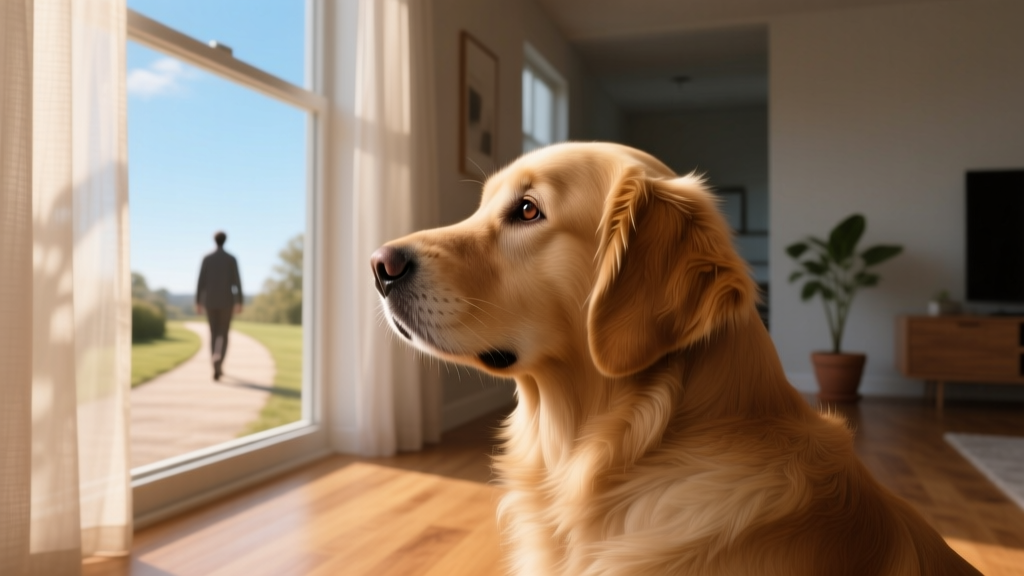
Yes, dogs do miss their owners. Peer-reviewed research confirms that dogs form secure attachment bonds with their primary caregivers — neurologically similar to the parent-child bond in humans. When separated, dogs exhibit measurable physiological stress responses including elevated cortisol, increased vocalization, and定向 (oriented) waiting behaviors. The intensity of this response varies by individual temperament, breed predisposition, duration of absence, and the quality of the bond formed.
If you have ever watched your dog greet you at the door after even a brief errand — tail helicoptering, full-body wiggles, vocalizations that sound almost like crying — you have witnessed the behavioral expression of an attachment system firing at full capacity. But is this genuine longing, or simply conditioned excitement? Modern canine cognitive science provides a clear answer: dogs experience something functionally analogous to missing a specific individual, and the mechanisms behind it run deeper than most owners realize.
The Neuroscience of Canine Attachment: How Dogs Process Your Absence
Key brain mechanism: When a dog interacts with their bonded owner, the neuropeptide oxytocin surges in both the dog and the human. A landmark 2015 study published in Science by Takefumi Kikusui and colleagues at Azabu University demonstrated that mutual gaze between dogs and owners triggered a positive oxytocin feedback loop — the same neurochemical circuit that bonds human parents to infants. Oxytocin levels in dogs increased by up to 130% after sustained eye contact with their owners, while owners saw increases up to 300%.
This oxytocin system is not just a feel-good chemical wash. It creates a neurobiological record of specific individuals. Dogs do not attach generically to "whoever feeds them." Research from the Hormones and Behavior journal shows that dogs can discriminate between their owner's scent and a stranger's scent, with measurable differences in brain activation patterns in the caudate nucleus — a region associated with reward anticipation and social attachment.
When your dog is separated from you, several physiological changes occur:
- Cortisol elevation: Salivary cortisol levels rise within 10-30 minutes of owner departure in dogs with strong attachment bonds, according to research published in the Journal of Veterinary Behavior.
- Heart rate variability changes: Separated dogs show decreased parasympathetic (calming) nervous system activity and increased sympathetic (stress) activation.
- Dopamine disruption: The anticipated reward of reunion is absent, creating a neurochemical deficit that drives seeking behaviors — pacing, door-watching, vocalizing.
- Thermoregulatory changes: Some studies using infrared thermography have documented drops in peripheral body temperature (ear and nose surface) during separation, consistent with stress-induced vasoconstriction.
The Evolutionary Roots: From Wolf Pack Bonds to Human-Dog Attachment
Evolutionary timeline: Dogs diverged from a now-extinct wolf lineage approximately 20,000-40,000 years ago. The attachment behaviors we see today were not trained into dogs by humans — they were selected for, both intentionally and unintentionally, across thousands of generations of cohabitation.
Wolves, the closest living relatives of dogs, already possess a strong social attachment system. Wolf packs function through pair bonds, cooperative pup-rearing, and long-term social memory — wolves separated from pack members show stress behaviors and will actively search for lost individuals over distances exceeding 100 miles in documented cases.
During domestication, this pre-existing attachment capacity was redirected from conspecific (same-species) bonds toward humans. A 2021 study in Current Biology by Christina Hansen Wheat at Stockholm University found that wolf pups raised by humans showed attachment behaviors toward their caregivers comparable to dog puppies — but dogs showed significantly stronger secure-base effects (using the human as a safe anchor for exploration in novel environments).
The critical evolutionary adaptation was not creating attachment from scratch, but lowering the threshold for cross-species bonding. Dogs evolved to form attachments during a wider developmental window and to maintain those bonds with greater intensity and flexibility than wolves. This is why a dog adopted at age three can bond deeply with a new owner — something far less common in wolves.
What the Research Actually Shows: Separation Behavior Studies
The most rigorous evidence for canine attachment comes from adaptations of the Ainsworth Strange Situation Test — a protocol originally designed to measure human infant-parent attachment. Researchers have applied this test to dogs with remarkably consistent results:
| Behavior Measured | With Owner Present | Owner Absent (Stranger Present) | Owner Absent (Alone) |
|---|---|---|---|
| Exploration of novel room | High — freely investigates | Moderate — checks back with stranger | Low — stays near door |
| Proximity-seeking | Maintains contact with owner | May approach stranger or avoid | Positions at exit point |
| Vocalization (whining, barking) | Minimal | Moderate increase | Highest frequency |
| Play behavior with toys | Engaged, initiates play | Reduced engagement | Rarely initiates |
| Greeting intensity on reunion | N/A | Moderate | Highest intensity |
A pivotal 2013 study by Topál and colleagues, referenced in the Merck Veterinary Manual's overview of canine social behavior, confirmed that dogs display a secure base effect — they explore more confidently when their owner is present and show distress behaviors specifically linked to the owner's absence rather than general environmental stress.
Importantly, research by the American Kennel Club's behavioral science reviews has documented that the intensity of reunion behavior correlates with separation duration. Dogs separated for 2 hours showed significantly more enthusiastic greetings than those separated for 30 minutes — suggesting they track the passage of time and that longer absences produce a stronger "missing" response.
Breed Variations in Attachment Intensity
Not all dogs miss their owners with equal intensity. Breed genetics, original working purpose, and individual temperament all influence attachment style. Here is a practical breakdown:
| Attachment Style | Typical Breeds | Separation Response | Owner Implications |
|---|---|---|---|
| Velcro / High Attachment | Vizsla, Weimaraner, German Shorthaired Pointer, Australian Shepherd, Border Collie | High distress, prolonged vocalization, follows owner room-to-room | Requires gradual desensitization to alone time; higher separation anxiety risk |
| Moderate / Balanced | Labrador Retriever, Golden Retriever, Cavalier King Charles Spaniel, Beagle | Noticeable greeting, settles within 20-40 minutes when alone | Generally adapts well to 4-6 hour absences with enrichment |
| Independent / Lower Display | Shiba Inu, Basenji, Afghan Hound, Chow Chow, Akita | Subtle greeting, may appear indifferent but still shows physiological stress markers | Do not mistake independence for lack of bond; still need social contact |
| Working-Line / Task-Oriented | Malinois, Dutch Shepherd, Livestock Guardian breeds (Great Pyrenees, Anatolian) | Variable — bonds intensely with handler but may tolerate separation if "job" is present | Needs purposeful activity; alone time without stimulation is poorly tolerated |
A critical nuance: independent breeds still form attachment bonds. Research using cortisol measurement has shown that Shiba Inus and Akitas exhibit comparable physiological stress during owner separation as "velcro" breeds — they simply express it less behaviorally. An Akita lying quietly by the door is not necessarily less distressed than a Vizsla howling at the window. The outward display differs; the internal state may be similar.
Common Misconceptions About Dogs Missing Their Owners
| Myth | What the Science Says |
|---|---|
| "Dogs only miss you because you feed them." | Studies show dogs prefer social interaction with their owner over food rewards in controlled choice tests. The bond is social, not purely transactional. |
| "If my dog doesn't greet me excitedly, they don't care." | Low-display breeds and older dogs may show subtle signs: ear position changes, tail carriage shifts, moving to the same room. Absence of exuberance ≠ absence of bond. |
| "Dogs don't have a concept of time, so they don't know how long you've been gone." | Dogs can discriminate between 30-minute, 2-hour, and 4-hour separations based on greeting intensity. They likely use scent decay (your scent fading in the house) and circadian rhythms to track elapsed time. |
| "Getting a second dog will stop them from missing you." | While canine companionship reduces some isolation stress, research shows it does not replace the owner-specific attachment bond. Dogs in multi-dog households still show owner-specific separation distress. |
| "My dog destroyed the house out of spite because I left." | Destructive behavior during separation is a stress response, not revenge. Dogs lack the cognitive capacity for spite — a concept requiring understanding of another's mental state and intent to cause emotional harm. |
| "Dogs who have been rehomed can't bond again because they're still missing their old owner." | Dogs can and do form new secure attachments after rehoming. While some dogs may show grief-like behaviors for weeks, the attachment system is designed to re-bond — this is an evolutionary survival feature, not a limitation. |
When Missing You Becomes a Problem: Separation Anxiety vs. Normal Attachment
Missing an owner is normal. Separation anxiety is a clinical behavioral condition that affects an estimated 14-40% of dogs presented to veterinary behaviorists, according to data referenced by the American Veterinary Medical Association. Understanding the boundary between healthy attachment and pathological distress is critical.
Red flags that indicate separation anxiety (not just missing you):
- Destructive behavior focused on exit points (doors, windows) — not random chewing
- Self-injury during escape attempts (broken teeth, torn nails, bleeding paws)
- Inappropriate elimination (urination/defecation) only when left alone, despite being house-trained
- Excessive salivation — puddles of drool found on return
- Non-stop vocalization for the entire absence (documented via camera or neighbor reports)
- Refusal to eat or drink while alone, even with high-value food puzzles
- Pacing in fixed patterns (figure-8 or circular routes) without settling
- Onset within 5-30 minutes of departure (not hours later)
If your dog displays these signs, consult your veterinarian. Separation anxiety is treatable through a combination of behavior modification (systematic desensitization and counter-conditioning protocols), environmental management, and in moderate-to-severe cases, prescription medications such as fluoxetine (Reconcile) or clomipramine (Clomicalm). A veterinary behaviorist or certified applied animal behaviorist (CAAB) can develop a tailored treatment plan.
Normal "missing" behaviors — greeting you enthusiastically, following you around the house, sleeping near your belongings, settling down after 15-30 minutes of alone time — do not require intervention. They are signs of a healthy bond.
Practical Takeaways: Supporting Your Dog's Attachment Needs
For dogs who miss you during daily absences (4-8 hours):
- Leave scent-rich items: A worn t-shirt (not washed) placed in their resting area provides olfactory comfort. Research shows owner scent reduces stress behaviors by up to 35% in controlled settings.
- Use food puzzles strategically: A Kong Classic stuffed with frozen peanut butter and kibble ($12-$18 for the medium size) provides 20-40 minutes of engagement, reducing the initial stress peak after departure.
- Establish departure routines: Predictable pre-departure cues (picking up keys, putting on shoes) followed by calm exits reduce anticipatory anxiety. Avoid dramatic goodbyes or guilty prolonged farewells — both increase cortisol.
- Provide background audio: Studies from the University of Glasgow found that soft rock and reggae music reduced stress indicators in kennel dogs more effectively than classical music. Services like RelaxMyDog (subscription: ~$8/month) offer canine-specific audio.
- Invest in a pet camera: Devices like the Furbo Dog Camera ($170-$220) or Wyze Cam v3 ($36-$50) let you monitor your dog's behavior in real-time and identify whether they settle after 15-30 minutes or remain distressed. This data is invaluable for your veterinarian or trainer.
For extended absences (travel, hospital stays, deployment):
- Arrange for a familiar caregiver rather than an unfamiliar boarding facility when possible
- Leave multiple scent items rotated by the caregiver every 2-3 days (scent fades over approximately 72 hours in indoor environments)
- Maintain your dog's normal feeding and walking schedule — routine predictability buffers attachment stress
- For absences exceeding 2 weeks, consider video call sessions — while evidence is mixed on whether dogs recognize owners on screens, some individuals show calming responses to familiar voices
How Is This Different From Human Missing?
While the neurochemical mechanisms (oxytocin, cortisol, dopamine) are shared between dogs and humans, there are important cognitive differences:
- Temporal scope: Humans can miss someone abstractly — thinking about a friend who moved away six months ago. Dogs appear to experience missing as an immediate, present-state response to the current absence. There is no strong evidence that dogs engage in long-term abstract rumination about absent individuals.
- Object permanence extension: Dogs understand that you still exist when you leave (object permanence develops by 8-12 weeks of age). But they likely do not project complex future scenarios — they do not think "my owner will return Thursday." They operate on a more immediate expectation framework.
- Social substitution: Humans can partially satisfy attachment needs through phone calls, photos, or memories. Dogs rely almost entirely on physical presence, scent, and sound. This makes physical separation more impactful for dogs relative to their coping toolkit.
- Grief processing: When an owner dies or permanently leaves, dogs can show prolonged behavioral changes — decreased appetite, lethargy, searching behaviors — lasting weeks to months. This is documented in veterinary behavioral literature and is consistent with an attachment loss response, though it differs from human grief in its cognitive framing.
Frequently Asked Questions
Why do dogs wait by the door when their owner is gone?
Door-waiting is a定向 orientation behavior driven by the attachment system. Dogs position themselves at the last known location of their bonded person and monitor for sensory cues of return — footsteps, car engine sounds, scent changes. This is not learned from watching humans open doors; it appears in dogs who have never observed door use, suggesting it is an expression of the underlying seeking/attachment drive rather than a conditioned response.
Can dogs sense when their owner is coming home?
There is anecdotal evidence and some preliminary research suggesting dogs may anticipate owner return through subtle environmental cues — changes in light patterns as afternoon approaches, the fading of owner scent (which may follow a predictable decay curve), and learned associations with time of day. However, claims of "psychic" or telepathic anticipation are not supported by controlled studies. Dogs are excellent pattern recognizers, and what appears to be precognition is likely sophisticated environmental cue processing.
How do dogs recognize their owner after long separations?
Dogs use a multi-modal recognition system: olfactory memory (your unique scent signature stored in their olfactory bulb), auditory memory (your voice pattern and footstep rhythm), and visual memory (your gait and body proportions). A 2018 study in Animal Cognition demonstrated that dogs could recognize their owner's face in photographs after separations of over 2 years. Scent memory appears to be the most durable — dogs have been documented recognizing owner-scented items after separations of 5+ years.
What does it mean when my dog sleeps on my clothes or pillow?
This is a comfort-seeking behavior driven by olfactory attachment. Your clothes and pillow carry the highest concentration of your scent in the home environment. By sleeping on these items, your dog is essentially surrounding themselves with your scent signature, which activates the same calming neural pathways as your physical presence. It is the canine equivalent of a child sleeping with a parent's sweater.
Is it normal for my dog to cry when I leave?
Brief vocalization (1-5 minutes) after departure is within normal range, particularly in puppies and newly adopted dogs still adjusting to a routine. Persistent crying, howling, or whining that continues beyond 30 minutes, or that occurs every single time you leave regardless of duration, may indicate separation anxiety and warrants a consultation with your veterinarian or a certified force-free trainer.
Do dogs miss their owners more than cats do?
Research suggests dogs display more overt attachment behaviors than cats, but this does not necessarily mean they "miss" more intensely. A 2019 study in PLOS ONE found that cats do form secure attachments to their owners at rates comparable to dogs (approximately 64% of cats showed secure attachment in the Strange Situation Test). Cats simply express distress differently — often through hiding, reduced grooming, or changes in litter box habits rather than vocalization and door-waiting.
Key Research Referenced in This Article:
- Nagasawa, M. et al. (2015). "Oxytocin-gaze positive loop and the coevolution of human-dog bonds." Science, 348(6232).
- Topál, J. et al. (1998). "Attachment to humans: A comparative study on hand-reared wolves and differently socialized dog puppies." Animal Behaviour, 56(6).
- Handlin, L. et al. (2011). "Short-term interaction between dogs and their owners: Effects on oxytocin, cortisol, insulin and heart rate." Anthrozoös, 24(3).
- Prato-Previde, E. et al. (2003). "Is the dog-human relationship an attachment bond? An observational study using the Strange Situation." Behaviour, 140(3).
- Rehn, T. & Keeling, L.J. (2011). "The effect of time left alone at home on dog welfare." Applied Animal Behaviour Science, 129(2-4).
Disclaimer: This article provides educational information about canine behavior and attachment science. If your dog displays signs of separation anxiety or behavioral distress, consult your veterinarian or a certified applied animal behaviorist for individualized assessment and treatment.
Tom Renshaw
All our authors care for dogs every day — read more of their work on the authors page.


