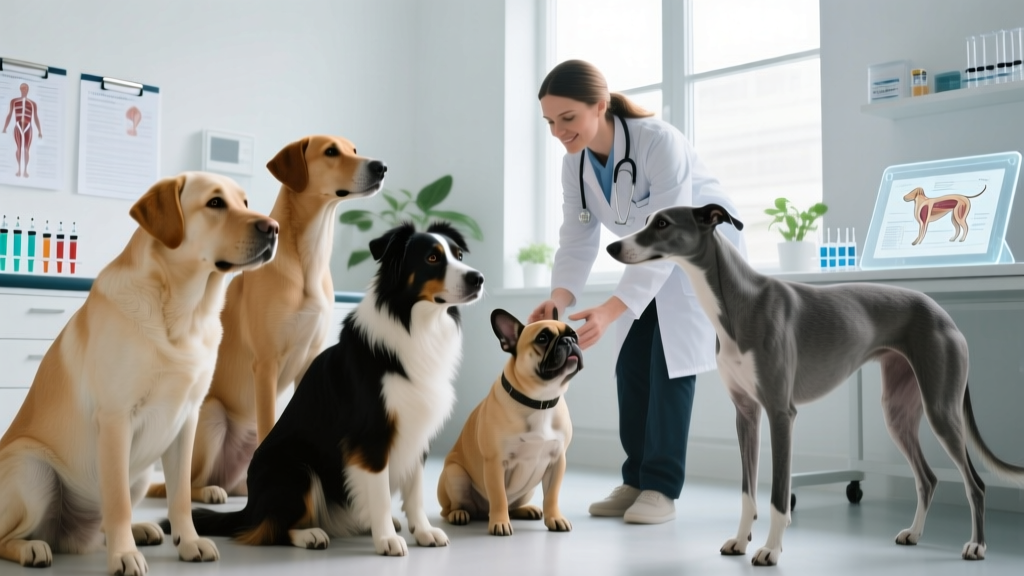
Diabetic Help Dog: The Science Behind Canine Hypoglycemia Detection
How diabetic help dogs detect blood sugar changes using olfactory science, plus training, breed suitability, and what owners need to know about these medical alert dogs.
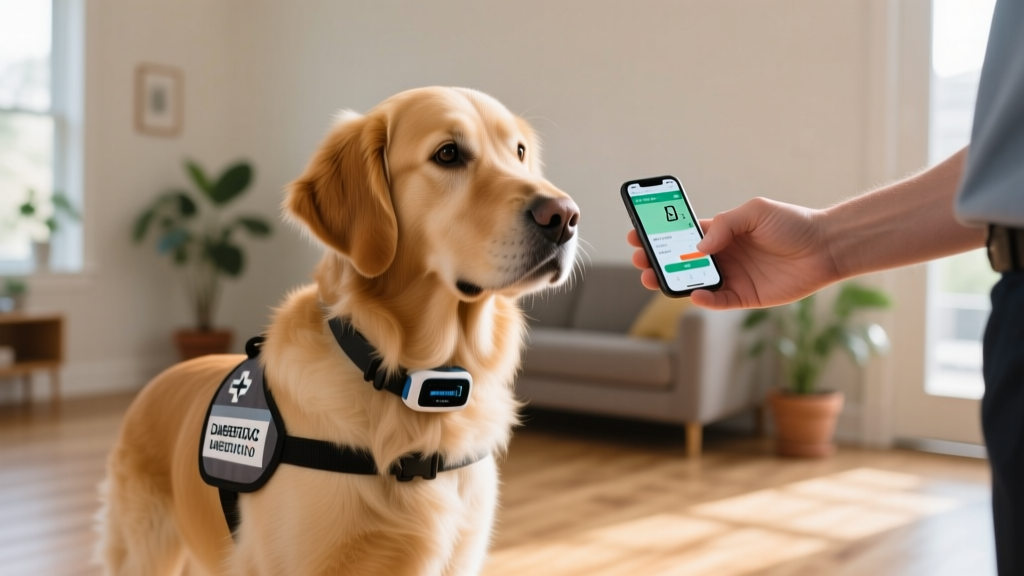
Quick Answer: A diabetic help dog (also called a diabetic alert dog or DAD) is a trained service animal that detects volatile organic compounds (VOCs) — primarily isoprene — released in a person's breath when blood glucose levels drop or spike. Research published in the journal Diabetes Care and confirmed by the University of Cambridge has shown that isoprene concentrations rise significantly during hypoglycemic episodes, and dogs can be trained to alert their handlers before symptoms become dangerous. These dogs are not guessing or reading body language alone; they are leveraging a sense of smell estimated to be 10,000 to 100,000 times more sensitive than a human's.
Why Do Dogs Detect Blood Sugar Changes? The Olfactory Science
The ability of a diabetic help dog to identify glycemic events is rooted in canine olfaction — one of the most sophisticated sensory systems in the animal kingdom. A dog's nose contains approximately 220 million to 300 million olfactory receptors (depending on breed), compared to roughly 5–6 million in humans. The olfactory bulb in a dog's brain is proportionally about 40 times larger than ours relative to total brain size, according to the American Kennel Club.
The Isoprene Connection
During hypoglycemia (low blood sugar), the body shifts metabolic pathways. Fat stores are broken down for energy, producing ketones and altering the composition of exhaled breath. A 2016 study led by Dr. Claire Guest at Medical Detection Dogs in the UK, published in Diabetes Care, identified isoprene — a small hydrocarbon molecule (C₅H₈) — as the primary VOC that rises during hypoglycemic events. In some patients, isoprene levels nearly doubled when blood glucose dropped below 70 mg/dL.
Dogs detect isoprene at concentrations as low as parts per trillion. To put that in perspective: that's roughly equivalent to detecting a single drop of liquid dissolved in an Olympic-sized swimming pool.
But isoprene isn't the only compound. During hyperglycemic episodes (high blood sugar), the body may produce acetone and other ketone bodies, creating a distinct breath signature. Trained diabetic help dogs learn to differentiate between the "low" scent profile and the "high" scent profile, alerting with different behaviors for each.
The Evolutionary Basis: Why Ancestral Dogs Developed This Sensitivity
Evolutionary Origin: The gray wolf (Canis lupus), the ancestor of all domestic dogs, relied on olfaction as its primary hunting sense across vast territories. Wolves can detect prey scent trails that are hours or even days old, and they can discriminate between individual animals within a herd by scent alone. This wasn't a luxury — it was a survival necessity. Wolves that could detect subtle chemical cues (a wounded animal's stress hormones, reproductive pheromones indicating vulnerable prey, or trace minerals leading to water sources) had a significant fitness advantage.
Over 15,000–30,000 years of domestication, dogs retained this extraordinary olfactory hardware while their social cognition evolved to attune to humans. The result: a species that can detect chemical changes in human bodies and is motivated to communicate those findings to us. That combination is precisely what makes a diabetic help dog possible.
Research from the Merck Veterinary Manual notes that the vomeronasal organ (Jacobson's organ) in dogs provides an additional chemical detection pathway, though for VOC detection in breath, the main olfactory epithelium does the heavy lifting. The evolutionary pressure for fine scent discrimination in wolves — tracking prey across miles of tundra — is the same biological infrastructure that allows a Labrador Retriever in a suburban kitchen to detect that their handler's blood sugar has dropped to 62 mg/dL before the continuous glucose monitor has even alarmed.
Physiological Mechanism: How a Dog's Brain Processes Glycemic Scents
Understanding the physiological mechanism requires tracing the pathway from molecule to behavior:
- Air Sampling: The dog inhales air containing VOCs. Dogs can sniff at a rate of 5–10 times per second, and their nasal anatomy separates airflow into an olfactory stream and a respiratory stream, allowing continuous scent sampling without interrupting breathing.
- Receptor Binding: Isoprene and related molecules bind to specific olfactory receptor proteins in the nasal epithelium. Dogs have roughly 1,100 functional olfactory receptor genes (humans have about 390), giving them a vastly larger "chemical vocabulary."
- Neural Processing: Signals travel via the olfactory nerve to the olfactory bulb, then to the piriform cortex and the amygdala. In trained dogs, repeated pairing of a specific scent with a reward creates a robust neural association — the dog recognizes the scent pattern and triggers the trained alert behavior.
- Behavioral Output: The dog performs the trained alert — typically pawing, nudging, fetching a testing kit, or activating a specialized alert button. This is not anxiety or confusion; it is a conditioned operant response reinforced through thousands of training repetitions.
Importantly, functional MRI studies conducted at Emory University's Dog Cognition Lab have shown that familiar scents activate the caudate nucleus (the brain's reward center) in dogs. For a trained diabetic help dog, detecting the hypoglycemia scent literally triggers the same neural reward circuitry as receiving a treat — the detection itself becomes reinforcing.
Practical Implications for Owners: Living With a Diabetic Help Dog
What Daily Life Looks Like
- Alert Response Time: Well-trained diabetic help dogs typically alert within 1–5 minutes of a glycemic shift beginning, often before CGM (continuous glucose monitor) sensors trigger an alarm. CGM sensors measure interstitial fluid, which lags behind blood glucose by 5–15 minutes.
- Training Maintenance: Ongoing scent reinforcement is essential. Handlers should provide scent samples (breath collected on cotton pads or specialized collection devices) at least 3–5 times per week to keep the dog's detection sharp.
- Cost of a Trained DAD: Fully trained diabetic alert dogs from accredited organizations typically cost between $8,000 and $20,000 in 2026, reflecting 18–24 months of specialized training. Some nonprofits offer subsidized placements.
- Public Access: Under the Americans with Disabilities Act (ADA), trained diabetic help dogs are service animals and have full public access rights — restaurants, workplaces, schools, and airlines (under DOT service animal rules).
- False Alerts: Even well-trained dogs may produce false alerts. Studies show accuracy rates of approximately 60–80% for detecting hypoglycemia in real-world conditions. Always confirm with a blood glucose meter or CGM reading.
Training Framework for Diabetic Alert Behaviors
| Training Phase | Duration | What Happens | Key Methods |
|---|---|---|---|
| Scent Imprinting | 2–4 months | Dog learns to associate hypoglycemic breath sample with reward | Positive reinforcement, scent wheels, cotton pad samples |
| Alert Behavior Shaping | 3–6 months | Dog learns specific alert action (paw, nudge, retrieve kit) | Operant conditioning, clicker training, force-free methods only |
| Discrimination Training | 3–6 months | Dog distinguishes "low" scent from "high" scent and normal baseline | Blind testing, multiple scent samples, variable reinforcement schedules |
| Public Access Training | 4–8 months | Dog performs alerts reliably in distracting environments | Gradual desensitization, real-world proofing, CGM-verified accuracy checks |
| Handler Partnership | 2–4 months | Dog and handler build working bond; handler learns to read dog's signals | Joint training sessions, supervised home transitions |
Common Misconceptions About Diabetic Help Dogs
| Myth | Fact (Science-Backed) |
|---|---|
| "The dog just senses my anxiety when my sugar drops." | While dogs do read emotional cues, DADs are trained to alert before the handler feels symptoms. Blind studies confirm dogs respond to scent samples without visual or behavioral cues from the handler. |
| "Any dog can be trained as a diabetic alert dog." | Scent sensitivity varies by breed and individual. Brachycephalic breeds (Pugs, Bulldogs) have reduced olfactory capacity. Breeds with high olfactory drive (Labradors, Golden Retrievers, German Shepherds, Poodles) are most commonly successful. |
| "A DAD replaces my CGM or blood glucose meter." | No. Diabetic help dogs are a complementary alert system. Always confirm alerts with a meter reading. Dogs have an estimated 60–80% accuracy rate in home settings — valuable, but not a replacement for medical devices. |
| "Once trained, the dog never needs refresher training." | Scent associations weaken without reinforcement. Handlers must provide regular scent samples and reward correct alerts. Most organizations recommend weekly maintenance sessions for the dog's working life. |
| "Online 'certified' DADs from websites are legitimate service dogs." | The ADA does not recognize online certifications. Legitimate service dogs undergo 18–24 months of in-person training. "Instant certification" websites sell documents with no legal standing and often place undertrained dogs that may give dangerous false alerts. |
Breed Variations: Which Dogs Excel as Diabetic Help Dogs?
Not all breeds are equally suited for diabetic alert work. The key factors are olfactory receptor density, trainability, focus duration, and temperament stability in public settings.
| Breed | Olfactory Capacity | DAD Suitability | Notes |
|---|---|---|---|
| Labrador Retriever | Excellent (~220M receptors) | ★★★★★ | Most common DAD breed worldwide; high food drive aids training |
| Golden Retriever | Excellent | ★★★★★ | Calm temperament ideal for pediatric handlers |
| German Shepherd | Excellent (~225M receptors) | ★★★★☆ | Strong focus; may be overly protective in public |
| Standard Poodle | Very Good | ★★★★☆ | Hypoallergenic coat; good for handlers with allergies |
| Mixed Breed (Shelter) | Variable | ★★★☆☆ | Individual assessment needed; many succeed with proper evaluation |
| Brachycephalic breeds (Pug, Bulldog) | Reduced | ★★☆☆☆ | Shortened nasal passages limit scent sampling efficiency |
Organizations like Assistance Dogs International (ADI) maintain standards for DAD placement and can help you find accredited training programs. Many programs now also use Labradoodle and Goldendoodle crosses for handlers who need a low-shedding dog with strong olfactory ability.
When Alert Behavior Might Signal a Problem
Red Flags: When Your Dog's Alerting Behavior Needs Attention
- Sudden increase in false alerts: May indicate the dog is responding to environmental contaminants (cleaning products, air fresheners) rather than glycemic VOCs. Review household chemical use and retrain with clean scent samples.
- Failure to alert during confirmed lows: Could mean scent association has weakened. Increase maintenance training frequency and consult your training organization immediately.
- Alerting with signs of stress (whining, trembling, avoidance): The dog may be experiencing alert burnout — a welfare concern. Reduce working hours and consult a veterinary behaviorist.
- Your dog alerting to other household members: This can actually be a sign of excellent scent discrimination — the dog may be detecting undiagnosed glycemic issues in another person. Have that person consult their physician.
Always consult your veterinarian if your working dog shows behavioral changes, and consult your endocrinologist regarding any changes in your diabetes management plan. A diabetic help dog complements — never replaces — professional medical care.
How Is Canine Glycemic Detection Different From Humans?
Humans with diabetes rely on technology and physical symptom awareness to manage blood glucose. Here's how canine detection compares:
| Detection Method | What It Measures | Lag Time | Limitations |
|---|---|---|---|
| Finger-stick blood glucose meter | Capillary blood glucose (mg/dL) | Near-instant (5–10 seconds) | Requires conscious action; useless during sleep or cognitive impairment |
| Continuous Glucose Monitor (CGM) | Interstitial fluid glucose | 5–15 minute lag behind blood glucose | Sensor compression lows; alarm fatigue; does not work if phone/sensor disconnects |
| Diabetic Help Dog (DAD) | Breath VOCs (isoprene, acetone) | Can alert before CGM (breath changes precede interstitial lag in some cases) | 60–80% accuracy; requires ongoing training; cannot provide numeric values |
| Human symptom awareness | Subjective physical symptoms (shaking, sweating, confusion) | Often delayed; hypoglycemia unawareness affects ~25% of Type 1 diabetics | Unreliable during sleep; impaired by hypoglycemia unawareness |
The key advantage of a diabetic help dog is proactive alerting during sleep and hypoglycemia unawareness — two scenarios where human self-monitoring fails entirely. A 2019 study in the journal PLOS ONE found that DAD handlers reported a significant reduction in paramedic calls and unconscious episodes after placement with a trained dog.
Related Canine Abilities: The Broader World of Medical Detection
Diabetic alert is one branch of a rapidly growing field. Dogs are also trained to detect:
- Seizure onset: Some dogs alert 15–45 minutes before an epileptic seizure, though the exact VOC mechanism is still under investigation.
- Certain cancers: Research at the Pine Street Foundation and the University of Arkansas has shown dogs can detect lung, breast, and colorectal cancer from breath and urine samples with accuracy rates exceeding 90% in controlled settings.
- Cortisol levels: Dogs are being trained to alert to cortisol spikes in individuals with PTSD and Addison's disease.
- Allergen detection: Peanut-detecting dogs scan food and environments for trace peanut protein, protecting handlers with severe anaphylactic allergies.
All of these rely on the same evolutionary inheritance and physiological mechanism described above: the dog's ability to detect parts-per-trillion concentrations of specific VOCs and communicate that detection through trained behaviors.
Frequently Asked Questions
Can dogs really smell diabetes?
Yes. Peer-reviewed research confirms that dogs detect volatile organic compounds — particularly isoprene — that increase in exhaled breath during hypoglycemic episodes. This is not anecdotal; it has been demonstrated in controlled, blinded studies.
Is a diabetic help dog the same as a service dog?
Yes. A diabetic help dog is a type of service dog specifically trained to perform a task (glycemic alerting) that mitigates a disability (diabetes). Under the ADA, they have the same public access rights as guide dogs or mobility assistance dogs.
How long does it take to train a diabetic alert dog?
Full training typically takes 18–24 months from puppy selection through public access certification. Some organizations place dogs at 12–18 months with the expectation that the handler continues refinement training.
Can I train my own dog to detect low blood sugar?
It's possible but extremely difficult without professional guidance. Scent imprinting requires carefully collected and stored hypoglycemic breath samples, and improper training can create false alert patterns that are dangerous. Most experts recommend working with an ADI-accredited organization.
What does it mean when my untrained dog paws at me during a low?
Some untrained dogs appear to naturally respond to their owner's glycemic changes — likely picking up on both scent cues and subtle behavioral shifts (trembling, confusion, sweating). While encouraging, this is not reliable enough to depend on without formal training and accuracy verification.
How much does a diabetic help dog cost in 2026?
Expect to pay $8,000–$20,000 for a fully trained DAD from a reputable organization. Some nonprofits offer dogs at reduced cost or free to qualifying applicants. Factor in $1,500–$3,000 annually for food, veterinary care, grooming, and ongoing training supplies.
Is this behavior normal for pet dogs without training?
It's not abnormal for a pet dog to show increased attentiveness when their owner is experiencing a medical event. Dogs are highly attuned to changes in their human's behavior, scent, and routine. However, consistent, reliable alerting requires dedicated training — it is not a "natural" behavior that emerges without reinforcement.
References
- DeBoer, S. et al. (2016). "Isoprene in breath as a potential marker for hypoglycemia." Diabetes Care, 39(8).
- Rooney, N.J. et al. (2019). "Can trained dogs detect a hypoglycaemic scent in patients with type 1 diabetes?" PLOS ONE, 14(6).
- American Kennel Club: How Dogs Smell
- Merck Veterinary Manual: Canine Senses
Anouk Beaumont
All our authors care for dogs every day — read more of their work on the authors page.