Can Clifford the Big Red Dog Exist? Science Says No
Could Clifford the Big Red Dog exist? We explore the canine science of giant dogs, Emily Elizabeth's fictional companion, and real-world giant breed biology.
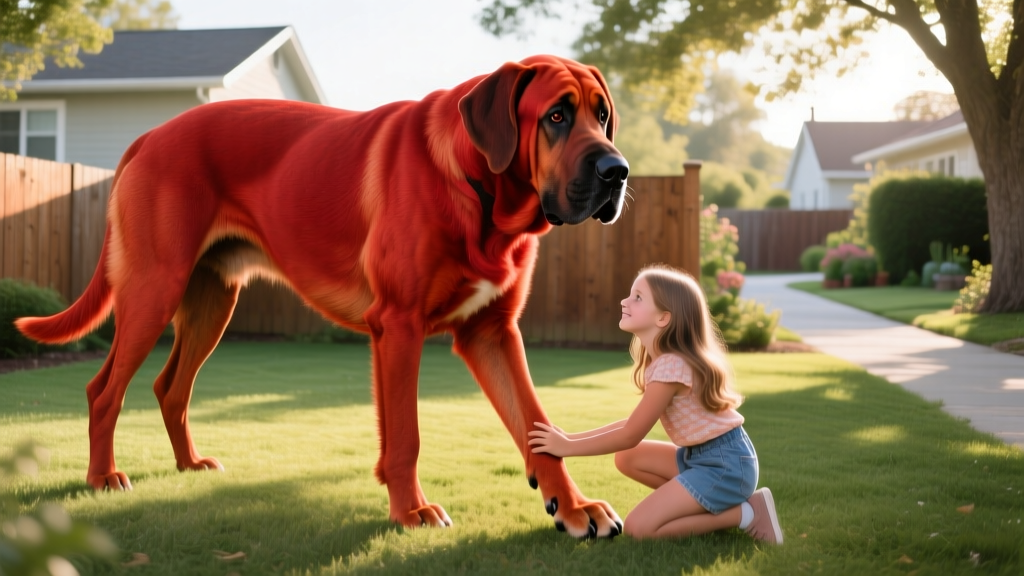
Could a Dog Like Clifford Actually Exist?
Short answer: No. Clifford the Big Red Dog — Emily Elizabeth's iconic 25-foot-tall crimson canine from Norman Bridwell's beloved book series — violates fundamental laws of biology, physics, and veterinary science. A dog of Clifford's depicted size (roughly 25 feet / 7.6 meters at the shoulder) would weigh an estimated 150,000–200,000 lb (68,000–90,000 kg), far exceeding the biological limits of any terrestrial mammal. However, the science behind why Clifford couldn't exist reveals fascinating truths about canine anatomy, giant breed genetics, and the evolutionary constraints that shape every dog from Chihuahuas to Great Danes.
The Biology of Size: Why Clifford the Big Red Dog Breaks Every Rule
When Emily Elizabeth wished for a big dog in the original 1963 story, she got something that defies the square-cube law — a principle of physics that governs all biological organisms. As an animal's linear dimensions increase, its volume (and therefore mass) increases by the cube of that factor.
A standard Vizsla — the breed most resembling Clifford's sleek red coat and build — stands about 22–24 inches (56–61 cm) at the shoulder and weighs 45–60 lb (20–27 kg). If you scaled a Vizsla up to Clifford's depicted height of approximately 25 feet (300 inches), you'd be multiplying linear dimensions by roughly 12.5x. The mass would increase by 12.5³, or about 1,953 times.
| Measurement | Real Vizsla | Scaled to Clifford (12.5x) | Biological Limit |
|---|---|---|---|
| Height at shoulder | 23 in / 58 cm | 287 in / 730 cm (≈24 ft) | Largest dog ever: 44 in / 112 cm (Zeus, Great Dane) |
| Body weight | 55 lb / 25 kg | ~107,000 lb / 48,600 kg | Largest dog ever: 343 lb / 156 kg (Zorba, Mastiff) |
| Bone cross-section needed | ~1.5 in² / 9.7 cm² | ~234 in² / 1,510 cm² | Bone compressive strength fails at ~18,000 psi |
| Daily caloric need | ~1,300 kcal | ~2.5 million kcal | Digestive tract cannot process this volume |
| Heart output required | ~2.5 L/min | ~4,800 L/min | No biological cardiac tissue can sustain this |
The heaviest dog ever recorded was Zorba, an English Mastiff who weighed 343 lb (156 kg) in 1989. The tallest was Zeus, a Great Dane who stood 44 inches (112 cm) at the shoulder. Even these extreme examples operated at the ragged edge of canine physiology — both suffered significant health complications, and Zeus passed away at just 5 years old.
The Square-Cube Law and Canine Anatomy
Biologist J.B.S. Haldane famously noted that "you can drop a mouse down a thousand-yard mine shaft; and, on arriving at the bottom, it gets a slight shock and walks away." A rat, by contrast, would be killed. A dog would shatter. This principle explains why Clifford's bones — even if proportionally scaled — would experience stresses roughly 12.5 times greater per unit area than a normal Vizsla's bones. Canine cortical bone has a compressive strength of approximately 150–200 MPa. Clifford's femurs would need to withstand forces far beyond this threshold with every step.
Evolutionary Context: How Dogs Got Big (and Why They Stopped)
The domestic dog (Canis lupus familiaris) descended from gray wolves averaging 70–145 lb (32–66 kg). Over 15,000–30,000 years of domestication, humans selectively bred dogs into an astonishing range of sizes — from the 4-lb (1.8 kg) Chihuahua to the 200+ lb (90+ kg) Mastiff. This represents the greatest size variation of any land mammal species.
Research published in the journal Genetics identified the IGF-1 (insulin-like growth factor 1) gene as the primary determinant of small body size in dogs. A single variant of this gene accounts for nearly all dogs under 33 lb (15 kg). For large and giant breeds, a more complex interplay of at least six major gene loci — including IGF-1R, GHR, and SMAD2 — governs skeletal growth patterns.
But evolution imposes hard ceilings. Wild canids never exceeded roughly 175 lb (80 kg) — the upper range of the largest gray wolf subspecies. The extinct dire wolf (Aenocyon dirus), one of the largest canids ever, topped out around 150–180 lb (68–82 kg). The metabolic, skeletal, and cardiovascular demands of a larger body simply become unsustainable for the canid body plan.
Key evolutionary constraints include:
- Cursorial locomotion: Canids are built for endurance running. Heavier bodies require exponentially more energy to move and generate devastating joint impact forces.
- Thermoregulation: Dogs cool primarily through panting and peripheral vasodilation. A Clifford-sized dog would generate enormous metabolic heat with insufficient surface area to dissipate it — fatal hyperthermia would occur rapidly.
- Cranial blood pressure: To pump blood 25 feet upward to the brain would require systolic pressures exceeding 600 mmHg — no mammalian blood vessel can sustain this without catastrophic rupture.
- Reproductive viability: Gestation in a 100,000-lb mammal would require a placenta and uterine environment beyond any known biological system.
Real Giant Breeds: The Closest Things to Clifford
While Emily Elizabeth's fictional companion remains impossible, several real breeds push the upper boundaries of canine size. Understanding these breeds helps explain what happens when dogs approach their biological limits.
| Breed | Height (shoulder) | Weight | Lifespan | Key Health Concerns |
|---|---|---|---|---|
| Great Dane | 28–32 in / 71–81 cm | 110–175 lb / 50–79 kg | 7–10 years | Gastric dilatation-volvulus (bloat), cardiomyopathy, osteosarcoma |
| English Mastiff | 27.5–30 in / 70–76 cm | 120–230 lb / 54–104 kg | 6–10 years | Hip dysplasia, joint disease, obesity-related complications |
| Saint Bernard | 26–30 in / 66–76 cm | 120–180 lb / 54–82 kg | 8–10 years | Elbow/hip dysplasia, bloat, dilated cardiomyopathy |
| Irish Wolfhound | 30–35 in / 76–89 cm | 105–180 lb / 48–82 kg | 6–8 years | Osteosarcoma, cardiomyopathy, bloat |
| Leonberger | 25.5–31.5 in / 65–80 cm | 90–170 lb / 41–77 kg | 7–9 years | Polyneuropathy, hip dysplasia, bloat, Addison's disease |
| Clifford (fictional) | ~300 in / 762 cm | ~107,000 lb / 48,500 kg | N/A | Everything. |
The data reveals a stark pattern: the larger the breed, the shorter the lifespan. Research from the American Veterinary Medical Association confirms that giant breeds age at an accelerated rate compared to smaller dogs. A 2013 study in the American Naturalist found that for every 4.4 lb (2 kg) increase in body mass, a dog's lifespan decreases by approximately one month. Great Danes, despite being among the tallest dogs, average just 7–10 years — roughly half the lifespan of a small terrier.
This "big dog penalty" stems from several physiological mechanisms:
- Accelerated cellular aging: Large breeds grow rapidly in their first 18 months, and this fast growth correlates with increased oxidative stress and telomere shortening.
- Cancer risk: More cells + faster cell division = higher probability of malignant mutations. Osteosarcoma affects Great Danes at rates 27x higher than small breeds.
- Cardiac strain: The heart must work proportionally harder to perfuse a massive body, leading to earlier onset of dilated cardiomyopathy.
- Joint degradation: Articular cartilage in giant breed joints bears forces of 2–3x body weight during normal walking. Over years, this causes early-onset osteoarthritis.
What If Clifford Were Real? The Physiological Breakdown
Let's indulge the fantasy and examine what Emily Elizabeth's daily life with a real Clifford would entail — the science paints a harrowing picture.
Nutrition Requirements
A 107,000-lb (48,500 kg) dog would require approximately 2.5 million kilocalories per day just for basic metabolic maintenance, based on the allometric scaling equation for resting energy requirement (RER = 70 × body weight in kg^0.75). That's roughly:
- 5,000 lb (2,268 kg) of standard dry kibble daily
- Approximately 1,250 thirty-pound bags of dog food per day
- An annual food cost exceeding $12–18 million at standard commercial kibble pricing
- Water intake of roughly 1,500–2,000 gallons (5,700–7,600 liters) daily
Waste Output
Canine fecal output averages 0.25–0.5 lb per 10 lb of body weight daily. Clifford would produce an estimated 2,675–5,350 lb (1,213–2,427 kg) of feces every single day. Emily Elizabeth would need a fleet of waste management vehicles, not a pooper-scooper.
Locomotion and Structural Integrity
At Clifford's scale, simply standing would be biomechanically impossible with standard canine bone geometry. The compressive force on each limb during standing would exceed 25,000 lb (11,340 kg). During a trot — where peak limb forces reach 2–2.5x body weight — each leg would experience forces over 50,000 lb (22,680 kg), far exceeding the yield strength of cortical bone.
Clifford Myths vs. Canine Science Facts
| Popular Belief | Scientific Reality |
|---|---|
| "Clifford is just a really big Vizsla" | No known Vizsla has exceeded 75 lb (34 kg). Clifford's depicted proportions would require entirely different skeletal architecture — more like an elephant's columnar limbs than a sighthound's gracile frame. |
| "Big dogs are always healthier and stronger" | Giant breeds have the shortest lifespans and highest rates of orthopedic disease, cardiac disease, and certain cancers among all domestic dogs. |
| "Dogs can grow to any size with enough food" | Growth is genetically programmed. Overfeeding causes obesity and orthopedic damage, not increased skeletal size. Growth plates close at breed-specific ages (12–24 months). |
| "Clifford's red coat is just a color" | The deep red coat depicted is consistent with pheomelanin pigmentation seen in breeds like the Vizsla, Rhodesian Ridgeback, and Irish Setter — controlled by the MC1R and ASIP genes at the E and A loci. |
| "A dog that big would be gentle" | Temperament isn't determined by size. However, at Clifford's scale, even playful behavior would generate forces capable of destroying buildings. A friendly tail wag at that mass would produce kinetic energy equivalent to a car collision. |
The Science of Why We Love Giant Dog Fantasies
The enduring appeal of Clifford the Big Red Dog — and Emily Elizabeth's unwavering devotion to her impossible companion — taps into well-documented psychological phenomena. Research in Anthrozoös, the journal of the International Society for Anthrozoology, shows that humans exhibit a strong "cute response" to dogs with neotenous (juvenile) features — large eyes, round faces, and proportionally oversized heads.
Clifford's design, particularly in his early illustrated appearances, features many of these supernormal stimuli. The fantasy of a dog that is enormous yet gentle, protective yet playful, satisfies what psychologists call the "tend-and-befriend" response — our evolved drive to nurture and bond with dependent creatures.
This also connects to the broader canine science of the human-dog bond. Studies using fMRI imaging have shown that when dog owners gaze at their pets, both species experience surges in oxytocin — the same bonding hormone involved in parent-infant attachment. Emily Elizabeth's fictional relationship with Clifford mirrors this real neurochemical loop, just at an absurdly scaled-up level.
Practical Takeaways: What Real Giant Breed Owners Should Know
If the Clifford fantasy has inspired you to consider a real giant breed, here are the evidence-based realities of living with dogs that push the upper limits of canine size:
Budget Realistically
- First-year costs: $3,500–$7,000 (including purchase/adoption, initial veterinary exams, spay/neuter, large-breed puppy food, oversized crate, and supplies)
- Annual ongoing costs: $2,500–$5,000 (food alone runs $1,200–$2,400/year for quality large-breed formulas)
- Emergency fund: Keep $3,000–$5,000 accessible. Giant breeds are at elevated risk for bloat (GDV), which requires emergency surgery costing $3,000–$7,000
- Pet insurance: Strongly recommended. Monthly premiums for giant breeds run $80–$150/month but can offset catastrophic costs
Nutrition for Giant Breeds
- Feed a diet specifically formulated for large/giant breed puppies (calcium:phosphorus ratio of 1.1:1 to 1.4:1, controlled calcium at ≤1.2% on a dry matter basis)
- Look for the AAFCO statement confirming "growth" or "all life stages" suitability for large-breed dogs (those expected to reach 70+ lb adult weight)
- Feed controlled portions to maintain a body condition score (BCS) of 4–5 out of 9. Overfeeding accelerates growth and increases orthopedic disease risk
- Consider a gastropexy (preventive stomach tacking surgery) at the time of spay/neuter to reduce GDV risk — typical cost: $300–$800 additional
Joint Health Management
- Begin joint supplementation (glucosamine HCl 500–1,000 mg + chondroitin sulfate 400–800 mg daily for a 100-lb dog) from 12 months of age
- Avoid high-impact exercise (jumping, hard running on pavement) until growth plates close — typically 18–24 months in giant breeds
- Provide orthopedic bedding; giant breeds are prone to calluses and hygromas from lying on hard surfaces
- Annual orthopedic evaluations from age 3 onward to catch early osteoarthritis
Lifespan Planning
The hardest reality of giant breed ownership is the compressed timeline. Plan for 7–10 years, not 12–15. Establish a relationship with your veterinarian early and discuss quality-of-life assessment tools like the HHHHHMM scale (Hurt, Hunger, Hydration, Hygiene, Happiness, Mobility, More good days than bad) to guide end-of-life decisions when the time comes.
When Giant Breed Size Signals a Problem
While we can't assess Clifford's veterinary chart, real giant breed owners should watch for these warning signs that may indicate health issues related to extreme size:
Red Flags Requiring Immediate Veterinary Attention
- Unproductive retching or dry heaving with a distended abdomen — classic signs of gastric dilatation-volvulus (bloat/GDV). This is a life-threatening emergency. Call your vet or emergency clinic immediately.
- Sudden hind limb weakness or collapse — may indicate spinal cord compression, fibrocartilaginous embolism, or degenerative myelopathy
- Rapid, unexplained weight loss exceeding 10% of body weight over 2–4 weeks — screen for osteosarcoma, cardiac disease, or metabolic disorders
- Exercise intolerance or coughing that develops suddenly — potential dilated cardiomyopathy, which affects giant breeds at disproportionately high rates
- Lameness lasting more than 48 hours in any single limb — giant breeds have elevated osteosarcoma risk, and persistent lameness warrants radiographic evaluation
For non-emergency concerns, regular wellness exams every 6 months (rather than annually) are recommended for giant breeds over age 5, given their accelerated aging trajectory. Ask your veterinarian about baseline cardiac echocardiograms at age 2–3 to establish normal values for comparison as your dog ages.
Frequently Asked Questions About Giant Dogs and Clifford Science
Why do dogs vary so much in size compared to other animals?
Dogs exhibit the greatest size variation of any land mammal due to intense artificial selection over thousands of years. The IGF-1 gene pathway, which regulates growth hormone signaling, has been selectively modified by humans to produce breeds ranging from 2 lb to over 250 lb. No other species has undergone such directed size manipulation. In wild animals, natural selection constrains size within relatively narrow ecological niches.
Can dogs be bred to be as large as horses?
No. The canine skeletal and cardiovascular architecture cannot support equine-scale body mass (900–2,200 lb / 400–1,000 kg). The largest dogs ever recorded topped out around 343 lb (156 kg), and even that extreme size came with severe health consequences. The canid body plan — built for cursorial (running-based) locomotion with digitigrade stance — simply cannot be scaled to horse proportions without fundamental structural redesign that evolution and selective breeding have not produced.
How do dogs process growth signals differently from humans?
Canine growth plates (physes) remain open for 12–24 months depending on breed size, compared to approximately 18–25 years in humans. Giant breeds grow faster and longer than small breeds, which is why they're more susceptible to developmental orthopedic diseases like hypertrophic osteodystrophy (HOD) and osteochondritis dissecans (OCD). Growth hormone in dogs is regulated by the same pituitary mechanisms as in humans, but breed-specific genetic variants in the GH/IGF-1 axis create dramatically different growth trajectories.
What does it mean when my giant breed dog seems "clumsy"?
Apparent clumsiness in giant breeds, especially adolescents aged 6–18 months, often reflects rapid skeletal growth outpacing neuromuscular coordination. The dog's brain is still calibrating motor commands to a body that changes dimensions weekly. However, persistent stumbling, knuckling (walking on the top of the paw), or dragging of hind feet warrants veterinary evaluation for neurological conditions including cervical spondylomyelopathy ("wobbler syndrome"), which is prevalent in Great Danes and other giant breeds.
Is it normal for giant breed dogs to sleep 14–18 hours a day?
Yes, this is within normal range. Giant breeds have lower metabolic rates per unit of body mass (following Kleiber's law, metabolic rate scales to the 0.75 power of body mass). Extended rest periods help conserve energy and reduce joint stress. However, a sudden increase in sleeping time combined with decreased appetite or reluctance to move should prompt a veterinary visit to rule out cardiac disease, hypothyroidism, or pain-related inactivity.
How is giant breed physiology different from small breed dogs?
Beyond the obvious size difference, giant breeds have proportionally smaller hearts relative to body mass, slower heart rates (60–80 bpm vs. 100–140 bpm in toy breeds), lower resting metabolic rates per kilogram, longer digestive transit times, and significantly accelerated cellular aging. Their bones, while absolutely larger, experience proportionally greater mechanical stress. These differences are why giant breeds require breed-specific nutrition, medication dosing adjustments, and tailored veterinary care protocols.
The Enduring Science Legacy of Emily Elizabeth's Impossible Dog
Clifford the Big Red Dog remains one of the most recognizable fictional animals in children's literature, and Emily Elizabeth's matter-of-fact acceptance of her 25-foot companion captures something true about the human-dog bond: we love our dogs unconditionally, regardless of their imperfections. From a scientific standpoint, Clifford serves as a remarkable teaching tool — his impossibility illuminates the very real constraints of biology, physics, and evolution that shape every living dog.
For those inspired by the Clifford fantasy to welcome a real giant breed into their lives, the rewards are substantial. Great Danes, Mastiffs, Wolfhounds, and their kin are among the most gentle, loyal, and emotionally attuned companions in the canine world. They simply ask that we understand their unique needs — and accept that their time with us, like Clifford's adventures, is finite and precious.
Sources Referenced
- Merck Veterinary Manual — Growth and Body Composition of Dogs
- Sutter, N.B. et al. "A Single IGF1 Allele Is a Major Determinant of Small Size in Dogs." Science, 2007
- Kraus, C. et al. "Within-Breed Body Size and Mortality in Dogs." The American Naturalist, 2013
- AVMA — Canine Nutrition and Giant Breed Management Guidelines
Anouk Beaumont
All our authors care for dogs every day — read more of their work on the authors page.


