Cerenia for Dogs Dosage: The Science Behind How It Stops Vomiting
Understand Cerenia for dogs dosage, the neuroscience of how maropitant blocks vomiting, and practical guidance for safe administration.
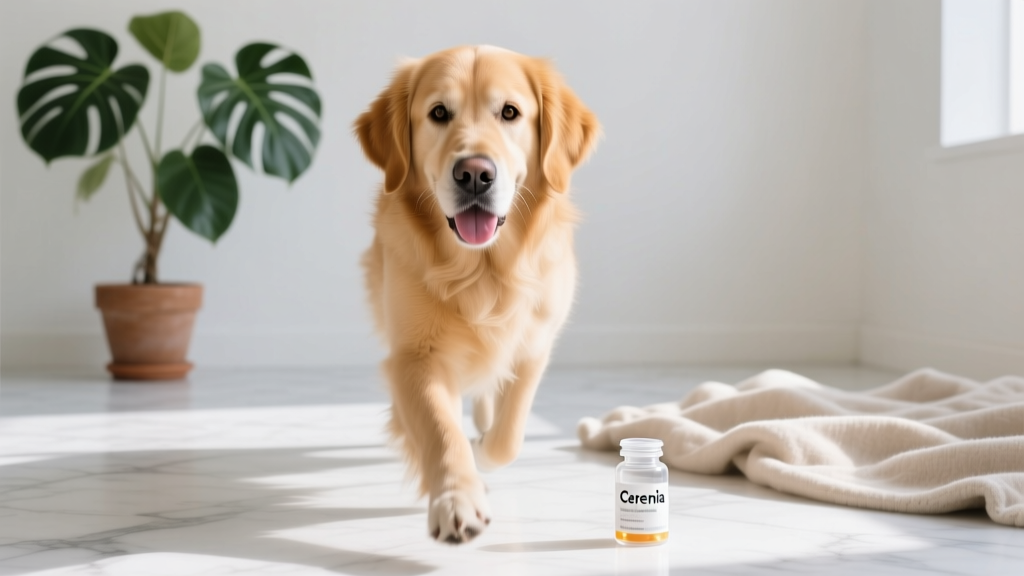
Direct Answer: Cerenia (Maropitant Citrate) Dosage for Dogs
Standard dosage for acute vomiting: 2 mg/kg (0.9 mg/lb) administered subcutaneously once daily for up to 5 days, or 8 mg/kg (3.6 mg/lb) orally once daily for up to 5 days.
Prevention of motion sickness: 8 mg/kg (3.6 mg/lb) orally, given at least 2 hours before travel, once daily for up to 2 days.
Available tablet strengths: 16 mg, 24 mg, 60 mg, and 160 mg — your veterinarian selects the correct tablet based on your dog's exact weight. Injectable formulation (10 mg/mL) is administered by veterinary staff only.
Always consult your veterinarian before administering Cerenia. Dosage must be tailored to your dog's health status, concurrent medications, and underlying cause of vomiting.
The Neuroscience of Vomiting: Why Dogs Need Antiemetics Like Cerenia
Vomiting is not a single reflex — it is a coordinated neurological event orchestrated by multiple brain regions. Understanding this mechanism is essential for grasping why Cerenia (the brand name for maropitant citrate) works where older anti-nausea medications sometimes fail.
How the Vomiting Reflex Works in Dogs
The canine brain contains a structure called the area postrema, located on the floor of the fourth ventricle. Unlike most brain regions, the area postrema sits outside the blood-brain barrier, making it a chemoreceptor trigger zone (CTZ) — essentially a chemical surveillance post that samples blood and cerebrospinal fluid for toxins.
When the CTZ detects harmful substances, inflammatory mediators, or metabolic imbalances, it activates the emetic center (located in the medulla oblongata). This center then coordinates the physical act of vomiting through a cascade involving:
- Contraction of abdominal muscles and diaphragm
- Relaxation of the lower esophageal sphincter
- Reverse peristalsis moving stomach contents upward
- Simultaneous closure of the glottis to prevent aspiration
A neurotransmitter called substance P binds to neurokinin-1 (NK-1) receptors throughout this pathway. This binding is one of the primary chemical signals that triggers and sustains the vomiting reflex. According to the Merck Veterinary Manual, substance P acts as the final common mediator across multiple vomiting pathways — whether the trigger is gastrointestinal, vestibular, or central.
This is where Cerenia's mechanism becomes significant. Maropitant citrate is a neurokinin-1 (NK-1) receptor antagonist. It works by binding to NK-1 receptors and physically blocking substance P from activating them. Because substance P operates at multiple points in the vomiting cascade — both in the CTZ and in the emetic center itself — blocking it provides broad-spectrum antiemetic coverage. This is fundamentally different from older antiemetics like metoclopramide (which primarily blocks dopamine receptors) or ondansetron (which targets serotonin 5-HT3 receptors).
The Evolutionary Basis: Why Dogs Vomit So Readily
From Wolf Ancestors to Modern Dogs
The vomiting reflex in canids is an evolutionary adaptation with deep roots. Wolves and wild canids are scavenger-predators — they consume prey rapidly, often including decomposing tissue, bones, and plant material that may contain toxins. The ability to quickly expel harmful stomach contents provided a critical survival advantage.
Wolves also practice regurgitation feeding — adults regurgitate partially digested food for pups too young to hunt. This behavior required a highly responsive emetic system that could be voluntarily triggered. Over thousands of years of domestication, dogs retained this sensitive vomiting reflex even as their diets became more controlled.
Modern dogs actually have a lower vomiting threshold than wolves in some respects. Selective breeding for neophilia (willingness to eat novel foods) and the abundance of environmental toxins in human habitats means dogs frequently ingest substances their ancestors never encountered — from chocolate to xylitol to household chemicals. The vomiting reflex that once protected wolves from spoiled carrion now activates in response to a much wider array of triggers.
This evolutionary context matters clinically. Because dogs are physiologically "designed" to vomit readily, veterinarians see vomiting as one of the most common presenting complaints. The challenge is distinguishing between protective vomiting (the body doing its job by expelling something harmful) and pathological vomiting (a symptom of disease that requires intervention). Cerenia is used in the latter scenario — when vomiting has become excessive, is causing dehydration, or is preventing oral medication or nutrition.
Cerenia Dosage by Weight: Detailed Administration Guide
Cerenia tablets come in four strengths, and your veterinarian will prescribe the specific tablet size that matches your dog's weight range. The oral dose for both acute vomiting and motion sickness prevention is 8 mg/kg (3.6 mg/lb). Below is the manufacturer's recommended tablet selection chart:
| Dog Weight | Weight (kg) | Tablet Strength | Number of Tablets | Approximate Dose |
|---|---|---|---|---|
| 4.5–10 lb | 2.0–4.5 kg | 16 mg | 1 tablet | 16 mg |
| 10.1–20 lb | 4.6–9.1 kg | 24 mg | 1 tablet | 24 mg |
| 20.1–40 lb | 9.2–18.1 kg | 60 mg | 1 tablet | 60 mg |
| 40.1–90 lb | 18.2–40.8 kg | 160 mg | 1 tablet | 160 mg |
| 90.1–150 lb | 40.9–68.0 kg | 160 mg | 2 tablets | 320 mg |
Important administration notes:
- Do NOT give with high-fat food. A high-fat meal can delay Cerenia absorption by up to 2 hours and reduce its effectiveness. The FDA-approved label specifies that tablets should be given with a light meal or on an empty stomach.
- Motion sickness timing: Administer at least 2 hours before travel. Giving Cerenia immediately before a car ride will not provide adequate anti-nausea coverage.
- Tablets should not be broken or crushed. Cerenia tablets are not scored for splitting, and the bitter taste of maropitant can cause foaming or gagging if the tablet is broken in the mouth.
- Injectable Cerenia (10 mg/mL solution) is dosed at 1 mg/kg (0.45 mg/lb) subcutaneously and is administered by veterinary staff in clinic settings.
Practical Implications: What Cerenia Means for Daily Life
Real-World Scenarios Where Cerenia Is Used
1. Acute gastroenteritis: Your dog ate something inappropriate and has been vomiting for 12+ hours. Your vet may administer injectable Cerenia at the clinic, then send you home with oral tablets for 3–5 days while the GI tract heals. Typical cost: $45–$85 for a 5-day course of oral tablets, depending on dog size.
2. Motion sickness prevention: Dogs that vomit during car rides can receive Cerenia 2 hours before travel. A 2018 study published in the Journal of Veterinary Internal Medicine found that maropitant reduced vomiting incidence in motion-sick dogs by approximately 90% compared to placebo. Cost per dose for a 50-lb dog: roughly $12–$18 per 160 mg tablet.
3. Post-operative nausea: After surgery, dogs commonly experience nausea from anesthesia and opioid pain medications. Cerenia is often included in post-surgical protocols alongside other supportive care.
4. Parvovirus supportive care: In parvovirus treatment, controlling vomiting is essential so the dog can keep down oral rehydration solutions and medications. Cerenia is a standard component of parvo protocols in most veterinary hospitals.
5. Kidney disease management: Dogs with chronic kidney disease (CKD) often experience uremic nausea. Cerenia can improve appetite and quality of life in these patients, though your vet will monitor kidney values closely.
Common Misconceptions About Cerenia Debunked
| Myth | Fact |
|---|---|
| "Cerenia cures the underlying cause of vomiting." | Cerenia is a symptom management drug. It blocks the vomiting signal but does not treat infections, obstructions, toxins, or organ disease. The underlying cause must be diagnosed and treated separately. |
| "I can use human anti-nausea medication instead." | Human antiemetics like dimenhydrinate (Dramamine) work on histamine pathways and are far less effective for canine vomiting. Some human medications are toxic to dogs. Never substitute without veterinary guidance. |
| "Cerenia is safe for puppies of any age." | The FDA-approved label states Cerenia tablets are approved for dogs 16 weeks of age and older for acute vomiting, and 16 weeks and older for motion sickness. The injectable form is approved for dogs 8 weeks and older. Using it in younger puppies is an extra-label decision your vet must make. |
| "If one tablet works, two will work better." | Overdosing Cerenia does not improve efficacy and increases the risk of side effects including lethargy, decreased appetite, and diarrhea. Always follow your vet's prescribed dose exactly. |
| "Cerenia can be given long-term indefinitely." | The approved duration is up to 5 days for acute vomiting and up to 2 days for motion sickness. Extended use requires veterinary monitoring, as chronic NK-1 receptor blockade may have effects that are not fully characterized. |
Side Effects, Contraindications, and When to Call Your Vet
According to FDA veterinary drug records, Cerenia is generally well-tolerated, but no medication is without risk. The most commonly reported side effects in clinical trials include:
- Decreased appetite (reported in approximately 9% of dogs)
- Lethargy/drowsiness (approximately 8%)
- Diarrhea (approximately 6%)
- Excessive salivation (particularly if the tablet is bitten or broken in the mouth — approximately 5%)
- Vomiting (ironically, reported in approximately 4% — usually when the underlying condition worsens rather than a drug side effect)
Contraindications — when Cerenia should NOT be used:
- Dogs with known hypersensitivity to maropitant citrate
- Dogs with suspected gastrointestinal obstruction (stopping vomiting without addressing a blockage can delay life-saving surgery)
- Dogs with gastrointestinal perforation
- Puppies under 16 weeks for oral tablets (injectable approved from 8 weeks)
- Use with caution in dogs with hepatic dysfunction — maropitant is metabolized primarily by the liver via CYP3A4 enzymes
When to Seek Immediate Veterinary Care
Contact your veterinarian or emergency clinic immediately if your dog experiences any of the following, even if currently taking Cerenia:
- Vomiting blood (hematemesis) or material that looks like coffee grounds
- Repeated vomiting more than 3 times in 24 hours despite Cerenia
- Abdominal distension or obvious pain (possible GDV/bloat — a life-threatening emergency)
- Lethargy progressing to unresponsiveness or collapse
- Pale or white gums (indicating shock or internal bleeding)
- Known or suspected toxin ingestion — call ASPCA Animal Poison Control at (888) 426-4435 (24/7, consultation fee applies)
Breed Considerations and How Dogs Differ From Humans
While Cerenia's mechanism of action is consistent across all dog breeds, certain breeds warrant additional consideration:
- Brachycephalic breeds (French Bulldogs, Pugs, English Bulldogs): These dogs are prone to vomiting due to brachycephalic obstructive airway syndrome (BOAS) and associated aerophagia (swallowing air). Repeated vomiting in brachycephalic dogs carries higher aspiration pneumonia risk due to their compromised airway anatomy. Cerenia may be used, but the underlying airway issues need concurrent management.
- Giant breeds (Great Danes, Irish Wolfhounds, Saint Bernards): These breeds are at elevated risk for gastric dilatation-volvulus (GDV/bloat). If a giant breed is vomiting and showing abdominal distension, Cerenia should NOT be given at home — this is an emergency requiring immediate veterinary evaluation.
- Herding breeds (Collies, Australian Shepherds, Shelties): Dogs with the MDR1 gene mutation have altered drug transport across the blood-brain barrier. While maropitant is not a primary MDR1-concern drug (unlike ivermectin), your vet may still want to know your dog's MDR1 status for comprehensive medication planning.
- Toy and small breeds (Chihuahuas, Yorkshire Terriers): These dogs dehydrate more rapidly when vomiting and may require lower-dose tablet formulations or the injectable route for more precise dosing.
How does canine vomiting physiology differ from humans? Humans have a less sensitive CTZ relative to body size, and our vomiting reflex is less readily triggered by dietary indiscretion. Dogs also lack the ability to voluntarily suppress nausea the way humans can — when the emetic center activates, vomiting follows. Additionally, dogs cannot communicate nausea verbally, so owners must watch for behavioral signs: lip licking, swallowing repeatedly, drooling, restlessness, and seeking cool surfaces to lie on.
Frequently Asked Questions
Can dogs take Cerenia with other medications?
Cerenia can interact with certain drugs. Because maropitant is metabolized by the CYP3A4 liver enzyme, medications that inhibit or induce this pathway (such as ketoconazole, itraconazole, or phenobarbital) may alter Cerenia's effectiveness or increase side effects. Always provide your veterinarian with a complete list of your dog's current medications, supplements, and flea/tick preventives before starting Cerenia.
What does it mean when my dog vomits but Cerenia doesn't stop it?
If vomiting persists despite proper Cerenia dosing, this is a significant clinical red flag. It may indicate a gastrointestinal obstruction, severe pancreatitis, toxin exposure, or another condition that requires diagnostic imaging (X-rays, ultrasound) and potentially surgical intervention. Persistent vomiting despite antiemetic therapy is one of the clearest signals that advanced diagnostics are needed.
Is vomiting normal in dogs?
Occasional vomiting (1–2 episodes, then resolution) can be normal — dogs may vomit after eating too quickly, consuming grass, or mild dietary indiscretion. However, vomiting that occurs more than twice in 24 hours, contains blood, is accompanied by lethargy, or persists beyond 24 hours is NOT normal and warrants veterinary evaluation.
How is Cerenia different from other anti-nausea drugs for dogs?
Cerenia (maropitant) blocks NK-1 receptors and substance P, targeting the central vomiting pathway. Ondansetron (Zofran) blocks serotonin 5-HT3 receptors and works primarily on peripheral GI triggers. Metoclopramide (Reglan) blocks dopamine receptors and also promotes gastric motility. Your veterinarian may use these drugs in combination for refractory cases, as they target different points in the vomiting cascade. According to the American Veterinary Medical Association, multi-modal antiemetic therapy is increasingly used in complex cases like parvovirus.
Can I buy Cerenia over the counter?
No. Cerenia is a prescription-only medication in the United States. It requires a valid veterinarian-client-patient relationship (VCPR) and a prescription. You can fill the prescription at your vet's office, through a licensed veterinary pharmacy, or via verified online pharmacies that require a prescription. Expect to pay $8–$18 per tablet depending on strength, or $45–$85 for a typical 5-day course.
References
- Merck Veterinary Manual — Antiemetics in Small Animals: merckvetmanual.com
- FDA Freedom of Information Summary — Cerenia (maropitant citrate): fda.gov/animal-veterinary
- American Veterinary Medical Association — Medication Safety: avma.org
Marcus Aldridge
All our authors care for dogs every day — read more of their work on the authors page.


