Brachycephalic Airway Anatomy
Why does your carlino dog snore so loudly? Explore the science behind brachycephalic airway syndrome, BOAS symptoms, and practical breathing management tips.
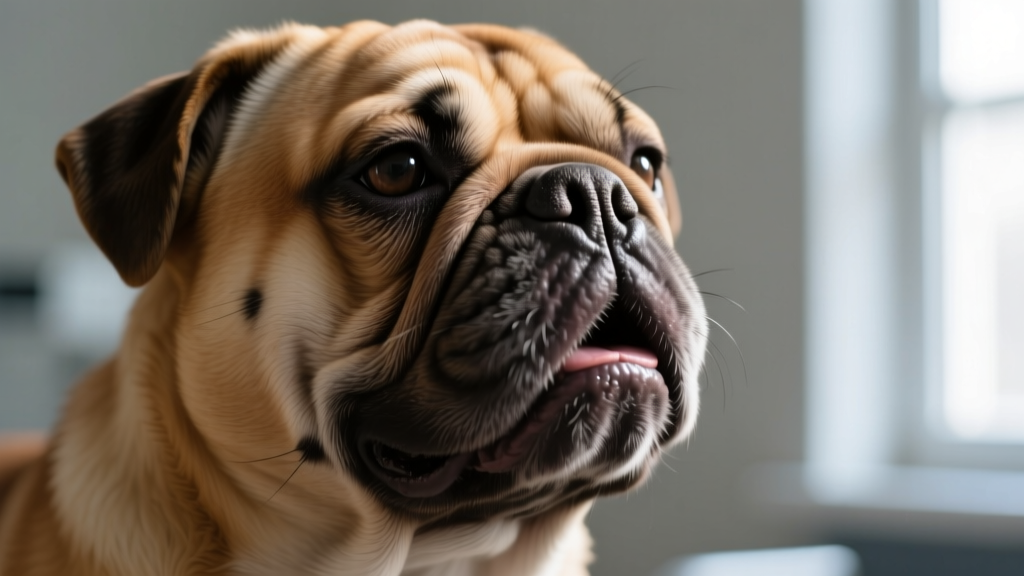
Quick Answer: Your carlino dog (Pug) snores and breathes noisily because its skull has been selectively bred to be dramatically shortened — a condition called brachycephaly. This compresses the same amount of soft tissue (tongue, soft palate, nasal turbinates) into a much smaller skeletal frame, partially obstructing the upper airway. The result is increased airway resistance, turbulent airflow, and the characteristic snoring, snorting, and wheezing owners hear daily. While some noise is "normal" for the breed, severe signs like exercise intolerance, cyanosis (blue gums), or fainting indicate Brachycephalic Obstructive Airway Syndrome (BOAS) and require veterinary evaluation.
Why Does the Carlino Dog Have Such a Flat Face?
The carlino dog — known in English-speaking countries as the Pug — carries one of the most extreme examples of brachycephalic skull conformation in the domestic dog. To understand why, we need to look at both evolutionary history and selective breeding pressure.
Evolutionary Context: From Wolf Skull to Carlino Skull
The ancestral gray wolf (Canis lupus) possesses a dolichocephalic (long-skulled) head shape optimized for bite force, heat exchange, and efficient nasal breathing during sustained pursuit. The nasal cavity is long, lined with complex turbinate bones that warm, humidify, and filter air before it reaches the lungs. Over roughly 15,000–30,000 years of domestication, and especially during the last 200–300 years of intensive breed formation, humans selected for paedomorphic (juvenile-retaining) facial features in companion breeds. The carlino dog's flattened face is essentially a neotenous trait — a puppy-like proportion frozen into adulthood through selection on genes like BMP3 and SMOC2, which regulate craniofacial development.
Genetic research published in NIH-funded studies has identified that brachycephaly in dogs is associated with variants in the SMOC2 gene (spastic paraplegia and psychomotor retardation-associated protein). Dogs homozygous for the brachycephalic variant show dramatically shortened maxillary bones, but their soft tissue volume does not shrink proportionally. This mismatch is the root cause of nearly every breathing issue the carlino dog faces.
The Physiological Mechanism: What Happens Inside a Carlino Dog's Airway
Understanding BOAS requires a tour through the upper airway structures that are affected. Here is what happens anatomically:
Airway Structures Affected in Brachycephalic Dogs
| Structure | Normal Function | In Carlino Dogs | Result |
|---|---|---|---|
| Nasal passages | Warm, filter, humidify air | Severely shortened; stenotic (narrow) nares | Increased inspiratory resistance; mouth-breathing |
| Soft palate | Separates nasal and oral cavities during swallowing | Elongated relative to shortened skull; extends into the pharynx | Partially blocks the laryngeal opening; snoring, gagging |
| Turbinate bones | Create surface area for air conditioning | Compressed and abnormally thickened; may extend into the nasopharynx | Obstructed airflow even through open nostrils |
| Larynx | Gateway to trachea; protects airway during swallowing | Everted laryngeal saccules (small sacs pulled outward by chronic negative pressure) | Further airway narrowing; progressive worsening over time |
| Trachea | Conducts air to lungs | Often hypoplastic (underdeveloped, narrower diameter) in brachycephalic breeds | Reduced total airway capacity; exercise intolerance |
Source: Adapted from the Merck Veterinary Manual — Brachycephalic Airway Syndrome in Dogs.
The physics at play is straightforward: Poiseuille's Law states that airway resistance is inversely proportional to the fourth power of the radius. Even a small reduction in airway diameter causes a massive increase in the effort required to breathe. When a carlino dog inhales through narrowed nostrils and past an elongated soft palate, the negative pressure generated inside the pharynx can pull the laryngeal saccules outward and, in severe cases, cause the laryngeal cartilages to collapse inward over time. This is why BOAS is progressive — a puppy who only snores mildly may develop serious obstruction by age 3–5 if untreated.
How Do Dogs With Brachycephaly Process Oxygen Differently?
In a mesocephalic or dolichocephalic dog (think Labrador Retriever or Greyhound), breathing is largely effortless at rest. The long nasal passages condition the air, the open pharynx allows laminar (smooth) airflow, and oxygen saturation stays near 97–100% on room air. The dog can pant efficiently to dissipate heat because air moves rapidly over the moist surfaces of the tongue and upper airway.
In the carlino dog, every one of these processes is compromised:
- Resting oxygen saturation may dip to 90–95% in affected individuals, particularly during sleep or in warm environments. While not immediately dangerous, chronic mild hypoxemia places stress on the heart and can contribute to cor pulmonale (right-sided heart enlargement) over years.
- Thermoregulation is severely impaired. Dogs do not sweat through their skin — they rely on panting to evaporate moisture from the respiratory tract. A carlino dog with stenotic nares and an elongated soft palate cannot move enough air to cool efficiently, making the breed highly susceptible to heatstroke at temperatures that a longer-nosed dog would tolerate easily.
- Sleep quality is disrupted. Research from the University of Cambridge and the Royal Veterinary College has documented that brachycephalic dogs experience sleep-disordered breathing analogous to human obstructive sleep apnea, with frequent arousals and fragmented REM cycles.
Practical Implications: What Carlino Dog Owners Must Know
Daily Management Framework
If you share your life with a carlino dog, these evidence-based practices can meaningfully improve your dog's respiratory comfort and long-term prognosis:
1. Maintain a lean body condition. Excess adipose tissue around the neck and pharynx worsens airway obstruction. Target a Body Condition Score (BCS) of 4–5 on the 9-point Purina scale. For an adult carlino dog (typical weight 14–18 lb / 6.4–8.2 kg), even 1–2 extra pounds can noticeably worsen breathing. Work with your veterinarian to determine exact caloric needs — generally 300–400 kcal/day for a moderately active adult, but this varies.
2. Use a harness, never a neck collar, for walks. Any pressure on the trachea further narrows an already compromised airway. A front-clip or dual-clip harness (e.g., Ruffwear Front Range, ~$40–$45; or 2 Hounds Design Freedom Harness, ~$35–$40) distributes force across the chest.
3. Control ambient temperature rigorously. Keep indoor temperature at or below 72°F (22°C). Avoid outdoor exercise when the heat index exceeds 75°F (24°C). In summer, walk during early morning or evening hours. Always carry water and offer it every 10–15 minutes during activity.
4. Limit sustained exertion. Short, sniff-rich walks of 15–20 minutes, two to three times daily, are generally appropriate for a healthy adult carlino dog. Avoid sustained running, fetch marathons, or activities that trigger continuous panting. Watch for early fatigue signals: increased noise, sitting or lying down mid-walk, or a purple-tinged tongue.
5. Elevate food and water bowls. Raising bowls 4–6 inches off the floor can reduce the angle at which the neck flexes during eating and drinking, slightly decreasing regurgitation risk. The carlino dog is predisposed to gastroesophageal reflux due to increased negative intrathoracic pressure from labored breathing.
6. Discuss surgical options with your veterinarian. Corrective surgeries — widening the nostrils (rhinoplasty), shortening the soft palate (staphylectomy), and removing everted saccules — are most effective when performed early, ideally between 6–18 months of age. Studies from the AVMA-accredited veterinary teaching hospitals show that early surgical intervention can improve exercise tolerance by 60–80% and significantly reduce progression to laryngeal collapse. Costs typically range from $1,500–$4,000 depending on the number of procedures and geographic location.
Myths vs. Facts About Carlino Dog Breathing
| Myth | Fact |
|---|---|
| "Snoring means my carlino is sleeping deeply and comfortably." | Loud snoring indicates turbulent airflow through a partially obstructed airway — the same physics as a kinked garden hose. It signals resistance, not relaxation. |
| "All Pugs snore; it's just what they do." | While mild noise is common, severe snoring, choking episodes, or exercise intolerance are signs of BOAS that benefit from veterinary intervention. Not every brachycephalic dog has severe obstruction — grading systems (like the Cambridge BOAS grading scheme) can determine your dog's specific risk level. |
| "My carlino dog doesn't like exercise, so he's just lazy." | Reluctance to exercise is often a protective response to air hunger (dyspnea), not a personality trait. Dogs with corrected airways frequently show dramatically increased activity levels post-surgery. |
| "Breeding two carlino dogs with longer noses will fix the problem in one generation." | Skull conformation is polygenic. While selecting for longer muzzles over multiple generations can improve airway anatomy, one generation of outcrossing to a mesocephalic breed does not guarantee resolution of all soft-tissue abnormalities. |
| "A little Benadryl will help my Pug breathe easier." | Antihistamines do not address the anatomical causes of BOAS. Never give your dog any medication without consulting your veterinarian — some OTC antihistamines contain decongestants (like pseudoephedrine) that are toxic to dogs. |
Breed Variations: How the Carlino Dog Compares to Other Brachycephalic Breeds
The carlino dog is not alone in its airway challenges. Brachycephaly exists on a spectrum, and different breeds show different patterns of obstruction:
| Breed | Skull Index (approx.) | Primary Airway Concern | BOAS Prevalence (estimated) |
|---|---|---|---|
| Carlino dog (Pug) | Very low (extreme brachycephalic) | Stenotic nares + elongated soft palate + aberrant turbinates | ~50–65% of breed population shows some BOAS signs |
| French Bulldog | Very low | Severe stenotic nares + hypoplastic trachea + GI reflux | ~55–70% |
| English Bulldog | Low | Massive soft tissue redundancy + severe skin folds + tracheal hypoplasia | ~60–75% |
| Boston Terrier | Low-moderate | Stenotic nares (variable) + elongated soft palate | ~30–45% |
| Shih Tzu | Moderate | Milder stenosis; often less severe BOAS | ~20–35% |
| Cavalier King Charles Spaniel | Moderate | Chiari-like malformation / syringomyelia more prominent than BOAS | ~15–25% for airway signs |
Prevalence estimates compiled from peer-reviewed studies including research published in PLOS Genetics and the Veterinary Journal. Individual variation is significant — always have your dog assessed individually.
When Breathing Behavior Signals a Medical Emergency
🚨 Seek Emergency Veterinary Care Immediately If Your Carlino Dog Shows:
- Cyanosis: Gums or tongue turning blue, purple, or gray (indicates critically low blood oxygen)
- Syncope: Fainting or collapsing episodes, especially after activity or excitement
- Stridor at rest: High-pitched wheezing sound while breathing when calm and stationary
- Severe exercise intolerance: Inability to walk more than a few minutes without sitting down or lying down
- Exaggerated abdominal breathing: Visible "pumping" of the abdomen with each breath, indicating the diaphragm is working overtime
- Heat distress: Excessive panting that does not resolve within 5 minutes of rest in a cool area, vomiting, or glazed eyes in warm conditions
ASPCA Animal Poison Control: (888) 426-4435 — available 24/7 (consultation fee applies) if you suspect your dog has ingested a toxic substance that may be compounding respiratory distress.
Always consult your veterinarian for any breathing changes. BOAS is manageable, but early intervention dramatically improves outcomes.
Canine Science Cross-Reference: Related Sensory and Behavioral Traits
The carlino dog's altered skull anatomy affects more than just breathing. Understanding these interconnected systems helps owners provide comprehensive care:
- Olfactory capacity: The compressed nasal cavity reduces the surface area of the olfactory epithelium. While a Bloodhound has approximately 300 million olfactory receptors, brachycephalic breeds have significantly fewer functional receptor sites due to reduced turbinate surface area. This means your carlino dog has a less acute sense of smell than a dolichocephalic breed — an important consideration if you're thinking about scent-work activities.
- Ocular exposure: The shallow orbits (eye sockets) characteristic of brachycephaly leave the corneas more exposed. This predisposes carlino dogs to corneal ulcers, dry eye (keratoconjunctivitis sicca), and proptosis (eye displacement from trauma). Annual veterinary ophthalmologic exams are strongly recommended.
- Dental crowding: The same number of teeth (42 in an adult dog) must fit into a dramatically shortened jaw. The result is rotated, overlapping, and impacted teeth that trap food and accelerate periodontal disease. Daily tooth brushing with a veterinary-formulated enzymatic toothpaste and professional cleanings every 12–18 months are essential.
- Skin fold dermatitis: The deep facial wrinkles of the carlino dog create warm, moist environments ideal for bacterial and yeast overgrowth. Clean folds daily with a soft cloth or veterinary-recommended wipe (e.g., Chlorhexidine-based wipes, ~$8–$12 for a 30-count pack) and dry thoroughly.
Frequently Asked Questions
Why does my carlino dog snore so loudly?
Snoring results from vibration of the elongated soft palate and redundant pharyngeal tissue as air is pulled through a narrowed upper airway. The shorter the skull, the more tissue is compressed into a small space, and the louder the turbulence. If your dog's snoring is accompanied by choking, gasping, or pauses in breathing during sleep, consult your veterinarian — these are signs of significant obstruction.
Can my carlino dog exercise safely?
Yes, but exercise must be managed carefully. Aim for 30–45 minutes of total daily activity, broken into short sessions of 15–20 minutes. Walk during cool parts of the day, use a harness, and stop immediately if your dog shows excessive panting, a blue-tinged tongue, or reluctance to continue. Swimming can be dangerous for brachycephalic breeds due to their front-heavy body conformation and compromised breathing — if you introduce water activities, use a properly fitted canine life jacket (e.g., Ruffwear Float Coat, ~$90–$95) and supervise continuously.
How do dogs with flat faces cool themselves compared to longer-nosed dogs?
All dogs cool primarily through panting — evaporative heat loss from the tongue, oral mucosa, and upper airway surfaces. Dolichocephalic and mesocephalic dogs can move large volumes of air rapidly, making panting highly efficient. In the carlino dog, the obstructed airway limits airflow volume, making evaporative cooling far less effective. This is why brachycephalic dogs overheat much faster and why ambient temperature control is a non-negotiable part of responsible ownership.
What does it mean when my carlino dog reverse-sneezes?
Reverse sneezing (paroxysmal respiration) is a rapid, forceful inhalation through the nose that produces a honking or snorting sound, often lasting 10–30 seconds. It's triggered by irritation of the nasopharynx and is more common in brachycephalic breeds due to the elongated soft palate and compressed nasal anatomy. While usually benign, frequent episodes (multiple times daily) warrant a veterinary exam to rule out nasopharyngeal turbinates, allergies, or foreign bodies.
Is it normal for my carlino dog to sleep 14+ hours a day?
Adult dogs typically sleep 12–14 hours per day, so this can fall within a normal range. However, if your carlino dog sleeps excessively, seems lethargic when awake, or shows poor exercise tolerance during waking hours, the "long sleep" may actually reflect poor sleep quality due to sleep-disordered breathing. Dogs with BOAS often experience frequent micro-arousals during sleep, meaning their total restorative sleep is lower than the hours suggest.
How is brachycephalic breathing in dogs different from human sleep apnea?
The underlying physics are similar — both involve soft tissue obstruction of the upper airway during sleep. However, humans with obstructive sleep apnea (OSA) typically have normal anatomy compounded by obesity or aging, while the carlino dog's obstruction is structural and congenital — present from birth due to skeletal malformation. Additionally, humans can use CPAP machines to maintain airway pressure; this is impractical for most dogs, making surgical correction and weight management the primary interventions in veterinary medicine. The condition in dogs is more accurately compared to pediatric craniofacial syndromes than to typical adult OSA.
References
- Merck Veterinary Manual — Brachycephalic Airway Syndrome in Dogs
- American Kennel Club — Brachycephalic Dog Breeds: What Owners Need to Know
- Packer, R.M.A., et al. (2015). "Impact of Facial Conformation on Canine Health: Brachycephalic Obstructive Airway Syndrome." PLOS ONE.
- Njikam, N., et al. (2009). "Brachycephalic Airway Syndrome." Veterinary Clinics of North America: Small Animal Practice.
Aaron Whyte
All our authors care for dogs every day — read more of their work on the authors page.


