Measuring Hypertension in Dogs
How canine blood pressure monitors work, the science behind canine hypertension detection, and what every dog owner should know about blood pressure screening.
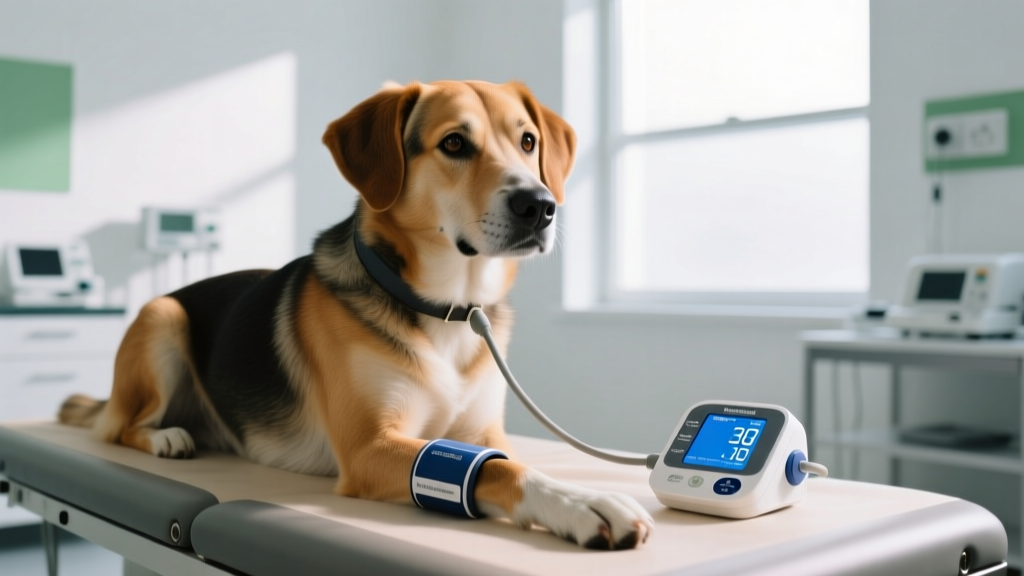
Can You Use a Canine Blood Pressure Monitor at Home?
Yes, canine blood pressure monitors exist and are increasingly available for both veterinary and home use, but they function differently from human devices. Dogs require species-specific cuff sizing (measured at 40% of the limb or tail circumference), and readings must be interpreted against canine-specific reference ranges — typically 110-160 mmHg systolic for a calm, resting dog. While veterinary-grade oscillometric monitors like the Cardell Touch or Surgo Vet HDO remain the clinical standard, pet-owner devices such as the VetCheck Canine BP Monitor ($180-$320) have entered the consumer market. However, white-coat hypertension (stress-induced spikes) affects up to 30% of clinical readings, making proper technique — and knowing when to consult your veterinarian — essential for meaningful results.
The Physiology of Blood Pressure in Dogs
Blood pressure in dogs operates through the same fundamental cardiovascular mechanics as in humans — the heart generates systolic pressure during contraction and diastolic pressure during relaxation — but the regulatory systems and normal ranges diverge in important ways. A dog's resting heart rate ranges from 60-140 beats per minute depending on size, compared to 60-100 bpm in humans, and their vascular system is optimized for burst-sprint physiology rather than sustained endurance.
How Canine Blood Pressure Is Generated and Regulated
The canine cardiovascular system maintains arterial pressure through three primary mechanisms:
- Cardiac output: The volume of blood pumped per minute, driven by heart rate and stroke volume. A 30 kg (66 lb) dog typically maintains a cardiac output of approximately 2.5-3.5 liters per minute at rest.
- Systemic vascular resistance: The degree of constriction in arterioles throughout the body, regulated by the sympathetic nervous system and hormones like angiotensin II and vasopressin.
- Blood volume: Total circulating fluid, managed by the kidneys through the renin-angiotensin-aldosterone system (RAAS). Dogs have a blood volume of roughly 80-90 mL per kg of body weight.
When any of these three systems shifts — due to disease, pain, stress, or medication — blood pressure changes accordingly. This is why a canine blood pressure monitor doesn't just measure heart function; it captures a snapshot of the entire neuroendocrine-cardiovascular axis.
Evolutionary Context: Why Dogs Process Blood Pressure Differently
From Wolf to Companion: Cardiovascular Adaptations
Ancestral wolves evolved as persistence-and-sprint predators, requiring a cardiovascular system that could rapidly shift from a low resting state to extreme output during prey pursuit. This created several evolutionary adaptations that persist in modern dogs:
- High vagal tone at rest: Wolves and dogs maintain a pronounced parasympathetic (rest-and-digest) baseline, resulting in relatively low resting heart rates for their body size — a trait called respiratory sinus arrhythmia, which is normal and healthy in dogs but would signal pathology in humans.
- Rapid sympathetic activation: The fight-or-flight response triggers faster and more dramatically in dogs, meaning stress can spike blood pressure readings by 30-50 mmHg within seconds — a major challenge for accurate measurement.
- Size-dependent hemodynamics: Through domestication, dogs developed the widest body-size range of any mammal (a Chihuahua at 2 kg to a Great Dane at 80+ kg). Smaller breeds have proportionally higher heart rates and slightly higher normal blood pressure ranges than giant breeds, which affects how a canine blood pressure monitor must be calibrated.
These evolutionary traits mean that measuring blood pressure in dogs requires understanding not just the numbers, but the context in which those numbers were obtained.
How a Canine Blood Pressure Monitor Actually Works
There are two primary technologies used in canine blood pressure measurement, and understanding the difference is critical for interpreting results:
| Feature | Oscillometric (Automatic) | Doppler (Ultrasonic) |
|---|---|---|
| How it works | Detects pressure oscillations in the cuff as the artery pulses during deflation | Uses an ultrasonic crystal to detect blood flow sounds (systolic only) during cuff deflation |
| Readings provided | Systolic, diastolic, and mean arterial pressure (MAP) | Systolic pressure only (most reliable single metric) |
| Accuracy in dogs | Moderate — can underestimate systolic in small breeds and overestimate in large breeds | High for systolic — considered gold standard for conscious dogs per ACVIM guidelines |
| Common veterinary models | Cardell Touch 9401 ($3,500-$5,200), SunTech Vet25 ($1,800-$2,400) | Parks Medical 811-B ($650-$850), Surgivet V-LAB ($900-$1,200) |
| Consumer/pet-owner models | VetCheck Canine ($180-$320), PetMAP Graphic II ($450-$600) | Limited consumer availability — requires more training to operate |
| Best for | Anesthetized patients, routine screening in calm dogs | Conscious patients, small/toy breeds, cats, home monitoring |
The Critical Role of Cuff Sizing
The single most common source of inaccurate readings — whether in a veterinary clinic or at home — is incorrect cuff width. According to the ACVIM consensus statement on canine hypertension, the cuff bladder width should be 30-40% of the circumference of the measurement site (typically the antebrachium/radius, metatarsus, or tail base).
Using a cuff that is too narrow artificially elevates the reading by 10-30 mmHg. A cuff too wide underestimates pressure. For a medium-sized dog like a Labrador (foreleg circumference ~12 cm), you need a cuff with a bladder width of approximately 4-5 cm. For a Chihuahua (foreleg circumference ~5 cm), that drops to 2 cm — which is why human cuffs are completely unreliable for small breeds.
Canine Blood Pressure Reference Ranges and What They Mean
| Category | Systolic (mmHg) | Diastolic (mmHg) | Clinical Significance |
|---|---|---|---|
| Normal | 110-150 | 60-90 | No intervention needed; recheck annually at wellness visits |
| Prehypertension | 150-159 | 90-99 | Monitor closely; investigate underlying causes; recheck in 2-4 weeks |
| Hypertension (Stage 1) | 160-179 | 100-119 | Moderate risk of target organ damage; treatment likely warranted |
| Hypertension (Stage 2) | ≥180 | ≥120 | High risk of retinal damage, kidney injury, stroke; urgent veterinary evaluation needed |
| Hypotension | <90 | <50 | May indicate shock, hemorrhage, sepsis, or Addison's disease; emergency |
Reference ranges adapted from the ACVIM consensus guidelines and the Merck Veterinary Manual. Individual readings may vary by breed, age, and measurement conditions.
When Elevated Blood Pressure Signals a Deeper Problem
Unlike humans, where hypertension is often a primary (idiopathic) condition, approximately 80% of canine hypertension is secondary — meaning it results from an underlying disease. This makes the canine blood pressure monitor not just a screening tool but a diagnostic window into systemic health.
Common Underlying Causes of Canine Hypertension
- Chronic kidney disease (CKD): Present in 9-87% of dogs with CKD depending on disease stage. The kidneys' inability to regulate fluid volume and RAAS activation drives persistent pressure elevation.
- Hyperadrenocorticism (Cushing's disease): Excess cortisol causes sodium retention and vascular sensitivity, elevating blood pressure in 20-80% of affected dogs.
- Diabetes mellitus: Chronic hyperglycemia damages small blood vessels and alters vascular compliance.
- Hypothyroidism: Though more commonly associated with low blood pressure, some hypothyroid dogs develop diastolic hypertension due to increased peripheral resistance.
- Pheochromocytoma: A rare adrenal tumor that episodically releases catecholamines, causing dramatic blood pressure spikes to 200+ mmHg.
⚠️ When to Seek Immediate Veterinary Care
If your dog's blood pressure reads ≥180 mmHg systolic, or if you observe any of the following alongside elevated readings, contact your veterinarian or an emergency clinic immediately:
- Sudden blindness or dilated, non-responsive pupils (retinal detachment from hypertensive crisis)
- Disorientation, head pressing, or seizures (hypertensive encephalopathy)
- Nosebleeds or blood in urine
- Acute collapse or inability to stand
These represent hypertensive target organ damage and require treatment within hours to prevent permanent injury.
Common Misconceptions About Canine Blood Pressure
| Myth | Fact |
|---|---|
| "I can use my home blood pressure cuff on my dog." | Human oscillometric monitors are calibrated for human arterial compliance and pulse characteristics. They may be off by 15-40 mmHg in dogs, especially toy breeds. Use a veterinary-validated device. |
| "Dogs don't get high blood pressure." | Studies published in the Journal of Veterinary Internal Medicine estimate that 0.5-1.5% of the general dog population has hypertension, rising to over 50% in dogs with chronic kidney disease or Cushing's disease. |
| "One high reading means my dog is hypertensive." | White-coat syndrome (stress-induced elevation) is well-documented in dogs. The ACVIM recommends a minimum of 5-7 readings per session, discarding the first, and averaging the remainder. A single reading is never diagnostic. |
| "If my dog acts normal, their blood pressure must be fine." | Hypertension is clinically silent until target organ damage occurs. Dogs may not show symptoms until retinal hemorrhage, kidney deterioration, or neurological events have already begun. |
| "Small dogs have lower blood pressure than large dogs." | The opposite is often true. Smaller breeds tend to have slightly higher normal systolic pressures due to higher metabolic rates and heart rates. Sighthounds (Greyhounds, Whippets) are a notable exception — they naturally run 10-20 mmHg higher than other breeds of similar size due to their unique cardiovascular physiology. |
Breed Variations in Normal Blood Pressure
Not all dogs share identical reference ranges. Research has documented breed-specific variations that veterinarians consider when interpreting readings from a canine blood pressure monitor:
- Sighthounds (Greyhounds, Whippets, Italian Greyhounds): Normal systolic pressure can range from 140-180 mmHg — significantly higher than the general canine population. A reading of 165 mmHg that would trigger concern in a Golden Retriever may be entirely normal for a Greyhound. This reflects their evolutionary specialization for high-output sprinting and elevated packed cell volume (PCV).
- Brachycephalic breeds (Bulldogs, Pugs, Boston Terriers): Chronic airway obstruction (BOAS) can create secondary cardiovascular changes, including altered right-sided heart pressures. These breeds may also show more variable readings due to respiratory effort affecting vascular dynamics.
- Giant breeds (Great Danes, Irish Wolfhounds): Tend toward lower resting heart rates and may show slightly lower diastolic pressures. Their large arterial diameter affects oscillometric readings, making Doppler measurement more reliable.
- Cavalier King Charles Spaniels: With the highest prevalence of mitral valve disease of any breed (affecting over 50% by age 10), regular blood pressure screening is especially important, as cardiac dysfunction can alter pressure dynamics in both directions.
Practical Implications: What This Means for Dog Owners
Actionable Guidance for Monitoring Your Dog's Blood Pressure
1. Advocate for routine screening. The American Veterinary Medical Association recommends blood pressure measurement at every wellness visit for dogs over 8 years of age, and at every visit for dogs diagnosed with CKD, diabetes, Cushing's disease, or hyperthyroidism. If your vet doesn't offer this, ask specifically.
2. Understand the measurement protocol. A proper blood pressure assessment should follow this sequence:
- Allow the dog to acclimate to the room for 5-10 minutes
- Position the dog in lateral recumbency (lying on their side) or sitting, with the measurement limb at heart level
- Apply correctly sized cuff (bladder width = 30-40% of limb circumference)
- Take 5-7 sequential readings, discarding the first
- Record the average of remaining readings along with heart rate and body position
3. If you're monitoring at home: Choose a quiet room, measure at the same time of day, and keep a log of readings with date, time, position, and cuff site. Bring this log to every veterinary appointment. Home monitoring is most valuable for dogs with diagnosed hypertension who are on medication (such as amlodipine at 0.1-0.5 mg/kg once daily or telmisartan at 1-2 mg/kg once daily) — it helps your vet assess whether dosing adjustments are needed.
4. Budget expectations: A veterinary blood pressure check typically costs $25-$60 as an add-on to an office visit. Home devices range from $180 (basic oscillometric) to $850 (Doppler units with accessories). For dogs with diagnosed hypertension, quarterly rechecks with your vet are standard, representing $100-$240 annually in monitoring costs alone.
How Is Canine Blood Pressure Measurement Different From Humans?
The differences go beyond cuff size:
- Arterial compliance: Dogs have more elastic arterial walls relative to body size, which affects how oscillometric algorithms interpret pulse waves. Human monitors use algorithms validated on human arterial stiffness profiles — they systematically misread canine arterial signals.
- Measurement position: Humans are measured seated with the arm at heart level. Dogs are typically measured in lateral recumbency or standing, and the measurement site (leg vs. tail vs. paw) significantly affects the reading. The antebrachium (forearm) is the preferred site for consistency.
- Stress artifact: Humans can be coached to relax. Dogs cannot. A dog's sympathetic nervous system can elevate systolic pressure by 30-50 mmHg purely from the stress of restraint and cuff inflation. This is why Doppler measurement — which is faster and requires less restraint — often yields more accurate readings in conscious dogs.
- Respiratory sinus arrhythmia (RSA): Dogs normally exhibit significant heart rate variation with breathing (faster on inhale, slower on exhale). This creates beat-to-beat blood pressure variability that doesn't occur in humans and requires multiple readings to average out.
Frequently Asked Questions
Why do dogs need blood pressure monitoring if they seem healthy?
Hypertension in dogs is overwhelmingly secondary to other diseases — particularly kidney disease, Cushing's disease, and diabetes. These conditions can silently elevate blood pressure for months before symptoms appear. By the time a dog shows signs like sudden blindness (from retinal detachment) or neurological symptoms, significant target organ damage has already occurred. Annual screening catches these changes early enough to intervene.
Can dogs develop primary (idiopathic) hypertension like humans?
It's rare but documented. Approximately 20% of canine hypertension cases have no identifiable underlying cause and are classified as idiopathic. These cases are more common in older dogs (over 10 years) and may have a genetic component, though this is not yet well-mapped. Even in these cases, regular monitoring with a canine blood pressure monitor is essential to prevent organ damage.
How do dogs physiologically respond to high blood pressure?
Dogs cannot verbally report headaches or dizziness, so their physiological responses are often the only clues. Signs include restlessness, pacing, changes in vision (bumping into objects, reluctance to navigate stairs), increased water consumption, and nosebleeds. The body attempts to compensate through pressure natriuresis (the kidneys excreting more sodium and water), but this mechanism eventually fails in chronic disease, creating a damaging feedback loop.
What does it mean when my dog's blood pressure is high at the vet but normal at home?
This is white-coat hypertension, and it's extremely common in dogs — documented in up to 30% of clinical measurements. The sympathetic nervous system activates in response to the unfamiliar environment, handling, and restraint. This is precisely why home monitoring with a canine blood pressure monitor can be valuable: it provides readings in a low-stress environment that may better reflect your dog's true baseline. Share your home readings with your veterinarian to help distinguish true hypertension from stress artifact.
Is it normal for a dog's blood pressure to fluctuate throughout the day?
Yes. Dogs, like humans, exhibit a circadian blood pressure rhythm, with pressures typically highest during active daytime hours and lowest during sleep. Variation of 10-20 mmHg systolic across the day is normal. What's concerning is when the average across multiple readings and multiple time points remains above 160 mmHg systolic.
Is blood pressure screening painful or stressful for dogs?
The procedure itself is painless — it feels like the cuff pressure you experience during your own blood pressure check. However, the restraint required can stress some dogs. Positive reinforcement training (treats and praise during and after cuff inflation) can significantly reduce stress artifact. Never use force or aversive restraint for blood pressure measurement, as this guarantees an elevated reading and creates negative associations for future visits.
Sources & Further Reading
- Acierno, M.J., et al. "ACVIM Consensus Statement: Guidelines for the Identification, Evaluation, and Management of Systemic Hypertension in Dogs and Cats." Journal of Veterinary Internal Medicine, 2018. Read the full guidelines.
- Merck Veterinary Manual: "Hypertension in Dogs and Cats." Merck Veterinary Manual.
- Brown, S., et al. "Results of the Panel on Establishing Blood Pressure Measurement Standards in Dogs and Cats." Journal of Veterinary Internal Medicine, ACVIM Forum Reports.
- American Veterinary Medical Association (AVMA) — Preventive care guidelines for senior dogs.
Disclaimer: This article is for educational purposes and does not replace professional veterinary advice. Always consult your veterinarian before making decisions about your dog's health, medication, or monitoring protocols. If you suspect a hypertensive emergency, seek immediate veterinary care.
Tom Renshaw
All our authors care for dogs every day — read more of their work on the authors page.


