The Zoonotic Infection Every Owner Understand
Brucellosis in dogs is a rare but serious zoonotic bacterial infection.
Can Dogs Get Brucellosis? The Direct Answer
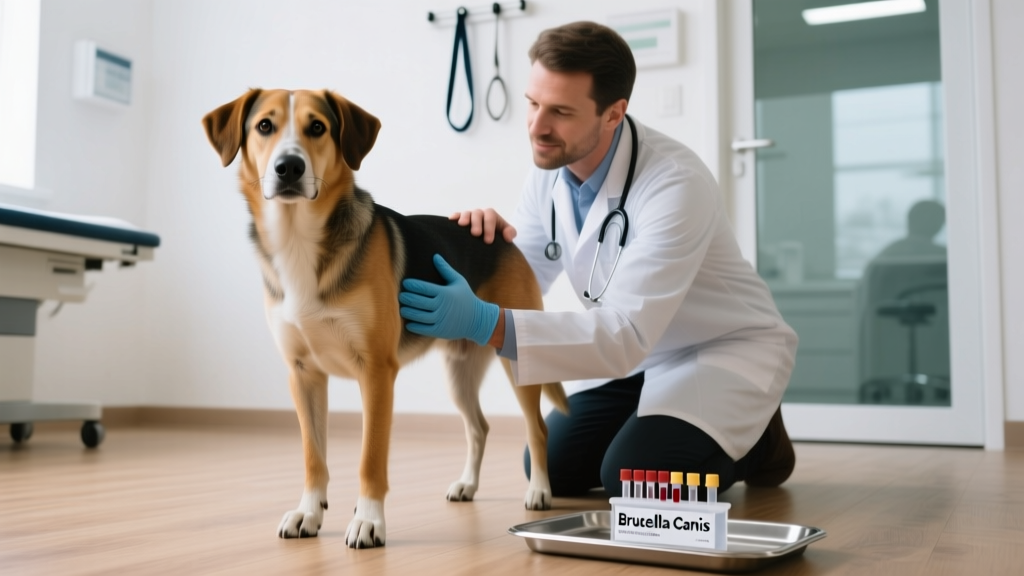
Yes, dogs can contract brucellosis, though it is considered uncommon in pet dogs in the United States. Canine brucellosis is caused primarily by Brucella canis, a gram-negative intracellular bacterium that targets the reproductive organs, lymph nodes, and joints. It is classified as a zoonotic disease — meaning it can transmit from dogs to humans — which makes understanding it essential for any dog owner, breeder, or shelter worker.
While most household pets face very low risk, intact (unspayed/neutered) dogs in breeding environments are the most vulnerable population. According to the Merck Veterinary Manual, B. canis remains endemic in commercial breeding kennels and stray dog populations worldwide.
What Is Brucellosis and How Does It Work?
The Bacterium Behind the Disease
Brucellosis is caused by bacteria in the genus Brucella. Multiple species exist, each with preferred hosts:
- Brucella canis — primarily infects dogs (the species most relevant to pet owners)
- Brucella abortus — cattle (dogs can become incidental hosts through raw milk exposure)
- Brucella suis — pigs (hunting dogs exposed to feral swine are at risk)
- Brucella melitensis — goats and sheep (rare in U.S. dogs)
What makes Brucella species particularly insidious is their status as facultative intracellular pathogens. Rather than being destroyed by the dog's immune system, these bacteria hijack macrophages — the very white blood cells designed to destroy them. Once inside a macrophage, Brucella prevents the phagosome (the internal compartment where bacteria are normally killed) from fusing with lysosomes. The bacteria then replicate inside the cell and spread to neighboring tissues through the lymphatic system.
This intracellular survival strategy is why brucellosis often becomes chronic and why treatment requires prolonged, combination antibiotic therapy — the drugs must penetrate inside cells to reach the bacteria.
The Evolutionary Context: Why Brucella Targets Canids
An Ancient Pathogen-Host Relationship
Brucella species have co-evolved with mammalian hosts for thousands of years. In wild canids — wolves, foxes, and coyotes — Brucella infections have been documented across multiple continents. The bacterium evolved to exploit reproductive tissues because this transmission route ensures bacterial survival across generations: an infected mother passes the organism to offspring during birth or through uterine fluids.
From an evolutionary standpoint, Brucella canis represents a pathogen that achieved a balance with its host — it rarely kills the host outright (which would end transmission) but causes enough reproductive disruption to maintain selective pressure. In wild canid populations, this likely manifested as reduced litter sizes or sporadic abortion events rather than mass die-offs, allowing both host and pathogen to persist.
Modern breeding practices — particularly high-density kennel environments — disrupt this evolved balance by concentrating susceptible animals and facilitating rapid spread through mating and shared environments.
How Brucellosis Spreads: Transmission Pathways
Understanding transmission is critical for prevention. Brucella canis spreads through several documented routes:
| Transmission Route | Risk Level | Details |
|---|---|---|
| Venereal (mating) | High | Seminal fluid and vaginal secretions carry high bacterial loads. Infected males shed organisms for months. |
| Placental/abortion fluids | Very High | Aborted fetuses and placental material contain enormous concentrations of bacteria. A primary source of kennel outbreaks. |
| Urine | Moderate | Infected dogs shed B. canis in urine intermittently. Contaminated environments pose risk to kennel mates. |
| Oro-nasal contact | Moderate | Sniffing or licking contaminated surfaces, urine, or birthing materials. |
| Transplacental | High | Mother to puppies in utero. Puppies may be born infected or develop illness within weeks. |
| Raw milk/nursing | Moderate | Puppies nursing from infected dams can acquire the organism. |
Human transmission occurs primarily through direct contact with birthing fluids, aborted fetuses, or semen during breeding assistance. The CDC classifies brucellosis as a reportable disease in humans, and laboratory workers handling Brucella cultures face significant occupational exposure risk.
Symptoms of Brucellosis in Dogs: What to Watch For
Canine brucellosis is notoriously difficult to recognize because many infected dogs show no outward symptoms for months or even years. When clinical signs do appear, they tend to be vague and overlap with many other conditions.
Symptom Checklist by Severity
Early / Subclinical (often missed):
- Subtle lethargy or reduced stamina
- Mild, intermittent fever (102.5–104°F / 39.2–40°C)
- Enlarged lymph nodes (lymphadenopathy), particularly submandibular and inguinal
- Reduced appetite without dramatic weight loss
Reproductive Signs (most characteristic):
- Abortion in late pregnancy (45–55 days gestation)
- Stillborn or weak puppies
- Epididymitis in males — swollen, painful scrotum
- Orchitis — inflammation of the testicles
- Infertility in both sexes
- Vaginal discharge (prolonged, often greenish-gray)
Systemic / Chronic Signs:
- Diskospondylitis — spinal infection causing back pain, reluctance to move, or hind-limb weakness
- Uveitis — eye inflammation causing redness, squinting, or cloudiness
- Arthritis — joint swelling and lameness, often shifting between limbs
- Glomerulonephritis — kidney inflammation leading to increased thirst and urination
Diskospondylitis deserves special attention. When B. canis localizes in the intervertebral discs, it can cause progressive spinal cord compression. Dogs may present with a hunched back, reluctance to jump or climb stairs, or sudden yelping when picked up. This complication can appear 6–18 months after initial infection and is sometimes the first sign owners notice.
Diagnosis: What Your Veterinarian Will Do
Diagnosing brucellosis requires specific laboratory tests because routine bloodwork often appears normal or shows only nonspecific changes. Here is what to expect during the diagnostic process:
| Test | What It Detects | Estimated Cost | Turnaround |
|---|---|---|---|
| Canine Brucella agglutination test (SAT) | Antibodies against B. canis in blood serum | $40–$80 | 3–7 days |
| Blood culture | Live bacteria isolated from blood sample | $80–$150 | 5–21 days |
| PCR testing | Bacterial DNA in blood, urine, or tissue | $100–$200 | 2–5 days |
| ELISA | Quantitative antibody levels | $60–$120 | 3–7 days |
| Radiographs (X-rays) | Diskospondylitis, joint changes | $200–$400 | Same day |
A significant diagnostic challenge: false negatives are common in early infection. Antibodies may not reach detectable levels for 3–4 weeks after exposure, and some chronically infected dogs develop immune tolerance that suppresses antibody production. The AVMA recommends repeat testing at 30-day intervals when clinical suspicion remains high despite an initial negative result.
If your dog has a history of breeding, exposure to stray dogs, or contact with livestock — and shows any combination of reproductive failure, spinal pain, or chronic low-grade fever — ask your veterinarian specifically about brucellosis screening. It is not included in standard wellness panels.
Treatment Options and Prognosis
Treating brucellosis is challenging because Brucella bacteria reside inside cells where many antibiotics penetrate poorly. The standard approach involves combination antibiotic therapy administered for a minimum of 6–8 weeks, though some protocols extend to 12 weeks or longer.
Commonly used drug combinations include:
- Doxycycline (5 mg/kg twice daily) combined with streptomycin (injectable, given during the first 2–3 weeks)
- Doxycycline combined with rifampin (used when streptomycin is unavailable or contraindicated)
- Enrofloxacin as an alternative in cases where doxycycline is not tolerated
Your veterinarian will determine the appropriate drug combination and dosage based on your dog's weight, health status, and infection severity. Never administer antibiotics without veterinary guidance.
Prognosis and Realistic Outcomes
Favorable scenario: Dogs treated early with appropriate combination therapy can achieve clinical remission. However, complete bacterial elimination is not guaranteed — some dogs remain chronic carriers even after months of treatment.
Guarded scenario: Dogs with diskospondylitis or kidney involvement face a more guarded prognosis (expected outcome is uncertain). Spinal infections may cause permanent neurological deficits even after the bacteria are controlled.
Breeding implications: Infected breeding dogs are typically removed from breeding programs permanently. The risk of transmission to mates and offspring is too high, and relapse after treatment is well-documented.
Common Misconceptions About Canine Brucellosis
| Myth | Fact |
|---|---|
| "My dog can't get brucellosis — it's a livestock disease." | Brucella canis is a distinct species that specifically infects dogs. While livestock Brucella species are more commonly discussed, canine brucellosis exists independently and is endemic in dog populations worldwide. |
| "If my dog looks healthy, they can't have it." | Many infected dogs are asymptomatic carriers for months or years. They can shed bacteria and infect other dogs without showing any outward signs of illness. |
| "A single round of antibiotics will cure it." | Intracellular bacteria require prolonged combination therapy (6–12 weeks). Even then, complete eradication is not guaranteed and relapse rates are significant. |
| "Humans can't catch it from dogs." | Brucellosis is zoonotic. While human cases from B. canis are less common than from livestock species, documented transmissions have occurred, particularly among breeders and laboratory workers. |
| "There's a vaccine for my dog." | No commercially available vaccine exists for canine brucellosis in the United States. Livestock vaccines (such as RB51 for cattle) are not approved for dogs and can be dangerous if accidentally administered. |
Practical Implications: What This Means for Dog Owners
If You Own a Pet Dog (Non-Breeding)
Your risk is very low. Spayed and neutered dogs that don't interact with intact stray dogs or livestock birthing environments face minimal exposure. Standard hygiene — washing hands after handling dogs, especially before eating — provides adequate protection.
If You Breed Dogs
- Test all breeding stock before introducing new dogs to your kennel. Request SAT or ELISA testing and quarantine new arrivals for 30 days with repeat testing.
- Isolate any dog that aborts a pregnancy. Wear disposable gloves when handling birthing materials. Submit aborted fetuses and placental tissue to a veterinary diagnostic lab for culture.
- Disinfect contaminated areas with a 1:32 dilution of household bleach (approximately ½ cup bleach per gallon of water). Brucella organisms are susceptible to most common disinfectants but can survive in organic material for weeks.
- Keep detailed records of all breeding pairs, test results, and pregnancy outcomes to facilitate contact tracing if an infection is identified.
If You Adopt from a Shelter or Rescue
Ask whether the dog was tested for brucellosis, particularly if the dog came from a commercial breeding facility (puppy mill rescue), a high-intake shelter in the southern U.S., or was imported from a country where canine brucellosis is endemic. If testing history is unknown and the dog is intact, request screening before introducing the dog to other intact animals.
If You Work in a Veterinary Clinic or Lab
Wear gloves, eye protection, and a mask when handling suspected cases. Brucella organisms can aerosolize during sample processing, and laboratory-acquired infections are among the most commonly reported occupational infections in microbiology labs. Follow BSL-3 precautions for culture work.
Breed and Population Variations in Risk
Brucellosis does not target specific breeds based on genetics. However, risk varies significantly by lifestyle and environment:
- Beagles have been disproportionately represented in brucellosis research because they are commonly used in laboratory settings, where kennel outbreaks have been well-documented.
- Hunting breeds (coonhounds, curs, feists) that work with feral swine face elevated exposure risk to Brucella suis, a related species that can cross-infect dogs.
- Dogs in commercial breeding facilities — regardless of breed — face the highest population-level risk due to density, frequent mating, and historically inconsistent testing protocols.
- Stray and free-roaming dogs in warm climates (southern U.S., Latin America, Mediterranean, Southeast Asia) have higher seroprevalence rates than indoor pet dogs in temperate regions.
How Is Brucellosis in Dogs Different from Human Brucellosis?
While the underlying bacteriology is similar, the clinical presentation differs meaningfully:
- In dogs, B. canis predominantly targets the reproductive tract, causing abortion, infertility, and epididymitis. Systemic signs like diskospondylitis are secondary complications.
- In humans, brucellosis (from any Brucella species) typically presents as undulant fever — a rising and falling fever pattern — with night sweats, fatigue, joint pain, and hepatosplenomegaly (enlarged liver and spleen). Reproductive complications are less prominent in humans.
- Incubation periods differ: dogs may show reproductive signs within 2–4 weeks of infection, while human symptoms can take 2–8 weeks to appear and may be mistaken for flu initially.
- Treatment duration is similar (6+ weeks of combination antibiotics), but human treatment protocols are more standardized through WHO guidelines, whereas canine protocols vary more between veterinary practices.
When Brucellosis Might Signal a Larger Problem
Red Flags That Require Immediate Veterinary Attention
Contact your veterinarian promptly if your dog exhibits any of the following, particularly if they are intact or have a breeding history:
- Abortion or stillbirth, especially in late pregnancy
- Swollen, painful scrotum in males
- Progressive back pain, reluctance to move, or hind-limb weakness
- Prolonged fever above 103°F (39.4°C) without an obvious cause
- Eye inflammation with squinting or visible cloudiness
- Chronic vaginal discharge lasting more than 2 weeks post-whelping
For human exposure concerns: If you have handled birthing materials, aborted fetuses, or semen from a dog later diagnosed with brucellosis, contact your physician and mention the exposure. Human brucellosis is treatable but can become chronic if diagnosis is delayed. You may also call the ASPCA Animal Poison Control Center at (888) 426-4435 (24/7, consultation fee applies) for guidance on zoonotic exposure situations involving animals.
Prevention Strategies: A Layered Approach
With no vaccine available, prevention relies on management practices:
- Spay and neuter. Removing reproductive organs eliminates the primary tissue targets and drastically reduces transmission risk. This is the single most effective preventive measure for pet dogs.
- Pre-breeding screening. Both male and female dogs should test negative for B. canis antibodies within 30 days before mating. Many responsible breeders test every 6 months.
- Quarantine new arrivals. Any dog entering a multi-dog household or kennel should be isolated for 30 days and tested before introduction.
- Avoid raw livestock products. Do not feed dogs unpasteurized milk or raw organs from cattle, goats, or pigs, as these can harbor other Brucella species.
- Protect hunting dogs. Dogs that track or retrieve feral swine should wear cut-resistant vests and be tested annually for B. suis exposure.
- Practice hygiene. Wear gloves when assisting with whelping. Wash hands thoroughly after contact with intact dogs in breeding environments.
Frequently Asked Questions
Can my dog give me brucellosis through casual contact like petting?
The risk from casual contact is extremely low. Brucella canis is primarily transmitted through contact with reproductive fluids, birthing materials, or semen. Simple petting, being licked, or sharing living space with an infected dog carries minimal human risk. However, immunocompromised individuals should take extra precautions and avoid contact with known positive dogs.
Is brucellosis in dogs reportable to state authorities?
Reporting requirements vary by state and jurisdiction. In many states, canine brucellosis is not a reportable animal disease (unlike livestock brucellosis, which is federally regulated). However, human brucellosis is reportable in all 50 states. Check with your state veterinarian's office for specific requirements in your area.
Can a dog that has been treated for brucellosis live a normal life?
Many treated dogs go on to live normal lifespans, though they may require ongoing monitoring. Dogs with residual complications — such as chronic back pain from diskospondylitis or kidney damage from glomerulonephritis — may need long-term management. Treated dogs should not be used for breeding, and periodic re-testing (every 6–12 months) is recommended to monitor for relapse.
How long can Brucella bacteria survive in the environment?
In organic material (soil, birthing fluids, manure) at cool temperatures, Brucella organisms can survive for weeks to months — some studies document survival up to 60 days in damp soil at 46–54°F (8–12°C). Direct sunlight, heat above 140°F (60°C), desiccation, and standard disinfectants kill the bacteria relatively quickly. This environmental persistence is why thorough kennel decontamination is critical after an outbreak.
Should I test my dog if I adopted from a puppy mill rescue?
Yes, testing is a reasonable precaution. Dogs from commercial breeding facilities have higher documented rates of B. canis infection due to kennel density and historically inconsistent screening. Request a SAT or ELISA test from your veterinarian, particularly if the dog is intact or shows any reproductive or musculoskeletal symptoms. The test cost ($40–$120) is a worthwhile investment for peace of mind.
Are there any natural or home remedies for canine brucellosis?
No. Brucellosis is a serious intracellular bacterial infection that requires prescription antibiotic therapy under veterinary supervision. There are no supplements, herbs, or home remedies that can eliminate Brucella bacteria. Delaying proper treatment risks permanent organ damage, chronic pain, and continued transmission to other dogs and potentially to humans.
Key Sources:
- Merck Veterinary Manual — Overview of Brucellosis in Dogs
- CDC — Brucellosis Information
- AVMA — Brucellosis Resources
This article is for educational purposes only. Always consult your veterinarian for diagnosis and treatment of any suspected infection in your dog.
Aaron Whyte
All our authors care for dogs every day — read more of their work on the authors page.


