The Science Behind Breeds of Dogs That Don't Shed
Explore the canine science behind breeds of dogs that don't shed, including hair growth cycles, genetics, and practical grooming implications for owners.
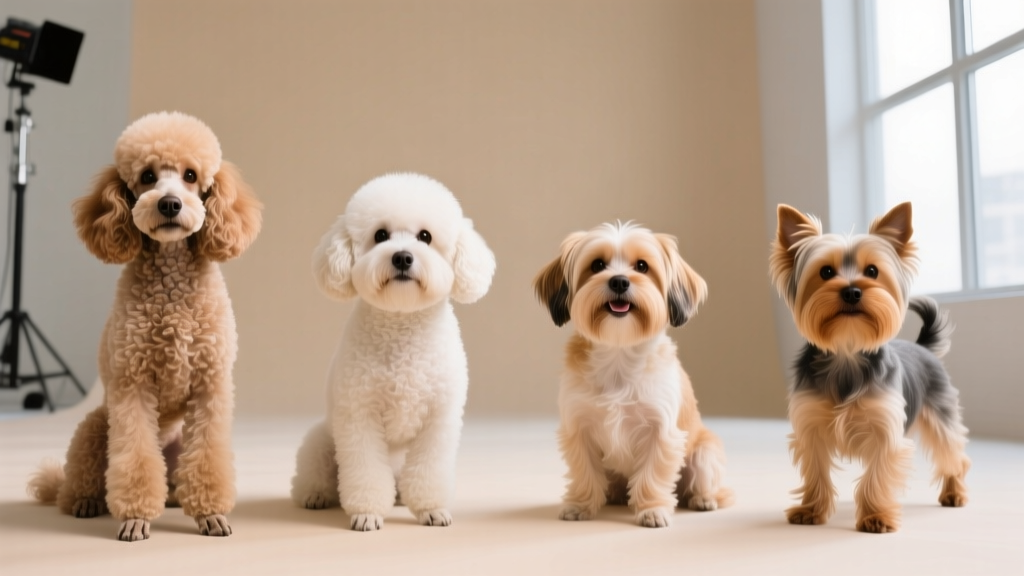
If you've spent time researching hypoallergenic companions, you've likely encountered lists of breeds of dogs that don't shed. Marketing language aside, the biological reality is more nuanced — and far more interesting. Understanding the science behind low-shedding coats helps you make better decisions about grooming budgets, allergy management, and breed selection.
Why Do Some Dogs Shed Less? The Hair Growth Cycle Explained
Every hair on a dog's body cycles through three phases:
- Anagen (growth phase): The hair follicle actively produces new hair shaft cells. In low-shedding breeds, this phase can last months to years.
- Catagen (transition phase): Growth stops and the follicle shrinks. Lasts 2–3 weeks.
- Telogen (resting/shedding phase): The old hair loosens and eventually falls out or is pushed out by a new anagen hair.
In heavily shedding breeds like Siberian Huskies or German Shepherds, a large percentage of follicles enter telogen simultaneously — typically triggered by seasonal photoperiod changes (daylight hours). This is what produces the infamous "coat blow" twice a year.
In low-shedding breeds, the anagen phase is dramatically extended. According to research published in PLoS Genetics (Cadieu et al., 2009), three genes — FGF5 (fibroblast growth factor 5), KRT71 (keratin 71), and RSPO2 (R-spondin 2) — account for the majority of coat variation in domestic dogs. The FGF5 variant specifically controls hair length by delaying the transition from anagen to catagen.
Evolutionary Context: From Wolves to Wire-Haired Terriers
Ancestral baseline: Wolves and early domestic dogs had double coats with a defined seasonal shed — an adaptation to regulate body temperature across harsh winters and warm summers. The undercoat (down hair) provided insulation, while guard hairs (awn and primary hairs) repelled moisture and UV radiation.
The "non-shedding" coat type is a product of artificial selection. As dogs moved into human homes and served roles where matting or debris collection was manageable (water retrieval, lap companionship), breeders selected for continuously growing coats. The Poodle's corded or curly coat, for instance, likely provided insulation for cold-water retrieving without the drag of a heavy seasonal undercoat.
Geneticist Elaine Ostrander's lab at the NIH National Human Genome Research Institute demonstrated that just a handful of genes control most visible coat differences across all dog breeds. The curly/wiry/long-hair combination that characterizes most low-shedding breeds involves the interaction of all three key variants (FGF5, KRT71, RSPO2) working together.
The Physiology: How Curly Coats Trap Shed Hairs
Here's what actually happens in breeds of dogs that don't shed: they do lose hairs, but the curl pattern and coat density trap those loose hairs against the body rather than releasing them into the environment. This is why a Poodle owner might find minimal hair on furniture but must commit to professional grooming every 4–8 weeks — those trapped hairs will mat if not brushed and cut regularly.
The mechanism works like this:
| Coat Type | Hair Release Mechanism | Shed Visibility |
|---|---|---|
| Double coat (Husky, Retriever) | Telogen hairs release freely; undercoat sheds in clumps | Very high — visible on floors, furniture, clothing |
| Single curly coat (Poodle, Bichon) | Loose hairs caught in curl structure | Low — hair accumulates in coat, removed by brushing |
| Wire/hair coat (Schnauzer, Wire Fox Terrier) | Coarse guard hairs hold dead undercoat | Low to moderate — requires hand-stripping or clipping |
| Hairless (Chinese Crested, Xoloitzcuintli) | Minimal follicles; FOXI3 gene variant | Negligible — but skin care required |
Breeds of Dogs That Don't Shed: A Science-Based Breakdown
Not all low-shedding breeds share the same genetic profile. Here's how some popular options compare on measurable traits:
| Breed | Weight Range | Coat Type | Grooming Frequency | Annual Grooming Cost (2026) |
|---|---|---|---|---|
| Standard Poodle | 40–70 lb / 18–32 kg | Curly single coat | Every 4–6 weeks | $720–$1,440 |
| Bichon Frisé | 12–18 lb / 5–8 kg | Curly double-layer (powder-puff) | Every 4–6 weeks | $540–$960 |
| Portuguese Water Dog | 35–60 lb / 16–27 kg | Curly or wavy | Every 6–8 weeks | $600–$1,100 |
| Miniature Schnauzer | 11–20 lb / 5–9 kg | Wire (double coat, stripped) | Every 5–8 weeks | $480–$900 |
| Soft Coated Wheaten Terrier | 30–45 lb / 14–20 kg | Silky, wavy single coat | Every 4–6 weeks | $600–$1,080 |
| Maltese | 4–7 lb / 2–3 kg | Long, straight, single coat | Daily brushing + bath every 2–3 weeks | $400–$800 |
Note: "Doodle" crosses (Labradoodle, Goldendoodle, etc.) are not predictably low-shedding. Because they are typically F1 or F1B crosses, coat genetics vary even within a single litter. An F1B Goldendoodle (75% Poodle) has a higher probability of inheriting the low-shedding coat, but there is no guarantee without genetic testing of the individual puppy.
Common Misconceptions Debunked
| Myth | Science-Based Fact |
|---|---|
| "Non-shedding dogs are hypoallergenic." | Dog allergies are triggered by dander (dead skin cells), saliva proteins (Can f 1, Can f 2), and urine — not hair itself. Low-shedding breeds may spread less dander because fewer hairs circulate, but no breed is truly allergen-free. Studies at the American Academy of Allergy, Asthma & Immunology confirm individual dog variation matters more than breed. |
| "Short-haired dogs shed less." | Hair length does not predict shedding volume. Dachshunds and Beagles have short coats but shed heavily because their anagen phase is brief and follicle turnover is rapid. |
| "Non-shedding dogs don't need grooming." | Continuously growing coats require regular cutting. Neglected Poodle or Bichon coats mat tightly against the skin, causing pain, restricted movement, and skin infections. Matting can hide sores, parasites, and tumors. |
| "Shaving a low-shedding dog reduces grooming needs." | Shaving does not stop hair growth. The coat will regrow, and repeated close shaving can damage follicle structure over time, potentially leading to alopecia or coat texture changes (post-clipping alopecia, documented in the Merck Veterinary Manual). |
Practical Implications for Owners
What Low-Shedding Ownership Actually Looks Like
- Budget for professional grooming: Expect $50–$120 per session depending on breed size and coat condition. For a Standard Poodle groomed every 6 weeks, that's $430–$1,040 annually.
- Brush at home 3–4 times per week minimum: Use a slicker brush (such as the Chris Christensen Big G or similar quality pin brush, $35–$65) followed by a metal comb to check for tangles near the skin.
- Learn to spot matting early: Mats form at friction points — behind ears, armpits, behind the collar. If you cannot pass a comb through the coat to the skin, a mat is forming.
- Bathe every 3–6 weeks: Use a canine-formulated shampoo (pH 6.5–7.5). Human shampoos disrupt the acid mantle and cause dryness. A conditioning spray helps prevent tangles in long curly coats.
- Allergy sufferers: Spend at least 2 hours with the specific dog you're considering before committing. Allergists recommend a clinical skin-prick test using dander from the actual dog, not a generic "dog" allergen extract.
When Low Shedding Signals a Health Problem
If your normally low-shedding dog suddenly begins losing hair in patches or shedding more than usual, this is not a normal coat cycle variation. Potential causes include:
- Hypothyroidism: Common in middle-aged Standard Poodles and Portuguese Water Dogs. Presents as bilateral symmetrical hair loss, lethargy, and weight gain. Diagnosis requires a full thyroid panel (T4, free T4, TSH) — cost approximately $120–$200.
- Cushing's disease (hyperadrenocorticism): Causes thinning coat, pot-bellied appearance, increased thirst/urination. More common in Poodles and small terrier breeds over age 6.
- Alopecia X (growth hormone-responsive dermatosis): Primarily seen in Pomeranians and Poodle-type breeds. Cosmetic hair loss without systemic illness.
- Dermatophytosis (ringworm): Fungal infection causing circular bald patches. Zoonotic — transmissible to humans.
- Stress-induced telogen effluvium: Acute stressors (surgery, illness, boarding) can push large numbers of follicles into telogen simultaneously, causing a noticeable shed 6–12 weeks after the event.
If you notice sudden coat changes, consult your veterinarian. A skin cytology, fungal culture, and blood work will typically identify the cause.
Frequently Asked Questions
Can dogs completely stop shedding?
No. All dogs with hair follicles shed to some degree. Hairless breeds (Chinese Crested, American Hairless Terrier, Xoloitzcuintli) come closest, but even they have small patches of hair that cycle normally. The hairless trait is caused by a dominant variant in the FOXI3 gene, which disrupts follicle development during embryogenesis.
How do dogs with curly coats differ from humans with curly hair?
Human hair grows from individual follicles with independent cycles, similar to dogs. However, humans lack an undercoat entirely and our follicle density is much lower (roughly 100,000 scalp follicles vs. a dog's 15,000+ follicles per square inch in some breeds). Dog curls are structurally produced by asymmetric keratin distribution in the hair shaft — the same mechanism as human curls, but the KRT71 gene variant in dogs is distinct from human keratin mutations.
Is it normal for a "non-shedding" dog to leave some hair on furniture?
Yes. Individual telogen hairs do release, especially during brushing, bathing, or vigorous play. Finding a few hairs on dark fabric is normal. Finding clumps or tufts is not — that suggests matting breakage or an underlying health issue.
What does it mean when my Poodle's coat changes texture as they age?
Poodle puppies have a soft, wavy puppy coat that transitions to the adult curly coat between 9–18 months. This "coat change" period often involves increased tangling and some shedding as puppy hairs are replaced. In senior dogs (8+), coats may thin or become drier due to reduced sebum production — supplementing with omega-3 fatty acids (EPA/DHA at 50–100 mg/kg combined EPA+DHA daily) can support coat quality, but consult your veterinarian before adding supplements.
Are mixed-breed "Doodles" as low-shedding as purebred Poodles?
Not reliably. An F1 Labradoodle (50% Poodle, 50% Labrador) has roughly a 50% chance of inheriting the shedding coat. F1B crosses (75% Poodle) improve the odds but don't guarantee the trait. Only an F2 or multigen cross with two proven low-shedding parents, ideally with KRT71/FGF5 genetic testing, offers higher predictability. Embark and Wisdom Panel DNA tests ($130–$200) can identify coat-gene variants in individual puppies.
Sources & Further Reading
- Cadieu, E. et al. (2009). "Genome-wide analysis reveals loci associated with coat type in dogs." PLoS Genetics. Full text
- American Kennel Club breed standards and coat descriptions: akc.org/dog-breeds
- Merck Veterinary Manual — Dermatologic conditions and post-clipping alopecia: merckvetmanual.com
Aaron Whyte
All our authors care for dogs every day — read more of their work on the authors page.


