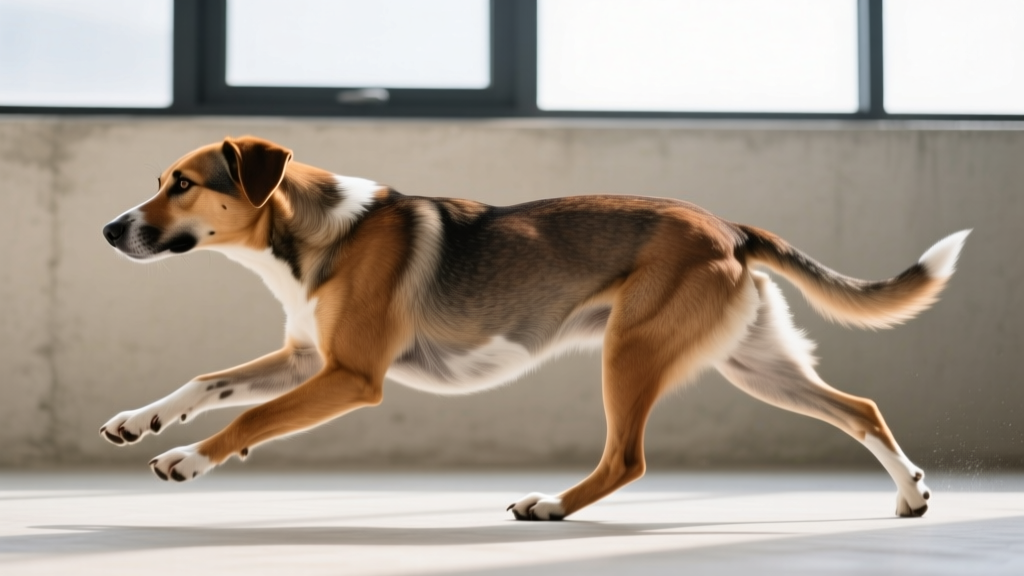
Braque Francais Dog: The Science Behind Its Pointing Instinct
Discover the canine science behind the Braque Francais dog's pointing instinct — from evolutionary roots to neurological mechanisms and practical owner guidance.

Why Does the Braque Francais Dog Point at Game?
The Braque Francais dog points because of a deeply ingrained predatory motor sequence that has been selectively amplified over centuries of breeding. Pointing is not a trained trick — it is a hardwired freeze response in the "orient and stalk" phase of the hunting sequence, neurologically reinforced through generations of selective pressure. Research published in Cell Reports (2018) identified specific genomic regions associated with pointing behavior in gundog breeds, confirming that this trait has a strong heritable genetic basis. When your Braque Francais freezes mid-stride with one paw raised and muzzle locked onto scent, you are witnessing a behavior shaped by both wolf ancestry and 400+ years of French breeding refinement.
The Evolutionary Basis: From Wolf Pack Hunting to Field Pointer
Ancestral Root: Pointing behavior in dogs like the Braque Francais derives from the orient-stalk-freeze segment of the predatory motor sequence shared with wolves (Canis lupus). In wild canids, this pause allows the hunter to assess prey position and coordinate with pack members before the final chase. In pointing breeds, humans have artificially arrested the sequence at the freeze stage — suppressing the chase-kill-bite components while amplifying the initial orient and stalk.
The Braque Francais — split into two recognized types, the larger Gascogne (25–32 kg / 55–70 lb) and the smaller Pyrenees (17–25 kg / 37–55 lb) — descends from southern French hunting dogs documented as early as the 15th century. These dogs hunted in the open terrain of Gascony and the Pyrenees foothills, where a silent freeze-and-indicate behavior was more valuable than a noisy chase. Hunters on foot needed dogs that would locate upland birds (partridge, quail, woodcock) and hold position, allowing the hunter to approach and flush the game.
Evolutionary biologist Raymond Coppinger's work on dog behavior established that breed-specific behaviors are essentially truncated predatory sequences. Herding dogs express the eye-stalk-chase without the grab-bite. Retrievers express the chase-grab-bite with a soft mouth and no kill-shake. Pointers like the Braque Francais express the orient-stalk-freeze and suppress everything after. This is not learned — it is developmental neurobiology shaped by selective breeding pressure.
The Physiological Mechanism: How the Braque Francais Brain Produces a Point
The Olfactory-to-Motor Pathway
When a Braque Francais detects volatile organic compounds (VOCs) emitted by game birds — primarily through its vomeronasal organ and main olfactory epithelium — the signal follows a specific neurological pathway:
- Olfactory receptor activation: The Braque Francais possesses approximately 200–300 million olfactory receptors (compared to ~6 million in humans), with an olfactory bulb proportionally 40× larger relative to brain size.
- Limbic processing: Scent data routes through the olfactory bulb to the amygdala and hippocampus, triggering emotional arousal and memory recall ("this scent means birds are near").
- Motor cortex inhibition: Here is the critical mechanism — in pointing breeds, the premotor cortex sends strong inhibitory signals to the motor cortex, effectively freezing voluntary movement. This is the neurological "brake" that distinguishes pointers from flushing breeds.
- Autonomic arousal: Simultaneously, the sympathetic nervous system activates — heart rate elevates, pupils dilate, breathing becomes shallow. The dog is physiologically primed to move but neurologically locked in place.
Electromyographic (EMG) studies on pointing breeds have shown sustained isometric muscle contraction during a point — the muscles are fully engaged but producing no movement. This is why a hard-pointing Braque Francais may tremble with effort.
A 2014 study by researchers at Uppsala University, published in Nature Communications, found that domestic dogs carry duplications of the WBSCR17 gene and structural variants near GTF2I and GTF2IRD1 — genes associated with Williams-Beuren syndrome in humans, which involves hypersociability and reduced fear. While this research focused on domestication broadly, subsequent work has linked specific alleles in the CDH2 (cadherin-2) gene region to compulsive and fixed-action-pattern behaviors in dogs, including the rigid freeze of pointing breeds.
Practical Implications: Living With a Braque Francais Dog's Pointing Drive
What This Means for Your Daily Life
- Urban walks: Your Braque Francais will point at squirrels, cats, pigeons, and even blowing leaves that carry interesting scent. This is involuntary — punishment or leash corrections for pointing will create conflict anxiety. Instead, teach a reliable "leave it" cue using positive reinforcement (treat reward for breaking the point and re-engaging with you).
- Exercise needs: The pointing instinct creates high mental stimulation demands. A Braque Francais needs 60–90 minutes of off-leash or long-line exercise daily in safe, open areas where it can search and point freely. Without this outlet, pointing energy redirects into frustration behaviors: door-dashing, window-barking, or obsessive yard-patrolling.
- Scent games at home: Use snuffle mats, frozen Kongs stuffed with game-scented treats, or hide-and-seek with bird wing decoys to satisfy the olfactory drive. Budget $15–$30 for a quality snuffle mat (e.g., Paw5 Wooly or AWOOF Snuffle Mat).
- Field training compatibility: If you hunt, the Braque Francais trains readily using force-free methods — reward-based retrieves, check-cord work, and bird-launcher exposure. Avoid shock-collar-based training (e-collars), which can suppress the point entirely and create gun-shy dogs. The AKC Hunt Test program offers structured titling opportunities.
- Multi-pet households: The pointing instinct may extend to pet birds (parrots, chickens). Always supervise interactions and provide secure, separate housing for avian pets. The Braque Francais's prey drive toward birds is strong but manageable with early desensitization.
Common Misconceptions About the Braque Francais Pointing Behavior
| Myth | Scientific Fact |
|---|---|
| "Pointing is something you train into a dog" | Pointing is a genetically inherited fixed-action pattern. Training refines and directs it, but you cannot teach a non-pointing breed to genuinely point. Puppies from pointing lines will often exhibit "flash points" as early as 6–8 weeks old. |
| "If my Braque Francais doesn't point, something is wrong" | Individual variation exists. Some Braque Francais dogs from pet lines (vs. field lines) show weaker pointing instincts. Environmental factors — lack of exposure to game scent, early trauma, or medical issues like nasal tumors — can also suppress the behavior. |
| "Pointing means the dog wants to attack the bird" | Pointing is the opposite of attack behavior. It represents a suppressed predatory sequence. The dog is neurologically inhibited from chasing. A Braque Francais that breaks point and chases is expressing poor impulse control or insufficient breeding selection, not "more drive." |
| "All French pointing breeds behave identically" | The Braque Francais (both Gascogne and Pyrenees types) has a notably softer, more biddable temperament than the Braque d'Auvergne or Braque Saint-Germain. Gascogne types tend toward steadier, longer holds; Pyrenees types often show quicker, more animated points with faster resets. |
| "A raised paw always means pointing" | A raised paw can also signal discomfort (thorn in pad, nail injury), submissive behavior, or a learned "shake" trick. True pointing involves the entire body freezing — head extended, tail rigid or slightly elevated, ears forward, and gaze locked on the scent source. |
When Pointing Behavior Signals a Problem
While pointing is normal and expected in the Braque Francais, certain presentations warrant veterinary attention:
- "Ghost pointing" with no scent source: If your dog repeatedly freezes and points at walls, empty corners, or nothing at all, this may indicate canine cognitive dysfunction (CCD) in senior dogs (typically 8+ years), or focal seizures. A veterinary neurological exam and MRI may be indicated. Estimated cost for a veterinary neurology consult: $250–$500; MRI: $1,500–$3,000.
- Sudden loss of pointing ability: If an established pointer stops pointing, consider nasal pathology (fungal rhinitis, nasal mites, tumors), which impairs olfactory input. Braque Francais dogs are not specifically predisposed to nasal tumors, but any breed can develop them. Diagnostic rhinoscopy costs $400–$800.
- Compulsive pointing (hours-long freezes): If the dog appears unable to break from a point, even when called or redirected, this may represent a compulsive disorder. Consult a veterinary behaviorist (DACVB). First-visit costs typically range $300–$600.
- Trembling or collapse during a point: Exercise-induced collapse (EIC) has been documented in several pointing breeds. While most studied in Labrador Retrievers, the DNM1 gene mutation can appear in other breeds. Genetic testing via Embark or Wisdom Panel ($150–$200) can screen for this.
🚨 Consult your veterinarian promptly if: your Braque Francais shows sudden behavioral changes, inability to break from a frozen position, apparent disorientation after pointing, or any signs of nasal discharge, sneezing, or reduced scent-tracking ability. These can indicate underlying medical conditions requiring professional diagnosis.
Braque Francais Pointing Compared to Other Gundog Breeds
| Breed | Point Style | Typical Hold Duration | Scenting Range | Weight (kg) |
|---|---|---|---|---|
| Braque Francais (Gascogne) | Upright, methodical, steady | 30–90 seconds (untrained); 2–5 min (trained) | 50–150 m from handler | 25–32 |
| Braque Francais (Pyrenees) | Animated, quick-set, frequent resets | 15–60 seconds (untrained); 1–3 min (trained) | 30–100 m from handler | 17–25 |
| English Pointer | Rigid, statue-like, extreme extension | Up to 10+ min (trained) | 100–300 m from handler | 25–34 |
| German Shorthaired Pointer | Intense, forward-leaning, sometimes crawling | 30–120 seconds (trained) | 75–200 m from handler | 25–32 |
| Vizsla | Close-working, frequent eye-contact checks | 20–60 seconds (trained) | 30–80 m from handler | 22–29 |
The Braque Francais occupies a distinctive niche: it works closer to the handler than an English Pointer, making it ideal for dense cover and walk-up hunting styles. Its point is generally less rigid than an English Pointer's but steadier than many continental breeds. This "medium-range, cooperative" hunting style reflects its evolutionary development alongside French peasant hunters who worked small, mixed terrain without horses.
How the Braque Francais Senses Game: Olfactory Science in Detail
The Braque Francais processes game scent through a system fundamentally different from human perception:
- Stereo olfaction: Each nostril samples air independently, allowing the dog to determine scent direction through concentration-gradient comparison — similar to how humans localize sound. Research from Duke University (2011) confirmed that dogs use bilateral nostril comparison to track scent plumes.
- Temporal resolution: Dogs can detect scent changes at approximately 5–10 millisecond intervals, meaning a Braque Francais sweeping its head across a field is effectively "reading" a real-time map of scent concentrations updated dozens of times per second.
- Ground vs. air scenting: The Braque Francais is primarily an air-scenting breed — it carries its head high and reads wind-borne VOCs rather than tracking ground disturbance like a Bloodhound. This makes it efficient in open fields but less effective in dense underbrush where ground scent pools.
- Humidity dependence: Scent molecule volatility increases with humidity. Your Braque Francais will point more reliably on damp mornings (relative humidity >60%) than on dry, hot afternoons. This is not a training issue — it is atmospheric chemistry.
Frequently Asked Questions
Why does my Braque Francais dog point at things that aren't animals?
The pointing instinct is triggered by any novel or concentrated scent that activates the olfactory-limbic pathway. Your dog may point at a dropped sandwich, a garden hose (rubber contains volatile compounds), or a spot where another dog urinated. The freeze response is the same neurological mechanism — the brain detects something significant and halts movement to gather more sensory data before committing to action.
Can dogs actually smell underground or through walls?
Yes, within limits. A Braque Francais can detect scent molecules that permeate through soil, drywall, and wood. VOCs from decomposing organic matter, rodent nests, or plumbing leaks can pass through building materials. However, detection range decreases dramatically with material density — a scent detectable at 5 meters in open air may only register at 30 cm through a concrete wall.
Is it normal for my Braque Francais puppy to point at 8 weeks old?
Absolutely. Flash pointing — brief, unpolished freeze responses — is commonly observed in pointing-breed puppies as young as 5–8 weeks. This confirms the behavior is innate rather than learned. The point will refine and strengthen through adolescence (6–18 months) as myelination of motor-control pathways completes.
How is the Braque Francais pointing instinct different from humans noticing something interesting?
When a human notices something interesting, we turn our head and focus visually. The response is voluntary and brief. In a Braque Francais, pointing is an involuntary autonomic-motor event — the dog does not choose to freeze any more than you choose to flinch from a loud noise. The entire body locks, heart rate spikes, and the dog may be temporarily unable to respond to verbal cues. It is a fixed-action pattern, not a decision.
What does it mean when my Braque Francais points then immediately runs in?
This is called "breaking point" and indicates either insufficient impulse control (common in young, untrained dogs), high prey-drive arousal overwhelming the inhibitory mechanism, or a dog from lines where the pointing instinct was not strongly selected for. Force-free training — rewarding sustained holds with high-value treats and gradually increasing distraction difficulty — is the recommended approach to build steadiness.
Is pointing behavior in the Braque Francais different from other pointing breeds?
The core neurological mechanism is identical across all pointing breeds. However, breed-specific expression varies. The Braque Francais tends to point with a more upright, "natural" posture compared to the extreme horizontal extension of an English Pointer. Gascogne-type Braques typically hold longer and work wider; Pyrenees-type Braques point more frequently but with shorter holds and closer range. These are population-level tendencies — individual dogs vary.
References
- Cell Reports (2018): Genomic analysis of canine behavioral traits — cell.com
- Nature Communications (2014): Genomic responses to selection for tame/aggressive behaviors in dogs — nature.com
- Duke University / PLOS (2011): Stereo olfaction in canine scent tracking — ncbi.nlm.nih.gov
- Coppinger, R. & Coppinger, L. (2001). Dogs: A Startling New Understanding of Canine Origin, Behavior & Evolution. Scribner.
- AKC Breed Standard — Braque Francais: akc.org
Priya Sutaria
All our authors care for dogs every day — read more of their work on the authors page.