Bot Fly on Dog: The Science Behind Cuterebra Infestations
How bot fly larvae infect dogs, the science of Cuterebra parasitism, symptoms, removal, and prevention — what every dog owner needs to know.
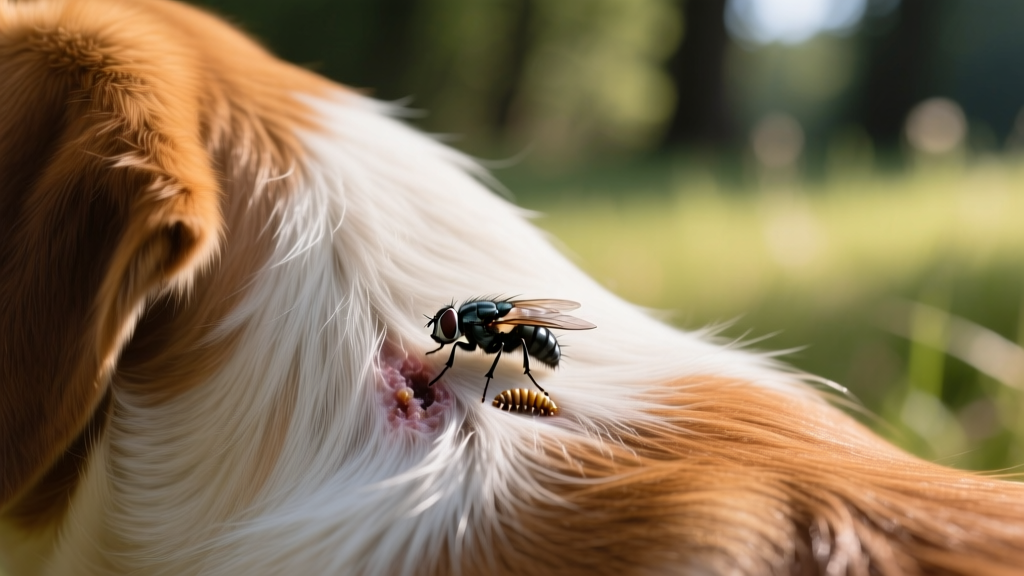
Can a Bot Fly Infest Your Dog?
Yes. Bot flies from the genus Cuterebra can infest dogs, though dogs are accidental (atypical) hosts. The larvae — commonly called "wolves" or "warbles" — enter through natural openings (nose, mouth, eyes, or open wounds) and migrate beneath the skin, eventually forming a raised, breathing-hole warble. While uncomfortable and sometimes alarming, Cuterebra infestations in dogs are typically treatable with veterinary surgical removal. Fatal cases are rare but can occur if larvae migrate to the brain or spinal cord (cerebral cuterebriasis).
If you've noticed a strange, circular bump on your dog with what looks like a small hole in the center — and you've watched that hole seem to breathe — you may be looking at a bot fly larva. It's one of the more unsettling discoveries a dog owner can make, but understanding the biology behind it helps you respond calmly and effectively.
The Parasite Behind the Bump: Cuterebra Biology
When people search for "bot fly on dog," they're usually referring to Cuterebra species — the rodent and rabbit bot flies native to North America. True bot flies (family Oestridae) include several genera, but Cuterebra is the one that most commonly affects companion dogs in the United States and Canada.
The Cuterebra Life Cycle
- Egg deposition: Adult female bot flies do not land on hosts. Instead, they lay eggs (5–15 at a time, up to 2,000 in a lifetime) near the entrances of rodent or rabbit burrows, on vegetation, or along trails where small mammals travel.
- Larval activation: Eggs hatch in response to the sudden increase in temperature and carbon dioxide from a passing warm-blooded animal — a process triggered in as little as 2–3 seconds of body-heat exposure.
- Host entry: First-instar larvae (L1) attach to the host's fur and migrate to natural body openings — nostrils, mouth, eyes, ears, or open wounds. In dogs, the nose and mouth are the most common entry points.
- Internal migration: Larvae migrate through tissue planes. In their typical rodent hosts, they travel to a subcutaneous site (often the neck or abdomen). In dogs — an atypical host — migration paths are less predictable and may involve the trachea, thorax, or central nervous system.
- Warble formation: The larva creates a fistula (breathing hole) in the skin, called a warble pore, through which it respires. The larva molts through second (L2) and third (L3) instars over 19–30 days, growing from ~1 mm to up to 25–30 mm in length.
- Exit and pupation: The mature L3 larva exits through the warble pore, drops to the ground, and pupates in soil for 28–63 days (sometimes overwintering) before emerging as an adult fly.
Source: Merck Veterinary Manual — Cuterebrasis in Small Animals
The adult Cuterebra fly itself is large (15–22 mm), robust, and resembles a bumblebee with its fuzzy, yellow-and-black or orange-and-black coloration. Adults do not feed and live only 7–10 days. They are not the stage that harms dogs — the larval stage is the problem.
How Do Dogs Get Infested? The Accidental Host Problem
Dogs are not the evolutionary target of Cuterebra. The parasite evolved to complete its life cycle in small rodents (chipmunks, squirrels, mice, woodrats) and lagomorphs (rabbits, hares). Dogs become accidental hosts when they investigate rodent burrows, sniff through brush piles, or root through tall grass where bot fly eggs are deposited.
Evolutionary Context: Why Dogs Are Vulnerable
The ancestral canid — like modern wolves, coyotes, and foxes — evolved as a cursorial predator and scavenger with a strong investigative drive. Sniffing burrows, digging into brush, and probing crevices with the muzzle are deeply conserved foraging and territorial behaviors. This nose-first exploration strategy is exactly what puts dogs in contact with Cuterebra eggs deposited near rodent habitats.
In wild canids, Cuterebra infestations do occur but are rarely documented because wild animals cannot seek treatment. The parasitic relationship between Cuterebra and small mammals dates back millions of years — the Oestridae family has co-evolved with mammalian hosts since the Eocene epoch (~40 million years ago). Dogs, as domesticated canids that still express ancestral sniffing and rooting behaviors in suburban and rural environments, inadvertently step into this ancient host-parasite dynamic.
Hunting and sporting breeds — terriers, beagles, dachshunds, and spaniels — are overrepresented in Cuterebra case reports. Their strong prey drive and tendency to pursue rodents into burrows and dense undergrowth increase exposure risk. However, any dog that spends time outdoors in areas with rodent populations can become infested.
Recognizing a Bot Fly Larva on Your Dog
Cuterebra warbles have a distinctive appearance that differentiates them from abscesses, tumors, or other skin masses:
| Feature | Cuterebra Warble | Skin Abscess or Tumor |
|---|---|---|
| Central pore | Visible circular opening (1–3 mm) — the fistula | No defined pore; may have a punctum if cystic |
| Movement | Larval movement visible through pore; may see rhythmic pulsing | No internal movement |
| Discharge | Clear to yellowish serous fluid; occasionally blood-tinged | Purulent (thick, white/yellow/green pus) if abscess |
| Pain level | Mild to moderate; dog may lick or scratch at site | Often more acutely painful, especially if abscess |
| Common locations | Head, neck, trunk, near legs — anywhere with skin access | Variable; often at bite sites, skin folds, or pressure points |
| Size | 1–3 cm diameter swelling; larva inside may reach 25–30 mm | Variable; abscesses can range from 0.5 cm to several cm |
| Seasonality | Late summer through fall (July–October in most of the US) | No seasonal pattern |
The most common locations for warbles in dogs are the head, neck, and trunk, reflecting the areas most likely to contact eggs during investigative sniffing. Some dogs develop multiple warbles simultaneously, though single lesions are more common.
When a Bot Fly Infestation Becomes Dangerous
Most subcutaneous Cuterebra infestations in dogs resolve well with veterinary removal. However, aberrant larval migration — where the larva travels to an atypical body location — can create serious complications:
Emergency Red Flags — Seek Veterinary Care Immediately
- Neurological signs: Seizures, circling, head tilt, blindness, sudden behavioral changes, or paralysis — these may indicate cerebral cuterebriasis (larva in the brain or spinal cord)
- Respiratory distress: Coughing, gagging, difficulty breathing, or nasal discharge — larvae can migrate through the trachea or nasal passages
- Ocular involvement: Larva visible in or around the eye, squinting, or sudden vision changes (ophthalmomyiasis)
- Systemic illness: Fever, lethargy, loss of appetite lasting more than 24 hours alongside a warble
- Attempting DIY removal: Never squeeze or attempt to extract the larva yourself — rupturing the larva can trigger anaphylaxis or severe tissue inflammation
Cerebral cuterebriasis, while uncommon, is the most serious complication. A 2018 retrospective study published in the Journal of Veterinary Internal Medicine reviewed cases of cerebrospinal cuterebriasis in dogs and cats and found that neurological symptoms often mimic other conditions (encephalitis, brain tumors), making diagnosis challenging without advanced imaging. MRI is typically required for definitive diagnosis of CNS involvement.
Veterinary Diagnosis and Treatment: What to Expect
Your veterinarian will follow a structured approach to diagnosis and removal:
Diagnosis
For subcutaneous warbles, diagnosis is usually straightforward — visual inspection of the fistula with magnification often reveals the larva's posterior spiracles (breathing structures) or direct movement. No advanced diagnostics are typically needed for simple cutaneous cases.
For suspected aberrant migration (neurological, respiratory, or ocular signs), your vet may recommend:
- MRI or CT scan: $1,500–$3,500 — to locate larvae in the CNS or thoracic cavity
- Cerebrospinal fluid (CSF) analysis: $200–$400 — eosinophilic pleocytosis (elevated eosinophils in CSF) is a hallmark finding in CNS cuterebriasis
- Complete blood count (CBC): $80–$150 — may show peripheral eosinophilia
- Thoracic radiographs: $200–$400 — if respiratory migration is suspected
Treatment Protocol
For a standard subcutaneous warble, treatment involves:
- Sedation and local anesthesia: The area is numbed; mild sedation may be used for anxious dogs.
- Surgical enlargement of the fistula: The veterinarian carefully widens the pore opening using a scalpel or biopsy punch.
- Intact larval extraction: Using fine forceps or hemostats, the larva is gently removed whole. This is critical — a ruptured larva releases antigens that can cause severe granulomatous inflammation or anaphylactic reaction.
- Wound flushing and debridement: The cavity is flushed with sterile saline or dilute chlorhexidine and any necrotic tissue is removed.
- Antibiotics and anti-inflammatories: A course of broad-spectrum antibiotics (typically amoxicillin-clavulanate, $15–$35) and an NSAID like carprofen ($20–$45) for 5–7 days to manage secondary infection and inflammation.
Total cost for straightforward subcutaneous removal typically ranges from $150 to $400, depending on sedation needs and aftercare medications. Cases involving the CNS, eye, or thoracic cavity require specialist referral and can cost $3,000–$8,000+ when imaging, surgery, and hospitalization are factored in.
Important: Some veterinarians may administer ivermectin or other macrocyclic lactones to kill larvae that cannot be surgically accessed (e.g., suspected CNS migration). This must be done under strict veterinary supervision — dying larvae in the brain can trigger severe inflammatory responses. Always consult your veterinarian before administering any antiparasitic medication.
Common Misconceptions About Bot Flies and Dogs
| Myth | Fact |
|---|---|
| "The fly lands on my dog and lays eggs directly on the skin." | Adult Cuterebra flies do not land on hosts. Eggs are deposited on vegetation or near burrow entrances. Larvae activate from heat and CO₂ when a host passes by. |
| "I can squeeze it out like a pimple." | Squeezing a warble risks rupturing the larva, which can cause anaphylaxis or a severe granulomatous reaction. Veterinary extraction ensures the larva is removed intact. |
| "Bot flies are contagious between dogs." | Cuterebrasis is not directly transmissible from dog to dog. Each infestation requires independent contact with bot fly eggs in the environment. |
| "If I leave it alone, the larva will come out on its own." | While the larva will eventually exit after completing development (~30 days), leaving it untreated risks secondary bacterial infection, larval rupture from scratching, or continued aberrant migration. |
| "My dog can't get bot flies if they stay in the yard." | If your yard has rodent activity (chipmunks, squirrels, mice), bot fly eggs may be present. Urban and suburban yards with brush piles, woodpiles, or bird feeders that attract rodents can harbor Cuterebra eggs. |
| "Flea and tick prevention protects against bot flies." | Most standard flea/tick preventives (isoxazolines like Bravecto, NexGard, Simparica) do not reliably prevent Cuterebra infestation. Some macrocyclic lactone-based heartworm preventives (ivermectin, milbemycin) may kill early-stage larvae, but this is not their labeled indication. |
Practical Prevention: Reducing Your Dog's Risk
Because Cuterebra eggs are deposited in the environment and dogs are accidental hosts, complete prevention is difficult. However, you can meaningfully reduce risk:
Actionable Prevention Steps
- Discourage rodent burrow investigation: Redirect your dog when they persistently sniff or dig at ground holes. Use positive reinforcement (treats, praise) to reward coming away from burrow sites.
- Manage rodent habitat around your property: Remove brush piles, seal gaps under sheds and decks, keep grass trimmed short, and relocate bird feeders away from areas where your dog spends time.
- Perform daily body checks during peak season: Run your hands over your dog's entire body after outdoor time from July through October. Feel for new bumps, particularly on the head, neck, and chest. Early detection (before the warble pore fully forms) gives your vet more treatment options.
- Keep dogs on leash in high-risk areas: Trails through dense brush, fields with visible rodent activity, and areas near wooded edges carry higher egg density.
- Discuss macrocyclic lactone coverage with your vet: While not labeled for Cuterebra prevention, year-round heartworm preventives containing ivermectin or milbemycin oxime (e.g., Heartgard Plus, Interceptor Plus — typically $8–$18/month) may provide partial protection by killing early-stage larvae before they complete migration. Ask your veterinarian whether this off-label benefit is relevant in your area.
- Check cats too: Cats are also accidental hosts and actually appear in veterinary literature more frequently than dogs for Cuterebra infestations, particularly for cerebral cases. Multi-pet households should check all animals.
How Is This Different From Human Bot Fly Infestations?
Human bot fly myiasis (typically caused by Dermatobia hominis, the human bot fly found in Central and South America) differs from canine Cuterebra infestation in several important ways:
- Transmission mechanism: D. hominis uses "phoresy" — the female captures a mosquito or other biting insect and glues her eggs to it. When the mosquito bites a human, body heat hatches the eggs and larvae enter through the bite wound. Cuterebra eggs, by contrast, are deposited directly in the environment.
- Host specificity: D. hominis evolved to parasitize primates and other large mammals. Cuterebra evolved for small rodents and rabbits — dogs (and humans) are accidental, dead-end hosts.
- Geographic range: Cuterebra is found throughout North America. D. hominis is restricted to tropical and subtropical regions of the Americas. US dog owners will encounter Cuterebra, not Dermatobia.
- Migration behavior: D. hominis larvae typically remain at the skin entry site. Cuterebra larvae in atypical hosts (dogs, cats) are more likely to migrate aberrantly, which is what creates neurological and respiratory complications.
Frequently Asked Questions
Why do dogs get bot fly infestations if they aren't the target host?
Dogs get infested because their natural investigative behavior — sniffing and probing into rodent burrows and dense vegetation — brings them into direct contact with Cuterebra eggs. The eggs are triggered to hatch by body heat and CO₂, which any warm-blooded animal produces. The larva doesn't discriminate between a chipmunk and a dog nose; it simply attaches and begins migration. Dogs are ecological "wrong place, wrong time" hosts.
Can dogs transmit bot fly larvae to other pets or humans?
No. Cuterebrasis is not contagious. The larva inside your dog's warble cannot transfer to another animal or person through contact. The only way a new infestation occurs is through independent environmental exposure to bot fly eggs. You cannot "catch" a bot fly from handling your dog's warble, though standard hygiene (gloves, handwashing) is always sensible when dealing with open skin lesions.
What does it mean when my dog has a bump with a hole in it?
A raised, firm subcutaneous swelling with a visible central pore (fistula) is the hallmark of a Cuterebra warble. You may see clear or slightly bloody discharge, and close inspection may reveal the larva's dark posterior spiracles or even rhythmic movement inside the pore. This appearance is highly specific — very few other conditions produce a "breathing hole" in a skin mass. Still, your veterinarian should confirm the diagnosis and perform safe removal.
Is a bot fly warble normal? Will it go away on its own?
While Cuterebra infestation is a naturally occurring parasitic event (not a disease your dog "caught" from another animal), it should not be left untreated. The larva will eventually exit on its own after approximately 19–30 days, but during that time your dog risks secondary bacterial infection, self-trauma from scratching or biting at the site, and the possibility — small but real — of continued aberrant internal migration. Veterinary removal is the standard of care and typically resolves the issue in a single visit.
How do dogs sense the bot fly larva? Do they know it's there?
Dogs can feel the mechanical irritation of the larva moving beneath the skin and the inflammatory response around the warble site. Many dogs will lick, scratch, or rub at the area. Some dogs seem relatively unbothered, particularly in the early stages before the warble pore forms and the larva is still migrating. There's no evidence that dogs perceive the larva as a "foreign organism" in any cognitive sense — they respond to the localized discomfort, much as they would to any skin irritation or insect bite.
What season are bot flies most active, and where in the US are they found?
Cuterebra flies are most active from mid-summer through early fall — typically July through October in most of the continental United States. In warmer southern states (Texas, Florida, Georgia), the season can extend from May through November. They are found throughout North America, with the highest incidence reported in the northeastern, mid-Atlantic, and upper midwestern states where rodent populations are dense. Cases are less common but still reported in the Pacific Northwest and mountain west.
Key Takeaways for Dog Owners
- Bot fly infestations in dogs are caused by Cuterebra larvae — the rodent/rabbit bot fly — and dogs are accidental hosts.
- The hallmark sign is a raised skin bump with a visible central breathing pore (fistula), often on the head, neck, or trunk.
- Never attempt to squeeze or extract the larva yourself — rupturing it can cause anaphylaxis or severe inflammation.
- Veterinary surgical removal is straightforward for subcutaneous warbles and typically costs $150–$400.
- Aberrant migration to the brain or spinal cord is rare but serious — seek emergency care for any neurological symptoms alongside a suspected warble.
- Prevention focuses on reducing rodent habitat near your home, discouraging burrow-sniffing on walks, and performing daily body checks during peak season (July–October).
- Standard flea/tick preventives do not reliably protect against Cuterebra — discuss macrocyclic lactone heartworm preventives with your vet for potential partial coverage.
- Merck Veterinary Manual: Overview of Cuterebrasis in Small Animals
- American Veterinary Medical Association (AVMA) — Parasite prevention guidelines
- ASPCA Animal Poison Control — (888) 426-4435 (for accidental ingestion of antiparasitic medications)
Jonas Cole
All our authors care for dogs every day — read more of their work on the authors page.


