Blueberries for Dogs
Explore the science of feeding blueberries to dogs — antioxidant benefits, safe serving sizes by weight, digestive mechanisms, and evidence-based feeding guidance.
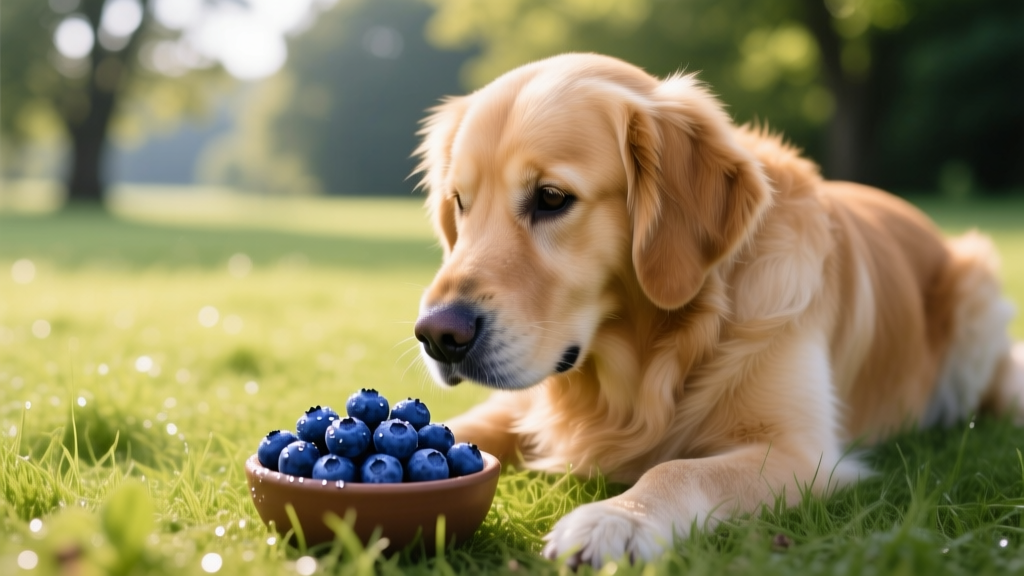
Blueberries are non-toxic to dogs and offer measurable antioxidant benefits when fed in appropriate quantities. They contain anthocyanins, vitamin C, and fiber that support cellular health. Serve fresh or frozen, washed, and sized appropriately to your dog's weight. Typical serving: 2-3 berries for small dogs (under 20 lb / 9 kg), 5-8 for medium dogs (20-50 lb / 9-23 kg), and 8-12 for large dogs (over 50 lb / 23 kg). Always introduce gradually to assess digestive tolerance.
The Nutritional Science of Blueberries in Canine Digestion
When you search for information about blueberries and dogs, you're tapping into a growing body of veterinary nutrition research. Blueberries (Vaccinium corymbosum) rank among the most antioxidant-dense fruits available, and their biochemical profile intersects with canine physiology in several measurable ways.
How Canine Bodies Process Blueberry Compounds
Dogs possess a shorter gastrointestinal tract relative to body size compared to humans — roughly 3-4 times body length versus 10-12 times in people. This means food transits faster, typically within 6-8 hours for most kibble-based diets. When a dog consumes blueberries, several things happen:
- Gastric phase (0-2 hours): Stomach acid (pH 1-2 in dogs, significantly more acidic than human gastric pH of 1.5-3.5) begins breaking down the berry's cellular matrix, releasing anthocyanins and other polyphenols.
- Small intestine (2-4 hours): Simple sugars (fructose, glucose) are absorbed. Anthocyanins undergo limited direct absorption — studies suggest only 1-2% of ingested anthocyanins enter canine bloodstream intact.
- Large intestine (4-8 hours): Gut microbiota ferment the remaining fiber and polyphenols, producing short-chain fatty acids (SCFAs) like butyrate that support colonocyte health.
The key insight: most blueberry benefit in dogs comes not from direct antioxidant absorption but from postbiotic metabolites produced when gut bacteria process berry compounds. This is why consistent, small servings outperform occasional large doses.
According to research published in the Journal of Animal Physiology and Animal Nutrition, polyphenol-rich foods like blueberries can modulate canine gut microbiome composition, increasing beneficial Lactobacillus and Bifidobacterium populations when fed consistently over 4-6 weeks.
Evolutionary Context: Why Can Dogs Process Berries at All?
Ancestral dietary flexibility: Gray wolves (Canis lupus), the primary ancestors of domestic dogs, consumed the stomach contents of herbivorous prey — including partially digested berries, grasses, and plant matter. This provided incidental exposure to fruit compounds over thousands of generations.
During the domestication process (beginning approximately 15,000-40,000 years ago), dogs evolved enhanced starch digestion capabilities. The AMY2B gene, responsible for pancreatic amylase production, exists in 4-30 copies in domestic dogs versus just 2 copies in wolves. This genetic expansion reflects adaptation to agricultural-era diets rich in plant-based carbohydrates.
Blueberries specifically contain compounds that dogs' ancestral digestive systems were pre-adapted to handle: moderate fructose loads, soluble fiber (pectin), and polyphenols similar to those found in wild berries wolves would have encountered in temperate forest ecosystems across North America and Eurasia.
Antioxidant Mechanisms: What Blueberries Actually Do Inside Your Dog
The phrase "blueberries for dogs" often surfaces alongside claims about antioxidant power. Here's the actual biochemistry, stripped of marketing language:
| Compound | Concentration in Blueberries | Mechanism in Dogs | Evidence Level |
|---|---|---|---|
| Anthocyanins (delphinidin, cyanidin, malvidin) | 85-270 mg per 100g fresh weight | Scavenge reactive oxygen species; reduce oxidative DNA damage in aging dogs | Moderate (limited canine-specific trials) |
| Vitamin C (ascorbic acid) | 9.7 mg per 100g | Dogs synthesize their own vitamin C hepatically; dietary contribution is supplementary, not essential | Strong (well-established physiology) |
| Vitamin K1 (phylloquinone) | 19.3 mcg per 100g | Supports hepatic synthesis of clotting factors II, VII, IX, X | Strong |
| Dietary fiber (pectin, cellulose) | 2.4g per 100g | Fermented by colonic microbiota into SCFAs; modulates stool consistency | Strong |
| Manganese | 0.336 mg per 100g | Cofactor for mitochondrial superoxide dismutase (MnSOD), an endogenous antioxidant enzyme | Moderate |
A pivotal 2010 study conducted at Tufts University's Cummings School of Veterinary Medicine found that Beagles fed a diet supplemented with antioxidant-rich foods (including blueberry powder) showed measurable reductions in plasma markers of oxidative stress after 6 months, particularly in dogs aged 7+ years. However, the study used concentrated blueberry extract equivalent to roughly 2 cups of fresh berries daily — far above typical treat-level feeding.
This distinction matters practically: feeding your 30 lb (14 kg) Cocker Spaniel 6 blueberries as a training treat provides enjoyment and modest nutritional benefit, but won't replicate clinical-level antioxidant effects observed in research settings. That's perfectly fine — treats should constitute no more than 10% of daily caloric intake according to the American Veterinary Medical Association.
Serving Sizes by Weight: Practical Feeding Framework
Here's an evidence-based serving guide calibrated to typical daily caloric needs and the 10% treat rule:
| Dog Weight | Daily Treat Calorie Budget | Blueberry Serving | Calories from Blueberries | Feeding Frequency |
|---|---|---|---|---|
| Toy breeds (5-12 lb / 2-5 kg) | 15-30 kcal | 1-2 berries | ~1 kcal | Daily or every other day |
| Small breeds (12-25 lb / 5-11 kg) | 30-50 kcal | 2-4 berries | 1-2.5 kcal | Daily |
| Medium breeds (25-50 lb / 11-23 kg) | 50-90 kcal | 5-8 berries | 3-5 kcal | Daily |
| Large breeds (50-90 lb / 23-41 kg) | 90-140 kcal | 8-12 berries | 5-7 kcal | Daily |
| Giant breeds (90+ lb / 41+ kg) | 140-200 kcal | 12-15 berries | 7-9 kcal | Daily |
Caloric reference: One medium blueberry contains approximately 0.57 calories. One cup (148g) contains about 84 calories and 15g of sugar — relevant context if you're using blueberries heavily in homemade treat recipes.
Common Misconceptions About Blueberries and Dogs
| Myth | Evidence-Based Reality | |
|---|---|---|
| "Blueberries cure canine cancer" | → | While anthocyanins show anti-proliferative effects in in vitro (petri dish) studies on canine cancer cell lines, no clinical trials demonstrate that dietary blueberries treat or cure cancer in living dogs. They may support overall cellular health as part of a balanced diet — nothing more. |
| "Dogs can't digest fruit at all" | → | Dogs possess functional sucrase-isomaltase and maltase enzymes in their small intestinal brush border, allowing them to digest fruit sugars. The AMY2B gene expansion during domestication specifically enhanced starch and carbohydrate processing. |
| "Blueberries will cause kidney stones" | → | Blueberries contain approximately 4 mg oxalate per 100g — classified as low-oxalate. For comparison, spinach contains 600-970 mg per 100g. Blueberry consumption at treat-level quantities does not meaningfully increase urolithiasis risk in dogs without pre-existing calcium oxalate stone history. |
| "Frozen blueberries are less nutritious" | → | Flash-frozen blueberries retain 90-95% of their anthocyanin content compared to fresh berries stored at room temperature for 5+ days. Frozen berries may actually deliver higher polyphenol availability if fresh berries have been in transit/storage for extended periods. |
| "All dogs love blueberries" | → | Individual taste preferences vary enormously. Dogs have approximately 1,700 taste buds (humans have ~9,000) and possess specific receptors for sweet, salty, sour, bitter, and umami. Some dogs show no interest in fruit; others enthusiastically consume it. Neither response indicates a health problem. |
How Blueberry Digestion Differs Between Dogs and Humans
Understanding the physiological differences helps explain why serving size recommendations for blueberries and dogs differ so dramatically from human dietary guidelines:
- Gastric pH: Dogs maintain a stomach pH of 1-2 (more acidic than humans at 1.5-3.5), optimized for raw meat digestion and pathogen destruction. This acidity rapidly breaks down blueberry cell walls, potentially increasing polyphenol release rate compared to human digestion.
- Intestinal transit time: Dogs process food in 6-8 hours on average; humans take 24-72 hours. This shorter window means less total time for nutrient absorption from plant matter, making the postbiotic fermentation pathway in the colon proportionally more important for dogs.
- Vitamin C synthesis: Unlike humans, dogs produce their own ascorbic acid in the liver via the enzyme L-gulonolactone oxidase. The vitamin C in blueberries is supplementary for dogs — beneficial during illness or stress, but not nutritionally essential as it is for people.
- Fructose metabolism: Dogs metabolize fructose primarily in the liver via fructokinase, similar to humans. However, excessive fructose intake can contribute to hepatic lipidosis in dogs with pre-existing metabolic conditions. This is why the 10% treat rule exists — it prevents cumulative sugar overload from all treat sources combined.
When Blueberries Might Signal or Cause a Problem
Red Flags: When to Consult Your Veterinarian
While blueberries are safe for the vast majority of dogs, watch for these scenarios:
- Choking hazard in small breeds: For dogs under 10 lb (4.5 kg), particularly brachycephalic breeds like Pugs or French Bulldogs with compromised airway anatomy, whole blueberries can pose a choking risk. Mash or halve berries for these dogs.
- Gastrointestinal upset after introduction: If your dog experiences loose stools, vomiting, or visible undigested blueberry skins in feces within 12-24 hours of first feeding, reduce serving size by 50% or discontinue. Some dogs have individual sensitivity to the tannin content.
- Diabetic dogs: While blueberries have a relatively low glycemic index (GI ~53), any fruit sugar addition should be discussed with your veterinarian for dogs managed for diabetes mellitus. Your vet may adjust insulin timing or dietary carbohydrate calculations.
- Dogs on prescription diets: If your dog eats a veterinary therapeutic diet (e.g., Hill's Prescription Diet, Royal Canin Veterinary Diet, Purina Pro Plan Veterinary Supplements), confirm with your vet that supplemental fruits won't interfere with the diet's precise nutrient formulation — particularly for renal or urinary diets where mineral balance is critical.
- Blueberry-flavored human products: Blueberry muffins, yogurts, jams, and baked goods often contain xylitol (toxic to dogs at doses as low as 50 mg/kg), excessive sugar, butter, or other unsafe ingredients. Only feed plain, washed, whole blueberries.
Always consult your veterinarian before introducing new foods to dogs with chronic health conditions, food allergies, or those on prescription medications.
Breed Variations and Individual Differences
No breed-specific contraindications exist for blueberry consumption. However, practical considerations vary:
- Brachycephalic breeds (English Bulldogs, Pugs, Boston Terriers, Shih Tzus): Modified airway anatomy increases choking risk with round, firm foods. Serve halved or mashed blueberries rather than whole.
- Giant breeds (Great Danes, Saint Bernards, Irish Wolfhounds): While they can safely consume larger quantities, their predisposition to gastric dilatation-volvulus (bloat) means any new food should be introduced gradually and fed in small portions spread across meals rather than as a single large serving.
- Arctic/Spitz breeds (Siberian Huskies, Alaskan Malamutes): These breeds evolved consuming diets with minimal plant matter in their ancestral environments. Some individuals show less interest in fruit, though this is a preference issue rather than a physiological intolerance.
- Herding breeds (Border Collies, Australian Shepherds): Often highly food-motivated and responsive to training — blueberries work excellently as low-calorie, high-value training rewards for these breeds. At roughly 0.57 calories per berry, you can deliver 20+ repetitions in a training session without approaching caloric limits.
Related Foods and Cross-References
If your dog tolerates blueberries well, these related foods share similar safety profiles and nutritional benefits:
- Strawberries: Safe in moderation; contain similar polyphenols but higher sugar content (4.9g per 100g vs blueberry's 9.7g total sugar). Remove green tops.
- Raspberries: Safe; contain trace amounts of xylitol naturally (~0.05g per 100g), but at levels far below toxic thresholds for dogs. A 30 lb dog would need to consume approximately 32 cups of raspberries to reach xylitol toxicity — functionally impossible.
- Blackberries: Safe; similar anthocyanin profile to blueberries. Slightly higher fiber content may cause loose stools in sensitive dogs if overfed.
- Cranberries: Safe but tart; most dogs reject plain cranberries. Avoid cranberry sauce (added sugar) and cranberry trail mix (often contains raisins, which are toxic to dogs).
Frequently Asked Questions
Can dogs eat blueberry muffins or blueberry yogurt?
No. Commercial blueberry baked goods and flavored dairy products typically contain added sugars, artificial sweeteners (potentially xylitol), butter, flour, and other ingredients unsuitable for canine digestion. Xylitol causes rapid insulin release and potentially fatal hypoglycemia in dogs at doses as low as 50 mg/kg body weight. Only feed plain, whole, washed blueberries.
Why does my dog's stool look blue or green after eating blueberries?
This is normal and harmless. The anthocyanin pigments that give blueberries their color are not fully broken down during canine digestion, particularly given dogs' rapid 6-8 hour transit time. Undigested pigment passes into feces, temporarily altering color. This resolves within 24-48 hours after the last blueberry serving and does not indicate gastrointestinal bleeding or disease.
Is it safe to feed my dog blueberries every day?
Yes, provided servings stay within the weight-based guidelines above and blueberries don't exceed 10% of your dog's total daily caloric intake alongside all other treats. Consistent daily feeding may actually enhance the gut microbiome benefits compared to sporadic feeding, based on polyphenol fermentation research.
What does it mean when my dog spits out blueberries?
Individual taste preference. Dogs have roughly 1,700 taste buds and vary widely in sweet/sour perception. Some dogs find the tartness of certain blueberry varieties unappealing. This doesn't signal illness or digestive problems — simply a preference. Try a different berry or accept that fruit isn't your dog's preferred treat category.
How is a dog's ability to taste blueberries different from humans?
Dogs possess specific sweet taste receptors (T1R2/T1R3 heterodimer) that respond to sugars, but their overall taste bud count (~1,700) is roughly one-fifth of humans (~9,000). They perceive sweetness but with less nuance. Dogs also have taste receptors specifically tuned to meat-derived compounds (amino acids like L-glutamate) that humans lack in the same configuration. Your dog likely experiences blueberries as "mildly sweet and interesting" rather than the complex flavor profile you perceive.
Are wild blueberries better than cultivated ones for dogs?
Wild blueberries (Vaccinium angustifolium) contain approximately 2x the anthocyanin concentration per gram compared to cultivated highbush blueberries due to their smaller size and higher skin-to-flesh ratio. They're safe and potentially more nutrient-dense, but also more expensive ($8-12 per pound frozen versus $3-5 for cultivated). Either variety provides benefit — choose based on your budget.
Can puppies eat blueberries?
Puppies over 12 weeks of age can safely consume small quantities of blueberries (1-2 berries for small breed puppies, 3-4 for large breed puppies). However, puppies' digestive systems are still developing, and their primary nutrition should come from a complete-and-balanced puppy diet meeting AAFCO growth requirements. Introduce berries gradually and monitor stool quality. Consult your veterinarian before adding any supplemental foods to a puppy's diet.
Sources consulted: American Kennel Club — Can Dogs Eat Blueberries?; ASPCA Toxic and Non-Toxic Plants Database; Merck Veterinary Manual — GI Physiology in Dogs.
Dr. Hannah Wickes
All our authors care for dogs every day — read more of their work on the authors page.


