Blood in Urine of Dog: Causes, Science & When to See a Vet
Blood in urine of dog (hematuria) explained: causes, physiological mechanisms, diagnostic steps, treatment costs, and when it signals an emergency.
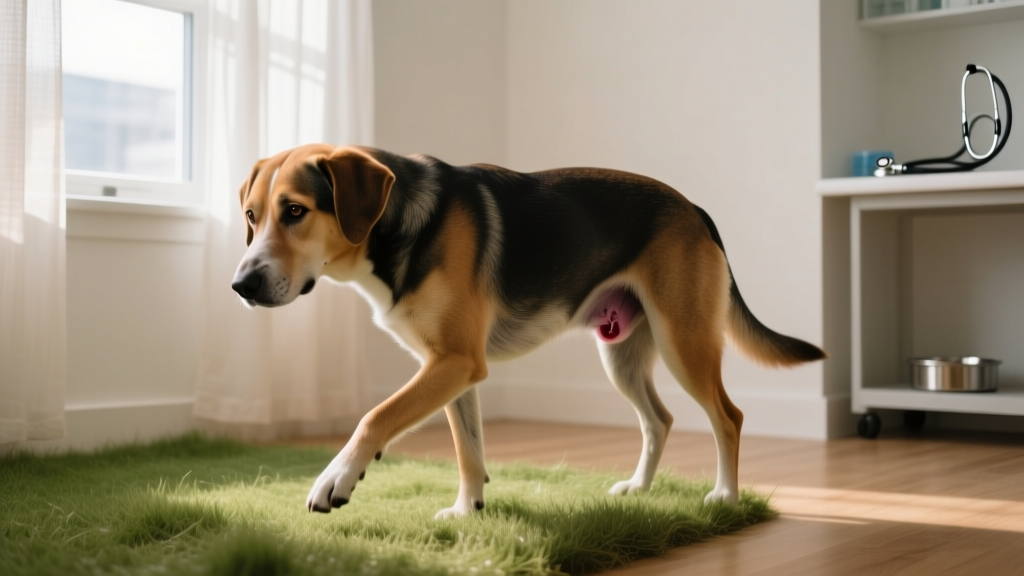
Quick Answer: Blood in your dog's urine — medically called hematuria — is never normal and always warrants a veterinary evaluation. The most common causes include urinary tract infections (UTIs), bladder stones, trauma, clotting disorders, and urinary tract tumors. While a UTI is the most frequent and treatable culprit (affecting roughly 14% of dogs at some point), hematuria can also signal life-threatening conditions like rat poison toxicity or invasive cancers. If you notice pink, red, or brown-tinged urine, contact your veterinarian within 24 hours. If your dog is also straining to urinate, vomiting, lethargic, or has pale gums, treat it as an emergency.
What Is Hematuria? The Science of Blood in Canine Urine
Hematuria refers to the presence of red blood cells (erythrocytes) in urine. In a healthy dog, the kidneys filter blood through microscopic structures called glomeruli — tiny capillary tufts that allow water and small waste molecules to pass while retaining blood cells and large proteins. When red blood cells appear in urine, it means something has breached that filtration barrier or introduced blood downstream of the kidneys.
The Physiology Behind Hematuria
Canine urine passes through four structures before leaving the body: the kidneys (filtration and concentration), the ureters (tubes connecting kidneys to bladder), the bladder (storage reservoir), and the urethra (exit tube). Blood can enter the urinary stream at any of these points, and the location often determines the color and pattern you observe:
- Upper urinary tract (kidneys, ureters): Blood is usually uniformly mixed into the urine, giving it a brown, tea-colored, or smoky appearance. This is because the blood has been agitated and partially broken down during storage in the bladder.
- Lower urinary tract (bladder, urethra): Blood tends to appear as fresh red drops, sometimes visible at the start or end of urination. The bladder lining (urothelium) is richly supplied with blood vessels, and inflammation here produces bright red hematuria.
The urothelium has a specialized protective layer called the glycosaminoglycan (GAG) layer — a mucus-like coating that prevents urine's acidic and waste-laden contents from irritating the underlying tissue. When this layer is compromised by infection, crystals, or chronic inflammation, blood vessels become exposed and leak erythrocytes into the urine.
Veterinarians classify hematuria into two categories: macroscopic (visible to the naked eye — pink, red, or brown urine) and microscopic (only detectable under a microscope during a urinalysis). Macroscopic hematuria typically involves more than 100 red blood cells per high-power field, while microscopic hematuria may involve as few as 5–10 RBCs/HPF. Both require investigation, though macroscopic hematuria usually signals a more urgent problem.
Why Do Dogs Get Blood in Their Urine? Causes Ranked by Prevalence
Understanding why hematuria develops requires looking at the specific disease processes that damage urinary tract tissues. According to data compiled in the Merck Veterinary Manual, the following conditions account for the vast majority of hematuria cases in dogs:
| Cause | Estimated Frequency | Mechanism | Typical Treatment Cost (US) |
|---|---|---|---|
| Bacterial UTI | ~40–50% of cases | Bacteria (E. coli, Staphylococcus) adhere to urothelium, causing inflammation and capillary leakage | $80–$250 (urinalysis + antibiotics) |
| Bladder/Kidney Stones (Uroliths) | ~15–20% | Mineral crystals aggregate into stones that physically abrade the bladder lining | $500–$3,500 (surgical removal) |
| Trauma | ~10% | Blunt force (hit by car, fall) ruptures blood vessels in kidneys or bladder | $1,000–$5,000+ (emergency surgery) |
| Clotting Disorders (Coagulopathy) | ~5–8% | Inability to form clots (rodenticide toxicity, hemophilia, thrombocytopenia) causes spontaneous bleeding | $300–$3,000 (vitamin K therapy, plasma transfusion) |
| Urinary Tract Tumors (TCC/UCS) | ~3–5% | Transitional cell carcinoma invades bladder wall, creating fragile, bleeding tissue | $2,000–$8,000 (surgery, chemo, NSAIDs) |
| Prostate Disease (Intact Males) | ~5% | Benign prostatic hyperplasia, prostatitis, or prostatic abscesses leak blood into urethra | $200–$2,500 (neutering, antibiotics) |
| Estrus (Intact Females) | Common but benign | Vaginal discharge during heat cycle mixes with urine, mimicking hematuria | N/A (normal physiology) |
Why Are Female Dogs More Prone to UTI-Related Hematuria?
Female dogs have a significantly shorter urethra than males — roughly 2–4 inches (5–10 cm) compared to 6–10 inches (15–25 cm) in males. This shorter distance from the external environment to the bladder gives bacteria less ground to traverse before reaching the sterile upper urinary tract. Research published in the Journal of Veterinary Internal Medicine has consistently found that spayed female dogs are the most frequently affected demographic for bacterial UTIs, partly due to changes in urethral tone and local immune function after estrogen decline.
The Evolutionary Context: Why Dogs Mask Urinary Symptoms
Ancestral Survival Instincts
In wild canids — wolves, coyotes, and African wild dogs — showing signs of illness or injury makes an individual vulnerable to predation and social displacement from the pack. Urinating blood would be a conspicuous signal of weakness. As a result, ancestral dogs evolved to suppress pain behaviors and continue normal activities even when experiencing significant internal pathology.
This evolutionary legacy means your domestic dog may be urinating blood for days or even weeks before you notice, especially if the hematuria is microscopic or intermittent. Dogs with early-stage bladder tumors or mild kidney infections often show zero behavioral changes — they eat normally, play normally, and appear completely healthy. This masking instinct is precisely why hematuria, once spotted, should never be dismissed as a "one-time thing." Your dog's evolutionary programming is working against early detection.
Additionally, wild canids use urine marking as a primary communication tool — depositing scent at territorial boundaries to signal pack status, reproductive readiness, and territory claims. The urinary system is under significant evolutionary selection pressure in canids because it serves dual roles in waste elimination and social communication. This may partly explain why the canine urinary tract is relatively susceptible to inflammatory and neoplastic conditions compared to some other mammalian systems.
Breed Variations: Which Dogs Are at Higher Risk?
Not all dogs face equal hematuria risk. Genetic predispositions, anatomical differences, and breed-specific disease patterns create significant variation:
| Breed | Elevated Risk For | Why |
|---|---|---|
| Dalmatian | Urate bladder stones | Unique genetic mutation (SLC2A9 gene) impairs uric acid metabolism, producing urate crystals instead of allantoin |
| Miniature Schnauzer | Struvite and calcium oxalate stones | Inherited tendency toward hypercalciuria and concentrated urine |
| Scottish Terrier, West Highland White Terrier, Shetland Sheepdog | Transitional cell carcinoma (TCC) | Scottish Terriers have an 18–20× higher risk of TCC than the general dog population |
| German Shepherd | Hemangiosarcoma, renal cystadenocarcinoma | Breed-specific tumor predispositions affecting kidneys and blood vessels |
| Doberman Pinscher | Von Willebrand disease (clotting disorder) | Inherited deficiency of von Willebrand factor, causing spontaneous bleeding including hematuria |
| English Bulldog, French Bulldog | Cystine stones | Inherited renal tubular defect causing cystinuria — cystine amino acid crystallizes in acidic urine |
If you own one of these breeds, the threshold for veterinary investigation should be lower. A single episode of discolored urine in a Scottish Terrier over age 7, for example, warrants a full urinary workup — not a "wait and see" approach.
How Veterinarians Diagnose the Source of Hematuria
When you bring your dog in for blood in urine, your veterinarian will systematically narrow down the cause through a tiered diagnostic approach. Understanding this process helps you prepare financially and emotionally for what may follow.
Tier 1: Initial Workup ($100–$300)
- Complete urinalysis: Evaluates urine specific gravity (concentration), pH, presence of red and white blood cells, bacteria, crystals, and protein. A fresh, free-catch sample is ideal, but a cystocentesis (sterile needle extraction directly from the bladder) is the gold standard because it eliminates contamination from the lower urethra and genital area.
- Urine culture and sensitivity: If bacteria are seen, the lab grows the organism and tests which antibiotics will kill it. Results take 48–72 hours. Cost: $50–$120.
- Basic blood panel (CBC + chemistry): Checks for anemia (suggesting chronic blood loss), kidney values (BUN, creatinine, SDMA), platelet count, and liver function.
Tier 2: Imaging ($300–$800)
- Abdominal ultrasound: The most informative non-invasive test. Reveals bladder wall thickness, stones, tumors, kidney architecture, and prostate size. Sensitivity for bladder masses is approximately 85–90%.
- Abdominal radiographs (X-rays): Excellent for detecting radiopaque stones (struvite, calcium oxalate) but will miss radiolucent stones (urate, cystine) and soft-tissue tumors.
Tier 3: Advanced Diagnostics ($500–$2,500)
- CT scan or contrast cystography: Used when ultrasound is inconclusive or surgical planning is needed. Provides 3D mapping of the entire urinary tract.
- Cystoscopy: A tiny camera inserted through the urethra into the bladder under general anesthesia. Allows direct visualization and biopsy of suspicious lesions. More common in female dogs due to wider, shorter urethra.
- Coagulation panel (PT/PTT): If a clotting disorder is suspected, these tests measure how long blood takes to clot. Critical if rodenticide exposure is possible.
- BRAF mutation test (CADDET™): A urine-based test that detects the BRAF V595E mutation associated with transitional cell carcinoma. Sensitivity is approximately 74–85% for TCC. Cost: $150–$250.
Common Misconceptions About Blood in Dog Urine
| Myth | Fact |
|---|---|
| "It's probably just a UTI — I can give leftover antibiotics." | Giving incomplete or incorrect antibiotics breeds resistant bacteria. A 2023 study in Veterinary Microbiology found that 38% of canine UTI isolates were resistant to at least one first-line antibiotic. Culture-guided therapy is essential. |
| "My dog seems fine, so it can't be serious." | Dogs with early bladder cancer, kidney disease, and even rodenticide toxicity may appear completely normal while actively bleeding internally. Behavioral masking is an evolutionary survival trait. |
| "Red urine means my dog ate beets or something dyed." | While beets can cause reddish urine (beeturia) in some dogs, this is uncommon. Blood is far more likely. A simple urinalysis dipstick can differentiate hemoglobin/myoglobin from plant pigments in minutes. |
| "Only male dogs get urinary problems." | Female dogs actually have higher UTI rates due to shorter urethral anatomy. Males are more prone to urethral obstruction from stones, but females lead in infection frequency. |
| "Cranberry supplements cure UTIs in dogs." | Cranberry proanthocyanidins may help prevent E. coli adhesion to the bladder wall in some cases, but they cannot eliminate an established infection. Antibiotics are required for active UTIs. |
Practical Takeaways: What to Do When You Spot Blood
Step-by-Step Action Plan
- Document the episode. Take a photo of the urine (color, consistency) with your phone. Note the time, whether your dog seemed to strain, and if this is the first occurrence.
- Collect a sample if possible. Use a clean, shallow container (a washed Tupperware lid works) to catch mid-stream urine. Refrigerate the sample in a sealed container and bring it to your vet within 4 hours. If you can't collect one, your vet can perform cystocentesis.
- Assess for emergency signs. If your dog is straining to urinate with little or no output, this could indicate a urethral obstruction — a life-threatening emergency more common in male dogs. Obstructions can cause bladder rupture or fatal kidney damage within 24–48 hours. Go to an emergency clinic immediately.
- Review your dog's environment. Check for access to rat poison (anticoagulant rodenticides cause internal bleeding), NSAIDs like ibuprofen (can cause kidney damage), or recent trauma.
- Schedule a vet visit within 24 hours for stable dogs, or go to emergency immediately for dogs showing distress.
⚠ Emergency Red Flags — Go to the Vet NOW
- Straining to urinate with little or no output (possible obstruction)
- Pale or white gums (suggests significant internal blood loss)
- Known or suspected access to rat poison
- Severe lethargy, collapse, or inability to stand
- Vomiting combined with hematuria
- Recent trauma (hit by car, fall from height, animal attack)
- Distended, painful abdomen
ASPCA Animal Poison Control: (888) 426-4435 (24/7, consultation fee applies) — call immediately if rodenticide ingestion is suspected.
How Is Canine Hematuria Different From Humans?
While the basic physiology of hematuria is similar across mammals, several key differences affect how blood in urine presents and is managed in dogs versus people:
- Urine concentration: Dogs have a remarkable ability to concentrate urine — their kidneys can produce urine with a specific gravity up to 1.060 or higher (humans typically max around 1.030). This means blood may appear more diluted in highly concentrated dog urine, or conversely, crystals and stones form more readily due to supersaturation.
- Dietary influence: Dogs on high-protein or raw diets naturally produce more acidic urine (pH 5.5–6.5), which favors certain crystal types (calcium oxalate, cystine). Kibble-fed dogs often have more alkaline urine (pH 7.0–8.0), favoring struvite crystals. Humans have less dietary-driven pH variation.
- Communication barrier: Humans can report dysuria (painful urination), urgency, and frequency. Dogs cannot verbalize these symptoms, so hematuria may be the only visible sign of a condition that has been progressing for weeks.
- Neoplasia patterns: Transitional cell carcinoma in dogs most commonly affects the bladder trigone (where ureters enter and urethra exits), making surgical removal far more difficult than in human bladder cancers, which more often occur on the bladder dome. This anatomical difference gives canine TCC a worse surgical prognosis.
- Estrus confusion: Intact female dogs in heat produce bloody vaginal discharge that mixes with urine, creating a false hematuria picture. This has no human equivalent and requires careful physical examination to differentiate.
Prevention and Long-Term Urinary Health
While not all causes of hematuria are preventable, you can significantly reduce your dog's risk for the most common culprits:
- Hydration: Ensure constant access to fresh water. Dogs should drink approximately 0.5–1 ounce per pound of body weight daily (a 50 lb / 23 kg dog needs roughly 25–50 oz / 750–1500 mL per day). Consider a pet water fountain if your dog is a reluctant drinker — many dogs prefer running water.
- Regular urinalysis: Include a urinalysis in your dog's annual wellness exam, especially after age 7. Microscopic hematuria caught early can reveal developing kidney disease, crystals, or early tumor markers before visible symptoms appear. Cost: $40–$80 per test.
- Weight management: Obesity increases UTI risk in female dogs by altering perineal anatomy and reducing grooming effectiveness. Maintain a body condition score (BCS) of 4–5 out of 9.
- Secure rodenticides: Anticoagulant rat poisons (brodifacoum, bromadiolone) are among the most common causes of coagulopathy-related hematuria. Use snap traps or professional pest control instead. If you must use rodenticides, choose cholecalciferol-based or bromethalin-based products in tamper-proof bait stations — though these have their own toxicity risks, they don't cause the same bleeding cascade.
- Breed-appropriate screening: If you own a Scottish Terrier, discuss annual bladder ultrasound starting at age 7. For Dalmatians and Bulldogs, ask your vet about urine pH monitoring and preventive diets.
Frequently Asked Questions
Can stress cause blood in a dog's urine?
Stress alone does not directly cause hematuria in dogs the way it can trigger idiopathic cystitis in cats. However, chronic stress can suppress immune function, making dogs more susceptible to UTIs, which in turn cause hematuria. Stress-related behavioral changes (excessive licking of genitals, changes in urination patterns) should prompt a veterinary exam to rule out underlying infection.
Is blood in urine normal for a female dog in heat?
Bloody vaginal discharge during estrus (heat) is normal and can mix with urine, creating the appearance of hematuria. However, true blood originating from the urinary tract is never normal, even during heat. Your veterinarian can differentiate the source by examining the vaginal vault and performing a cystocentesis-collected urinalysis. If you're unsure, always get it checked — pyometra (uterine infection) can also cause bloody discharge and is life-threatening.
What does it mean when my dog's urine is brown instead of red?
Brown or tea-colored urine often indicates upper urinary tract bleeding (kidneys or ureters) where blood has been in the bladder long enough to break down, or it may signal the presence of myoglobin (muscle breakdown product) or bilirubin (liver disease). This pattern warrants a thorough workup including blood work and kidney imaging, as it may indicate conditions like leptospirosis, immune-mediated hemolytic anemia, or renal tumors.
How quickly can a UTI cause visible blood in dog urine?
Bacterial UTIs can produce visible hematuria within 24–48 hours of bladder colonization. Bacteria like E. coli multiply rapidly in the warm, nutrient-rich bladder environment, and the resulting inflammatory response can compromise the urothelial lining quickly. However, many dogs with UTIs show only microscopic hematuria for days before it becomes visible, which is why behavioral signs (frequent urination, licking, accidents in the house) are equally important to watch for.
Should I be concerned if my dog had blood in urine once but seems fine now?
Yes. A single episode of hematuria can be an early warning sign of bladder stones, a developing tumor, or a mild infection that your dog's immune system temporarily suppressed. According to the AVMA's dog care guidelines, any change in urination patterns or urine appearance warrants professional evaluation. At minimum, schedule a urinalysis within the week. Intermittent hematuria is a hallmark of bladder tumors — they bleed, stop, and bleed again as tissue sloughs and regenerates.
This article is for educational purposes and does not replace professional veterinary advice. If your dog is showing signs of hematuria, consult your veterinarian promptly for proper diagnosis and treatment. Early intervention significantly improves outcomes for most causes of blood in canine urine.
Aaron Whyte
All our authors care for dogs every day — read more of their work on the authors page.


