Bird Hunting Dogs: The Science Behind Pointing,...
Explore the evolutionary biology, neurophysiology, and selective breeding science behind bird hunting dogs — pointing, flushing, and retrieving behaviors explained.
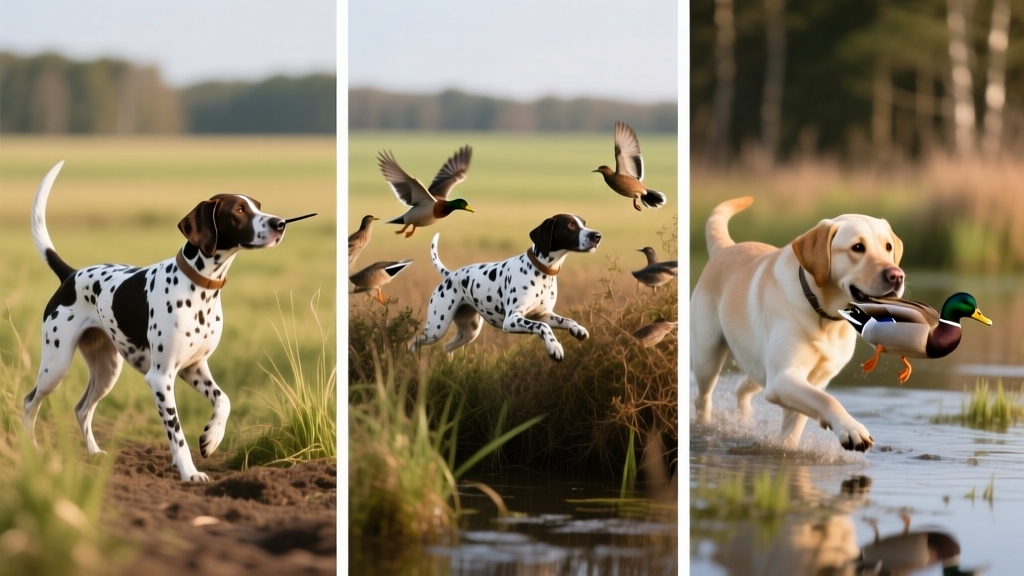
If you've ever watched an English Pointer freeze mid-stride with one paw raised, or marveled at a Labrador Retriever who instinctively carries objects gently in their mouth, you've witnessed thousands of years of canine science in action. Bird hunting dogs exhibit specialized predatory behaviors — pointing, flushing, and retrieving — that are modified expressions of the ancestral wolf predatory motor sequence. These aren't trained tricks; they are deeply ingrained neurological patterns shaped by both natural evolution and centuries of selective breeding. Understanding the science behind these behaviors transforms how you live with, train, and appreciate these remarkable dogs.
Quick Answer: Bird hunting dogs perform pointing, flushing, and retrieving behaviors because humans selectively amplified specific stages of the wolf predatory sequence (orient → stalk → chase → grab → kill → consume). Pointers were bred to freeze at the stalk phase; flushers to amplify the chase phase; retrievers to specialize in the grab-carry phase with inhibited bite pressure. These behaviors are controlled by distinct neural circuits involving the hypothalamus, amygdala, and dopaminergic reward pathways.
The Predatory Motor Sequence: The Neurological Blueprint Behind Bird Hunting Dogs
Every predatory mammal, including wolves and domestic dogs, possesses a hardwired behavioral chain called the predatory motor sequence. Research published in the Journal of Veterinary Behavior and documented in the Merck Veterinary Manual describes this sequence as a series of discrete motor patterns:
- Orient: Eyes and ears direct toward prey stimulus (sight, sound, scent)
- Stalk: Slow, deliberate approach with lowered body posture
- Chase: Rapid pursuit of fleeing prey
- Grab-bite: Seizing the prey with the mouth
- Kill-bite: Dispatching prey via suffocation or cervical fracture
- Dissect/Consume: Tearing and eating the prey
What makes bird hunting dogs scientifically fascinating is that selective breeding has amplified certain stages while suppressing others. A Pointer exhibits an exaggerated stalk followed by a complete behavioral freeze — the chase and grab are inhibited. A Retriever performs a modified grab-bite with dramatically reduced jaw pressure, carrying the "prey" back without damage. A Spaniel or flushing breed amplifies the chase phase to startle birds into flight.
Neuroimaging and behavioral research suggest these motor patterns are organized in the hypothalamus and periaqueductal gray matter of the brainstem. Electrical stimulation of specific hypothalamic regions in canines can elicit complete predatory sequences without any external stimulus — demonstrating that the neural circuitry is innate, not learned. The amygdala processes the emotional salience of prey stimuli (the excitement a birddog shows when it scents game), while dopaminergic pathways in the nucleus accumbens provide the reward reinforcement that makes these behaviors self-sustaining and intensely pleasurable for the dog.
Evolutionary Origins: From Ancestral Wolf to Specialized Bird Dog
Evolutionary Context: The ancestral wolf (Canis lupus) hunted cooperatively, using the complete predatory sequence to pursue large ungulates. However, wolves also hunted small game — birds, rodents, lagomorphs — using modified versions of the same sequence. When humans began domesticating dogs approximately 15,000–40,000 years ago, the earliest proto-dogs likely scavenged and hunted small prey around human settlements.
The specialized bird hunting dog emerged much later. Historical records from the American Kennel Club's field trial archives indicate that pointing breeds were documented in Mediterranean Europe by the 12th–14th centuries, initially used with nets rather than firearms. Flushing spaniels appear in records from the same era. Retrievers as a distinct category developed primarily in the 18th–19th centuries alongside the rise of shotgun sport hunting in Britain and North America.
The evolutionary mechanism behind breed specialization is directional selection on standing genetic variation. Rather than creating entirely new behaviors, breeders identified and amplified naturally occurring variations in predatory motor patterns. A wolf pup that hesitated slightly before chasing prey might have been selected as the foundation for pointing breeds. A wolf that preferentially carried food items back to the den rather than consuming them on-site provided the behavioral template for retrieving.
Genomic research, including studies referenced by the National Institutes of Health, has identified specific genetic loci associated with behavioral traits in dog breeds. The gene WBSCR17, located in the Williams-Beuren syndrome critical region on chromosome 6, has been linked to hypersociability in dogs — a trait that facilitates the cooperative hunting relationship between bird dogs and human handlers. Additionally, variations in the DRD4 dopamine receptor gene have been associated with novelty-seeking and activity levels, traits that differ measurably between pointing breeds and flushing breeds.
How Do Bird Hunting Dogs Sense and Process Prey? The Olfactory and Visual Mechanisms
Bird hunting dogs rely on a sophisticated sensory processing system that differs significantly from human perception. Understanding these mechanisms explains why your birddog behaves the way it does in the field — and in your backyard.
Olfactory Processing: The Scent Cone and Vomeronasal Integration
Dogs possess approximately 300 million olfactory receptors (compared to roughly 6 million in humans), with an olfactory epithelium surface area 30–60 times greater than ours depending on breed. For bird hunting dogs, scent processing operates through two parallel systems:
- Main olfactory system: Detects volatile organic compounds (VOCs) emitted by birds — including uropygial gland secretions, feather keratin degradation products, and metabolic byproducts in droppings. These VOCs form a "scent cone" that the dog tracks upwind.
- Accessory olfactory system (vomeronasal/Jacobson's organ): Processes heavier, non-volatile molecules, particularly pheromones. When a birddog pauses with its nose near the ground and exhibits the Flehmen response (lip curling), it is routing scent molecules to the vomeronasal organ for detailed chemical analysis.
The olfactory bulb in bird hunting breeds is proportionally larger than in brachycephalic breeds, containing more mitral cells (the output neurons that relay scent information to the cortex). This anatomical difference means a German Shorthaired Pointer literally processes scent information at a higher resolution than a Pug — it's not just motivation, it's hardware.
Visual Processing: Motion Detection and the Tapetum Lucidum
Bird hunting dogs, particularly pointing breeds, exhibit exceptional motion detection acuity. Research indicates dogs can detect moving objects at distances up to 800–900 meters, though stationary object discrimination drops to roughly 20/75 visual acuity compared to human 20/20. The tapetum lucidum, a reflective layer behind the retina, enhances light sensitivity for dawn/dusk hunting — precisely when game birds like grouse and pheasant are most active.
Flushing breeds (Spaniels, for example) tend to work at closer ranges (10–30 meters from the handler) and rely more heavily on olfactory cues combined with short-range visual detection of ground-level movement. Pointing breeds work at extended ranges (50–200+ meters) and integrate distant visual motion detection with wind-borne scent cones to locate coveys.
Breed Variations: How Selection Shaped Different Bird Hunting Strategies
| Category | Representative Breeds | Amplified Sequence Stage | Suppressed Stages | Typical Working Range |
|---|---|---|---|---|
| Pointers/Setters | English Pointer, German Shorthaired Pointer, Irish Setter, Brittany | Orient → Stalk (freeze) | Chase, grab-bite, kill-bite | 50–200+ meters |
| Flushers | English Springer Spaniel, Cocker Spaniel, Boykin Spaniel | Orient → Stalk → Chase (burst) | Grab-bite, kill-bite | 10–30 meters |
| Retrievers | Labrador Retriever, Golden Retriever, Chesapeake Bay Retriever, Nova Scotia Duck Tolling Retriever | Grab-bite (soft mouth) → Carry → Return | Kill-bite, dissect | Handler-directed (0–100 m on command) |
| Versatile/Continental | German Wirehaired Pointer, Vizsla, Weimaraner, Wirehaired Pointing Griffon | Full sequence through grab (point, flush, retrieve) | Kill-bite (inhibited) | 30–150 meters |
The concept of "soft mouth" in retrievers deserves specific attention. Studies measuring bite force in retriever breeds show they can modulate jaw pressure to as low as 2–5 PSI when carrying objects — compared to a bite force of 200–400+ PSI during defensive biting. This extraordinary motor control is the result of selective breeding for inhibited grab-bite pressure over 15+ generations. The neural mechanism involves enhanced proprioceptive feedback from mechanoreceptors in the periodontal ligament and oral mucosa, combined with cortical inhibition of the masseter and temporalis muscles via the trigeminal motor nucleus.
Common Misconceptions About Bird Hunting Dogs, Debunked
| Myth | Scientific Fact |
|---|---|
| "Pointing is a trained behavior." | Pointing is an innate motor pattern. Puppies from pointing breeds will spontaneously freeze in a pointing posture when exposed to bird scent, even without any prior training or exposure to adult pointing dogs. Training refines and adds handler control, but the freeze itself is genetically programmed. |
| "Bird dogs need to hunt to be happy." | Bird dogs need outlets for their amplified predatory sequence. This can be satisfied through hunt tests, field trials, structured scent work, flirt pole exercises, or advanced retrieval games. The neurological reward comes from performing the motor pattern, not from killing prey. |
| "Retrievers naturally bring things back without training." | The grab-and-carry impulse is innate, but the return to handler component is a trained behavior built on the dog's natural social bond and cooperative tendency. Without training, many retrievers will pick up objects and run away with them — the "keep-away" game exploits this natural sequence. |
| "You need an e-collar to train a bird dog." | Modern force-free and positive reinforcement methods are highly effective for bird dog training. Techniques using counter-conditioning, desensitization, and positive reinforcement with high-value rewards produce reliable field behaviors. Organizations like the AKC field trial community increasingly embrace science-based, humane training protocols. |
| "A bird dog that chases squirrels is poorly bred." | Squirrel chasing demonstrates a functional predatory sequence — it indicates healthy neurological development. The training goal is stimulus discrimination (responding to bird scent but ignoring squirrels), not suppression of the entire predatory drive. |
Practical Implications: Living With a Bird Hunting Dog in Daily Life
What the Science Means for Your Daily Routine
Exercise Requirements: Bird hunting breeds typically require 60–120 minutes of vigorous daily exercise. However, physical exercise alone is insufficient. These dogs need predatory sequence fulfillment — activities that allow them to express their amplified behavioral stages:
- For pointers: Scent work games, structured "find it" exercises, and long-line exploration in varied terrain (budget $15–$40 for a 30-foot biothane long line; $50–$150 for AKC scent work trial entry fees)
- For flushers: Flirt pole sessions (10–15 minutes, 2–3x daily), flirt pole with intermittent "catches" to complete the sequence and prevent frustration ($20–$45 for a quality flirt pole like the Squishy Face Studio model)
- For retrievers: Structured retrieve games with varied objects, water retrieval, and bumper launches ($25–$60 for a Chuckit! launcher; $15–$30 for canvas training bumpers)
- For versatile breeds: Combination activities including NAVHDA (North American Versatile Hunting Dog Association) natural ability tests, barn hunt, and multi-discipline sport participation
Behavioral Management: If your bird hunting dog exhibits problematic chasing (cars, bicycles, joggers), this represents a misdirected predatory sequence, not aggression. Intervention should focus on:
- Management: Secure fencing (minimum 6-foot height for athletic breeds), double-door entry protocols, long-line use in unsecured areas
- Redirection: Teaching an incompatible behavior (e.g., "watch me" or emergency recall) using high-value reinforcement (real meat, cheese — not dry kibble in high-distraction environments)
- Fulfillment: Providing structured outlets so the predatory drive is satisfied in appropriate contexts
Nutritional Considerations: Active bird hunting dogs working in the field may require 2,000–4,000+ calories daily during hunting season, compared to 1,200–1,800 for the same dog at rest. Performance formulations with 30%+ protein and 20%+ fat (e.g., Purina Pro Plan Sport 30/20, approximately $55–$70 per 35-lb bag) support sustained field activity. Always transition diets gradually over 7–10 days.
When Bird Hunting Behaviors Signal a Problem
While predatory motor patterns are normal, certain presentations warrant veterinary or behavioral evaluation:
- Compulsive chasing with no off-switch: If your dog cannot be interrupted from chasing even with high-value rewards or physical barriers, this may indicate a compulsive disorder. Canine compulsive disorders affect an estimated 2–8% of the dog population and respond to a combination of behavioral modification and, in some cases, SSRIs prescribed by your veterinarian.
- Sudden onset of hyperfixation in a senior dog: A previously calm dog that suddenly develops intense predatory chasing behavior after age 7–8 should be evaluated for cognitive dysfunction syndrome or neurological changes. Consult your veterinarian for a full neurological exam.
- Predatory drift toward small household pets: While bird dogs can coexist with cats and small dogs, predatory drift — where a familiar small animal suddenly triggers the full predatory sequence — is a documented behavioral phenomenon. It typically occurs when the small animal exhibits rapid, erratic movement (running, squealing). Management protocols including baby gates, separate zones, and supervised interaction are essential in multi-pet households with high-drive bird dogs.
- Resource guarding of retrieved objects: If your retriever begins growling, snapping, or freezing when you approach them while they hold a toy or object, this is resource guarding, not normal retrieving behavior. Work with a certified force-free behavior consultant (look for IAABC or CCPDT certification; sessions typically range $100–$200/hour).
🚨 When to Consult Your Veterinarian: If your bird hunting dog exhibits sudden behavioral changes, compulsive patterns that cannot be interrupted, aggression toward familiar humans or animals, or signs of pain during field activities (limping, reluctance to jump, vocalizing when picking up objects), schedule a veterinary exam promptly. These may indicate underlying medical conditions including orthopedic pain, neurological disease, or endocrine disorders.
Frequently Asked Questions About Bird Hunting Dog Science
Why do bird hunting dogs point at birds?
Pointing is an amplified and prolonged version of the stalk phase of the predatory motor sequence. In wolves, the stalk is a brief transitional behavior before the chase. In pointing breeds, centuries of selective breeding have extended this phase into a sustained freeze, sometimes lasting several minutes. The dog's brain is processing prey location via scent and inhibiting the motor command to chase — a form of behavioral inhibition mediated by the prefrontal cortex and its connections to the hypothalamic predatory centers. The raised paw, extended tail, and fixed gaze are components of an "intention movement" — the dog's body language signaling prey location to the human handler, a cooperative behavior unique to the dog-human hunting partnership.
Can dogs actually smell individual bird species?
Yes. Research demonstrates that trained dogs can discriminate between scent samples from different bird species with accuracy rates exceeding 90%. Each bird species produces a unique volatile organic compound profile from its uropygial (preen) gland secretions, feather oils, and metabolic waste. Experienced bird hunting dogs learn to associate specific scent profiles with specific prey species, which is why a well-trained Pointer may show more excitement when it scents pheasant (a preferred game bird) compared to a non-game species like a starling.
How do bird hunting dogs process scent differently from humans?
Beyond the 50x greater receptor count, dogs employ stereo olfaction — each nostril samples air independently, allowing the brain to compare scent intensity between left and right nostrils to determine directionality. Dogs also use a breathing technique during active scenting that separates inhalation (sampling) from exhalation (directed downward through slits in the nostrils), preventing exhaled air from disrupting the scent sample. This is physiologically impossible for humans. Additionally, the canine olfactory bulb has direct connections to the hippocampus (memory) and amygdala (emotion), which is why scent-triggered behaviors in bird dogs are so immediate, intense, and resistant to extinction.
What does it mean when my dog "checks in" during a hunt or walk?
When a bird hunting dog pauses its search to look back at you, make eye contact, or return to your side briefly, this is a cooperative checking behavior rooted in the domestication process. Research from the American Veterinary Medical Association-referenced literature on dog-human communication shows that dogs are unique among canids in spontaneously seeking human guidance. In bird hunting breeds, this checking behavior has been specifically selected for — a dog that maintains handler awareness is easier to direct in the field than one that hunts independently.
Is it normal for my bird dog to carry things in its mouth constantly?
Yes, particularly in retriever breeds. The grab-carry impulse is the amplified motor pattern that defines these breeds. Many Labrador and Golden Retrievers will greet visitors by picking up a shoe, toy, or cushion — this is a displacement behavior channeled through their amplified carry instinct. It's normal and healthy. Provide appropriate carry objects (soft toys, canvas bumpers) and redirect from inappropriate items using positive reinforcement trade-up exercises (offer a higher-value item in exchange rather than forcibly removing the object, which can trigger resource guarding).
How is a bird dog's hunting instinct different from human hunting behavior?
Human hunting is primarily a cognitive-planned activity mediated by the prefrontal cortex — we use tools, strategy, and abstract reasoning. A bird dog's hunting behavior is a sensorimotor pattern driven by subcortical brain structures (hypothalamus, brainstem). The dog does not "plan" to hunt; it responds to prey stimuli with hardwired motor programs that feel intrinsically rewarding. This is why bird hunting dogs will perform pointing, flushing, or retrieving behaviors even in the complete absence of training or human direction — the behavior is its own reward, mediated by dopamine release in the brain's mesolimbic pathway.
Related Behaviors and Cross-References
The predatory motor sequence that drives bird hunting dogs also underlies many other common canine behaviors:
- Herding behavior in Border Collies and Australian Shepherds represents an amplified stalk-and-chase sequence with inhibited grab-bite
- Terrier "shake and kill" behavior with toys represents the complete predatory sequence through the kill-bite stage
- Scent hound trailing (Beagles, Bloodhounds) represents amplified orient behavior with extended duration
- Sighthound coursing (Greyhounds, Whippets) represents amplified chase with extreme speed specialization
- Livestock guardian behavior (Great Pyrenees, Anatolian Shepherds) represents suppressed predatory sequence with amplified territorial and protective behaviors
Understanding where your dog falls on the predatory sequence spectrum helps you predict behavior, design appropriate enrichment, and build a training plan that works with your dog's neurological wiring rather than against it.
Marcus Aldridge
All our authors care for dogs every day — read more of their work on the authors page.


