Bad Breath in Dogs: Why It Happens and What It Means
Explore the science behind bad breath in dogs — from oral microbiome research to evolutionary origins, breed risks, and when halitosis signals serious disease.
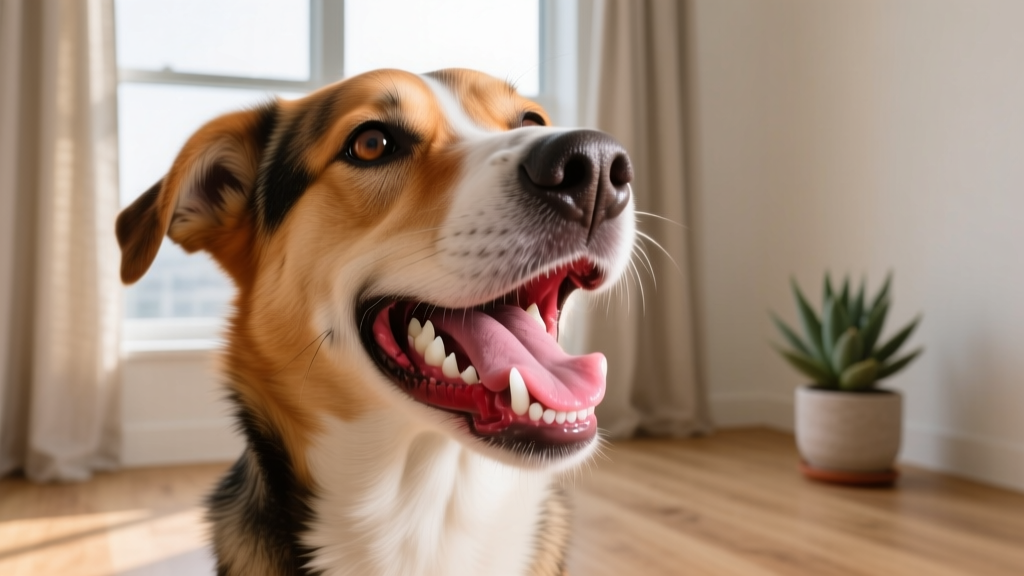
Direct Answer: Bad breath in dogs (halitosis) is primarily caused by volatile sulfur compounds (VSCs) — hydrogen sulfide, methyl mercaptan, and dimethyl sulfide — produced by anaerobic bacteria colonizing plaque biofilm on teeth and the tongue's posterior surface. While mild oral odor is normal for a carnivore-descended species, persistently foul breath signals periodontal disease (affecting an estimated 80% of dogs over age 3), gastrointestinal dysfunction, or metabolic conditions like kidney disease. The specific odor profile often points to the underlying cause: a rotting-meat smell suggests advanced dental decay, a sweet or fruity odor may indicate diabetic ketoacidosis, and a urine-like smell can signal renal failure.
The Microbiome Behind Your Dog's Breath
Dog breath isn't simply "dirty" — it's a complex chemical output of a living microbial ecosystem. The canine oral cavity hosts over 400 bacterial species, many unique to dogs and absent from human mouths. A 2022 study published in the Journal of Veterinary Dentistry cataloged the canine oral microbiome and found that dogs with periodontal disease show a dramatic shift from aerobic gram-positive bacteria (the healthy baseline) toward anaerobic gram-negative species like Porphyromonas gulae, Prevotella intermedia, and Treponema denticola.
These anaerobes thrive in low-oxygen pockets — deep gum crevices, fractured tooth surfaces, and the crypts of the tongue's papillae. They metabolize sulfur-containing amino acids (cysteine, methionine) found in saliva and food debris, releasing VSCs as metabolic waste. Hydrogen sulfide smells like rotten eggs. Methyl mercaptan resembles decaying cabbage. Dimethyl sulfide carries a sweetish, sewage-like note. Together, these three compounds account for roughly 90% of the malodor in canine halitosis.
The pH Factor Most Owners Miss
Canine saliva has a pH of approximately 7.5–8.0, which is more alkaline than human saliva (6.5–7.5). This higher pH actually slows cavity formation (dogs rarely get caries) but creates an ideal environment for calculus (tartar) mineralization. Calcium phosphate from saliva precipitates onto plaque within 24–72 hours, hardening it into calculus that harbors bacteria beneath its surface. This is why brushing alone — once tartar has formed — cannot eliminate bad breath in dogs. The bacteria are shielded under a mineralized crust that only professional scaling can remove.
Evolutionary Origins: Why Dogs Developed This Oral Ecology
Ancestral Context: Wild canids — wolves, coyotes, and African wild dogs — maintain relatively clean teeth through their feeding mechanics. Gnawing on raw bones provides mechanical abrasion that disrupts plaque biofilm, while tearing raw meat and hide stimulates gingival blood flow and saliva production. Their diets are also low in fermentable carbohydrates, starving the plaque-forming bacteria that thrive on starches.
The shift began roughly 15,000–30,000 years ago when proto-dogs began scavenging near human settlements rich in starchy agricultural waste. Genomic studies confirm that dogs evolved extra copies of the AMY2B gene (producing amylase for starch digestion) compared to wolves — an adaptation that inadvertently fed oral bacteria the simple sugars they need to produce acid and VSCs. Modern kibble, which is 30–60% carbohydrate by weight, continues this trend, providing abundant substrate for plaque formation.
Small and brachycephalic breeds face an additional evolutionary mismatch. Wolves have long muzzles with widely spaced teeth, allowing saliva to flush food debris naturally. Breeds like Pugs, Shih Tzus, and Cavalier King Charles Spaniels have been selectively bred for shortened skulls, compressing 42 teeth into a space evolved for far fewer. This crowding creates tight interproximal spaces where anaerobic pockets flourish — making periodontal disease nearly inevitable without intervention.
Physiological Mechanisms: How Bad Breath Forms Step by Step
Understanding the progression from healthy mouth to halitosis helps explain why early intervention matters. Here's the physiological cascade:
- Pellicle formation (hours): A thin protein film from saliva coats tooth surfaces within hours of cleaning. This pellicle is odorless and normal.
- Plaque colonization (24–48 hours): Pioneer bacteria — primarily Streptococcus and Actinomyces species — adhere to the pellicle and begin multiplying. Plaque is a soft, sticky biofilm that can still be disrupted by brushing.
- Biofilm maturation (3–5 days): The plaque community diversifies. Anaerobic bacteria migrate into deeper layers, establishing oxygen-depleted zones. VSC production begins, producing the first noticeable odor.
- Calculus mineralization (1–3 weeks): Salivary calcium phosphate crystallizes within the biofilm, converting soft plaque into hard calculus (tartar). This creates a rough surface that attracts more plaque — a self-accelerating cycle.
- Gingival inflammation (weeks to months): Bacterial toxins trigger an immune response. The gingival sulcus (the shallow groove between tooth and gum) deepens from a normal 1–3 mm to 4+ mm, creating a periodontal pocket where the worst odor-producing anaerobes thrive.
- Systemic bacterial translocation (months to years): Inflamed, bleeding gums allow oral bacteria to enter the bloodstream. Studies have linked canine periodontal disease to elevated markers of kidney, liver, and cardiac damage.
When Bad Breath Signals Something Beyond the Mouth
While periodontal disease accounts for the majority of canine halitosis cases, the odor profile can serve as a diagnostic clue for systemic conditions. Here's a framework veterinarians use to interpret different breath odors:
| Odor Description | Likely Cause | Mechanism | Urgency |
|---|---|---|---|
| Rotten meat / decaying tissue | Advanced periodontal disease, oral tumors, or foreign body (bone fragment, stick lodged in palate) | Necrotic tissue and anaerobic bacterial breakdown of proteins | Veterinary visit within 1–2 weeks |
| Sweet, fruity, or acetone-like | Diabetic ketoacidosis (DKA) | Ketone bodies (acetone, acetoacetate) exhaled via lungs when insulin is insufficient | Emergency — same day |
| Urine or ammonia | Chronic kidney disease (CKD) or acute renal failure | Uremic toxins (urea, creatinine) accumulate in blood and are exhaled or secreted in saliva | Urgent — within 24–48 hours |
| Fecal or vomit-like | Megaesophagus, intestinal obstruction, or severe gastroesophageal reflux | Stagnant food fermenting in dilated esophagus or backing up from GI tract | Veterinary visit within 24–48 hours |
| Metallic or blood-like | Oral trauma, bleeding tumors, or coagulation disorders | Iron in hemoglobin oxidizing on oral surfaces | Veterinary visit within 24–48 hours |
⚠️ When to Call Your Veterinarian Now: If your dog's bad breath is accompanied by any of these signs, seek veterinary care within 24 hours: sudden increase in water consumption, vomiting, lethargy, loss of appetite, yellowing of gums or eyes, difficulty eating or dropping food, facial swelling, or pawing at the mouth. These combinations suggest systemic illness, not just dental disease. Always consult your veterinarian for proper diagnosis — this article is educational, not a substitute for professional care.
Breed Variations in Halitosis Risk
Not all dogs are equally prone to bad breath. Craniofacial structure, body size, and genetic immune factors create significant breed-level variation:
Highest-risk breeds: Brachycephalic breeds — Pugs, Bulldogs (English and French), Shih Tzus, Pekingese, Boston Terriers — face the greatest periodontal risk due to dental crowding. A study referenced in the Merck Veterinary Manual notes that toy and small breeds (Yorkshire Terriers, Chihuahuas, Miniature Dachshunds) show periodontal disease rates exceeding 80% by age 3, compared to roughly 50% in large breeds.
Moderate-risk breeds: Medium-sized mesocephalic breeds like Beagles, Cocker Spaniels, and Border Collies have more proportional dental architecture but may have genetic predispositions to specific oral conditions. Cocker Spaniels, for instance, are prone to lip-fold pyoderma — bacterial infections in the skin folds around the lips that produce a yeasty, foul odor often confused with dental halitosis.
Lower-risk breeds: Large dolichocephalic breeds — Greyhounds, Dobermans, German Shepherds — have well-spaced teeth and more natural mechanical cleaning from chewing. However, Greyhounds are a notable exception among large breeds: they have a documented genetic predisposition to aggressive periodontal disease, likely related to immune system variation. Sighthound owners should not assume dental health based on breed size alone.
Common Misconceptions Debunked
| Myth | Evidence-Based Fact |
|---|---|
| "Dogs are supposed to have bad breath — it's just what dogs smell like." | Normal canine breath has a mild, not unpleasant odor. Persistent foul breath indicates active bacterial overgrowth and usually periodontal disease. A healthy dog's breath should not make you recoil. |
| "Dry kibble cleans a dog's teeth." | Standard kibble shatters on the crown of the tooth and provides minimal mechanical abrasion at the gumline where plaque matters most. Only specially formulated dental diets (with larger, fibrous kibble designed to envelop the tooth) have demonstrated plaque reduction in clinical trials. Look for products with the Veterinary Oral Health Council (VOHC) seal of acceptance. |
| "Chewing on bones keeps teeth clean and breath fresh." | While raw bones may provide some abrasion, they carry significant fracture risk — particularly cooked bones, which splinter. Veterinary dentists report that slab fractures of the maxillary fourth premolar (the large upper carnassial tooth) are among the most common injuries from hard chew objects. The AVMA specifically discourages feeding bones due to risks of dental fractures, esophageal obstruction, and intestinal perforation. |
| "Bad breath is just a cosmetic issue." | Periodontal bacteria entering the bloodstream through inflamed gums have been associated with endocarditis (heart valve infection), glomerulonephritis (kidney inflammation), and hepatic abscesses. Halitosis is often the first detectable sign of a process that can shorten your dog's lifespan. |
| "My dog is too old for dental anesthesia — it's too risky." | Modern veterinary anesthesia protocols (including pre-anesthetic bloodwork, IV fluids, and multiparameter monitoring) make dental procedures safe for most senior dogs. The risk of untreated periodontal infection — chronic pain, systemic inflammation, organ damage — generally exceeds the risk of a properly managed anesthetic event. Age alone is not a contraindication. |
How Canine Oral Health Differs From Humans
Dogs and humans share the basic architecture of teeth, gums, and oral bacteria, but several physiological differences shape how halitosis develops in each species:
Cavity resistance vs. gum vulnerability: Dogs' alkaline saliva (pH 7.5–8.0) protects against dental caries — fewer than 5% of dogs develop cavities. However, this same pH accelerates calculus formation. Where humans primarily lose teeth to decay, dogs lose them to periodontal ligament destruction. A dog's teeth don't rot from the crown down; they loosen from the root up as the supporting bone erodes.
Tooth count and density: Adult dogs have 42 teeth compared to humans' 32, packed into a proportionally smaller jaw. The resulting crowding — especially in small breeds — creates far more interproximal niches for anaerobic bacteria. Human flossing reaches surfaces that a dog's anatomy makes inaccessible without professional tools.
Communication through scent: Dogs evolved to gather information through oral and facial scent glands. What humans perceive as "bad breath" partly reflects a dog's normal chemical communication system. However, the distinction between functional scent communication and pathological halitosis is clear: healthy dogs produce mild oral odors; diseased mouths produce VSCs at concentrations detectable even to the less-sensitive human nose.
Practical Implications: An Evidence-Based Oral Care Plan
Daily and Periodic Care Framework
Daily (the non-negotiable):
- Tooth brushing with a dog-specific enzymatic toothpaste (human toothpaste contains xylitol, which is toxic to dogs, or fluoride that causes GI upset). Use a dual-head canine brush or a finger brush. Focus on the buccal (cheek-side) surfaces of the upper premolars and canines, where plaque accumulates fastest. Effective brushing takes 30–60 seconds per side.
- Water additives containing chlorhexidine (0.12% concentration) or zinc gluconate can reduce VSC production between brushings. Products like Healthy Mouth™ have VOHC acceptance. Expect to spend $12–$18 per bottle (lasts approximately 30 days for a medium dog).
Weekly:
- Inspect your dog's gums: healthy gingiva is coral-pink (or pigmented black/gray in some breeds). Red, swollen, or bleeding gums at the gumline indicate active gingivitis.
- Lift the lips and check for calculus buildup — a yellow-to-brown hardened deposit, most visible on the upper premolars and canines.
- Offer a VOHC-approved dental chew (e.g., Purina Dental Chewz at $15–$22 for a 30-count bag, or Greenies at $18–$28). These are formulated to flex around the tooth and provide mechanical cleaning without fracture risk.
Annually (or as recommended by your vet):
- Professional dental cleaning under general anesthesia — this is the only way to scale subgingival calculus and probe periodontal pockets. Expect costs of $300–$800 for a routine cleaning without extractions at a general practice, or $500–$1,500+ at a veterinary dental specialist. Full-mouth dental radiographs (essential for detecting hidden root disease) add $100–$250.
- Pre-anesthetic bloodwork ($80–$180) to assess liver and kidney function before anesthesia.
Related Canine Science Topics
Oral health connects to broader aspects of canine biology and behavior:
- Canine olfaction and oral scent: Dogs have up to 300 million olfactory receptors (compared to humans' 6 million). Their vomeronasal organ (Jacobson's organ) specifically processes pheromones and oral chemical signals. When dogs greet each other with open-mouthed sniffing, they're reading a complex chemical profile that includes oral microbiome output.
- Coprophagia and breath odor: Dogs that consume feces (their own or other animals') introduce intestinal bacteria into the oral cavity, creating a distinctly foul halitosis that differs from periodontal odor. This behavior may stem from ancestral scavenging instincts or nutritional deficiency.
- Resource guarding and oral sensitivity: Dogs with dental pain may develop resource guarding around food or chew items — a behavioral change rooted in the anticipation of oral discomfort when chewing. If a previously relaxed dog suddenly growls when approached during meals, dental pain should be ruled out before behavioral intervention.
Frequently Asked Questions
Why does my dog's breath smell so bad even after eating?
Post-meal halitosis that persists beyond 30 minutes usually indicates that food particles are becoming trapped in existing periodontal pockets or between crowded teeth. The bacteria in these pockets rapidly ferment trapped carbohydrates, producing VSCs within minutes. If you notice this pattern, your dog likely has established periodontal disease that needs professional evaluation — the pockets are acting as fermentation chambers every time they eat.
Can dogs actually get their breath checked the way humans do at the dentist?
Yes. Veterinary dentists use halimeters — devices that measure VSC concentrations in parts per billion — to objectively quantify halitosis severity. While not standard at every wellness visit, halimetry is used in veterinary dental specialty practices to establish baselines before treatment and measure improvement afterward. A simpler clinical approach is the organoleptic score: the veterinarian literally sniffs the dog's breath at varying distances and rates it on a 0–5 scale.
What does it mean when my dog's breath suddenly smells different?
A sudden change in breath odor — particularly if it shifts toward sweet, fruity, ammonia-like, or distinctly foul — warrants prompt veterinary attention. Acute changes often signal systemic events: new-onset diabetes (ketone production), acute kidney injury (uremic toxins), or ingestion of a caustic or toxic substance. A gradual worsening over months typically reflects progressive periodontal disease. Always consult your veterinarian when you notice a distinct change in your dog's breath character.
Is bad breath normal in puppies?
Puppies may have a distinctive, mildly sour breath during the teething window (approximately 3–7 months of age) as deciduous teeth are resorbed and replaced. Mild odor from the inflammation of erupting teeth is normal. However, a truly foul or putrid smell in a puppy is not normal and may indicate a retained deciduous tooth (creating a pocket of infection), an oral foreign body, or a congenital condition like a cleft palate trapping food. Puppy breath should smell relatively neutral or slightly "puppy-like" — not rotten.
How is canine halitosis different from human bad breath?
The underlying mechanism — anaerobic bacteria producing VSCs — is identical. But the bacterial species differ (Porphyromonas gulae in dogs vs. Porphyromonas gingivalis in humans), and dogs don't typically develop halitosis from tonsil stones or post-nasal drip the way humans do. Additionally, dogs cannot perform the oral hygiene behaviors humans use (flossing, tongue scraping, mouthwash), making them entirely dependent on owner intervention. Without brushing and professional care, virtually all dogs will develop halitosis-producing periodontal disease — it's a matter of when, not if.
Does my dog's diet affect their breath?
Significantly. Diets high in fermentable carbohydrates (many commercial kibbles contain 30–60% starch) provide substrate for plaque bacteria. Novel protein or limited-ingredient diets may help if the halitosis is partially driven by food sensitivities causing gastrointestinal reflux. Raw diets are sometimes claimed to improve breath through mechanical bone-cleaning, but they carry bacterial contamination risks (Salmonella, Listeria) documented by the FDA and provide inconsistent dental benefit. The most evidence-supported dietary approach is a VOHC-accepted dental diet with mechanically engineered kibble texture.
Key Research References
- Dewhirst, F.E., et al. "Phylogeny of 328 oral bacterial species from 66 dogs." Journal of Clinical Microbiology, 2022 — Comprehensive canine oral microbiome catalog identifying breed-specific bacterial profiles.
- Merck Veterinary Manual: Overview of Dental Disease in Dogs — Clinical reference on periodontal disease prevalence, progression, and breed predisposition.
- AVMA: Dental Health — American Veterinary Medical Association guidance on professional dental care standards and anesthesia safety.
- Veterinary Oral Health Council (VOHC) — Independent body that evaluates and certifies dental products for efficacy in reducing plaque and calculus in dogs and cats.
Priya Sutaria
All our authors care for dogs every day — read more of their work on the authors page.


