Alano Español (Spanish Alano Dog): Breed Science,...
Explore the science behind the Alano Español dog — genetics, bite mechanics, temperament, and evolutionary history of this rare Spanish catch dog breed.
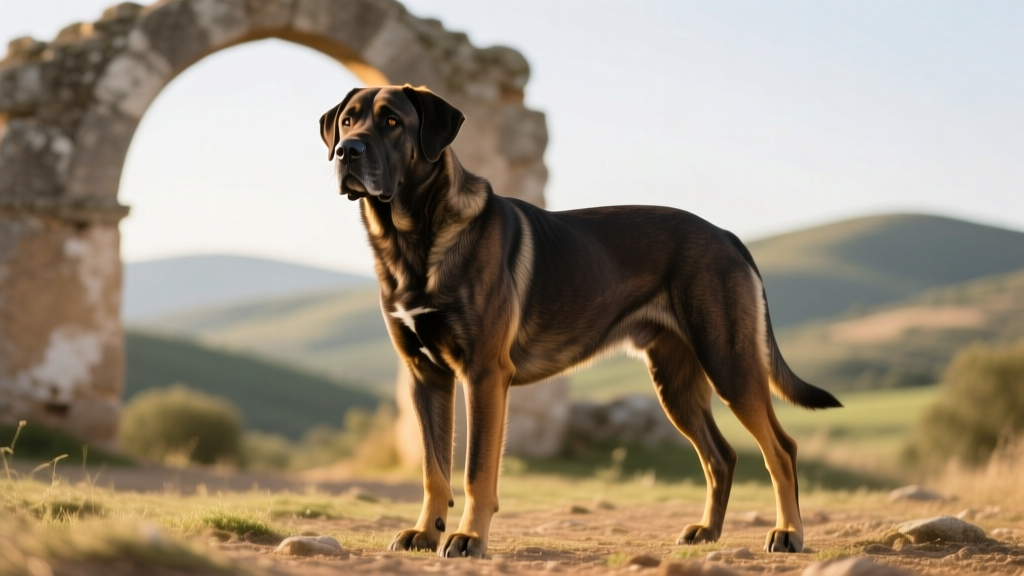
What is the Alano Español? The Alano Español (Spanish Alano) is a large, molosser-type catch dog originating from the Iberian Peninsula, historically used for bull-baiting, boar hunting, and livestock management. Recognized by Spain's Real Sociedad Canina de España (RSCE) in 2004, the breed nearly went extinct in the mid-20th century before dedicated recovery efforts began in the 1980s. Today, fewer than 1,000 registered Alanos exist worldwide, making them one of Europe's rarest working breeds. They weigh 75–88 lb (34–40 kg), stand 22–25 inches (56–63 cm) at the shoulder, and possess a brachycephalic-to-mesocephalic skull structure that gives them exceptional bite force relative to body size.
The Evolutionary Origins of the Alano Español
The Alano's lineage traces back to the livestock guardian and war dogs of the ancient Alans, a nomadic Sarmatian people who migrated across Europe during the 4th and 5th centuries CE. These dogs accompanied the Alans through the Caucasus, across the Roman Empire, and eventually into the Iberian Peninsula during the Visigothic invasions.
Evolutionary Context: The Alano's "catch and hold" biting style — gripping large prey with sustained pressure rather than rapid slashing — reflects an ancestral hunting strategy that predates modern domestication. In wolf packs, large-prey hunting relies on sustained jaw grip to immobilize animals like bison or elk. The Alano's skull morphology, muscular jaw structure, and behavioral tendency to bite and hold (rather than bite-and-release like many terriers) represent a selected amplification of this ancestral predatory motor pattern, specifically the "grab-bite" component of the predatory sequence described by canine behaviorist Raymond Coppinger.
Genetic analyses place molosser-type breeds, including the Alano, within a distinct clade separate from spitz, herding, and toy breeds. A 2017 study published in Cell Reports by Parker et al. mapped genomic relationships among 161 dog breeds, confirming that Iberian mastiff and catch dog breeds share ancestral lineages with Central Asian livestock guardian types, supporting the historical migration theory.
Skull Mechanics and Bite Force: The Science of the Alano's Jaw
How does the Alano's bite work? The Alano Español has a skull index (width-to-length ratio) that falls between brachycephalic and mesocephalic categories — sometimes termed "modified brachycephalic." This skull shape produces a wider zygomatic arch and shorter rostrum compared to dolichocephalic breeds like Greyhounds, resulting in greater temporalis and masseter muscle cross-sectional area.
Bite force in dogs correlates directly with skull width and jaw muscle mass. Research published in the Journal of Anatomy (Ellis et al., 2009) demonstrated that brachycephalic and molosser breeds generate bite forces ranging from 250 to over 550 Newtons at the carnassial teeth, compared to 130–200 N in similarly sized dolichocephalic breeds. The Alano, with a head circumference typically measuring 20–23 inches (51–58 cm) and pronounced masseter development, falls in the upper range of this spectrum.
Physiological mechanism: The temporalis muscle, anchored to the sagittal crest and zygomatic arch, provides the primary closing force. In the Alano, the sagittal crest is well-developed (a trait shared with other molosser breeds), providing increased surface area for muscle attachment. The masseter muscle, running from the zygomatic arch to the mandible, contributes lateral grinding force. Together, these muscles generate the sustained, high-pressure grip that historically made the Alano effective at immobilizing bulls and wild boar.
| Metric | Alano Español | Presa Canario | Dogo Argentino | American Pit Bull Terrier |
|---|---|---|---|---|
| Skull Type | Modified brachycephalic | Brachycephalic | Mesocephalic | Mesocephalic |
| Estimated Bite Force (N) | 400–550 | 450–600 | 350–500 | 235–330 |
| Head Circumference | 20–23 in (51–58 cm) | 22–26 in (56–66 cm) | 19–22 in (48–56 cm) | 16–19 in (41–48 cm) |
| Primary Bite Style | Catch and hold | Catch and hold | Catch and release | Catch and hold |
| Working Weight | 75–88 lb (34–40 kg) | 88–130 lb (40–59 kg) | 80–100 lb (36–45 kg) | 30–65 lb (14–29 kg) |
Temperament Science: Why Alanos Are Calm Until They're Not
The Alano Español displays what canine behaviorists call high bite-threshold, low reactivity temperament — meaning they are slow to trigger aggressive responses but, once engaged, exhibit intense and sustained drive. This is not a contradiction; it's a product of selective pressure for specific neurochemical profiles.
How do Alanos process threat stimuli? Temperament in working catch dogs involves a balance between serotonin-mediated impulse control and dopamine-driven reward-seeking in predatory behavior. Breeds selected for bull-baiting and boar-catching needed dogs that would not react impulsively to provocation (a dog that attacks the handler or livestock is counterproductive) but would engage with extreme intensity when directed at the target animal.
This neurobehavioral profile produces a dog that is notably calm in domestic settings — Alanos are often described as "furniture dogs" at home — but capable of explosive engagement when stimulated. Serotonin receptor polymorphisms (particularly 5-HT2A variants) have been linked to aggression thresholds in dogs in research published in Applied Animal Behaviour Science. While no breed-specific genomic study has been conducted on Alanos (given the small population size), their behavioral phenotype aligns with high serotonin tone combined with high dopaminergic drive in prey-oriented contexts.
What does it mean when my Alano stares and freezes?
The "stalking freeze" — where an Alano locks onto a stimulus, becomes rigid, and fixes gaze — is an expression of the predatory sequence's orient and stalk phase. This is normal predatory drift, not necessarily aggression. In the Alano's working context, this freeze preceded the chase-and-catch phase. Owners should redirect this behavior with a recall cue or engagement toy before the dog progresses to the chase phase, particularly around small animals or fast-moving children.
Common Misconceptions About the Alano Español
| Myth | Fact |
|---|---|
| "Alanos are inherently aggressive and dangerous" | Alanos score well on temperament evaluations when properly socialized. The RSCE breed standard specifically penalizes unprovoked aggression. Their low reactivity means they are typically less reactive than many popular breeds, but their power means any incident has greater consequence. |
| "They're the same as Presa Canarios" | While both are Iberian molosser breeds, the Alano is lighter (75–88 lb vs. 88–130 lb), more athletic, and was selected for speed and endurance in boar hunting. The Presa Canario was developed primarily as a guardian and cattle dog with a heavier, more stationary build. |
| "Alanos have lockjaw" | No dog breed possesses a locking jaw mechanism. The Alano's sustained grip is a behavioral trait (high persistence) combined with powerful jaw musculature, not a mechanical locking structure. All dogs can release their bite voluntarily. |
| "They can't live with other dogs" | Alanos historically worked in packs of 3–5 dogs during boar hunts. Dog-to-dog socialization during the critical period (3–14 weeks) typically produces stable multi-dog cohabitation, though same-sex aggression can emerge in intact adults — a trait common across molosser breeds. |
| "They're too rare to find health data on" | The Spanish Alano recovery program has maintained pedigree records since the 1980s, and the RSCE tracks health data. Known issues include hip dysplasia (estimated 8–12% prevalence in screened dogs) and entropion, though the small gene pool requires careful outcrossing management. |
Health Science: Genetic Bottlenecks and Recovery Breeding
The Alano Español experienced a severe population bottleneck in the 1960s and 1970s, when changing agricultural practices and the banning of bull-baiting reduced the breed to fewer than 50 known individuals. The recovery program, initiated by university researchers and breed enthusiasts in Salamanca and Extremadura in the 1980s, rebuilt the population from these remaining dogs.
What does this mean genetically? Bottleneck events reduce heterozygosity — the proportion of gene loci where an individual carries two different alleles. Low heterozygosity increases the risk of recessive genetic diseases being expressed. According to the Merck Veterinary Manual, breeds with effective population sizes below 50 face elevated inbreeding depression risk.
Current health concerns documented in the breed include:
- Hip dysplasia: Estimated 8–12% prevalence based on RSCE screening data. PennHIP or OFA screening is recommended before breeding.
- Entropion: Inward rolling of the eyelid, seen in approximately 3–5% of the population. Surgical correction costs $300–$800 per eye.
- Gastric dilatation-volvulus (GDV/bloat): As a deep-chested breed over 70 lb, Alanos carry elevated bloat risk. Prophylactic gastropexy during spay/neuter ($200–$500 additional cost) is recommended by many veterinarians for at-risk breeds.
- Cruciate ligament injuries: The Alano's athletic build and high-drive movement style predispose them to CCL tears, with TPLO surgical repair costing $3,500–$5,500 per knee.
Emergency Red Flags for Alano Owners:
- Unproductive retching, distended abdomen, or restlessness after eating — possible GDV. Seek emergency veterinary care immediately.
- Sudden hind-limb lameness or "clicking" knee — possible CCL tear.
- Chronic eye discharge or squinting — possible entropion requiring surgical correction.
Always consult your veterinarian for diagnosis and treatment. For toxic ingestion emergencies, contact ASPCA Animal Poison Control at (888) 426-4435 (24/7, consultation fee applies).
Practical Implications for Alano Owners
Exercise Requirements
Alanos need 90–120 minutes of structured activity daily, including at least 30 minutes of high-intensity work (sprint-chase games, weighted pulling, flirt pole sessions). Without adequate physical and mental stimulation, they may develop destructive behaviors or redirected predatory drift toward household pets or passing joggers.
Training Approach
Use positive reinforcement and force-free methods exclusively. Alanos are sensitive to handler tone despite their tough appearance — harsh corrections or aversive tools (shock collars, prong collars) damage the trust relationship and can trigger defensive responses in a dog powerful enough to cause serious injury. Reward-based engagement training, using high-value food rewards (freeze-dried liver, chicken) and tug-toy reinforcement, produces reliable recall and impulse control.
Socialization Protocol
Begin socialization during the 3–14 week critical period. Expose the puppy to a minimum of 100 novel stimuli (surfaces, sounds, people of different appearances, other vaccinated dogs) before 16 weeks. For adult Alanos with limited socialization history, implement a desensitization and counter-conditioning program at sub-threshold distances — typically starting at 50–100 feet from triggers and reducing distance over weeks as the dog maintains relaxed body language.
Housing and Containment
A minimum 6-foot fence is recommended. Alanos can scale shorter fences when motivated. Electronic/invisible fences are unsuitable — the breed's high pain tolerance means the deterrent shock will not reliably contain them, and the frustration can increase territorial reactivity. A physical fence with a dig-proof footer (buried 12–18 inches or secured with an L-footer) is the safe standard.
Cost of Ownership
Expect to invest $2,500–$4,000 for a puppy from a registered RSCE breeder (imports from Spain add $1,000–$2,500 in transport and quarantine costs). Annual care costs range from $1,800–$3,200, including premium large-breed nutrition ($60–$90/month for a 80 lb dog), pet insurance ($50–$90/month for comprehensive coverage), and preventive veterinary care.
How Is the Alano Different from Other Molosser Breeds?
The Alano occupies a unique niche among catch dogs. Unlike the Dogo Argentino (bred for pack-hunting puma and boar with a stronger prey drive and less human-bonding), the Alano was selected for close cooperation with human handlers and the ability to work in coordinated groups. Unlike the heavier Presa Canario or Neapolitan Mastiff, the Alano retains the athletic capacity to run 15–20 mph over rough terrain for sustained periods — a requirement of traditional montería (driven boar hunt) work in the Sierra Morena.
This combination of power, athleticism, and handler-focus makes the Alano behaviorally closer to a working-line Belgian Malinois in temperament structure than to a typical mastiff breed, despite the vastly different physical appearance.
Why do Alano Españols have such a strong bite?
The Alano's bite force (estimated 400–550 N) results from selective breeding for a modified brachycephalic skull with wide zygomatic arches, a well-developed sagittal crest for temporalis muscle attachment, and behavioral selection for sustained gripping during bull and boar work. This is a functional adaptation, not a genetic anomaly.
Can Alanos live with cats or small dogs?
Some Alanos cohabit successfully with cats and small dogs when raised together from puppyhood, but the breed's strong predatory drive means this is never guaranteed. Cats that run trigger the chase-and-catch sequence. If introducing an Alano to a household with small animals, implement gradual desensitization over weeks, always supervise interactions, and provide the smaller animals with escape routes the dog cannot access.
Is the Alano's calm temperament normal or a sign of illness?
The Alano's low-reactivity baseline is normal breed temperament, not lethargy or depression. However, if a previously active Alano becomes unusually withdrawn, refuses food, or shows exercise intolerance, this warrants veterinary evaluation — these can signal hypothyroidism, cardiac issues, or pain from orthopedic conditions like hip dysplasia.
How is the Alano's pain tolerance different from humans?
Alanos, like many working molosser breeds, exhibit high pain tolerance due to selective pressure — dogs that released their grip on a bull or boar due to pain were culled from breeding programs. This involves both physiological differences (higher endogenous opioid tone) and behavioral selection (suppression of pain-signaling behaviors). This means injuries can be more advanced before owners notice them. Perform daily body checks, watching for subtle signs like altered gait, reluctance to jump, or changes in eating posture.
Is the Alano Español recognized by the AKC?
No. As of 2026, the Alano Español is not recognized by the American Kennel Club. It is recognized by Spain's RSCE and by the Fédération Cynologique Internationale (FCI) on a provisional basis. In the US, owners may register with the United Kennel Club (UKC), which recognizes the breed.
Sources:
- Parker, H.G. et al. (2017). "Genomic Analyses Reveal the Influence of Geographic Origin, Migration, and Hybridization on Modern Dog Breed Development." Cell Reports, 19(4), 697–708.
- Ellis, J.L. et al. (2009). "Craniofacial morphology and feeding behavior in Canis lupus familiaris." Journal of Anatomy.
- Merck Veterinary Manual: Basics of Inherited Disorders in Dogs
- AKC Breed Information Resources
Anouk Beaumont
All our authors care for dogs every day — read more of their work on the authors page.


