ACL Brace for Dogs: The Science of Cranial Cruciate Ligament Support
How ACL braces for dogs work, the science behind cranial cruciate ligament injuries, and what veterinary research says about brace effectiveness and alternatives.
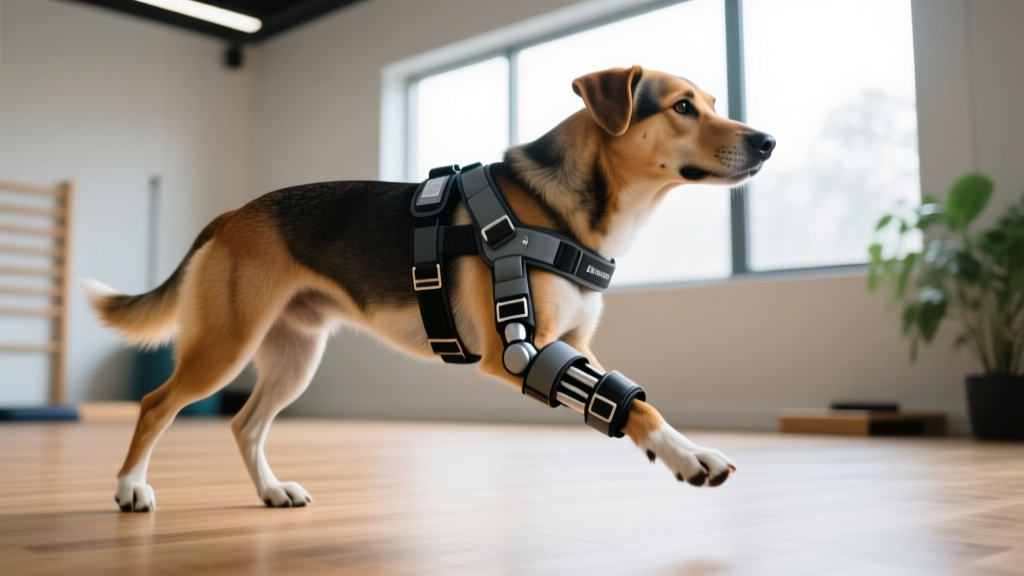
Quick Answer: An ACL brace for dogs — more accurately called a cranial cruciate ligament (CCL) stifle brace — is a custom or semi-custom orthopedic device that stabilizes the knee joint after ligament injury or surgery. Braces work by limiting the abnormal forward sliding motion (cranial tibial thrust) that occurs when the ligament is torn. While braces can provide meaningful support for dogs that are poor surgical candidates, veterinary orthopedic research consistently shows that surgical stabilization (TPLO, TTA, or lateral suture) remains the gold standard for restoring full function in most dogs.
When your dog suddenly limps, holds a hind leg up, or develops a gradual swagger in their back end, one of the first things a veterinarian will check is the cranial cruciate ligament (CCL) — the canine equivalent of the human ACL. CCL disease is the single most common orthopedic condition treated in veterinary medicine, affecting an estimated 20-25% of dogs at some point in their lives. As owners search for non-surgical options, the ACL brace for dogs has become a frequently researched topic. But how do these braces actually work at a biomechanical level, and what does the science tell us about their real-world effectiveness?
The Biomechanics of the Canine Stifle Joint
The canine stifle (knee) joint is fundamentally different from the human knee in one critical way: dogs stand with their tibia (shin bone) angled forward rather than vertically. This creates a constant forward-shearing force on the tibia every time the dog bears weight — a phenomenon called cranial tibial thrust. The cranial cruciate ligament is the primary structure preventing this forward slide.
When the CCL tears, the tibia shifts forward with every step. This produces:
- Joint instability — the femur and tibia no longer track properly
- Meniscal damage — the medial meniscus gets crushed between the shifting bones (occurs in approximately 40-60% of complete CCL tears)
- Osteoarthritis progression — abnormal joint motion triggers inflammatory cascades that degrade cartilage within weeks
- Muscle atrophy — the quadriceps and hamstring groups weaken from disuse, reducing dynamic joint stabilization
According to research published in the Journal of the American Veterinary Medical Association, dogs with untreated CCL tears develop measurable osteoarthritis within 4-8 weeks, and compensatory overload on the opposite hind limb leads to a contralateral CCL tear in approximately 40-60% of cases within 1-2 years.
How an ACL Brace for Dogs Actually Works
Canine stifle braces function through several biomechanical mechanisms:
- External compression — The brace applies circumferential pressure around the stifle, increasing proprioceptive feedback and providing a degree of passive stabilization through soft tissue compression.
- Mechanical limitation of cranial tibial thrust — Rigid or semi-rigid brace designs incorporate struts or stays that physically resist the forward sliding motion of the tibia relative to the femur.
- Range-of-motion control — Some custom braces include hinge mechanisms that limit full extension and full flexion, keeping the joint within a functional arc where instability is minimized.
- Proprioceptive enhancement — The tactile stimulus of the brace against the skin increases neuromuscular awareness, prompting the dog to engage stabilizing muscles more actively during movement.
Custom-fabricated braces from veterinary orthotists (such as those produced by companies like OrthoPets or Hero Braces) are molded from a cast or 3D scan of the individual dog's limb. These typically cost between $800 and $1,800 including the initial consultation, casting, fitting, and follow-up adjustments. Semi-custom or off-the-shelf neoprene sleeve braces range from $40 to $200 but offer substantially less mechanical stabilization.
| Feature | Custom Rigid Brace | Semi-Custom Hinged Brace | Neoprene Sleeve |
|---|---|---|---|
| Typical Cost | $800–$1,800 | $200–$500 | $40–$200 |
| Cranial Tibial Thrust Control | Moderate to Good | Mild to Moderate | Minimal |
| Range-of-Motion Limitation | Yes (adjustable hinges) | Partial | No |
| Fitting Required | Professional cast/3D scan | Measurement-based | Size chart only |
| Best Suited For | Non-surgical candidates, post-op protection | Partial tears, mild instability | Proprioceptive support, mild arthritis |
| Durability | 2–4 years with maintenance | 6–18 months | 3–6 months |
Evolutionary Context: Why Dogs Are Prone to CCL Injuries
Evolutionary Perspective: The canine stifle joint evolved for burst-speed pursuit and rapid directional changes — not for the sustained weight-bearing demands of modern domestic life. Wolves and wild canids maintain lean body condition (typically 10-15% body fat) and have stifle angles optimized for their specific hunting gaits. Domestic dogs, particularly overweight individuals carrying 20-30%+ body fat, place forces on the CCL that far exceed what the ligament evolved to handle.
Additionally, selective breeding has altered hindlimb conformation in many breeds. The exaggerated stifle angulation in German Shepherds, the short, heavily loaded limbs of Bulldogs, and the extreme angulation in some show-line Labrador Retrievers all create mechanical disadvantages that predispose these breeds to CCL failure. A 2021 study in the Merck Veterinary Manual references data showing that Labrador Retrievers, Rottweilers, Newfoundlands, and Staffordshire Terriers carry CCL rupture rates 2-5 times higher than the general dog population.
From an evolutionary standpoint, a torn CCL in a wild canid would likely be a death sentence — the animal couldn't hunt, couldn't flee, and would be vulnerable to competitors. Domestic dogs have the advantage of veterinary intervention, but the underlying biomechanical vulnerability remains encoded in their anatomy.
What the Research Says About Brace Effectiveness
The scientific literature on canine CCL bracing presents a nuanced picture. A systematic review of conservative (non-surgical) management of CCL disease found that dogs managed without surgery showed variable outcomes depending on body weight:
- Dogs under 30 lb (13.6 kg): Approximately 50-67% achieve acceptable functional outcomes with conservative management (rest, NSAIDs, physical therapy, and optionally bracing) within 6-12 months, as the body forms periarticular fibrosis (scar tissue) that partially stabilizes the joint.
- Dogs over 30 lb (13.6 kg): Conservative management yields significantly poorer outcomes, with persistent lameness, progressive arthritis, and reduced quality of life being common.
- Brace-specific data: Peer-reviewed studies isolating brace effectiveness (brace vs. no brace, all other variables controlled) remain limited. Most evidence comes from case series and owner surveys rather than randomized controlled trials.
A study published in the Journal of Veterinary Internal Medicine noted that dogs managed conservatively with structured rehabilitation protocols (including potential bracing) showed improvement in ground reaction force measurements at 6 months, but these values remained significantly below those of dogs treated surgically with tibial plateau leveling osteotomy (TPLO).
Practical Takeaways for Owners:
- An ACL brace for dogs is not a substitute for surgical stabilization in most medium-to-large breed dogs with complete CCL tears.
- Braces can be a reasonable option for dogs with partial tears, dogs that are poor anesthesia candidates (severe heart disease, advanced age with comorbidities), or as a temporary bridge while awaiting surgery.
- If pursuing a brace, work with a board-certified veterinary surgeon or a certified veterinary orthotist — not an online retailer selling generic sizes.
- Combine any bracing protocol with structured physical rehabilitation: underwater treadmill therapy ($75–$150 per session), therapeutic exercises, and weight management.
- Budget for lifelong osteoarthritis management regardless of treatment choice: joint supplements (glucosamine/chondroitin/omega-3), Adequan injections ($50–$80 per dose), or Librela (bedinvetmab) monthly injections ($50–$120 depending on dog weight).
Common Misconceptions About Canine ACL Braces
| Myth | Scientific Reality |
|---|---|
| "A brace will heal the torn ligament." | Torn CCL tissue does not regenerate. The body forms fibrous scar tissue around the joint that provides secondary stability, but the ligament itself does not reattach or heal. A brace manages symptoms and limits instability — it does not repair the ligament. |
| "Any knee sleeve from Amazon works the same as a custom brace." | Generic neoprene sleeves provide compression and proprioceptive feedback but cannot mechanically resist cranial tibial thrust. They function more like a supportive bandage than an orthopedic stabilization device. |
| "If my dog seems fine with the brace, the problem is solved." | Compensatory gait changes and progressive osteoarthritis continue even when overt lameness improves. Radiographic monitoring every 6-12 months is essential to track joint degeneration. |
| "Braces are a new, better alternative to surgery." | Surgical techniques like TPLO have 90-95% success rates with return to near-normal function. Braces remain a second-line option for specific cases where surgery is not feasible. |
| "Small dogs don't need treatment — they'll be fine." | While small dogs (under 15 lb / 6.8 kg) have better conservative management outcomes, untreated CCL tears still lead to meniscal damage, chronic pain, and compensatory contralateral injuries. Veterinary assessment is always warranted. |
Breed Variations in CCL Risk and Brace Considerations
CCL disease does not affect all breeds equally. Conformation, body weight, and genetic predisposition create significant variation in both injury risk and brace effectiveness:
- High-risk breeds: Labrador Retrievers, Rottweilers, Newfoundlands, Staffordshire Terriers, Mastiffs — these breeds often have conformational factors (straight stifles, heavy body mass) that place extreme loads on the CCL. Custom rigid braces are more likely to be indicated for non-surgical candidates in these breeds.
- Brachycephalic breeds: Bulldogs, Pugs, and similar breeds often have concurrent orthopedic issues (hip dysplasia, patellar luxation) that complicate brace fitting and effectiveness. Their shorter limbs can also limit the leverage a brace can apply.
- Sighthounds: Greyhounds, Whippets, and similar breeds have naturally lean body condition and different stifle mechanics. Their thin skin and minimal subcutaneous fat make brace fitting challenging — pressure sores are a significant risk.
- Small breeds: Chihuahuas, Yorkshire Terriers, and Pomeranians often experience concurrent patellar luxation alongside CCL disease, requiring different stabilization approaches. Braces designed purely for CCL support may not address the patellar component.
When to See a Veterinarian vs. Trying a Brace at Home
See a veterinarian immediately if your dog shows:
- Sudden non-weight-bearing lameness (leg held completely off the ground)
- Audible "pop" or "snap" during activity followed by acute pain
- Visible swelling or heat around the stifle joint
- Inability to bear weight after 24 hours of rest
- Signs of systemic illness alongside lameness (fever, lethargy, loss of appetite) — this may indicate infection rather than orthopedic injury
Consult your veterinarian before purchasing any brace. A proper diagnosis requires a cranial drawer test and/or tibial compression test performed by a trained clinician, often under sedation, plus radiographs to assess the degree of joint effusion and osteoarthritis. Attempting to brace an undiagnosed injury could worsen a fracture, septic arthritis, or bone tumor.
How Canine CCL Injuries Differ From Human ACL Tears
Understanding this distinction helps owners make better treatment decisions:
- Angle of loading: Humans walk upright with a near-vertical tibia, so ACL loading is primarily rotational (pivoting injuries). Dogs have a sloped tibial plateau, making the CCL a primary weight-bearing stabilizer against constant forward shear — every single step loads it.
- Degenerative vs. traumatic: Most human ACL tears are acute traumatic events (sports injuries). The majority of canine CCL tears are degenerative — the ligament weakens over time due to chronic inflammation, immune-mediated processes, and repetitive microtrauma, then fails under normal activity. This means the "healthy" contralateral ligament is often already degenerating.
- Healing potential: Neither human ACL nor canine CCL heals on its own, but humans can sometimes function with an ACL-deficient knee through muscle compensation (especially non-athletes). Dogs have far less capacity for this compensation due to their quadrupedal stance and constant stifle loading.
- Surgical approach: Human ACL reconstruction typically replaces the ligament with a graft. Canine surgery rarely attempts ligament replacement — instead, it changes the biomechanics (TPLO levels the tibial plateau; TTA advances the tibial tuberosity) so the ligament is no longer needed.
Frequently Asked Questions
Why do dogs get CCL injuries so frequently?
The canine stifle's angled tibial plateau creates constant forward-shearing force on the CCL during weight-bearing. Combined with selective breeding for conformational traits that may worsen this angle, rising obesity rates in pet dogs, and the degenerative nature of the disease, CCL tears have become the most common orthopedic injury in veterinary medicine.
Can dogs walk on a torn CCL without a brace or surgery?
Some dogs, particularly those under 30 lb (13.6 kg), can develop enough periarticular fibrosis (scar tissue stabilization) over 6-12 months to walk with acceptable function. However, they will develop progressive osteoarthritis regardless, and the contralateral limb is at high risk for a compensatory tear. Veterinary-guided rehabilitation is strongly recommended even in conservative management cases.
How do dogs compensate for a torn CCL biomechanically?
Dogs shift weight to the contralateral hind limb and the forelimbs, alter their gait to reduce stifle flexion during swing phase, and reduce overall activity. This creates a cascade of secondary problems: contralateral CCL overload, hip and spinal strain from asymmetric posture, and forelimb joint stress from increased front-end loading.
What does it mean when my dog "toe touches" after rest but walks normally after warming up?
This is a classic sign of partial CCL damage or early-stage osteoarthritis. The joint stiffens during rest (especially overnight), and initial movement is painful. As the dog moves, synovial fluid circulation improves and the joint "warms up," reducing discomfort. This pattern should prompt a veterinary examination — it often precedes a complete tear.
Is it normal for a dog with a CCL injury to seem better some days and worse others?
Yes, this fluctuation is typical and can be misleading. Activity levels, weather changes (barometric pressure affects inflamed joints), and the degree of secondary muscle fatigue all influence day-to-day comfort. Intermittent improvement does not mean the ligament is healing — it reflects the variable nature of chronic joint inflammation.
How is an ACL brace for dogs different from a human knee brace?
Canine braces must account for the dog's horizontal posture, fur-covered skin (which reduces friction and grip), different joint angles, and the inability to instruct the dog to limit activity. Human knee braces rely heavily on patient compliance and upright biomechanics. Canine braces must be more mechanically robust and securely fitted to function on a quadruped that cannot understand activity restrictions.
This article provides educational information and does not replace professional veterinary advice. Always consult your veterinarian for diagnosis and treatment of orthopedic conditions. For referrals to board-certified veterinary surgeons, visit the American College of Veterinary Surgeons directory.
Tom Renshaw
All our authors care for dogs every day — read more of their work on the authors page.


