12 Best White Fluffy Dog Breeds: Sizes, Temperaments & Care Guide
Discover 12 white fluffy dog breeds ranked by size, energy, and grooming needs.
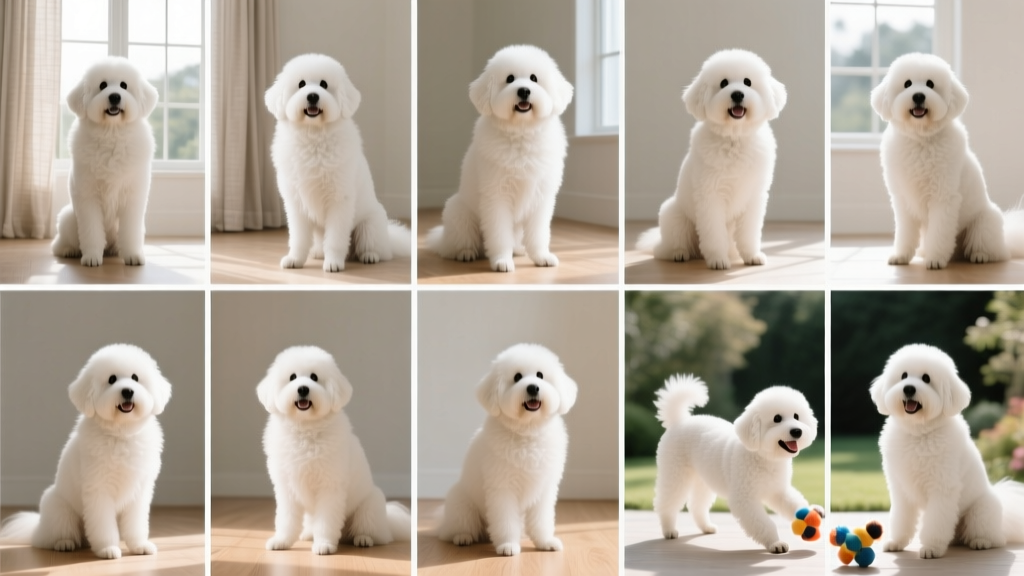
What Makes a Breed Qualify as a White Fluffy Dog?
Our Selection Criteria:
- Coat Color: Predominantly white or accepted in white by AKC/UKC breed standards
- Coat Texture: Double coat, long hair, or dense undercoat creating visible fluffiness (not short-haired white breeds)
- Breed Recognition: AKC, UKC, or FCI recognized (no unregistered designer mixes)
- Size Range: All classes represented — toy to giant — so every household finds a match
- Availability: Breeds with enough registered breeders or rescue presence in the US to be realistically obtainable
When dog owners search for white fluffy dog breeds, they're usually picturing one of two things: a compact cloud that fits in a tote bag, or a majestic, bear-sized guardian with a plumed tail. The reality is that "fluffy" spans a massive range — from the 4-pound Bichon Frise to the 100-pound Great Pyrenees. What unites them is a coat that demands commitment: daily brushing for some, professional grooming every 4-6 weeks for others, and seasonal "blowing coat" events that will test your vacuum cleaner's limits.
This guide ranks 12 white fluffy breeds across size classes, with honest assessments of grooming time, exercise needs, and the health conditions that disproportionately affect each one. We've organized them logically — small breeds first, then medium, then large — so you can quickly find options that fit your living situation.
Small White Fluffy Breeds (Under 20 lb / 9 kg)
1. Bichon Frise
Size: 12-18 lb (5-8 kg) | 9.5-11.5 in tall
Key Fluff Factor: Powder-puff double coat with curly outer hair that stands away from the body, creating a halo effect when properly groomed.
Profile: The Bichon Frise is the quintessential small white fluffy dog — cheerful, hypoallergenic (low-shedding, not truly allergen-free), and relentlessly social. They need professional grooming every 4-6 weeks ($60-90 per session) and daily brushing to prevent matting. Bichons thrive in apartments but require 30-45 minutes of daily activity. Prone to allergies, patellar luxation, and bladder stones.
2. Maltese
Size: Under 7 lb (under 3 kg) | 7-9 in tall
Key Fluff Factor: Floor-length, straight silky white coat that flows when they move — often kept in a shorter "puppy cut" for practicality.
Profile: One of the oldest toy breeds, the Maltese has been a lap companion for over 2,000 years. Their single-layer coat (no undercoat) means less shedding but requires daily combing to prevent tangles. Tear staining is a near-universal issue — daily eye wiping with a damp cloth or commercial wipe prevents the rust-colored streaks. Expect 20-30 minutes of daily exercise. Common health concerns include dental disease (small mouths crowd teeth), luxating patellas, and hypoglycemia in puppies under 4 months.
3. Coton de Tulear
Size: 9-15 lb (4-7 kg) | 9-11 in tall
Key Fluff Factor: Unique cotton-textured coat (hence the name) that's soft, airy, and slightly wavy — distinctly different from the silky Maltese or curly Bichon.
Profile: Originally from Madagascar, the Coton is a rare find in the US but growing in popularity. They're known for "clownish" behavior and vocal communication — expect grunts, sighs, and the occasional yodel. Their coat mats less easily than similar breeds but still needs brushing 3-4 times weekly. Cotons adapt well to seniors and apartment dwellers. Health testing should include cardiac evaluation and patella checks. Puppy prices typically range from $2,500-$4,000 from AKC breeders.
4. American Eskimo Dog (Miniature & Toy)
Size: Toy: 6-10 lb (3-5 kg) | Miniature: 10-20 lb (5-9 kg)
Key Fluff Factor: Dense double coat with a pronounced ruff around the neck and a plumed tail carried over the back — the classic "Spitz" silhouette in brilliant white.
Profile: Don't let the fluffy exterior fool you — Eskies are sharp, energetic dogs that excel at agility and obedience. They were originally circus performers in the early 1900s. The double coat sheds heavily twice yearly (spring and fall), and during blow-out periods, daily brushing is non-negotiable. Eskies are vocal watchdogs and can develop nuisance barking without training. They need 45-60 minutes of daily exercise despite their small size. Hip dysplasia and progressive retinal atrophy (PRA) are screening priorities.
Medium White Fluffy Breeds (20-60 lb / 9-27 kg)
5. Samoyed
Size: 35-65 lb (16-29 kg) | 19-23.5 in tall
Key Fluff Factor: The iconic "Sammy smile" framed by a thick, weather-resistant double coat that can produce enough undercoat during shedding season to be spun into yarn (some owners actually do this).
Profile: Samoyeds are working dogs bred to herd reindeer and pull sleds in Siberia. They need 60-90 minutes of vigorous daily exercise and do best with access to a yard. Their coat requires 20-30 minutes of brushing daily — skipping sessions leads to painful matting close to the skin. Samoyeds are notoriously friendly (terrible guard dogs) but can be stubborn during training. Health screenings should include hips, eyes, and cardiac evaluation. AKC breed standard notes that only white and cream are accepted colors. Budget $80-120 per professional grooming session if you can't manage the coat at home.
6. Japanese Spitz
Size: 15-25 lb (7-11 kg) | 12-15 in tall
Key Fluff Factor: Stand-off double coat that creates a rounded, cloud-like silhouette — pure white with black eye rims and lips for striking contrast.
Profile: Often described as a "Samoyed in a smaller package," the Japanese Spitz is recognized by the UKC but not yet fully by the AKC (currently in the Foundation Stock Service). They're cleaner than many Spitz breeds — their white coat repels dirt surprisingly well, and mud dries and falls off. Moderate energy (30-45 minutes daily) makes them suitable for townhouse living. They shed heavily twice yearly but are relatively low-maintenance between blow-out seasons. Finding a reputable US breeder can take 6-12 months; expect to pay $2,500-$5,000.
7. Volpino Italiano
Size: 9-12 lb (4-5.5 kg) | 10-12 in tall
Key Fluff Factor: Dense, stand-off coat with a pronounced ruff — resembles a small fox in white, with an alert, upright ear carriage that adds to the fluffy silhouette.
Profile: This rare Italian breed dates back to the Renaissance and was favored by Florentine nobility. Volpinos are FCI-recognized but extremely uncommon in the US — fewer than 50 are registered domestically. They're lively, intelligent, and more independent than typical toy breeds. Their coat is easier to maintain than a Bichon's (brushing 2-3 times weekly), and they're generally hardy. The challenge is sourcing one: expect to import from European breeders or join a multi-year waiting list. Primary lens luxation (PLL) genetic testing is essential.
8. Eurasier
Size: 40-70 lb (18-32 kg) | 19-24 in tall
Key Fluff Factor: Medium-length double coat with a mane-like ruff; white is one of several accepted colors (also wolf-gray, red, and black-and-tan).
Profile: Developed in Germany in the 1960s by crossing Chow Chows, Wolfspitz, and Samoyeds, the Eurasier was designed as a calm family companion. They're not AKC-recognized but have a growing US following. Eurasiers are notably quiet — they rarely bark without cause — and bond deeply with their family while being reserved with strangers. Exercise needs are moderate (45-60 minutes daily). They do poorly in kennels or with dog walkers; they want to be with their people. Coat care is moderate: brushing 2-3 times weekly, more during seasonal shedding. US breeders are scarce; expect $3,000-$4,500 and possible travel to pick up your puppy.
Large & Giant White Fluffy Breeds (60+ lb / 27+ kg)
9. Great Pyrenees
Size: 85-160 lb (39-73 kg) | 25-32 in tall
Key Fluff Factor: Thick, weather-resistant double coat with a lion-like mane — one of the most visually imposing fluffy breeds in existence.
Profile: Bred to guard livestock in the Pyrenees Mountains between France and Spain, Great Pyrenees are independent thinkers who patrol rather than obey. They're nocturnal by instinct (barking at night is normal), calm indoors, and surprisingly low-energy for their size — 30-45 minutes of daily walking suffices. The coat is self-cleaning to a degree (dirt sheds out when dry), but expect 30 minutes of brushing twice weekly and massive seasonal shedding. According to the Merck Veterinary Manual, common health concerns include hip dysplasia, bloat (GDV), and bone cancer. They require secure 6-foot fencing — invisible fences won't contain a Pyr who decides to patrol the neighborhood.
10. Kuvasz
Size: 70-115 lb (32-52 kg) | 26-30 in tall
Key Fluff Factor: Medium-coarse double coat with a slight wave — less "powder-puff" than a Pyrenees but still substantial, with a regal bearing.
Profile: This Hungarian livestock guardian is more athletic and higher-drive than the Great Pyrenees. Kuvaszok (plural) need experienced owners who understand guardian breed behavior: independent decision-making, wariness of strangers, and strong territorial instincts. Early socialization (8-16 weeks) is critical — puppy classes and controlled exposure to diverse people and environments prevent overprotectiveness. Exercise needs are moderate to high (60 minutes daily). Their white coat was deliberately selected so shepherds could distinguish them from wolves at night. Hip dysplasia, elbow dysplasia, and hypothyroidism are screening priorities. Not recommended for first-time dog owners or apartment living.
11. Maremma Sheepdog
Size: 65-100 lb (30-45 kg) | 24-29 in tall
Key Fluff Factor: Dense, slightly wavy white coat with a thick collar ruff — rustic and functional rather than show-groomed.
Profile: The Italian cousin of the Great Pyrenees, the Maremma is rare in the US but prized among working livestock guardians. They're slightly smaller and more agile than Pyrs, with a tighter bond to their family. Maremmas are FCI-recognized but not AKC-registered. They need a job — whether that's actual livestock guarding, property patrolling, or structured activities like nosework. Without purpose, they become destructive. Coat maintenance is moderate (brushing 2-3 times weekly). Finding one in the US typically requires contacting the Maremma Sheepdog Club of America; expect waitlists of 12-18 months and prices of $2,000-$3,500.
12. Newfoundland (White & Landseer)
Size: 100-150 lb (45-68 kg) | 26-28 in tall
Key Fluff Factor: Massive, water-resistant double coat — the white variety (and Landseer pattern: white with black markings) creates a stunning, polar-bear-like appearance.
Profile: While most people picture black Newfoundlands, the white variety and Landseer pattern are AKC-accepted. Newfies are the gentle giants of the dog world — famously patient with children, eager to please, and strong swimmers (their webbed feet and water-resistant coat are built for rescue work). They need 45-60 minutes of daily exercise and thrive in cooler climates; heat above 80°F (27°C) is dangerous. Drool is a lifestyle factor — keep towels handy. Grooming requires 20-30 minutes of brushing 3-4 times weekly. Health screenings should include hips, elbows, heart (subaortic stenosis), and cystinuria (a kidney stone condition). Life expectancy is unfortunately short: 8-10 years. Budget $3,000-$5,000+ for a well-bred puppy, plus $2,000-$3,500 annually for food, grooming, and preventive care at giant-breed dosages.
Breed Comparison: All 12 White Fluffy Breeds at a Glance
| Breed | Weight Range | Exercise (min/day) | Grooming Commitment | Shedding Level | Apartment OK? | Puppy Cost (USD) |
|---|---|---|---|---|---|---|
| Bichon Frise | 12-18 lb / 5-8 kg | 30-45 | High (daily brush + pro groom every 4-6 wks) | Low | Yes | $1,500-$3,500 |
| Maltese | Under 7 lb / under 3 kg | 20-30 | High (daily comb, tear stain care) | Very Low | Yes | $1,500-$4,000 |
| Coton de Tulear | 9-15 lb / 4-7 kg | 20-30 | Moderate (brush 3-4x/week) | Low | Yes | $2,500-$4,000 |
| American Eskimo (Toy/Mini) | 6-20 lb / 3-9 kg | 45-60 | High (daily during blow-out) | Very High (seasonal) | Yes (with exercise) | $1,500-$3,000 |
| Samoyed | 35-65 lb / 16-29 kg | 60-90 | Very High (daily 20-30 min) | Extreme (seasonal) | No | $2,000-$5,000 |
| Japanese Spitz | 15-25 lb / 7-11 kg | 30-45 | Moderate (2-3x/week, heavy seasonal) | High (seasonal) | Yes | $2,500-$5,000 |
| Volpino Italiano | 9-12 lb / 4-5.5 kg | 30-45 | Moderate (2-3x/week) | Moderate | Yes | $3,000-$5,000+ (import) |
| Eurasier | 40-70 lb / 18-32 kg | 45-60 | Moderate (2-3x/week) | High (seasonal) | Possible (with yard) | $3,000-$4,500 |
| Great Pyrenees | 85-160 lb / 39-73 kg | 30-45 | Moderate-High (2x/week, heavy seasonal) | Very High (seasonal) | No | $1,500-$3,500 |
| Kuvasz | 70-115 lb / 32-52 kg | 60 | Moderate (2-3x/week) | High (seasonal) | No | $1,500-$3,000 |
| Maremma Sheepdog | 65-100 lb / 30-45 kg | 45-60 | Moderate (2-3x/week) | High (seasonal) | No | $2,000-$3,500 |
| Newfoundland (White) | 100-150 lb / 45-68 kg | 45-60 | High (3-4x/week brushing) | High | No | $3,000-$5,000+ |
How to Choose: A Decision Framework for Your Lifestyle
With 12 very different breeds on this list, the "best" white fluffy dog depends entirely on your situation. Here's a practical framework to narrow it down:
- Step 1 — What's your living space?
- Apartment or condo → Focus on Bichon Frise, Maltese, Coton de Tulear, Japanese Spitz, or Volpino Italiano
- Townhouse with small yard → Add American Eskimo (Mini), Eurasier
- House with fenced yard → All breeds are options, including Great Pyrenees, Kuvasz, Maremma, Newfoundland
- Step 2 — How much time can you commit to grooming daily?
- Under 10 minutes → Coton de Tulear, Japanese Spitz, Volpino Italiano (plus professional grooming every 6-8 weeks)
- 10-20 minutes → Bichon Frise, Maltese, Eurasier, Maremma
- 20-30+ minutes → Samoyed, Great Pyrenees, Newfoundland (daily brushing is non-negotiable)
- Step 3 — What's your experience level with dogs?
- First-time owner → Bichon Frise, Maltese, Coton de Tulear, Japanese Spitz, Newfoundland (forgiving, eager to please)
- Some experience → Samoyed, American Eskimo, Eurasier (need consistent training but are cooperative)
- Experienced handler only → Kuvasz, Maremma Sheepdog, Great Pyrenees (independent guardian instincts require confident leadership)
- Step 4 — What's your activity level?
- Mostly sedentary / senior → Maltese, Coton de Tulear, Great Pyrenees (surprisingly low-energy indoors)
- Moderately active (daily walks, occasional hikes) → Bichon Frise, Japanese Spitz, Eurasier, Newfoundland
- Very active (running, hiking, dog sports) → Samoyed, American Eskimo, Kuvasz
- Step 5 — Budget for annual care?
- Under $2,000/year → Smaller breeds (Maltese, Coton) — lower food costs, standard vet bills
- $2,000-$3,500/year → Medium breeds (Samoyed, Eskimo, Eurasier) — moderate food + grooming
- $3,500-$5,000+/year → Giant breeds (Newfoundland, Great Pyrenees, Kuvasz) — giant-breed food ($80-$150/month), higher medication dosages, potential emergency costs for bloat or orthopedic issues
Top 3 Picks by Common Scenarios
Based on the most frequent situations we hear from dog owners searching for white fluffy breeds:
Best for apartment dwellers who want low shedding: Bichon Frise. Their curly coat traps loose hair (you brush it out rather than vacuum it up), they're quiet enough for shared walls, and their exercise needs are met with two 20-minute walks plus indoor play. The trade-off is grooming cost — budget $720-$1,080 annually for professional grooming.
Best for active families with a yard: Samoyed. They're sturdy enough for hiking, patient with children, and their friendly nature makes them poor guard dogs but excellent family members. The reality check: the coat is a lifestyle commitment. If you can't commit to daily brushing, this breed will develop painful mats that require a full shave-down.
Best for someone wanting a gentle giant: Newfoundland (white variety). They're calm, trainable, and famously good with children. The honest downsides are lifespan (8-10 years), drool, heat sensitivity, and the sheer space they occupy — a Newfie in a small kitchen is a comedy routine you'll tire of quickly.
Honorable Mentions & Breeds to Reconsider
Honorable mentions that narrowly missed the list:
- West Highland White Terrier: White and fluffy-faced, but their wiry outer coat is more "scruffy" than "fluffy" in the traditional sense. They're also terrier-personality-strong — not the cuddly lap dog many expect from a small white breed.
- Bolognese: Nearly identical to the Bichon in appearance and temperament, but so rare in the US (fewer than 200 registered) that sourcing one responsibly is extremely difficult.
- Standard Poodle (white): Fluffy when groomed in a full coat, but most owners opt for shorter clips. Hypoallergenic, highly intelligent, and available in three sizes — a strong alternative if you prioritize trainability over the "classic fluffy" look.
Breeds commonly mistaken as "white and fluffy" that don't qualify:
- Havanese: Come in many colors; white is possible but not breed-defining. Their coat is silky rather than fluffy.
- Pomeranian: Extremely fluffy, but white is a minority color — orange and red dominate the breed. White Poms often carry a higher price premium and may have more skin issues.
- Chow Chow: Fluffy, yes, but the breed standard favors red, black, and cinnamon. Cream/white Chows exist but are uncommon, and the breed's temperament (aloof, cat-like, same-sex aggression) makes them unsuitable for most families seeking a friendly fluffy companion.
Frequently Asked Questions
Are white fluffy dogs harder to keep clean?
Yes, but it's manageable. White coats show dirt, tear stains, and environmental staining (grass, mud) immediately. Practical strategies include: using a whitening shampoo monthly (brands like Chris Christensen or BioSilk are groomer favorites), wiping paws after every outdoor walk, and feeding a diet that minimizes tear staining (some owners report improvement with filtered water and avoiding foods with artificial dyes). The good news: many white-coated breeds have self-cleaning coat textures where dirt dries and falls out with brushing.
Do white dogs have more health problems than other colors?
Not inherently, but some white-coated breeds carry genes linked to deafness and skin sensitivity. The AKC notes that piebald and merle genes (which produce white patches) can affect inner ear development. However, the breeds on this list are predominantly white by standard (not piebald), and responsible breeders perform BAER hearing tests on puppies. Sunburn is a real concern for white dogs with thin coats — apply dog-safe sunscreen (SPF 30+, zinc oxide-free) to noses, ear tips, and belly during extended sun exposure.
What's the cheapest white fluffy breed to own long-term?
The Bichon Frise and Maltese have the lowest lifetime costs among fluffy breeds, primarily due to small size (less food, lower medication dosages). Expect $1,500-$2,500 annually for food, routine vet care, grooming, and supplies. The most expensive are giant breeds — a Newfoundland or Great Pyrenees can cost $3,500-$5,000+ per year, with emergency veterinary bills (bloat surgery: $3,000-$7,000; hip replacement: $5,000-$8,000 per hip) being a realistic risk to budget for or insure against.
Can I get a white fluffy dog if I have allergies?
No dog is truly hypoallergenic — allergies are triggered by dander (dead skin cells), saliva, and urine proteins, not hair length. That said, low-shedding breeds like the Bichon Frise, Maltese, and Coton de Tulear produce less airborne dander and are better tolerated by many allergy sufferers. Spend time with the breed before committing (visit a breeder or rescue for 2+ hours) to test your reaction. An allergist can perform specific IgE testing to identify whether you react to Can f 1 or Can f 2 proteins.
How do I find a responsible breeder for these breeds?
Start with the AKC Marketplace (for AKC-recognized breeds) or the national breed club's breeder referral directory. Red flags include: multiple litters always available, no health testing documentation (OFA/PennHIP for hips, CERF for eyes, breed-specific genetic tests), refusal to let you visit the breeding facility, and prices significantly below the ranges listed in this guide. Responsible breeders typically have waitlists of 3-12 months, require spay/neuter contracts for pet-quality puppies, and include a take-back clause ensuring they'll accept the dog back at any point in its life.
Marcus Aldridge
All our authors care for dogs every day — read more of their work on the authors page.


