Tall Poodle Breeds and Mixes: Complete Guide
Exploring every tall poodle breed option — from Standard Poodles to large doodle mixes.
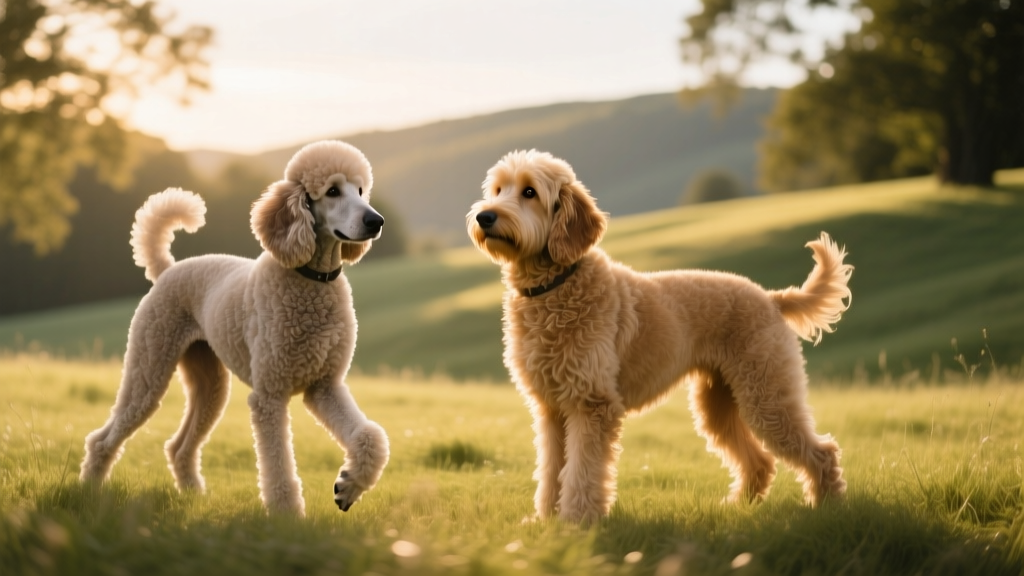
When people search for a "tall poodle breed," they're usually looking for one of two things: a purebred Standard Poodle — the largest of the three AKC-recognized poodle varieties — or a large designer mix that pairs poodle genetics with another big breed. Both paths lead to impressive, athletic dogs standing 15 inches or taller at the shoulder, but the predictability, care requirements, and costs differ significantly between them.
This guide breaks down every tall poodle option available to prospective owners in 2026, including exact size ranges, generation genetics (F1, F1B, F2, multigen), health realities behind the hybrid vigor myth, and what you'll actually spend on purchase and annual care.
The Standard Poodle: The Original Tall Poodle Breed
The Standard Poodle is the only tall poodle recognized as a distinct variety by the American Kennel Club. While Miniature Poodles stand 10–15 inches and Toy Poodles max out at 10 inches, the Standard Poodle stands over 15 inches at the shoulder — with many males reaching 22–27 inches and weighing 45–70 lb (20–32 kg).
Originally bred in Germany as a water retriever (despite the common French association), the Standard Poodle is a versatile working dog with exceptional intelligence — ranked second among all breeds in Stanley Coren's intelligence rankings. Their single-layer, curly coat is low-shedding and often described as hypoallergenic, though no dog is truly allergen-free.
| Attribute | Specification |
|---|---|
| Height (shoulder) | Over 15 in / 38 cm (males often 22–27 in / 56–69 cm) |
| Weight | 40–70 lb / 18–32 kg |
| Lifespan | 12–15 years |
| Coat | Single-layer, curly; low-shedding |
| Energy | High — 60–90 minutes daily exercise |
| AKC Group | Non-Sporting (US); Sporting in some registries |
| Grooming | Professional clip every 6–8 weeks; daily brushing |
Large Poodle Mixes: Designer Breeds That Qualify as Tall
Several designer breeds pair a Standard Poodle with another large breed to produce tall, low-shedding (or reduced-shedding) companions. These mixes are not AKC-recognized breeds but are registered with organizations like the American Canine Hybrid Club (ACHC) and International Designer Canine Registry (IDCR).
| Mix Name | Non-Poodle Parent | Typical Height | Typical Weight | Coat Inheritance |
|---|---|---|---|---|
| Goldendoodle (Standard) | Golden Retriever | 20–26 in / 51–66 cm | 50–90 lb / 23–41 kg | Wavy to curly; moderate to low shed |
| Labradoodle (Standard) | Labrador Retriever | 21–24 in / 53–61 cm | 50–75 lb / 23–34 kg | Wavy, fleece, or curly; variable shed |
| Bernedoodle (Standard) | Bernese Mountain Dog | 23–29 in / 58–74 cm | 70–90 lb / 32–41 kg | Wavy to curly; tricolor possible |
| Sheepadoodle | Old English Sheepdog | 21–27 in / 53–69 cm | 60–85 lb / 27–39 kg | Wavy to curly; heavy grooming |
| Newfypoo (Newdle) | Newfoundland | 22–30 in / 56–76 cm | 70–130 lb / 32–59 kg | Straight to curly; often heavy coat |
| Saint Berdoodle | Saint Bernard | 24–30 in / 61–76 cm | 80–150 lb / 36–68 kg | Variable; often moderate shedding |
| Pyredoodle | Great Pyrenees | 22–32 in / 56–81 cm | 85–120 lb / 39–54 kg | Wavy to curly; guard dog instincts possible |
The Standard Goldendoodle and Standard Bernedoodle are by far the most popular tall poodle mixes, with established breeding programs and predictable multigenerational lines. The larger mixes (Newfypoo, Saint Berdoodle, Pyredoodle) are less common and tend to have more trait variability even within the same litter.
Understanding Generations: F1, F1B, F2, and Multigen Explained
F1 (First Generation): 50% Poodle × 50% other breed. Maximum genetic diversity but least predictable coat type and shedding level. An F1 Goldendoodle might have a straight, wavy, or curly coat — you won't know until the puppy matures around 6–9 months.
F1B (First Generation Backcross): F1 dog bred back to a Poodle (75% Poodle / 25% other breed). More likely to inherit the low-shedding poodle coat. Often recommended for allergy sufferers, though still not guaranteed hypoallergenic.
F2 (Second Generation): Two F1 dogs bred together. Still 50/50 genetically, but coat and size become less predictable due to gene recombination. F2 litters often have the widest variation in appearance.
Multigen (F3 and beyond): Multiple generations of the same cross bred together. Most predictable traits — coat type, size, and temperament stabilize. Reputable multigen programs have 3+ generations of health testing behind them.
For tall poodle mixes specifically, generation matters enormously for size predictability. An F1 Bernedoodle might range from 50 lb to 95 lb depending on which parent's size genes dominate, while a well-established multigen Standard Bernedoodle program can reliably produce puppies in the 70–85 lb range.
Size Range and Growth Timeline
One of the biggest challenges with tall poodle mixes is predicting adult size. Purebred Standard Poodles are relatively consistent, but designer mixes carry genetic instructions from two breeds of potentially different sizes.
| Breed/Mix | Min Weight | Max Weight | Min Height | Max Height | Full Size By |
|---|---|---|---|---|---|
| Standard Poodle | 40 lb / 18 kg | 70 lb / 32 kg | 15 in / 38 cm | 27 in / 69 cm | 12–18 months |
| Standard Goldendoodle | 50 lb / 23 kg | 90 lb / 41 kg | 20 in / 51 cm | 26 in / 66 cm | 12–24 months |
| Standard Bernedoodle | 50 lb / 23 kg | 90 lb / 41 kg | 23 in / 58 cm | 29 in / 74 cm | 18–24 months |
| Standard Labradoodle | 50 lb / 23 kg | 75 lb / 34 kg | 21 in / 53 cm | 24 in / 61 cm | 12–18 months |
| Newfypoo | 70 lb / 32 kg | 130 lb / 59 kg | 22 in / 56 cm | 30 in / 76 cm | 18–24 months |
| Saint Berdoodle | 80 lb / 36 kg | 150 lb / 68 kg | 24 in / 61 cm | 30 in / 76 cm | 24–36 months |
Giant breeds like the Saint Berdoodle and Newfypoo take significantly longer to reach full size — often 2–3 years — and continue filling out in chest and muscle mass well past their height plateau. Budget for a large or giant-breed puppy food formula (AAFCO-approved for large breeds) during the first 12–18 months to support controlled growth and reduce orthopedic risk.
Coat Types, Shedding, and the Hypoallergenic Question
Coat inheritance in tall poodle mixes follows an unpredictable pattern in F1 and F2 generations. The poodle contributes genes for a curly, continuously-growing single coat, while the other parent breed typically contributes genes for a double coat with a shedding undercoat.
What you might get:
- Straight/hair coat: Resembles the non-poodle parent. Sheds moderately to heavily. Easiest to maintain — weekly brushing sufficient.
- Wavy/fleece coat: Most common in F1 crosses. Moderate shedding. Requires brushing 3–4 times per week and professional grooming every 8–10 weeks.
- Curly/wool coat: Closest to poodle genetics. Lowest shedding. Requires daily brushing and professional grooming every 6–8 weeks. Most prone to matting if neglected.
Is a tall poodle mix hypoallergenic? No dog is truly hypoallergenic. Allergens come from dander (dead skin cells), saliva, and urine — not just hair. An F1B or multigen tall poodle mix with a curly coat is the most likely to be tolerable for mild allergy sufferers, but even curly-coated dogs produce allergens. If allergies are a primary concern, spend time with adult dogs of the specific cross before committing to a puppy, and consider allergy testing with an allergist.
Temperament Range: Best-Case and Challenging Scenarios
Tall poodle mixes inherit temperament traits from both parent breeds, and the combination isn't always straightforward. Here's the realistic range:
Best-case temperament (well-socialized, good genetics): Intelligent, eager to please, gentle with children, sociable with other dogs, adaptable to various living situations. Standard Poodles are notably less hyperactive than many assume — they're athletic but settle well indoors when exercised adequately. Goldendoodles and Labradoodles tend to inherit this balanced energy alongside the retriever parent's social nature.
Challenging scenarios:
- Poodle sensitivity + retriever mouthiness: Some Goldendoodles inherit the Poodle's emotional sensitivity alongside the Golden's desire to carry things in their mouth — resulting in a dog that nips or mouths when anxious. Address with positive reinforcement redirect training starting at 8 weeks.
- Bernese independence + Poodle alertness: Bernedoodles can be more reserved with strangers than either parent breed, and some develop protective barking. Early socialization (before 16 weeks) with diverse people and environments is critical.
- Giant breed stubbornness + Poodle intelligence: Newfypoos and Saint Berdoodles are smart enough to learn commands quickly but may choose not to comply if they don't see the point. Keep training sessions short (5–10 minutes), high-value, and game-based.
- Separation anxiety risk: Poodles and several of the common mix partners (Goldens, Bernese, Labs) are prone to separation anxiety. Tall poodle mixes left alone for 8+ hours daily without enrichment are at elevated risk for destructive behavior and excessive vocalization.
Training should always use force-free, positive reinforcement methods. Tall poodle mixes — especially those with poodle sensitivity — shut down under harsh corrections. Use high-value treats (small pieces of boiled chicken or commercial training treats like Zuke's Mini Naturals), clicker marking, and reward-based shaping.
Health Considerations: Hybrid Vigor Myth vs. Reality
The concept of "hybrid vigor" (heterosis) is real but widely misunderstood. Crossbreeding can reduce the risk of recessive genetic diseases that are concentrated within a single breed's gene pool. However, it does not eliminate health problems — especially conditions that both parent breeds share.
According to the Merck Veterinary Manual, mixed-breed dogs can inherit any condition present in either parent breed, and some structural issues (hip dysplasia, for example) are influenced by size and growth rate regardless of pedigree.
| Condition | Standard Poodle Risk | Common Mix Partner Risk | Mix Risk |
|---|---|---|---|
| Hip Dysplasia | Moderate (OFA ~12% affected) | High in Goldens, Labs, Bernese (~15–20%) | Moderate to High |
| Elbow Dysplasia | Low to Moderate | High in Bernese, Newfoundlands | Moderate |
| Addison's Disease | Elevated (autoimmune) | Low in most mix partners | Low to Moderate |
| Bloat (GDV) | Elevated (deep-chested breed) | Elevated in giant breeds | Elevated — take seriously |
| Progressive Retinal Atrophy (PRA) | Present (prcd-PRA gene) | Present in Labs, Goldens | Moderate |
| Sebaceous Adenitis | Elevated (skin autoimmune) | Low in most partners | Low to Moderate |
| Cancer (histiocytic sarcoma) | Moderate | High in Bernese Mountain Dogs | Elevated in Bernedoodles |
| Degenerative Myelopathy (DM) | Present (SOD1 gene) | Present in some lines | Low to Moderate |
Critical note on bloat (Gastric Dilatation-Volvulus): Any deep-chested tall dog — purebred or mixed — is at elevated risk for GDV, a life-threatening emergency where the stomach fills with gas and can twist. Know the signs: unproductive retching, distended abdomen, restlessness, pale gums. GDV is a surgical emergency — get to a vet immediately. Discuss prophylactic gastropexy (stomach tacking) with your veterinarian if you own a tall poodle mix over 50 lb.
Health testing to demand from breeders: Both parents should have OFA (Orthopedic Foundation for Animals) hip and elbow scores, CERF/CAER eye certifications, and breed-relevant DNA panels (prcd-PRA, DM, vWD). For Bernedoodles, ask about histiocytic sarcoma research participation. Always consult your veterinarian about a breed-appropriate health screening schedule for your individual dog.
Grooming Needs and Costs
Grooming is where tall poodle owners feel the most impact on their budget and schedule. A Standard Poodle or curly-coated tall mix requires professional grooming every 6–8 weeks — that's 6 to 8 sessions per year.
Professional grooming costs (2026 national averages):
- Standard Poodle full clip and bath: $75–$120 per session
- Standard Goldendoodle/Labradoodle: $85–$150 per session
- Bernedoodle/Newfypoo (large, thick coat): $120–$200+ per session
Annual grooming budget: $500–$1,600 depending on breed size, coat type, and your regional market. Urban areas (NYC, San Francisco, Seattle) trend toward the higher end.
At-home maintenance between professional sessions:
- Curly coats: Daily brushing with a slicker brush (Chris Christensen Big G or similar quality) and a steel comb for checking tangles
- Wavy coats: Brushing 3–4 times per week
- Straight coats: Weekly brushing with a pin brush
- All coat types: Regular ear cleaning (poodle-mix ears are drop ears prone to yeast infections — clean weekly with a veterinary ear wash like Epi-Otic Advanced)
Cost Breakdown: Purchase Price and Annual Care
| Breed/Mix | Reputable Breeder Price | Rescue/Adoption Fee | First-Year Total Cost* |
|---|---|---|---|
| Standard Poodle (AKC) | $2,000–$4,500 | $300–$600 | $4,500–$8,000 |
| Standard Goldendoodle (multigen) | $2,500–$5,000 | $400–$800 | $5,000–$9,000 |
| Standard Bernedoodle | $3,000–$5,500 | $400–$800 | $5,500–$10,000 |
| Standard Labradoodle (Australian lines) | $2,500–$4,000 | $300–$600 | $4,500–$7,500 |
| Newfypoo | $1,500–$3,500 | $400–$700 | $4,000–$8,000 |
| Saint Berdoodle | $1,500–$3,000 | $300–$600 | $4,000–$7,500 |
*First-year total includes purchase price, initial veterinary exams, vaccinations (DHPP series, rabies, bordetella), spay/neuter, microchip, crate, grooming tools, food, training classes, and pet insurance enrollment.
Ongoing annual costs after year one: $2,000–$4,000 for food (large/giant breed formulas like Purina Pro Plan Large Breed or Royal Canin Giant), grooming, routine veterinary care, heartworm/flea/tick prevention (e.g., Simparica Trio or NexGard Plus), and pet insurance premiums ($40–$90/month for large breeds).
Rescue availability: Standard Poodles are moderately available through breed-specific rescues (check the AKC Rescue Network). Designer tall poodle mixes appear less frequently in rescue but do surface — check Doodle rescues like IDOG Rescue and general large-breed rescues. Expect adoption fees of $300–$800 with the dog typically already spayed/neutered, vaccinated, and microchipped.
Who Is the Ideal Owner for a Tall Poodle Breed?
Best fit:
- Active individuals or families who can provide 60–90 minutes of daily exercise (walks, swimming, fetch, agility)
- Homes with access to a fenced yard (tall poodle mixes are athletic and benefit from off-leash play in secure areas)
- Owners willing to budget $500–$1,600 annually for professional grooming
- People seeking a large, intelligent companion for activities like hiking, dock diving, or therapy work
- First-time dog owners (Standard Poodles and Goldendoodles are forgiving of beginner mistakes; giant mixes like Saint Berdoodles are better suited to experienced handlers)
- Families with children — most tall poodle mixes are gentle and patient, though supervise all dog-child interactions, especially with toddlers and giant breeds
Poor fit:
- Anyone away from home 8+ hours daily without a dog walker or daycare plan (separation anxiety risk)
- Budget-constrained households — large poodle mixes are expensive to feed, groom, and insure
- Owners who prefer a low-maintenance coat — even the straightest-coated tall poodle mixes need regular brushing
- Small apartments without nearby access to outdoor exercise space
Frequently Asked Questions
What two breeds make up a tall poodle mix?
A tall poodle mix pairs a Standard Poodle (over 15 inches at the shoulder) with another large or giant breed — most commonly a Golden Retriever (Goldendoodle), Labrador Retriever (Labradoodle), Bernese Mountain Dog (Bernedoodle), or Newfoundland (Newfypoo). The Standard Poodle itself is a pure breed, not a mix.
How big will a tall poodle mix get?
Size varies significantly by generation and parent size. Standard Goldendoodles typically reach 50–90 lb (23–41 kg) and 20–26 inches tall. Standard Bernedoodles reach 50–90 lb and 23–29 inches. Giant mixes like Newfypoos can reach 130 lb (59 kg). Ask the breeder for the exact weights of both parents — the puppy will typically fall between the two parent weights.
What will the temperament be like?
Tall poodle mixes generally combine poodle intelligence with the companionable nature of retriever or working breed partners. Expect a smart, trainable dog that bonds closely with family. However, individual temperament varies — some inherit more poodle sensitivity, others more of the partner breed's independence. Early socialization (8–16 weeks) and positive reinforcement training are the two biggest factors you can control.
Is a tall poodle mix hypoallergenic or low-shedding?
No dog is truly hypoallergenic. An F1B or multigen tall poodle mix with a confirmed curly coat is the most likely to be low-shedding and potentially tolerable for mild allergy sufferers. F1 and F2 mixes may shed moderately. Always spend time with adult dogs of the cross before committing.
What health issues might a tall poodle mix inherit?
Shared risks include hip dysplasia, elbow dysplasia, bloat (GDV), progressive retinal atrophy, and breed-specific conditions (Addison's disease from the poodle side; histiocytic sarcoma from the Bernese side in Bernedoodles). Reputable breeders test both parents for these conditions via OFA, CAER, and DNA panels. Consult your veterinarian about a screening schedule appropriate for your dog's specific mix.
How much does a tall poodle designer mix cost?
Expect to pay $2,000–$5,500 from a reputable breeder who health-tests both parents and provides a health guarantee. First-year total costs (including vet care, supplies, food, and grooming) typically run $4,500–$10,000. Adoption through rescue costs $300–$800 but availability is limited.
Are tall poodle mixes recognized by the AKC?
No. The AKC recognizes the Standard Poodle as a pure breed but does not recognize designer crosses like Goldendoodles or Bernedoodles. These mixes may be registered with the American Canine Hybrid Club (ACHC) or International Designer Canine Registry (IDCR), though these registrations don't carry the same weight as AKC purebred registration for competition purposes.
Priya Sutaria
All our authors care for dogs every day — read more of their work on the authors page.


