Staffordshire Bull Terrier Mix: Complete Breed Guide for Owners
Everything about the Staffordshire Bull Terrier mix: parent traits, size, temperament variability, health risks, grooming, cost.
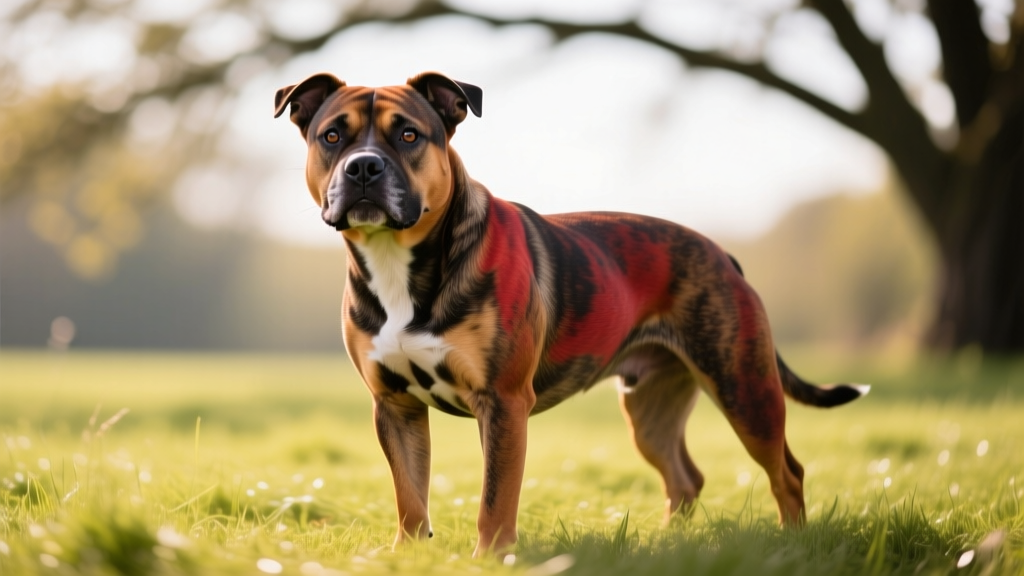
What Exactly Is a Staffordshire Bull Terrier Mix?
A Staffordshire Bull Terrier mix is any crossbreed dog with one Staffordshire Bull Terrier parent and one parent from a different breed. Unlike purebreds with predictable traits governed by an AKC breed standard, mixed breeds inherit a randomized combination of genes from each parent. That means two puppies from the same litter can look, behave, and even differ in size significantly.
The Staffordshire Bull Terrier — sometimes called the "Staffy" — is a muscular, compact terrier originally bred in England for bull-and-bear baiting before becoming a beloved family companion. When crossed with another breed, the Staffy contributes traits like loyalty, high energy, a stocky build, and a short single coat. But the other parent breed shapes the outcome just as much, which is why understanding both sides of the pedigree matters.
Common Staffordshire Bull Terrier crosses you'll encounter include the Staffy-Labrador mix (sometimes called a "Staffador"), Staffy-American Bulldog mix, Staffy-Boxer mix, and Staffy-Jack Russell Terrier mix. Each pairing produces a very different dog.
Parent Breed Breakdown: The Staffy and Common Crosses
Before predicting what a Staffordshire Bull Terrier mix might be like, you need to understand the parent breeds individually. Here's how the Staffy stacks up against some of the most common breeds it's crossed with:
| Trait | Staffordshire Bull Terrier | Labrador Retriever | Boxer | American Bulldog |
|---|---|---|---|---|
| Weight | 24–38 lb (11–17 kg) | 55–80 lb (25–36 kg) | 50–80 lb (23–36 kg) | 60–120 lb (27–54 kg) |
| Height | 14–16 in (36–41 cm) | 21.5–24.5 in (55–62 cm) | 21.5–25 in (55–64 cm) | 20–28 in (51–71 cm) |
| Coat | Short, smooth, single | Short, dense, double | Short, smooth, single | Short, smooth, single |
| Energy Level | High | High | High | Moderate-High |
| Lifespan | 12–14 years | 11–13 years | 10–12 years | 10–12 years |
| AKC Group | Terrier | Sporting | Working | Foundation Stock Service |
The Staffy is notably smaller than many breeds it's crossed with. A Staffy-Labrador mix, for example, typically lands somewhere between the two parents in weight — often 40–65 lb (18–29 kg) — but there's no guarantee. Genetics don't split evenly down the middle.
Generations Explained: F1, F1B, and Multigen Staffy Mixes
- F1 (First Generation): One purebred Staffordshire Bull Terrier × one purebred of another breed. Maximum genetic diversity, but the most unpredictable trait expression. Each puppy in a litter may look quite different.
- F1B (First Generation Backcross): An F1 Staffy mix bred back to one of the parent breeds (usually the non-Staffy side). Slightly more predictable, with a 75/25 genetic split favoring one parent.
- F2 (Second Generation): Two F1 Staffy mixes bred together. Trait expression becomes highly variable again as recessive genes resurface in unpredictable combinations.
- Multigen: Multiple generations of Staffy mixes bred together. More consistency in appearance and size, but still not as uniform as a purebred. Rare for Staffy crosses — more common in doodle-type designer breeds.
Most Staffordshire Bull Terrier mixes you'll find through rescues or casual breeders are F1 crosses — one Staffy parent and one other breed. Multigen Staffy mixes are uncommon because there's no established "designer breed" registry driving systematic breeding programs the way there is for Labradoodles or Goldendoodles. This means you're almost always dealing with an F1 or a dog of unknown generational background.
Size, Coat, and Appearance: Predictable vs. Unpredictable Traits
One of the biggest questions prospective owners ask is: "How big will my Staffordshire Bull Terrier mix get?" The honest answer depends heavily on the other parent breed.
| Cross Type | Expected Weight Range | Expected Height Range | Build Type |
|---|---|---|---|
| Staffy × Labrador | 40–65 lb (18–29 kg) | 17–22 in (43–56 cm) | Medium, athletic |
| Staffy × Boxer | 40–70 lb (18–32 kg) | 17–23 in (43–58 cm) | Medium, muscular |
| Staffy × American Bulldog | 50–85 lb (23–39 kg) | 17–24 in (43–61 cm) | Medium-large, stocky |
| Staffy × Jack Russell Terrier | 18–30 lb (8–14 kg) | 12–16 in (30–41 cm) | Small, compact |
| Staffy × French Bulldog | 22–35 lb (10–16 kg) | 12–16 in (30–41 cm) | Small, stocky |
Coat Type Possibilities
Here's where you get some predictability: the Staffordshire Bull Terrier carries genes for a short, smooth, single-layer coat. If the other parent also has a short coat (Boxer, Bulldog, Lab), the puppies will almost certainly have short fur. If the other parent carries long or wiry coat genes (think a Border Collie or Wire Fox Terrier cross), you could see anything from short and smooth to medium-length with a slight wave.
Shedding level varies accordingly. A Staffy-Lab mix will shed moderately year-round because Labradors carry a dense double coat. A Staffy-Boxer cross typically sheds less because both parents have single coats. No Staffordshire Bull Terrier mix is hypoallergenic or truly low-shedding — Staffies shed, and they pass that tendency on.
Trait Variability at a Glance
| Trait | Predictability | What Influences It |
|---|---|---|
| Coat length | Moderately predictable | Both parents' coat genes; short coat is dominant in Staffies |
| Adult size | Low predictability | Size gap between parents; F1 puppies can land anywhere in the range |
| Ear shape | Unpredictable | Staffies have rose/semi-prick ears; the other parent's ear genes may dominate |
| Color | Unpredictable | Staffies come in red, fawn, white, black, blue, brindle — plus combinations |
| Temperament | Low predictability | See temperament section below |
| Exercise needs | Moderately predictable | Almost always high regardless of the cross — Staffies are energetic dogs |
Temperament Range: Best-Case and Challenging Scenarios
The Staffordshire Bull Terrier is known for courage, tenacity, and an almost startling devotion to its family. The AKC breed standard describes them as "courageous, strong-headed, and affectionate" — and notably good with children, earning the nickname "nanny dog" in their native England.
But temperament in a mix is a roll of the dice. Here's the realistic range:
Best-Case Scenario
Your Staffy mix inherits the breed's legendary people-orientation, the playful energy of the other parent, and a stable, confident disposition. This dog is eager to train, adores children, gets along with other dogs after proper socialization, and forms a deep bond with the family. Think: a compact, muscular cuddle bug with an off-switch indoors and a turbo engine outdoors.
Challenging Scenario
Your mix inherits the Staffy's terrier-driven prey drive and dog-selectiveness combined with the other breed's stubbornness or reactivity. This dog may be leash-reactive toward other dogs, chase cats or small animals, show resource guarding tendencies, or struggle with separation anxiety. Staffies are strong for their size — a 45-pound Staffy mix can pull hard on leash and is difficult to manage without consistent training.
Temperament Factors to Watch
- Dog-to-dog aggression: Staffies were historically bred for dog fighting. While modern Staffies are far removed from those lines, the genetic tendency for same-sex dog aggression can surface. Early, positive socialization is non-negotiable.
- Prey drive: Terrier heritage means small animals — squirrels, rabbits, cats — may trigger a chase instinct. The intensity varies by individual.
- Separation anxiety: Staffies are velcro dogs. They bond intensely and do not do well left alone for 8+ hours daily. Crosses with other velcro breeds (Labs, French Bulldogs) amplify this.
- Trainability: Staffies are intelligent but strong-willed. They respond beautifully to positive reinforcement — treats, play, praise. Force-free methods work best; aversive tools like shock collars or prong collars damage the trust-based relationship these dogs need.
Health Considerations: The Hybrid Vigor Myth vs. Reality
Let's address a widespread misconception: the idea that mixed-breed dogs automatically enjoy "hybrid vigor" that eliminates health problems. The reality, according to veterinary research, is more nuanced. Mixed breeds benefit from a wider gene pool, which can reduce the risk of certain recessive inherited disorders. But they can absolutely inherit conditions from either parent breed — and some conditions are so common across many breeds that mixing doesn't help.
Here are the health conditions your Staffordshire Bull Terrier mix may be predisposed to, drawn from both parent breed risk profiles:
Conditions From the Staffy Side
- L-2-hydroxyglutaric aciduria (L2HGA): A rare metabolic disorder causing seizures and behavioral changes. DNA testing is available and responsible Staffy breeders screen for it. Prevalence in Staffies: estimated 4–5% carrier rate.
- Hereditary cataracts (HC): Staffies carry a specific gene mutation (HSF4) linked to juvenile-onset cataracts. DNA test available; carrier rate around 10–15% in some populations.
- Persistent hyperplastic primary vitreous (PHPV): An eye condition that can cause blindness. Screening recommended.
- Cruciate ligament disease (CCL tear): The Staffy's muscular build on relatively short legs puts stress on knee joints. CCL tears are common and typically require surgical repair ($2,000–$4,500 per knee in 2026).
Conditions From Common Cross Breeds
- Hip dysplasia: Common in Labradors, Boxers, and American Bulldogs. A Staffy mix with a larger parent breed inherits this risk. OFA screening costs around $45–$75 per hip evaluation.
- Brachycephalic obstructive airway syndrome (BOAS): If crossed with a French Bulldog or other short-muzzled breed, the mix may inherit breathing difficulties. BOAS is a progressive condition that can require surgical intervention.
- Allergies (atopic dermatitis): Both Staffies and Labradors are prone to environmental and food allergies. Symptoms include itchy skin, ear infections, and paw licking. Management is lifelong and can cost $50–$200/month for medications like Apoquel or Cytopoint injections.
- Heart disease: Boxers are predisposed to aortic stenosis and arrhythmogenic right ventricular cardiomyopathy (ARVC). A Staffy-Boxer mix inherits this cardiac risk.
Grooming, Exercise, and Daily Care
Grooming Needs
The majority of Staffordshire Bull Terrier mixes inherit a short, low-maintenance coat. Here's what that means in practice:
- Brushing: Once or twice weekly with a rubber curry brush (like a Kong ZoomGroom, around $8–$12) or a bristle brush. This removes loose hair and distributes skin oils.
- Bathing: Every 6–8 weeks or as needed. Use a dog-specific shampoo — human shampoo disrupts the skin's pH balance.
- Nail trims: Every 2–4 weeks. Staffies are active and may wear nails down partially, but regular trims prevent overgrowth and joint strain.
- Ear cleaning: Weekly checks; clean with a veterinary ear wash if debris accumulates. Floppy-eared mixes (from Lab or Basset Hound crosses) need more frequent attention to prevent infections.
- Dental care: Daily tooth brushing with enzymatic dog toothpaste. Staffies can be prone to dental disease, and mixes inherit varying jaw structures that affect tooth crowding.
Exercise Requirements
Staffordshire Bull Terriers are athletic, high-energy dogs. Most Staffy mixes need:
- Minimum 60 minutes of structured exercise daily — walks, jogging, fetch, flirt pole sessions, or agility-style play.
- Mental stimulation: Puzzle feeders (Outward Hound Nina Ottosson puzzles, $12–$25), snuffle mats, or scent work games for 15–20 minutes daily.
- Off-leash time in secure areas if recall is reliable. Note: many Staffy mixes have unreliable recall around small animals due to prey drive, so assess this carefully before trusting off-leash freedom.
Understimulated Staffy mixes tend to develop destructive behaviors — chewing furniture, digging, excessive barking. This is a breed combination that needs a job, even if that job is just a structured game of tug with rules.
Cost Breakdown: Purchase Price and Ongoing Expenses
Acquisition Cost
| Source | Typical Cost (2026) | What's Included |
|---|---|---|
| Responsible breeder (F1 cross) | $500–$1,500 | Health testing of parents, first vaccinations, deworming, health guarantee, take-back clause |
| Casual/backyard breeder | $200–$600 | Variable — often no health testing, minimal veterinary care |
| Rescue/shelter | $50–$350 | Spay/neuter, vaccinations, microchip, basic veterinary exam |
Staffordshire Bull Terrier mixes are common in shelters and breed-specific rescues, particularly pit bull-type rescues that also take in Staffies and Staffy crosses. Adopting from a rescue is often the most cost-effective and socially responsible option, and you'll typically get a dog that's already been temperament-evaluated and spayed/neutered.
First-Year Estimated Costs
- Acquisition: $50–$1,500
- Initial veterinary exam + vaccines: $200–$500
- Spay/neuter (if not included): $300–$700
- Food (quality kibble like Purina Pro Plan, Royal Canin, or Hill's): $400–$700/year
- Supplies (crate, leash, harness, bed, bowls, toys): $200–$400
- Training classes (6–8 week group course): $150–$300
- Pet insurance (optional but recommended): $40–$80/month ($480–$960/year)
- Total first year: $1,780–$5,060 depending on source and choices
Who This Mix Suits Best
A Staffordshire Bull Terrier mix is not a beginner-friendly dog in most cases. Here's a realistic assessment of who thrives with this cross:
Ideal Owner Profile
- Experience level: Intermediate to experienced. You've owned dogs before and understand canine body language, leash reactivity management, and the importance of early socialization.
- Activity level: Active. You enjoy daily walks of 30+ minutes, outdoor activities, and can commit to structured exercise.
- Time at home: Significant. Staffy mixes don't tolerate long isolation well. Work-from-home owners or households where someone is present most of the day are ideal.
- Family composition: Staffies are generally excellent with children — patient, sturdy, and playful. However, supervision is always required with young children, and the mix's behavior with other household pets depends on individual temperament and early socialization.
- Housing: A fenced yard is strongly preferred. Apartments can work if the owner is committed to multiple daily outings, but check your lease — some properties have breed restrictions that may apply to Staffy-type dogs.
This Mix Is Not Ideal For
- First-time dog owners unprepared for a strong, energetic terrier-type dog
- Households with cats or small pets (unless the specific dog has been tested and socialized with them)
- Owners who work 10+ hour days away from home with no dog walker or daycare arrangement
- Those unwilling to invest in ongoing training and socialization through the dog's first two years
Frequently Asked Questions
What two breeds make up a Staffordshire Bull Terrier mix?
A Staffordshire Bull Terrier mix always has one purebred Staffordshire Bull Terrier parent. The second parent can be any breed — Labrador Retriever, Boxer, American Bulldog, Jack Russell Terrier, French Bulldog, or even another mixed breed. The specific cross determines the puppy's likely size, coat, and temperament tendencies.
How big will my Staffordshire Bull Terrier mix get?
Adult size ranges from as small as 18 lb (8 kg) for a Staffy-Jack Russell cross to as large as 85 lb (39 kg) for a Staffy-American Bulldog cross. Most common mixes (Staffy-Lab, Staffy-Boxer) land in the 40–65 lb (18–29 kg) range. There is no way to predict exact adult size from a puppy — paw size is an unreliable indicator in mixed breeds.
What will the temperament be like?
Expect a loyal, energetic, people-oriented dog with a terrier edge. Staffy mixes are typically affectionate with family, playful, and alert. Challenges may include dog-selectiveness, prey drive toward small animals, and separation anxiety. Temperament varies significantly between individual dogs, even within the same litter. Meeting the parent dogs (if possible) and reviewing temperament evaluations (if adopting from a rescue) provides the best insight.
Is a Staffordshire Bull Terrier mix hypoallergenic or low-shedding?
No. Staffordshire Bull Terriers have short, single coats that shed moderately year-round. Unless crossed with a genuinely low-shedding breed like a Poodle (which is an uncommon pairing), a Staffy mix will shed. They are not hypoallergenic and will leave hair on furniture and clothing.
What health issues might this mix inherit?
Key conditions to watch for include L-2-hydroxyglutaric aciduria (L2HGA), hereditary cataracts, cruciate ligament tears, hip dysplasia, skin allergies, and — depending on the other parent — cardiac conditions or brachycephalic airway issues. DNA testing through services like Merck Veterinary Manual-referenced labs can screen for several of these. Always consult your veterinarian about an appropriate screening schedule.
How much does a Staffordshire Bull Terrier mix cost?
From a responsible breeder, expect to pay $500–$1,500 for an F1 puppy. Rescue adoption fees range from $50–$350 and typically include spay/neuter and vaccinations. First-year total ownership costs (including food, veterinary care, supplies, and training) range from approximately $1,780 to $5,060.
Are Staffordshire Bull Terrier mixes good with children?
Staffordshire Bull Terriers are historically known for being gentle and patient with children — they earned the "nanny dog" nickname in England. Many Staffy mixes inherit this temperament. However, individual temperament varies, and any dog should be supervised around young children. Teach children to respect the dog's space, especially during eating and sleeping.
Can I keep a Staffy mix in an apartment?
Yes, but with caveats. Staffy mixes are medium-sized and can adapt to apartment living if they receive at least 60 minutes of daily exercise and mental stimulation. The bigger challenge is often breed restrictions in rental properties — check your lease and local regulations before committing.
Tom Renshaw
All our authors care for dogs every day — read more of their work on the authors page.


