Siberian Husky Cross Japanese Akita
Everything about the Siberian Husky cross Japanese Akita mix: size, temperament, health risks, grooming needs.
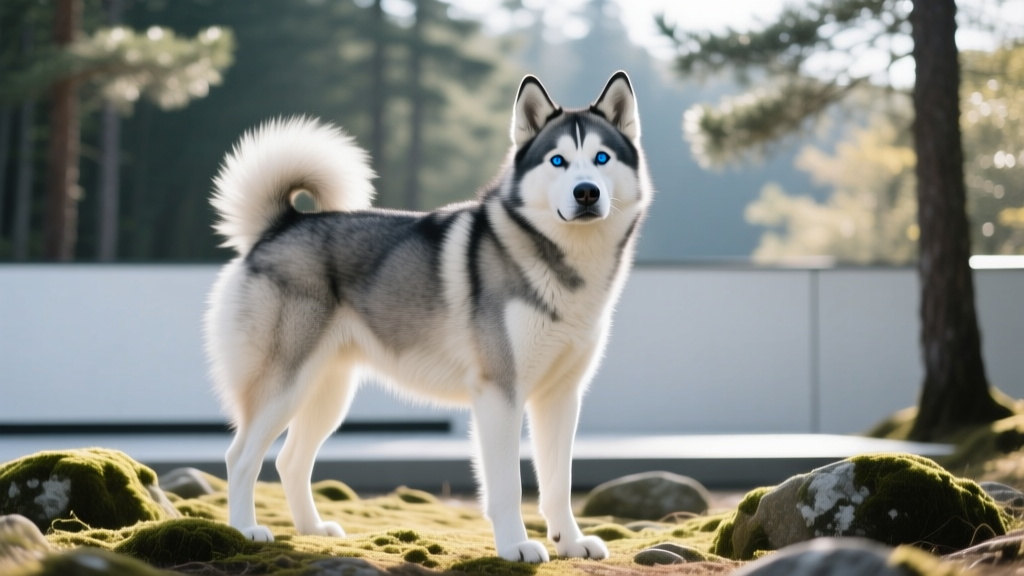
The Siberian Husky cross Japanese Akita — sometimes called an Akita Husky, Huskita, or Siberian Akita — is a striking mixed breed that blends two iconic northern spitz-type dogs. With their wolf-like appearance, thick double coats, and piercing eyes, these dogs turn heads wherever they go. But behind that stunning exterior lies a complex temperament and a set of care requirements that make this mix a poor fit for first-time owners and an excellent match for the right experienced handler.
If you're researching this cross before adopting or buying, this guide breaks down exactly what you can expect — and just as importantly, what you can't predict when two strong-willed, independent spitz breeds are combined.
Parent Breed Breakdown: Siberian Husky Meets Japanese Akita
Understanding any mixed breed starts with understanding the parent breeds. The Siberian Husky and Japanese Akita (also known as Akita Inu) share a spitz heritage but were developed for very different purposes, which creates an interesting — and sometimes challenging — combination of drives in their offspring.
| Trait | Siberian Husky | Japanese Akita (Akita Inu) |
|---|---|---|
| Origin | Northeast Asia (Chukchi people, Siberia) | Akita Prefecture, Honshu, Japan |
| AKC Group | Working Group | Working Group |
| Weight Range | 35–60 lb (16–27 kg) | 65–130 lb (29–59 kg) |
| Height | 20–23.5 in (51–60 cm) | 22.5–27.5 in (57–70 cm) |
| Original Purpose | Endurance sled pulling, pack work | Bear hunting, guardian, companion to nobility |
| Temperament | Outgoing, friendly, mischievous, pack-oriented | Loyal, aloof with strangers, courageous, dignified |
| Prey Drive | Very high | High to very high |
| Dog Aggression Tendency | Low (pack dog) | High (especially same-sex) |
| Trainability | Moderate — intelligent but independent | Low to moderate — strong-willed, sensitive |
| Shedding | Heavy, seasonal blow-outs | Heavy, seasonal blow-outs |
| Lifespan | 12–14 years | 10–13 years |
Both breeds are recognized by the American Kennel Club in the Working Group, and both carry the classic spitz traits: erect ears, curled tails, thick double coats, and wedge-shaped heads. The key difference lies in their social orientation. Huskies are gregarious pack animals who greet strangers like old friends. Akitas are reserved guardians who bond intensely with their family and view unfamiliar people and dogs with suspicion.
When you cross these two, you're essentially rolling the dice on which parent's social temperament the puppies inherit — and that's the single most important variable in this mix.
Size, Weight, and Physical Variation
Because the Japanese Akita can be more than twice the weight of a Siberian Husky, the size range in this cross is genuinely wide. Even within a single litter, you may see significant variation depending on which parent's growth genes dominate.
| Measurement | Lower End (Husky-dominant) | Upper End (Akita-dominant) |
|---|---|---|
| Weight (male) | 50 lb (23 kg) | 110 lb (50 kg) |
| Weight (female) | 40 lb (18 kg) | 90 lb (41 kg) |
| Height at withers | 21 in (53 cm) | 26 in (66 cm) |
| Body type | Lean, athletic, endurance-built | Broad-chested, muscular, powerful |
Most F1 (first-generation) Husky-Akita crosses land somewhere in the middle — typically 55–85 lb (25–39 kg) and 22–25 inches tall. But there's no guarantee. A puppy that takes strongly after the Akita parent can reach 100+ lb, while a Husky-leaning individual may stay closer to 50 lb. This variability is one of the defining features of any mixed breed, and it matters practically: you need to be prepared for a dog at either end of this range.
Coat Types, Colors, and the Shedding Reality
Here's one area where predictability is higher: both parent breeds carry genes for thick, weather-resistant double coats, so you can be almost certain a Husky-Akita cross will have a dense undercoat with a longer guard-hair topcoat. What varies is coat length, texture, and color.
Inherited from the Husky side: Medium-length coat, softer texture, classic black-and-white, gray-and-white, red-and-white, or agouti patterns. Husky-patterned face masks are common.
Inherited from the Akita side: Slightly shorter, coarser guard hairs, solid or brindle colors including red (sesame), fawn, brindle, white, or pinto. The Akita's characteristic "urajiro" (white underbelly and inner leg markings) may appear.
Shedding level: Heavy year-round with intense seasonal blow-outs, typically in spring and fall. During a coat blow, you'll remove fistfuls of undercoat daily for 2–4 weeks. Neither parent breed offers any low-shedding genetics, so this mix is absolutely not hypoallergenic. If you have allergies or an aversion to dog hair on every surface of your home, this is not the right dog for you.
Grooming Requirements
- Daily brushing during shedding season (3–4 weeks, twice yearly) using an undercoat rake and slicker brush. The Furminator or Chris Christensen Big G rake work well for dense spitz coats.
- 2–3 times per week brushing outside shedding season to manage loose hair and prevent matting behind ears and at the ruff.
- Bathing every 6–8 weeks or as needed. Over-bathing strips natural oils from the double coat. Use a canine-specific oatmeal or de-shedding shampoo.
- Never shave a double-coated dog. Shaving disrupts the coat's thermal regulation and sun protection. The undercoat may grow back patchy or not at all — a condition called post-clipping alopecia.
- Nail trims every 3–4 weeks, ear checks weekly, and dental brushing 3+ times per week.
Temperament: What to Expect (and What You Can't Predict)
Temperament is where this cross gets complicated. The Husky and Akita sit at opposite ends of the social spectrum, and their offspring can land anywhere along that line — even within the same litter.
Best-Case Temperament Scenario
The dog inherits the Husky's friendliness and sociability tempered by the Akita's loyalty and calmness. Result: an outgoing, affectionate family dog who is alert and watchful without being reactive. Good with familiar people, tolerant of strangers after a brief introduction, and playful without being hyperactive.
Challenging Temperament Scenario
The dog inherits the Akita's wariness and same-sex dog aggression combined with the Husky's high prey drive and escape artistry. Result: a powerful, reactive dog who is aloof or aggressive toward unfamiliar dogs, chases cats and small animals, and will exploit any fence weakness to roam. This is not a hypothetical — it's a realistic outcome that requires experienced management.
- Stranger tolerance: Ranges from Husky-level "everyone is my friend" to Akita-level "I will body-block you from entering my home."
- Dog-dog social skills: Huskies are pack dogs and usually good with other dogs. Akitas, particularly intact males, are notoriously dog-aggressive. Your cross could be either.
- Prey drive: Expect high to very high. Both breeds were bred to chase and catch animals. Cats, rabbits, and small dogs are at risk unless raised together from puppyhood with careful management.
- Independence: Both breeds are famously independent thinkers. This is not a dog that lives to please you. Training requires patience, creativity, and high-value rewards.
- Vocalization: Huskies howl and "talk." Akitas are generally quieter but will vocalize to alert. Expect some level of vocal expression, especially when left alone or bored.
Socialization Is Non-Negotiable
Given the Akita's genetic predisposition toward wariness and dog aggression, early and ongoing socialization is critical. The AVMA recommends structured positive exposure to diverse people, environments, and other dogs during the 3–14 week socialization window. For this cross, continue structured socialization through at least 18 months of age. Enroll in force-free puppy classes, arrange controlled playdates with stable, vaccinated dogs, and expose your puppy to varied surfaces, sounds, and situations. Never use punishment-based methods — both breeds are sensitive to harsh handling and will shut down or become defensively aggressive.
Health Considerations: Inherited Risks from Both Parent Breeds
Let's address a common myth: the idea that mixed breeds automatically enjoy "hybrid vigor" that eliminates genetic health problems. The reality, as documented in research published in the Journal of the American Veterinary Medical Association, is that while mixed breeds may have reduced risk for some recessive conditions, they remain susceptible to any condition that both parent breeds share. And the Husky and Akita share several.
| Condition | From Parent | Prevalence / Notes | Screening Method |
|---|---|---|---|
| Hip dysplasia | Both (especially Akita) | Estimated 10–15% in Akitas, 5–10% in Huskies (OFA data) | OFA/PennHIP radiographs at 24 months |
| Progressive retinal atrophy (PRA) | Both | Present in both breeds; leads to gradual blindness | DNA test (Optigen prcd-PRA); CERF eye exam |
| Hypothyroidism | Akita (higher prevalence) | Akitas are overrepresented; autoimmune thyroiditis | Full thyroid panel (T3, T4, TSH, autoantibodies) |
| Gastric dilatation-volvulus (bloat) | Both (deep-chested breeds) | Life-threatening emergency; risk increases with age | Preventive: gastropexy during spay/neuter |
| Corneal dystrophy | Husky | Hereditary; causes corneal opacity, may affect vision | CERF/CAER ophthalmologist exam |
| Sebaceous adenitis | Akita | Autoimmune skin disease; up to 8% of Akitas affected | Skin biopsy if scaling/hair loss noted |
| Immune-mediated conditions | Akita (VKH-like syndrome) | Akita-specific autoimmune disorder affecting skin and eyes | Veterinary dermatologist/ophthalmologist diagnosis |
If you're buying from a breeder, insist on seeing health clearances for both parents: OFA hip scores, CERF eye clearances, and thyroid panels at minimum. A responsible breeder will provide these without being asked. If you're adopting, ask the rescue about any known medical history and budget for a comprehensive veterinary exam within the first two weeks.
Bloat (GDV) deserves special attention. Both parent breeds are deep-chested and at elevated risk. Discuss prophylactic gastropexy with your veterinarian at the time of spay or neuter — this surgical procedure tacks the stomach to the abdominal wall and significantly reduces the risk of a life-threatening torsion. Feed 2–3 smaller meals daily rather than one large meal, avoid vigorous exercise within one hour before or after eating, and use a slow-feeder bowl if your dog eats rapidly.
Expected Lifespan
Most Husky-Akita crosses live 10–13 years, which aligns with the average of both parent breeds. Maintaining a lean body condition score (BCS 4–5 on a 9-point scale), providing regular veterinary care, and feeding an AAFCO-certified complete diet are the most impactful things you can do to maximize longevity.
Training, Exercise, and Daily Life
This is a high-energy, intelligent, and strong-willed dog. Both parent breeds were built to work — Huskies pulling sleds over vast distances, Akitas tracking and holding large game. Their cross needs a job, or they'll invent one (usually one you won't like, like dismantling your couch or digging under the fence).
Exercise Requirements
- Minimum 60–90 minutes of structured exercise daily. This includes brisk leash walks, hiking, jogging (after skeletal maturity at ~18 months), and off-leash running in securely fenced areas only.
- Mental stimulation is equally important. Food puzzles (Kong Classic, Outward Hound Nina Ottosson puzzles), scent work, and trick training sessions tire this dog's brain in ways physical exercise alone cannot.
- Off-leash caution: Due to extremely high prey drive, reliable recall is difficult to achieve with this cross. Never trust off-leash freedom in unfenced areas, regardless of training level. A GPS collar (such as the Fi Series 3 or Tractive GPS 4) is a wise backup.
Training Approach
Use positive reinforcement exclusively — high-value food rewards (freeze-dried liver, boiled chicken, cheese), toy rewards, and life rewards (door opening, leash clipping as rewards for calm behavior). Both breeds respond poorly to force, intimidation, or repetitive drills. Keep sessions short (5–10 minutes), varied, and end on a success.
Key training priorities for this cross:
- Loose-leash walking — both breeds pull. Start with a front-clip harness (Ruffwear Front Range or similar) and reward heavily for proximity.
- Rock-solid "leave it" and "drop it" — essential for managing prey drive in real-world situations.
- Crate training — provides a safe den space and prevents destructive behavior when unsupervised.
- Recall — practice in progressively distracting environments, but always maintain a long-line backup.
- Handling desensitization — Akitas can be touch-sensitive. Gently handle paws, ears, mouth, and tail from puppyhood to make veterinary visits and grooming manageable.
Cost and Where to Find a Husky-Akita Cross
This is not a commonly produced designer mix like a Labradoodle or Goldendoodle. You won't find dedicated "Huskita" breeders with established multigenerational programs. Most available dogs come from one of three sources:
| Source | Typical Cost | What to Expect |
|---|---|---|
| Intentional breeder (F1) | $800–$2,000 | Rare; verify health testing on both parents. Ask for OFA/PennHIP, CERF, and thyroid results. |
| Backyard/accidental litter | $200–$600 | No health testing; higher risk of inherited conditions. Budget for early vet screening. |
| Breed-specific rescue | $150–$450 (adoption fee) | Check Petfinder and Akita/Husky rescues. Adult dogs may come with behavioral assessments. |
First-year total cost estimate: Beyond the acquisition price, budget $2,500–$4,500 for the first year. This includes veterinary care (initial exam, vaccinations, spay/neuter, heartworm prevention), high-quality food ($60–$100/month for a large breed), grooming supplies, crate, harness, leash, training classes, pet insurance ($40–$80/month depending on coverage and deductible), and emergency fund reserves.
Adoption is a genuinely excellent option for this cross. Many Husky and Akita rescues encounter mixed-breed dogs, and adopting an adult gives you the advantage of an already-assessed temperament — critical when dealing with a mix that can range from gregarious to dog-reactive.
Who Should (and Shouldn't) Own This Mix
The Siberian Husky cross Japanese Akita is not a universally suitable dog. Here's a clear-eyed look at who thrives with this mix and who should look elsewhere.
This Mix Suits You If:
- You have 2+ years of experience with strong-willed or spitz-type breeds
- You have a securely fenced yard (minimum 6-foot fence, no gaps)
- You're active and can commit 60–90 minutes daily to exercise
- You understand and accept heavy shedding as a permanent fact of life
- You're prepared for potential dog-dog reactivity and will manage it proactively
- You have no cats or small pets (or are prepared for careful, supervised introductions)
- You live in a climate with cool to cold winters (this coat struggles in sustained heat above 85°F / 29°C)
Look for a Different Breed If:
- You're a first-time dog owner
- You live in an apartment or have no secure outdoor space
- You work long hours and the dog will be alone 8+ hours daily
- You have young children (Akitas are not known for patience with unpredictable toddler behavior)
- You already have a same-sex dog in the home
- You want a low-maintenance, easy-to-train companion
- You or a household member has dog allergies
Family composition note: This cross can do well with older, dog-savvy children (ages 10+) who understand canine body language and respect the dog's space. They are generally not recommended for homes with toddlers or infants due to the Akita's guarding instincts and potential resource guarding tendencies. Always supervise all interactions between dogs and children, regardless of breed.
Frequently Asked Questions
What two breeds make up a Huskita?
A Huskita is a cross between a Siberian Husky and a Japanese Akita (Akita Inu). Some breeders may use the American Akita instead, which is a larger, more heavily built breed recognized separately by the FCI and AKC. The American Akita variant tends to produce larger offspring with a broader head and heavier bone structure.
How big will a Siberian Husky cross Japanese Akita get?
Most fall in the 55–85 lb (25–39 kg) range and stand 22–25 inches at the shoulder. However, individuals can range from as small as 40 lb (18 kg) to as large as 110 lb (50 kg) depending on which parent's genes dominate. Males are typically larger than females.
What will the temperament be like?
Temperament is the most unpredictable aspect of this cross. Your dog could be friendly and social like a Husky, reserved and protective like an Akita, or a blend of both. Expect high intelligence, independence, strong prey drive, and a need for experienced handling. Early and ongoing socialization is essential regardless of initial temperament.
Is the Husky-Akita mix hypoallergenic or low-shedding?
No. Both parent breeds are heavy shedders with dense double coats. This cross sheds year-round and experiences intense seasonal coat blow-outs. It is not suitable for allergy sufferers.
What health issues might this mix inherit?
Key concerns include hip dysplasia, progressive retinal atrophy, hypothyroidism (especially from the Akita side), gastric dilatation-volvulus (bloat), corneal dystrophy, and sebaceous adenitis. Request health clearances from breeders and maintain regular veterinary checkups. Always consult your veterinarian about breed-appropriate screening protocols for your individual dog.
How much does a Siberian Husky cross Japanese Akita cost?
From an intentional breeder, expect $800–$2,000 for a puppy. Adoption fees from rescues range from $150–$450. First-year total ownership costs typically run $2,500–$4,500 including veterinary care, food, supplies, and insurance.
Can this mix live with other dogs?
Possibly, but with caution. The Akita's tendency toward same-sex dog aggression can be inherited. Opposite-sex pairings have a higher success rate. Introductions should be gradual and supervised, ideally with the help of a certified force-free behavior consultant. Never leave this mix unsupervised with smaller dogs due to prey drive.
Are there generation differences (F1, F1B, F2) in this mix?
Unlike Poodle mixes (Labradoodles, Goldendoodles), the Husky-Akita cross is almost always an F1 — a direct first-generation cross between a purebred Siberian Husky and a purebred Japanese Akita. F1B (crossing back to one parent breed) and F2 (crossing two F1 Husky-Akitas) are extremely rare because there's no established breeding program for this mix. If someone advertises an "F1B Huskita," ask for pedigree documentation, as this is unusual and may indicate mixed or misrepresented parentage.
Priya Sutaria
All our authors care for dogs every day — read more of their work on the authors page.


