Rottweiler German Shepherd Mix: Complete Breed Profile & Care Guide
Everything about the Rottweiler German Shepherd mix: size, temperament, health risks, coat types, cost.
What Is a Rottweiler German Shepherd Mix?
The Rottweiler German Shepherd mix — sometimes called a Shepweiler, Rottie Shepherd, or German Rottie — is a cross between two of the most recognizable working breeds in the world: the Rottweiler and the German Shepherd Dog (GSD). Both parent breeds were developed in Germany for herding and guarding livestock, and both rank consistently in the AKC's top 10 most popular breeds in the United States.
Unlike purpose-bred doodle mixes that follow structured F1/F1B breeding programs, the Rottweiler German Shepherd mix is typically a first-generation (F1) cross. You'll occasionally find multigenerational breeders, but they're rare. This means individual puppies can vary dramatically in appearance, size, and temperament — even within the same litter.
Parent Breed Breakdown: Rottweiler vs. German Shepherd
Understanding the parent breeds is essential because your mix will inherit some combination of these traits. Here's how they compare across key categories:
| Trait | Rottweiler | German Shepherd |
|---|---|---|
| AKC Weight Range | 80–135 lb (36–61 kg) | 50–90 lb (23–41 kg) |
| Height at Shoulder | 22–27 in (56–69 cm) | 22–26 in (56–66 cm) |
| Coat Type | Short, dense double coat | Medium-length double coat (short and long variants exist) |
| Shedding Level | Moderate year-round, seasonal blowout | Heavy — notorious shedder, year-round + seasonal |
| Energy Level | Moderate — calm indoors, active outdoors | High — needs sustained daily activity |
| Trainability | High, but can be stubborn; responds to firm, fair leadership | Very high — among the most trainable breeds |
| Guarding Instinct | Very strong — natural guardian, aloof with strangers | Strong — protective, reserved with unfamiliar people |
| Family Bonding | Deeply loyal to family, can be velcro-like | Extremely bonded, often one-person oriented |
| Lifespan | 9–10 years | 7–10 years |
| Bite Force (estimated) | ~328 PSI | ~238 PSI |
Both breeds share guarding instincts, high intelligence, and deep loyalty. But they differ meaningfully in energy expression (the Rottie is more of a "power athlete" while the GSD is an endurance worker) and in coat maintenance. Your mix will land somewhere on these spectrums.
Size, Weight, and Physical Appearance
Because both parent breeds are large dogs, the Rottweiler German Shepherd mix will almost always be a substantial animal. However, the exact size depends heavily on which parent the puppy favors, the sex of the dog, and the size of the specific parent dogs used in the cross.
| Category | Minimum (GSD-leaning female) | Maximum (Rottweiler-leaning male) |
|---|---|---|
| Weight | 55 lb (25 kg) | 130 lb (59 kg) |
| Height | 22 in (56 cm) | 27 in (69 cm) |
| Body Type | Athletic, leaner, longer-bodied | Broad-chested, muscular, stockier |
Most adults land in the 75–110 lb (34–50 kg) range, with females clustering toward the lower end and males toward the higher end. You won't know exactly where your puppy will fall until they reach 12–18 months of age.
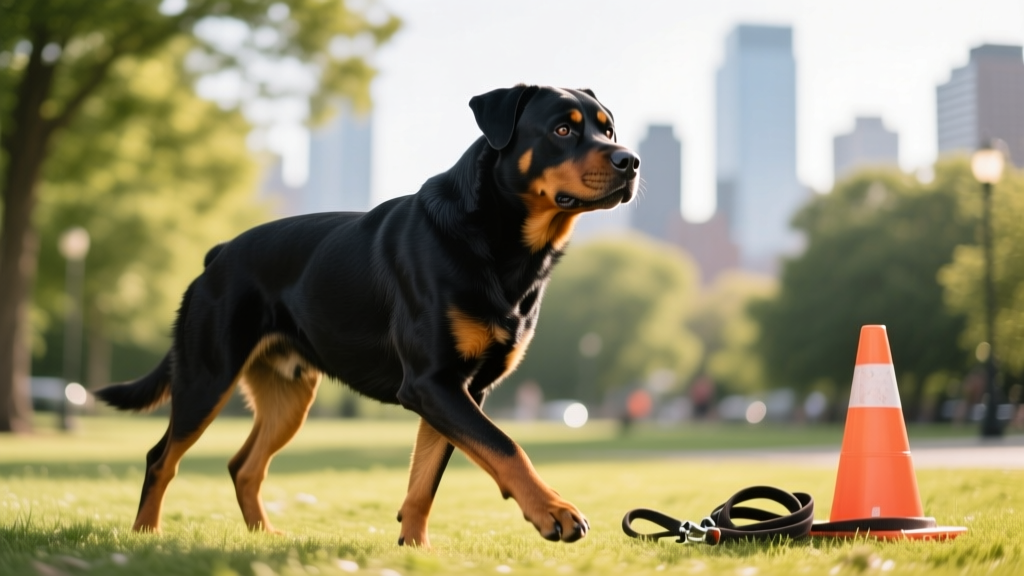
Physical appearance varies widely. Some individuals have the Rottweiler's broad head, jowls, and black-and-tan markings. Others inherit the GSD's sloping topline (though responsible breeders are moving away from extreme slopes), pointed ears, and sable or black-and-red coloring. Many show a blend — a stockier GSD-type build with Rottweiler coloring, or a leaner Rottweiler build with GSD ear shape.
Generations and Breeding Types
- F1 (First Generation): One purebred Rottweiler × one purebred German Shepherd. Maximum genetic diversity, but highest trait variability. Most Rottweiler-GSD mixes you'll find are F1.
- F1B (First Generation Backcross): An F1 mix bred back to one of the parent breeds (e.g., F1 Shepweiler × purebred Rottweiler). Slightly more predictable toward the backcross parent's traits.
- F2 (Second Generation): Two F1 Shepweilers bred together. Greater genetic variation than F1 — puppies can look wildly different from each other.
- Multigen (F3+): Multiple generations of Shepweiler-to-Shepweiler breeding. Very rare for this mix. Does NOT mean the breed is "stabilized" — it just means the breeder has been crossing the same mix for several generations.
Unlike Poodle mixes (doodles), where structured multigenerational breeding programs are common, the Rottweiler German Shepherd mix rarely has established breeding lines. Most available puppies come from F1 crosses, meaning you should expect significant individual variation. A responsible breeder will health-test both parent dogs (not just the mix puppy) using OFA or PennHIP evaluations.
Temperament: What to Expect (and What to Prepare For)
Temperament is the most critical — and most variable — aspect of this mix. Both parent breeds are intelligent, driven working dogs with strong protective instincts. The combination can produce an outstanding family companion or a challenging dog that overwhelms an inexperienced owner.
Best-Case Temperament Scenario
A well-socialized Shepweiler inherits the GSD's eagerness to please and the Rottweiler's calm confidence. This dog is alert without being reactive, protective without being aggressive, playful with family members, and politely reserved with strangers. They excel in obedience, enjoy structured activities like nosework or agility, and settle calmly in the home after adequate exercise.
Challenging Temperament Scenario
An under-socialized Shepweiler may inherit the GSD's wariness of strangers combined with the Rottweiler's territorial guarding drive — amplified. This can manifest as leash reactivity, resource guarding, barrier frustration (lunging at fences or windows), and difficulty accepting new people or animals into the home. Without sufficient mental stimulation, these dogs can develop destructive behaviors, excessive barking, or hyper-vigilance.
Both Rottweilers and German Shepherds have narrow socialization windows that close around 14–16 weeks. For a Shepweiler puppy, structured exposure to diverse people, environments, surfaces, sounds, and other animals between 8–16 weeks is non-negotiable. Use only positive reinforcement methods — treats, praise, play — to build confident, positive associations. The American Veterinary Society of Animal Behavior (AVSAB) recommends socialization begin before the puppy vaccination series is complete, in controlled, low-risk environments.
With Children and Other Pets
Well-socialized Shepweilers can be excellent with children in their own family, often forming protective bonds. However, their size and strength make them risky around toddlers — a 90-lb dog can accidentally knock over a small child during play. Both parent breeds have prey drive that varies individually, so introductions to cats and small animals should be gradual and supervised. Same-sex dog aggression is a known tendency in Rottweilers and some GSD lines, so multi-dog households should plan careful introductions.
Coat, Shedding, and Grooming Requirements
Is the Rottweiler German Shepherd mix hypoallergenic or low-shedding? No. Neither parent breed is hypoallergenic. You will get a shedding dog — the only question is how much.
Coat Type Possibilities
- Rottweiler-inherited coat: Short, flat, dense double coat. Moderate shedding year-round with heavier seasonal shedding in spring and fall. Easier to maintain — weekly brushing with a rubber curry brush or bristle brush suffices.
- German Shepherd-inherited coat: Medium-length double coat with a harsh outer layer and soft undercoat. Heavy shedding year-round, intense "coat blow" twice yearly where the undercoat comes out in clumps. Requires brushing 3–5 times per week with an undercoat rake and slicker brush.
- Blended coat: Short-to-medium length with a denser undercoat than a pure Rottweiler. Moderate-to-heavy shedding. Most Shepweilers land here.
Grooming Schedule
| Task | Frequency | Tools Needed |
|---|---|---|
| Brushing | 2–5× per week (coat-dependent) | Undercoat rake, slicker brush, or rubber curry |
| Bathing | Every 6–8 weeks (or as needed) | Oatmeal-based dog shampoo; avoid human products |
| Nail trims | Every 3–4 weeks | Guillotine or scissor-style clippers; styptic powder on hand |
| Ear cleaning | Every 2–4 weeks | Veterinarian-recommended ear cleanser; cotton balls (never Q-tips deep in canal) |
| Dental care | Daily brushing ideal; minimum 3× per week | VOHC-approved enzymatic toothpaste and dog toothbrush |
Budget for shedding management: A quality undercoat rake (like the Furminator Large Short Hair or the Oster ShedMonster) runs $25–$45. If you opt for professional deshedding treatments during coat blow season, expect $50–$80 per session at most groomers.
Health Considerations: Hybrid Vigor vs. Reality
There's a common belief that mixed-breed dogs are automatically healthier than purebreds due to "hybrid vigor." This is partially true and partially misleading. Here's what the science actually says:
Hybrid vigor (heterosis) can reduce the risk of recessive genetic conditions that require two copies of a defective gene. If a Rottweiler carries one copy of a gene for a condition that German Shepherds don't typically carry (and vice versa), the offspring is less likely to express that disease. A large-scale study published in the Journal of the American Veterinary Medical Association found that mixed-breed dogs had a slightly lower overall incidence of inherited disorders compared to purebreds.
However, hybrid vigor does NOT protect against conditions that both parent breeds share. And Rottweilers and German Shepherds share several significant health risks:
| Condition | Description | Prevalence | Screening |
|---|---|---|---|
| Hip Dysplasia | Malformation of the hip joint causing arthritis and pain | ~20% of GSDs; ~20% of Rottweilers (OFA data) | PennHIP or OFA radiographs on both parents |
| Elbow Dysplasia | Abnormal elbow joint development leading to lameness | ~20% of GSDs; ~15% of Rottweilers | OFA elbow radiographs |
| Degenerative Myelopathy (DM) | Progressive spinal cord disease causing hind-limb paralysis | Carrier rate ~35% in GSDs; present in Rottweilers | DNA test (SOD1 mutation) on both parents |
| Hemangiosarcoma | Aggressive cancer of blood vessel walls, often affecting spleen or heart | Both breeds have elevated risk vs. general population | No reliable screening; know emergency signs (collapse, pale gums, abdominal distension) |
| Osteosarcoma | Bone cancer, most common in large/giant breeds | Rottweilers have one of the highest breed-specific rates | No routine screening; monitor for persistent lameness |
| Gastric Dilatation-Volvulus (GDV/Bloat) | Life-threatening stomach torsion; deep-chested breeds at highest risk | Both breeds are high-risk due to chest conformation | Prophylactic gastropexy can be discussed with your vet |
Conditions more specific to one parent:
- From the Rottweiler side: Aortic stenosis (heart condition), hypothyroidism, juvenile-onset laryngeal paralysis and polyneuropathy (JLPP)
- From the GSD side: Exocrine pancreatic insufficiency (EPI), pannus (chronic eye condition), perianal fistulas
Lifespan expectation: Most Shepweilers live 9–12 years, which is roughly in line with both parent breeds. Cancer is the leading cause of premature death in both Rottweilers and German Shepherds, so regular veterinary wellness exams — including annual bloodwork starting at age 5 — are important for early detection.
For any health concerns, always consult your veterinarian. The information here is educational and is not a substitute for professional veterinary diagnosis or treatment.
Exercise, Training, and Mental Stimulation
This is a high-drive, high-intelligence mix that requires genuine commitment to daily activity. A Shepweiler that doesn't get enough physical and mental exercise will find its own entertainment — and you won't like what it chooses.
Daily Exercise Requirements
- Minimum: 60–90 minutes of structured activity per day
- Ideal: 90–120 minutes, combining physical exercise with mental challenges
- Activity types: Brisk leash walks (2× daily, 30–45 min each), off-leash running in secure areas, hiking, swimming, flirt pole sessions, structured fetch
Training Approach
Both parent breeds are highly trainable but have different learning styles. German Shepherds tend to be eager and fast learners who thrive on praise and repetition. Rottweilers are equally intelligent but can be more deliberate — they'll assess whether a command is "worth it" before complying. Your Shepweiler may lean either direction.
Recommended methods: Positive reinforcement (treats, toys, praise) combined with clear, consistent boundaries. Force-free training builds trust and produces more reliable results with guardian breeds than dominance-based methods. The AVSAB recommends Least Intrusive, Minimally Aversive (LIMA) strategies as the standard of care.
Never use shock collars, prong collars, or alpha rolls with this mix. Guardian breeds that are trained through fear or pain are more likely to develop fear-based aggression — a dangerous outcome in a 90-lb dog with a powerful bite.
Mental Stimulation Ideas
- Puzzle feeders (Kong Wobbler, Outward Hound Nina Ottosson puzzles — $15–$35)
- Scent work and nose games (hide treats around the yard)
- Obedience training sessions (10–15 minutes, 2–3× daily)
- Structured sports: rally obedience, agility, tracking, protection sports (IGP/Schutzhund with qualified clubs)
Cost: Purchase Price, Annual Care, and Budgeting
Puppy Purchase Price
| Source | Price Range | Notes |
|---|---|---|
| Responsible breeder (health-tested parents) | $800–$2,000 | Should provide OFA/PennHIP scores, genetic test results, health guarantee, and take-back clause |
| Casual/backyard breeder | $300–$800 | Often no health testing; higher risk of inherited conditions and behavioral issues |
| Rescue/adoption | $50–$400 | Adult Shepweilers appear in breed-specific rescues (German Shepherd and Rottweiler rescues) and general shelters; often already evaluated for temperament |
First-Year Estimated Costs
- Veterinary care (initial exams, vaccines, spay/neuter): $800–$1,500
- High-quality large-breed food (annual): $600–$1,000 (they'll eat 4–6 cups/day of premium kibble like Purina Pro Plan Large Breed, Royal Canin Giant, or Orijen Large Breed)
- Heartworm/flea/tick prevention (annual): $200–$400 (Simparica Trio, Interceptor Plus, or similar)
- Training classes (group obedience, 6–8 week course): $150–$350
- Supplies (crate, bed, leash, bowls, toys): $300–$600
- Pet insurance (optional but recommended): $50–$100/month for a large breed ($600–$1,200/year)
Total first-year estimate: $3,500–$6,000+ depending on your choices around insurance, food quality, and training investment.
Ongoing Annual Costs (Years 2+)
Expect $2,000–$4,000 per year for food, preventive care, insurance, and routine supplies. Large breeds cost more to medicate (doses are weight-based), and emergency veterinary care for conditions like GDV or cancer can run $5,000–$15,000+ per incident.
Breed-Specific Legislation and Insurance Considerations
Both Rottweilers and German Shepherds appear on breed-restrictive lists used by some homeowners' insurance companies, apartment complexes, and municipalities. A Shepweiler may face:
- Housing restrictions: Many rental properties and HOAs ban one or both parent breeds. Check your lease or HOA rules before committing.
- Insurance exclusions: Some homeowners/renters policies exclude liability coverage for specific breeds. Contact your insurer before bringing the dog home.
- Local BSL (Breed-Specific Legislation): Laws vary significantly by jurisdiction. Some cities or counties restrict or ban Rottweilers or German Shepherds. Check your local animal control ordinances.
Adoption from a rescue may sometimes bypass breed restrictions if the dog is listed as a "mixed breed" rather than identified by specific parent breeds, but this varies by property management and jurisdiction. Always be transparent — misrepresenting your dog's breed can void insurance and result in eviction.
Who Should (and Shouldn't) Own a Shepweiler
This Mix Suits You If:
- You have prior experience with large, strong working breeds
- You can commit 90+ minutes daily to exercise and training
- You have a securely fenced yard (minimum 5–6 ft fence; both breeds are athletic enough to clear shorter fencing)
- You're home regularly — both breeds are prone to separation anxiety when left alone 8+ hours daily
- You're prepared for a 10–12 year commitment to a dog that may weigh more than some adult humans
- You understand and accept the liability that comes with owning a powerful guardian breed
This Mix Is NOT a Good Fit If:
- You're a first-time dog owner (consider a lower-drive breed or an adult rescue with a known temperament)
- You live in a small apartment with no yard and limited time for outdoor activity
- You have very young children and no experience managing large dogs around kids
- You're away from home 10+ hours per day
- You want a low-maintenance, low-shedding companion
- You're uncomfortable with the idea of professional training classes
Frequently Asked Questions
What two breeds make up the Rottweiler German Shepherd mix?
The mix is a cross between a purebred Rottweiler and a purebred German Shepherd Dog. Both breeds originated in Germany as herding and working dogs. The Rottweiler was historically used to drive cattle and pull carts for butchers, while the German Shepherd was developed in the late 1800s by Captain Max von Stephanitz as a versatile herding and working dog.
How big will a Rottweiler German Shepherd mix get?
Adults typically range from 55 to 130 lb (25–59 kg) and 22 to 27 inches (56–69 cm) at the shoulder. Most individuals fall in the 75–110 lb range. Males tend to be larger than females, and puppies favoring the Rottweiler parent will generally be heavier and stockier.
What will the temperament be like?
Expect a loyal, intelligent, and protective dog. The exact temperament varies by individual — some lean toward the GSD's eager-to-please attitude, while others show the Rottweiler's more independent, confident style. Early socialization and consistent positive-reinforcement training are essential regardless of which traits emerge. These dogs bond deeply with their families and can be reserved or aloof with strangers.
Is this mix hypoallergenic or low-shedding?
No. Neither the Rottweiler nor the German Shepherd is hypoallergenic. Both are double-coated breeds that shed moderately to heavily. A Shepweiler will shed year-round and "blow" their undercoat one to two times per year. If you have dog allergies, this mix is not a suitable choice.
What health issues might this mix inherit?
The most significant shared risks are hip dysplasia, elbow dysplasia, degenerative myelopathy, GDV (bloat), hemangiosarcoma, and osteosarcoma. Rottweiler-specific risks include aortic stenosis and hypothyroidism, while GSD-specific risks include exocrine pancreatic insufficiency and pannus. Request health clearances for both parent dogs from any breeder.
How much does a Rottweiler German Shepherd mix cost?
From a responsible breeder with health-tested parents, expect $800–$2,000. Adoption through breed-specific rescues or shelters typically costs $50–$400. First-year total ownership costs (including veterinary care, food, supplies, and training) run $3,500–$6,000+.
Are Rottweiler German Shepherd mixes aggressive?
Not inherently. Both parent breeds were developed to work closely with humans, and aggression toward their own family is atypical. However, both breeds have strong guarding instincts that, without proper socialization and training, can develop into problematic reactivity or territorial behavior. Well-bred, well-socialized Shepweilers are protective without being indiscriminately aggressive. Poorly bred or under-socialized individuals can present real behavioral challenges — which is why sourcing from a responsible breeder and investing in early training matters enormously.
Can this mix live with cats or other dogs?
It depends on the individual dog's prey drive and socialization history. Puppies raised with cats often coexist peacefully. Adult Shepweilers with unknown histories should be introduced to cats and other dogs gradually and under controlled conditions. Same-sex dog aggression can occur, particularly between intact males. Spaying/neutering and structured introductions help but don't guarantee compatibility.
Beth Carrasco
All our authors care for dogs every day — read more of their work on the authors page.


