Complete Breed Comparison Guide
Pitbull vs Staffordshire Bull Terrier compared head-to-head: size, temperament, health risks, costs, and which breed fits your lifestyle best.
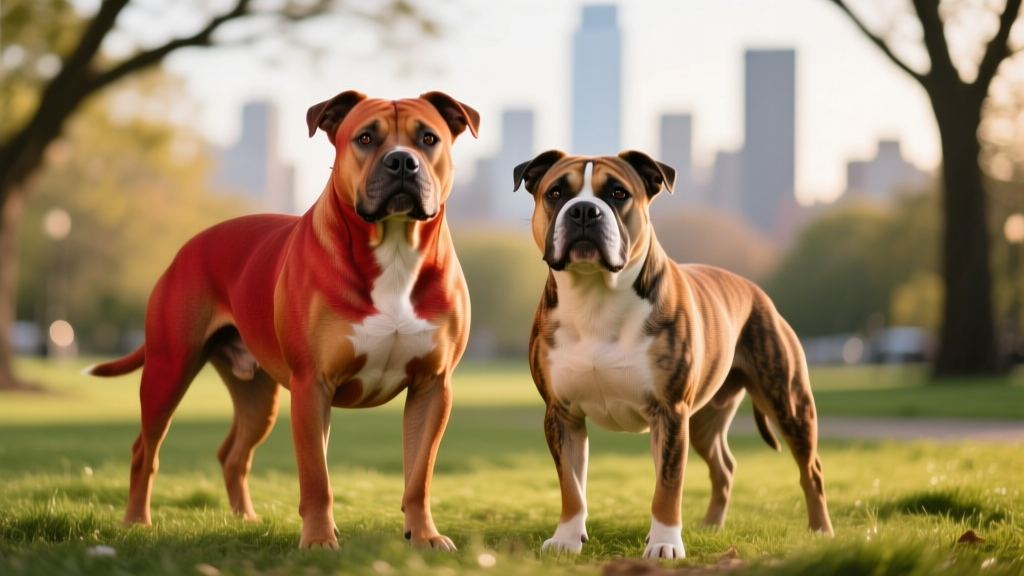
Pitbull vs Staffordshire Bull Terrier: At a Glance
If you've spent any time browsing rescue pages or talking to fellow dog enthusiasts, you've probably heard the terms "Pitbull" and "Staffordshire Bull Terrier" used interchangeably — sometimes even by people who should know better. The confusion is understandable. Both breeds share bulldog-and-terrier ancestry, muscular builds, and broad, expressive heads. But make no mistake: the American Pit Bull Terrier (APBT) and the Staffordshire Bull Terrier (SBT) are distinct breeds with different histories, different care requirements, and very different personalities once you get to know them.
This guide breaks down every meaningful difference between the two breeds so you can make an informed decision based on your living situation, experience level, and lifestyle — not just which face looks cuter on Petfinder.
| Attribute | American Pit Bull Terrier (APBT) | Staffordshire Bull Terrier (SBT) |
|---|---|---|
| AKC Recognition | Not AKC-recognized (UKC-recognized) | AKC-recognized (Terrier Group) |
| Weight Range | 30–65 lb (14–29 kg) | 24–38 lb (11–17 kg) |
| Height | 17–21 in (43–53 cm) | 14–16 in (36–41 cm) |
| Lifespan | 12–16 years | 12–14 years |
| Energy Level | High (60–90 min/day) | Moderate-High (45–60 min/day) |
| Trainability | High — eager, responsive | Moderate-High — can be stubborn |
| Grooming Needs | Low (weekly brush) | Low (weekly brush) |
| Shedding | Moderate year-round | Low to moderate |
| Apartment Friendly | Possible with sufficient exercise | Better suited — smaller footprint |
| Family Fit | Excellent with proper socialization | Excellent — known as "nanny dog" |
| Dog Tolerance | Variable — can be dog-selective | Variable — some dog-aggression history |
| Estimated Purchase Price | $500–$2,500 | $1,500–$3,500 |
| Annual Care Cost | $1,800–$3,200 | $1,500–$2,800 |
Head-to-Head: Category Winners
🏆 Size & Manageability: Staffordshire Bull Terrier
At 24–38 lb, the SBT is genuinely a medium-small dog. This matters practically: easier to lift into a car, lower food bills, more accepted by landlords with weight restrictions (many rental policies cap dogs at 25–30 lb). The APBT at up to 65 lb is a solidly medium-to-large, athletic dog that requires more physical management — stronger leash skills, sturdier crates (a 42-inch crate vs. a 30-inch for most SBTs), and more space to stretch out.
🏆 Trainability & Biddability: American Pit Bull Terrier
The APBT's terrier-drive combined with a strong desire to work with people makes them notably responsive to positive reinforcement training. They excel in obedience, agility, and weight-pull sports. The SBT is trainable but carries a more independent terrier streak — they'll learn commands just fine but may decide a squirrel is more interesting than your recall cue. For first-time owners working with a trainer, the APBT's handler focus is an advantage.
🏆 Apartment Living: Staffordshire Bull Terrier
The SBT's compact size and moderate energy make them the stronger apartment candidate. A 45-minute walk plus indoor play sessions typically satisfies them. The APBT's higher exercise ceiling (many individuals need 60–90 minutes of vigorous activity) means apartment dwellers must commit to serious daily exercise — think running, fetch sessions, or structured play — or risk destructive boredom behaviors.
🏆 Family With Young Children: Tie (Context-Dependent)
Both breeds have well-documented affection for people, including children. The SBT earned the historical nickname "nanny dog" in England for their noted gentleness with kids (though this term is somewhat romanticized — no dog should ever be left unsupervised with toddlers). The APBT is equally people-oriented and patient, but their larger size means an exuberant 55-lb dog can accidentally knock over a small child. If your kids are under 5, the SBT's smaller stature is a practical safety advantage.
🏆 Health & Longevity: American Pit Bull Terrier
Both breeds are generally healthy, but the APBT tends toward slightly longer lifespans (12–16 years vs. 12–14 for the SBT) and a somewhat broader genetic pool, especially among working-line and mixed-line dogs. The SBT's more closed UK gene pool has concentrated certain hereditary conditions. That said, neither breed is plagued by the severe health burdens seen in brachycephalic or giant breeds. Always consult your veterinarian about breed-appropriate screening.
🏆 Cost to Own: Staffordshire Bull Terrier
Lower body weight means lower food costs (roughly $35–$55/month for an SBT vs. $50–$80/month for an APBT on quality kibble), lower medication dosages (heartworm preventives, flea/tick treatments are weight-based), and generally lower annual care costs. The SBT does cost more upfront from a breeder, but annual savings add up over a 12+ year lifespan.
What Pitbulls and Staffordshire Bull Terriers Share
Before getting into dealbreakers, it's worth understanding why these breeds get confused. The similarities are significant:
- Common ancestry: Both descend from 19th-century bulldog-and-terrier crosses developed in the British Isles. The APBT was further developed in America for farm work, companionship, and (unfortunately) dog fighting. The SBT remained in England and was refined as a companion and show breed.
- Coat and grooming: Both have short, smooth, single coats. Neither requires professional grooming. A rubber curry brush weekly, occasional baths, and regular nail trims cover the basics for both.
- Human orientation: Both breeds are intensely people-focused. They bond deeply with their families, follow owners room-to-room, and are notorious lap dogs despite their athletic builds. Neither does well as an outdoor-only dog or with long isolation periods.
- Physical strength relative to size: Pound-for-pound, both breeds are remarkably strong. A 35-lb SBT can pull harder on leash than many 60-lb breeds. Invest in a proper front-clip harness (the Ruffwear Front Range or the 2 Hounds Design No-Pull Harness are solid choices) rather than relying on a flat collar.
- Breed-specific legislation exposure: Both breeds are frequently targeted by BSL (breed-specific legislation) and landlord restrictions. Before committing to either breed, check your local ordinances, HOA rules, and rental policies. Resources like AVMA's position on BSL explain why these laws are ineffective, but they remain enforceable in many jurisdictions.
- Prey drive: Both breeds carry terrier prey drive. Cats, rabbits, and small dogs may trigger chasing instincts. Early socialization and management (leash walks in squirrel-heavy areas, secure fencing) are non-negotiable for both.
Key Differences That Should Drive Your Decision
These are the practical dealbreakers that separate the breeds for most owners:
1. Exercise Commitment
APBT: Plan for 60–90 minutes of structured activity daily. This includes brisk walks, running alongside a bike, fetch, flirt pole sessions, or dog sports. Under-exercised APBTs are the ones chewing through drywall and howling at 2 AM.
SBT: 45–60 minutes is usually sufficient. A good walk, some tug play, and a puzzle toy will leave most SBTs content. They still need daily activity, but the threshold for "enough" is lower.
2. Dog-to-Dog Socialization
APBT: Dog tolerance varies widely. Some APBTs are dog-social; many become dog-selective or dog-intolerant after reaching social maturity (around 2–3 years). This isn't a flaw — it's a breed trait. Plan for management: leash walks, no dog parks, and structured playdates with known-compatible dogs.
SBT: Similar variability, though the breed's smaller size makes management physically easier. Some SBTs are scrappy with same-sex dogs. Early puppy socialization (8–16 weeks) is critical for both breeds, but don't expect it to override genetic predisposition in every case.
3. Registration and Competition
APBT: Recognized by the UKC (United Kennel Club) but not the AKC. If you want to compete in AKC obedience, rally, or agility, the APBT cannot participate in AKC-sanctioned events. UKC offers its own competition venues.
SBT: AKC-recognized in the Terrier Group. Eligible for all AKC companion and performance events. If competitive dog sports are on your wishlist, the SBT opens more doors.
4. Availability and Adoption
APBT: One of the most common breeds in U.S. shelters. If you're open to adoption, you'll likely find APBTs and APBT mixes at nearly every shelter and pit bull-specific rescue (Bad Rap, the Pit Bull Rescue Center, etc.). Adoption fees typically run $50–$300.
SBT: Far less common in the U.S. You may need to join a breed-specific rescue waitlist or work with a reputable breeder. The Staffordshire Bull Terrier Club of America maintains a rescue network, but available dogs are fewer and farther between.
Health Comparison: Breed-Specific Risks
Both breeds are generally robust, but each carries predispositions worth understanding before you commit. Ask any breeder for health testing documentation — at minimum, OFA (Orthopedic Foundation for Animals) hip evaluations and relevant genetic screening.
| Condition | APBT Risk | SBT Risk | Notes |
|---|---|---|---|
| Hip Dysplasia | Moderate (~12% OFA dysplastic) | Low-Moderate (~8%) | Request OFA hip scores from breeder; maintain lean body condition |
| Skin Allergies / Atopy | High | Moderate | APBTs are notorious for environmental and food allergies; expect potential lifelong management ($50–$200/month for Apoquel or Cytopoint if needed) |
| Demodectic Mange | Moderate | Low | Immune-mediated; more common in puppies and immunocompromised dogs |
| L-2-HGA (L-2-hydroxyglutaric aciduria) | Not associated | Moderate (breed-specific) | A metabolic disorder causing seizures and behavioral changes; genetic test available |
| Hereditary Cataracts (HC) | Low | Moderate | SBT breeders should provide annual CERF/OFA eye exams |
| Patellar Luxation | Low | Low-Moderate | Knee cap displacement; more common in smaller breeds |
| Cardiac Disease | Low-Moderate | Low | Ask breeder about cardiac screening; annual vet auscultation recommended |
| Hypothyroidism | Moderate | Low | More common in APBTs; manageable with daily levothyroxine (~$15–$30/month) |
Bottom line on health: The APBT's allergy predisposition is the most financially impactful difference. Chronic skin allergies can cost $600–$2,400 annually in diagnostics and medication. The SBT's L-2-HGA is rarer but more severe — always confirm both parents tested clear. For either breed, budget for pet insurance (Trupanion, Healthy Paws, or similar) at roughly $40–$80/month depending on your zip code and deductible.
Cost Breakdown: What You'll Actually Spend
Here's a realistic first-year and ongoing cost comparison based on 2026 U.S. averages:
| Expense Category | APBT | SBT |
|---|---|---|
| Purchase (breeder) | $500–$2,500 | $1,500–$3,500 |
| Adoption fee (rescue/shelter) | $50–$300 | $200–$500 |
| Spay/neuter | $250–$600 | $200–$500 |
| Initial supplies (crate, harness, bed, bowls, toys) | $300–$500 | $250–$400 |
| Monthly food (quality kibble or balanced diet) | $50–$80 | $35–$55 |
| Monthly preventives (heartworm, flea/tick) | $25–$50 | $18–$35 |
| Annual vet exams + vaccines | $400–$700 | $350–$600 |
| Pet insurance (monthly) | $45–$85 | $35–$70 |
| Training classes (6–8 week course) | $150–$350 | $150–$350 |
| Estimated First-Year Total | $2,800–$5,500 | $3,200–$6,200 |
| Estimated Ongoing Annual Cost | $1,800–$3,200 | $1,500–$2,800 |
The SBT's higher purchase price from breeders reflects lower availability in the U.S. — there are simply fewer SBT breeders, and responsible ones health-test extensively. However, the APBT's higher allergy rates can erase this cost difference within the first few years if your dog develops chronic atopic dermatitis.
Lifestyle Matching: Which Breed Is Right for You?
Choose the American Pit Bull Terrier If:
- You're an active person who runs, hikes, or bikes regularly and wants a dog that can keep up for hours
- You're interested in competitive dog sports (weight pull, agility, obedience through UKC venues)
- You're open to adopting from a shelter or rescue — APBTs are abundant and many are already trained
- You have a securely fenced yard (minimum 6-foot fence recommended; APBTs can be athletic climbers and diggers)
- You want a larger, more imposing companion for outdoor adventures
- You have experience with strong, driven breeds or are committed to working with a certified positive-reinforcement trainer
Choose the Staffordshire Bull Terrier If:
- You live in an apartment or smaller home and want a manageable, compact dog
- You have young children and want a sturdy but not overpowering family dog
- You want AKC registration and access to AKC-sanctioned competitions
- You prefer a dog with slightly lower daily exercise requirements
- You're willing to search for a reputable breeder or join a rescue waitlist
- You want a breed with slightly lower allergy predisposition
- Weight-restrictive housing policies apply to you (many landlords allow dogs under 35 lb but not over)
Frequently Asked Questions
What are the main differences between a Pitbull and a Staffordshire Bull Terrier?
The most significant differences are size (APBTs are 30–65 lb; SBTs are 24–38 lb), exercise needs (APBTs require 60–90 min/day; SBTs need 45–60 min), AKC recognition (only the SBT is AKC-recognized), and health predispositions (APBTs are more allergy-prone; SBTs carry breed-specific L-2-HGA risk). Both share terrier ancestry, short coats, strong human bonds, and similar temperaments.
Which breed is better for families with children?
Both breeds are excellent with children when properly socialized. The SBT has a slight practical edge for families with toddlers due to smaller size — a 30-lb SBT is less likely to accidentally injure a small child during play. For families with older kids (6+), either breed works well. The key factor is always individual temperament and supervision, not breed alone.
Which breed is better for apartments?
The Staffordshire Bull Terrier is the stronger apartment candidate due to smaller size, lower exercise threshold, and easier compliance with weight-restrictive housing policies. An APBT can thrive in an apartment with a dedicated owner who provides 60–90 minutes of daily exercise, but the SBT's needs are more realistic for urban living.
Which breed is easier to train?
The American Pit Bull Terrier is generally more biddable and handler-focused, making them slightly easier for training — especially for owners new to terrier-type breeds. SBTs are intelligent but can be more independent. Both respond best to positive reinforcement methods (treat-based rewards, clicker training, play rewards). Force-free training is essential; aversive methods damage trust with both breeds and worsen behavioral outcomes.
Which breed has more health problems?
Neither breed is considered unhealthy, but they differ in predispositions. APBTs have higher rates of skin allergies and hypothyroidism, which are manageable but can be costly. SBTs carry risk for L-2-HGA (a metabolic disorder) and hereditary cataracts, which are less common but potentially more serious. A responsibly bred dog of either breed, with health-tested parents, is likely to be healthy. See the AKC's SBT health overview for breed-specific screening recommendations.
Which breed costs more to own?
The SBT typically costs more upfront ($1,500–$3,500 from a breeder vs. $500–$2,500 for an APBT), but the APBT often costs more annually due to larger size (more food, higher medication doses) and higher allergy rates. Over a 12-year lifespan, total ownership costs are roughly comparable, with the APBT averaging slightly higher ongoing expenses.
Are Pitbulls and Staffordshire Bull Terriers aggressive breeds?
Neither breed is inherently aggressive toward people — both score well on temperament testing. The American Temperament Test Society data shows APBTs passing at rates comparable to or exceeding many popular breeds. Dog-to-dog tolerance varies individually in both breeds and is influenced by genetics, socialization, and maturity. Responsible ownership means managing your dog's environment, not stereotyping the breed.
Should I get a Pitbull or a Staffordshire Bull Terrier?
If you're active, have outdoor space, and want a versatile athletic partner — especially if you're open to adoption — the APBT is likely your match. If you live in a smaller space, have young children, prefer a lower exercise commitment, or want AKC competition eligibility, the SBT is the better fit. For either breed, commit to early socialization, positive-reinforcement training, and proactive veterinary care.
Final Verdict
There is no universally "better" breed between the American Pit Bull Terrier and the Staffordshire Bull Terrier. The right choice depends entirely on your living situation, activity level, and priorities.
For active, experienced owners with space and time: The APBT offers an unmatched combination of athleticism, trainability, and devotion — and you can likely adopt one from a rescue for under $300.
For apartment dwellers, families with small children, or those wanting AKC sports access: The SBT delivers the same loyal temperament in a more manageable package, with slightly lower daily exercise demands.
Whichever you choose, invest in early puppy socialization (or adult-dog decompression protocols for rescues), force-free training with a certified professional (look for CCPDT or KPA credentials), and a relationship with a veterinarian experienced with terrier-type breeds. Both of these dogs will reward your effort with a depth of loyalty that few breeds can match.
Aaron Whyte
All our authors care for dogs every day — read more of their work on the authors page.


