Pitbull Mixed with Shar Pei: The Complete Breed Guide
Everything about the pitbull mixed with shar pei: size, temperament, coat types, health risks, grooming needs, costs.

The pitbull mixed with shar pei is one of the more unusual designer crosses you'll encounter. Sometimes called a Sharpull or Pit Pei, this mix combines the muscular athleticism of the American Pit Bull Terrier with the ancient, wrinkled dignity of the Chinese Shar-Pei. The result is a dog that can be fiercely loyal, deeply independent, and visually striking — but also one that demands an experienced handler who understands both parent breeds.
Unlike popular doodle mixes that have been refined over decades of multigenerational breeding, the pitbull-Shar-Pei cross is still relatively rare and unpredictable. Individual puppies from the same litter can look and behave very differently from one another. If you're considering this mix — whether from a breeder or a rescue — this guide will help you understand what to expect and how to prepare.
Parent Breeds: Understanding the Foundation
Before we can talk about the mix, you need to understand the two very different dogs that create it. The American Pit Bull Terrier and the Chinese Shar-Pei sit on opposite ends of the temperament and history spectrum, and their combination produces some fascinating — and sometimes challenging — offspring.
| Trait | American Pit Bull Terrier | Chinese Shar-Pei |
|---|---|---|
| Origin | United States / UK (19th century bull-and-terrier crosses) | China (ancient breed, 200+ BC) |
| AKC Recognition | Not AKC-recognized (UKC-recognized); American Staffordshire Terrier is the AKC equivalent | AKC-recognized since 1992 (Non-Sporting Group) |
| Weight Range | 30–65 lb (14–29 kg) | 45–60 lb (20–27 kg) |
| Height | 17–21 in (43–53 cm) | 18–20 in (46–51 cm) |
| Coat | Short, smooth, single coat | Short to medium, harsh "horse coat" or longer "brush coat" |
| Temperament | People-oriented, energetic, eager to please | Aloof with strangers, independent, loyal to family |
| Trainability | High — responds well to positive reinforcement | Moderate — can be stubborn, needs patient methods |
| Lifespan | 12–16 years | 8–12 years |
| Shedding | Moderate year-round | Low to moderate, seasonal |
The Pit Bull brings sociability, athleticism, and a strong desire to work with their handler. According to the United Kennel Club breed standard, the APBT is confident, intelligent, and good-natured. The Shar-Pei, meanwhile, contributes wariness around strangers, a strong guarding instinct, and a famously independent streak. The AKC describes the Shar-Pei as "loyal, independent, and calm" — a dog that bonds deeply with family but often has little interest in pleasing outsiders.
When these breeds are crossed, you get a dog that may inherit any combination of these traits. One puppy might be as gregarious as a Pit Bull; another from the same litter might be as reserved as a Shar-Pei. This variability is the defining characteristic of first-generation designer mixes.
Size, Weight, and Physical Appearance
Because both parent breeds fall into a similar medium-to-large size range, the pitbull mixed with shar pei doesn't have the dramatic size variability you see in crosses involving toy or giant breeds. Still, there's a meaningful spread.
| Measurement | Minimum | Maximum | Most Common Range |
|---|---|---|---|
| Weight | 35 lb (16 kg) | 65 lb (29 kg) | 45–55 lb (20–25 kg) |
| Height at Shoulder | 17 in (43 cm) | 21 in (53 cm) | 18–20 in (46–51 cm) |
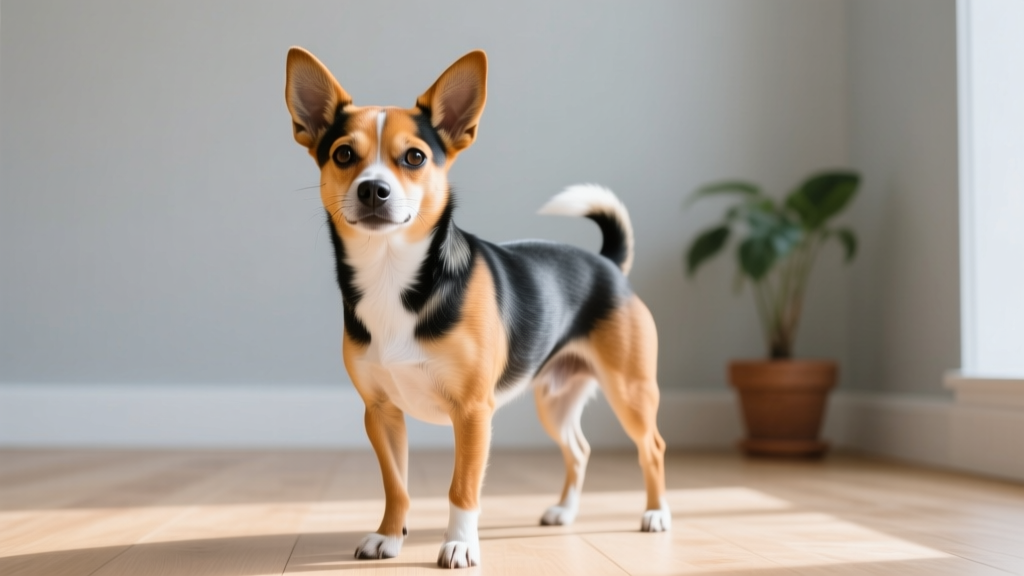
Physically, expect a muscular, stocky dog with a broad chest. The head shape varies considerably: some individuals inherit the Pit Bull's broad, wedge-shaped skull, while others show the Shar-Pei's characteristic wrinkles and hippopotamus-like muzzle. Many fall somewhere in between, with light wrinkling on the forehead and jowls but a more streamlined muzzle than a purebred Shar-Pei.
Ears can be rose-shaped (Pit Bull) or small and triangular (Shar-Pei), and the tail may be straight, slightly curved, or the Shar-Pei's characteristic high-set curl. Body condition is important to monitor — these dogs tend to be stocky, and excess weight puts stress on joints that may already be predisposed to dysplasia.
Coat Types and Grooming Requirements
Coat inheritance in this mix is relatively straightforward because both parents have short coats, but texture varies:
- Pit Bull-type coat: Smooth, glossy, very short hair that lies flat against the body. Easy to maintain with a weekly rubber curry brush.
- Shar-Pei "horse coat" type: Extremely short, harsh, and bristly to the touch. Can feel almost like sandpaper. Some people find this coat texture irritating against bare skin.
- Shar-Pei "brush coat" type: Slightly longer (up to 1 inch / 2.5 cm), softer than the horse coat but still dense. Less common in the general Shar-Pei population but present in some lines.
Most pitbull-Shar-Pei mixes inherit a short coat that falls somewhere between the Pit Bull's smooth finish and the Shar-Pei's harsher texture. This mix is not hypoallergenic and is not low-shedding. Both parent breeds shed moderately, and you should expect year-round shedding with seasonal increases in spring and fall. If you have dog allergies, this cross is not a good choice.
- Brush 2–3 times per week with a bristle brush or rubber grooming mitt
- Bathe every 4–8 weeks or as needed (over-bathing strips natural oils from short coats)
- Clean facial wrinkles daily if your dog inherits Shar-Pei-style skin folds — trapped moisture causes yeast infections and intertrigo
- Check and clean ears weekly, especially if folded
- Trim nails every 2–4 weeks
- Brush teeth 3–5 times per week minimum (dental disease affects over 80% of dogs by age 3, per the AVMA)
The wrinkle care point deserves emphasis. If your dog inherits significant facial or body folds from the Shar-Pei side, those skin folds require daily attention. Moisture, debris, and bacteria trapped in wrinkles lead to painful skin infections — one of the most common reasons Shar-Pei owners visit the vet. Use a soft, damp cloth or veterinary-recommended wrinkle wipe (such as Squishface Wrinkle Wipes or DermaPet Acetic/Boric wipes) to clean between folds, then dry thoroughly.
Temperament: Best-Case and Challenging Scenarios
Temperament is where the pitbull mixed with shar pei becomes genuinely unpredictable, and this is the most important section of this guide for prospective owners.
Your dog inherits the Pit Bull's people-orientation and eagerness to train, combined with the Shar-Pei's calm demeanor and moderate energy level. The result: a loyal, moderately active family dog who is friendly with familiar people, politely reserved with strangers, and responsive to positive reinforcement training. This dog is confident without being reactive and protective without being aggressive.
Your dog inherits the Shar-Pei's stranger suspicion and independence combined with the Pit Bull's physical strength and tenacity — but without the Pit Bull's typical handler-focus. The result: a powerful, strong-willed dog who may be aloof or reactive with unfamiliar people and dogs, difficult to redirect once aroused, and resistant to training from anyone outside their primary bond. This dog requires significant management in public settings and is not suitable for first-time owners or multi-dog households without professional guidance.
Most pitbull-Shar-Pei mixes fall somewhere between these extremes, but the range is wide enough that you should be prepared for either outcome. Key temperament considerations include:
- Dog-dog socialization: Both parent breeds can have same-species aggression tendencies. Pit Bulls were historically selected for gameness, and Shar-Pei can be territorial with other dogs. Early, ongoing socialization is non-negotiable — and even with excellent socialization, some individuals will never be comfortable in dog parks or group settings.
- Stranger approach: Expect some wariness. The Shar-Pei influence means your dog may not welcome visitors the way a pure Pit Bull often does. Counter-conditioning and desensitization using high-value treats can help, but respect your dog's boundaries.
- Family bonding: Both breeds bond deeply with their people. Separation anxiety is a real possibility, especially if the dog is left alone for long hours.
- Prey drive: Moderate to high in many individuals. Cats and small animals should be introduced carefully, if at all.
- Children: With proper socialization, these dogs can be gentle with children they're raised alongside. However, their size and strength mean interactions with young children should always be supervised. Teach children to respect the dog's space, especially during eating and sleeping.
Training should exclusively use positive reinforcement and force-free methods — reward-based training, clicker training, and LIMA (Least Intrusive, Minimally Aversive) protocols. Neither parent breed responds well to harsh corrections. Shar-Pei tend to shut down under pressure, and Pit Bulls can become conflicted and stressed. A certified professional dog trainer (CPDT-KA or IAABC-certified) is a worthwhile investment, particularly for puppy socialization classes and any leash reactivity work.
Health Considerations: Hybrid Vigor vs. Reality
Let's address a persistent myth: hybrid vigor does not eliminate health problems in designer mixes. The concept of heterosis (hybrid vigor) is real in livestock breeding, where crossing two highly inbred lines produces healthier first-generation offspring. However, the benefit is proportional to how inbred the parent lines are. If either parent carries genes for heritable conditions, those genes can absolutely be passed to mixed-breed puppies.
A pitbull mixed with shar pei may inherit conditions from either or both parent breeds. Here's what to watch for:
| Condition | From Which Parent | Prevalence / Notes |
|---|---|---|
| Hip Dysplasia | Both | Common in both breeds; OFA screening recommended for parents |
| Skin Fold Dermatitis (Intertrigo) | Shar-Pei | Very common in wrinkled individuals; requires daily fold cleaning |
| Shar-Pei Fever (Familial Renal Amyloidosis) | Shar-Pei | Episodic fever and joint swelling; can progress to kidney failure. No genetic test available — diagnosis is clinical |
| Entropion | Shar-Pei | Eyelid rolls inward, irritating the cornea; may require surgical correction ($1,500–$3,500 per eye) |
| Allergies (Atopic Dermatitis) | Both | Environmental and food allergies are common in both breeds; Shar-Pei are especially prone |
| Demodectic Mange | Pit Bull | Immune-mediated; Pit Bull lines have higher susceptibility |
| Hypothyroidism | Pit Bull | Autoimmune thyroiditis; manageable with daily levothyroxine ($15–$30/month) |
| Heart Disease (Aortic Stenosis) | Pit Bull | Congenital; screening via echocardiogram recommended |
Of particular concern is Shar-Pei Fever (also called Familial Shar-Pei Fever or FSF). This is an autoinflammatory condition unique to the Shar-Pei breed that causes recurrent episodes of high fever (104–107°F / 40–42°C) and swelling of the hock joints. Over time, repeated episodes can lead to amyloid protein deposits in the kidneys, eventually causing renal failure. According to the Merck Veterinary Manual, amyloidosis is a leading cause of death in Shar-Pei. There is no genetic screening test — the only way to reduce risk is breeding away from affected lines, which is difficult to verify in a mixed-breed context.
Preventive health plan for your pitbull-Shar-Pei mix:
- Annual wellness exams with full blood panel (including kidney values: BUN, creatinine, SDMA)
- Hip evaluation via PennHIP or OFA radiographs at 24 months
- Annual thyroid panel (starting at age 4)
- Regular skin and ear checks, especially if wrinkles are present
- Maintain lean body condition score (BCS 4–5 on a 9-point scale) to reduce joint stress
- Heartworm prevention year-round (e.g., Simparica Trio, Heartgard Plus — consult your veterinarian for the right product)
Always consult your veterinarian to develop a health monitoring plan tailored to your individual dog's inherited traits and risk factors.
Exercise, Training, and Daily Care
This mix typically needs 45–90 minutes of structured exercise daily, depending on which parent's energy level they lean toward. Pit Bull-dominant individuals tend to be higher-energy and benefit from:
- Two 30-minute leash walks per day
- Structured play sessions (flirt pole, tug with rules, fetch)
- Mental enrichment: food puzzles, snuffle mats, scent work
- Canine sports for appropriate outlets: weight pull, barn hunt, rally obedience
Shar-Pei-dominant individuals may be more moderate, satisfied with one solid walk and some yard time. However, even lower-energy individuals need daily mental stimulation to prevent boredom-related behaviors like chewing, digging, or excessive barking.
Because of the potential for dog-dog reactivity, many pitbull-Shar-Pei mixes do best with on-leash exercise in controlled environments rather than off-leash dog parks. A well-fitted front-clip harness (such as the Ruffwear Front Range or 2 Hounds Design Freedom Harness) gives you better control on walks without putting pressure on the trachea.
- Weeks 8–16: Puppy socialization classes (force-free, rewards-based). Expose to 100+ novel stimuli: surfaces, sounds, people of all appearances, other vaccinated dogs
- Months 4–6: Basic obedience: sit, down, stay, recall, loose-leash walking, "leave it" and "drop it" cues
- Months 6–12: Intermediate obedience, impulse control exercises, continued public socialization
- Ongoing: Regular training sessions 3–5 times per week, even after basics are mastered — consistency prevents regression
Cost: What to Budget for a Pitbull Mixed with Shar Pei
Because this is an uncommon cross, pricing varies widely depending on your source:
| Expense | Low End | High End | Notes |
|---|---|---|---|
| Puppy from a breeder | $500 | $1,500 | Wide range; reputable breeders are rare for this cross |
| Rescue/adoption fee | $50 | $400 | Often includes spay/neuter, vaccines, microchip |
| Initial veterinary (first year) | $800 | $1,800 | Vaccines, spay/neuter, heartworm test, fecal exams |
| Food (annual) | $480 | $900 | $40–$75/month for quality AAFCO-approved kibble or balanced diet |
| Supplies (crate, bed, harness, toys) | $200 | $500 | One-time; replace items as needed |
| Training classes | $150 | $600 | Group classes vs. private sessions |
| Pet insurance (annual) | $480 | $900 | $40–$75/month; recommended given Shar-Pei health risks |
| First-year total (breeder puppy) | $2,610 | $6,200 | Varies significantly by region and veterinary costs |
A word on breeders: because the pitbull-Shar-Pei mix is not a popular, established designer breed (unlike Goldendoodles or Labradoodles), you're unlikely to find dedicated breeders with multigenerational programs. Most litters are F1 (first-generation) crosses. Be cautious of anyone marketing "rare designer puppies" at premium prices without providing health testing documentation for both parent dogs. A responsible breeder will provide OFA hip scores, thyroid panels, and ideally eye certifications for both the Pit Bull and Shar-Pei parent.
Rescue is a very viable path for this mix. Pit Bull-type dogs are overrepresented in shelters nationwide, and Shar-Pei mixes appear regularly as well. Check local shelters, Petfinder, and breed-specific rescues for both parent breeds.
Who Is This Mix Best Suited For?
The pitbull mixed with shar pei is not a dog for everyone. Here's a realistic assessment of who thrives with this mix and who should consider alternatives:
| Factor | Good Fit | Poor Fit |
|---|---|---|
| Experience Level | Experienced owners familiar with strong, independent breeds | First-time dog owners |
| Household | Single-dog household or home with one well-matched dog | Multi-dog home without management plan |
| Children | Families with older children (10+) who understand dog body language | Homes with toddlers or children who may provoke the dog |
| Living Situation | House with fenced yard; some apartment-friendly if exercised adequately | No outdoor access or extremely sedentary lifestyle |
| Time Commitment | Owner home often or able to arrange midday visits; 1–2 hours daily for exercise and training | Gone 10+ hours daily with no support |
| Training Willingness | Committed to ongoing positive reinforcement training and socialization | Looking for a low-effort, "self-training" dog |
If you live in an area with breed-specific legislation (BSL), be aware that pit bull-type mixes may be subject to housing restrictions, insurance surcharges, or municipal bans depending on your jurisdiction. Check your local ordinances and your renter's or homeowner's insurance policy before committing to this mix.
Frequently Asked Questions
What two breeds make up the pitbull mixed with shar pei?
The American Pit Bull Terrier (or closely related pit bull-type breeds such as the American Staffordshire Terrier or Staffordshire Bull Terrier) and the Chinese Shar-Pei. Most crosses use an American Pit Bull Terrier as one parent and a Chinese Shar-Pei as the other, though some litters may involve American Bulldog or other bull-type breeds marketed as "pitbull."
How big will this mixed breed get?
Most adults weigh between 45 and 55 lb (20–25 kg) and stand 18–20 inches (46–51 cm) at the shoulder. The range extends from about 35 lb (16 kg) on the small end to 65 lb (29 kg) for larger individuals, depending on which parent's size genes dominate.
What will the temperament be like?
Temperament varies significantly between individuals. Expect a loyal, protective dog that bonds closely with family. Some are friendly and outgoing like the Pit Bull parent; others are reserved and independent like the Shar-Pei parent. Early socialization and consistent positive reinforcement training are essential regardless of which temperament you get.
Is this mix hypoallergenic or low-shedding?
No. Both parent breeds have short coats that shed moderately year-round with seasonal increases. This mix is not suitable for people with dog allergies. There is no such thing as a truly hypoallergenic dog, but this mix is on the higher-shedding end of the spectrum.
What health issues might this mix inherit?
Key concerns include hip dysplasia (both breeds), skin fold dermatitis and Shar-Pei Fever (from the Shar-Pei side), allergies and atopic dermatitis (both breeds), entropion (Shar-Pei), and hypothyroidism (Pit Bull). Pet insurance is strongly recommended — Shar-Pei Fever-related kidney disease can result in veterinary bills exceeding $10,000 over the dog's lifetime.
How much does a pitbull mixed with shar pei cost?
Puppies from breeders typically range from $500 to $1,500, though this cross is uncommon and dedicated breeders are rare. Adoption fees at rescues and shelters range from $50 to $400. First-year total costs (including veterinary care, food, supplies, and training) typically fall between $2,600 and $6,200.
Can this mix live with other dogs?
Some individuals can, particularly if raised together from puppyhood with careful introductions. However, both parent breeds have tendencies toward same-species aggression, so this mix often does best as the only dog in the household. If you have existing dogs, arrange a controlled meet-and-greet before committing, and work with a certified behavior consultant to manage introductions.
Anouk Beaumont
All our authors care for dogs every day — read more of their work on the authors page.