Parti Yorkie
Everything you need to know about the Parti Yorkie — size, temperament, health risks, grooming, costs.
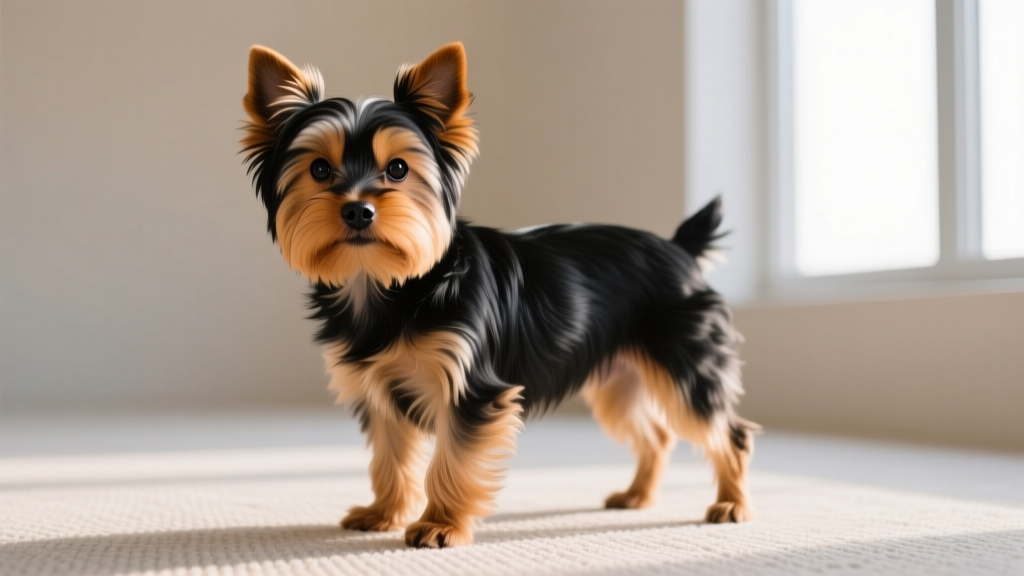
What Is a Parti Yorkie? Breed Overview
The Parti Yorkie is a Yorkshire Terrier born with a non-standard, tri-color or multi-color coat — typically a combination of white, black, and tan (or gold/chocolate). Unlike the traditional blue-and-tan Yorkshire Terrier recognized by the American Kennel Club (AKC), Parti Yorkies display piebald or parti-color patterns caused by a recessive piebald gene (s-locus). They are purebred Yorkshire Terriers, not a separate breed or a mixed breed.
The AKC officially accepted Parti-colored Yorkshire Terriers for registration in 2000, though they remain disqualified from AKC conformation shows. They can participate in AKC companion and performance events such as agility, rally, and obedience trials. The Yorkshire Terrier Club of America (YTCA) considers the parti color a fault, but this has not slowed their popularity among pet owners who love their striking appearance.
| Attribute | Details |
|---|---|
| Size Class | Toy |
| Weight | 4–7 lb (1.8–3.2 kg) |
| Height | 7–8 inches (18–20 cm) at the shoulder |
| Lifespan | 12–16 years (some reach 17+) |
| Coat Type | Long, fine, silky; hair-like (low-shedding) |
| Coat Colors | Tri-color (white/black/tan), chocolate parti, golden parti, merle parti (non-standard) |
| Energy Level | Moderate for a toy breed |
| Grooming Needs | High — daily brushing for long coats |
| AKC Group | Toy Group |
| Apartment Friendly | Excellent |
Origin and History of the Parti-Colored Yorkshire Terrier
The Yorkshire Terrier originated in northern England during the mid-1800s, bred by working-class weavers and miners in Yorkshire and Lancashire to catch rats in mills and mines. The breed was developed from a mix of now-extinct Clydesdale Terriers, Paisley Terriers, and likely Skye Terriers and Maltese.
Parti-colored Yorkies have existed since the breed's earliest days. Historical records from the late 1800s reference white and tri-colored Yorkshire Terriers. However, these dogs were quietly removed from breeding programs or not registered because they didn't conform to the blue-and-tan standard. The recessive piebald gene persisted silently in the gene pool for generations.
In the late 1990s, California breeder Gloria Lipman began intentionally documenting and registering parti-colored puppies born in her litters. After DNA testing confirmed their purebred status, the AKC opened registration to parti-colored Yorkshire Terriers in 2000. Since then, dedicated breeders have established parti-to-parti breeding lines, producing litters where 100% of puppies carry the parti pattern.
Temperament and Personality: What Living With a Parti Yorkie Is Really Like
Parti Yorkies share the identical temperament profile of traditional Yorkshire Terriers — the coat color does not influence personality. Expect these core behavioral traits:
Bold and confident: Despite weighing under 7 pounds, Parti Yorkies carry themselves with terrier bravado. They will alert-bark at delivery drivers, challenge dogs five times their size on walks, and claim the center of the couch without hesitation. This is not nervousness — it's genuine self-assurance rooted in their terrier lineage.
Deeply attached to their person: Parti Yorkies tend to bond intensely with one primary caregiver. They follow you from room to room, insist on lap time during TV watching, and often develop separation anxiety if left alone for more than 4–5 hours regularly. If you work from home or can bring your dog to the office, this breed thrives. If you're gone 10 hours a day, expect problem behaviors like destructive chewing or excessive vocalization.
Alert and vocal: These are exceptional watchdogs for their size. A Parti Yorkie will announce visitors, strange noises, and the neighbor's cat with sharp, persistent barking. This trait requires early training — not to eliminate barking (impossible for a terrier), but to teach a "quiet" cue that lets you manage volume on command.
Playful and energetic in bursts: Don't mistake their small size for laziness. Parti Yorkies have genuine play drives. They enjoy short games of tug, chasing flirt poles, and puzzle toys that dispense treats. However, their energy comes in 15–20 minute bursts followed by long naps on warm surfaces.
Intelligent but independent: They learn commands quickly but may choose not to obey if something more interesting is happening. This is classic terrier decision-making — they're not unintelligent, they're evaluating whether compliance is worth their effort. Food motivation works extremely well.
- Compact size ideal for apartments and travel
- Low-shedding coat suitable for many allergy sufferers
- Loyal, affectionate companionship
- Long lifespan (12–16 years)
- Unique, eye-catching coat colors
- Alert watchdog qualities
- Prone to separation anxiety if left alone too long
- Frequent barking requires management training
- Fragile build — injury risk from jumps and falls
- High grooming commitment and cost
- Difficult to housebreak compared to larger breeds
- Dental disease is nearly universal without preventive care
Physical Characteristics: Size, Build, and Coat Details
Weight: The AKC breed standard specifies Yorkshire Terriers should not exceed 7 lb (3.2 kg). Most Parti Yorkies fall in the 4–7 lb (1.8–3.2 kg) range. Dogs under 4 lb are often marketed as "teacup" or "tiny teacup" — be aware that these extremely small dogs carry significantly higher health risks including hypoglycemia, fragile bones, and congenital defects. The Merck Veterinary Manual notes that toy breeds bred for extremely small size face disproportionate health challenges.
Height: Adult Parti Yorkies typically stand 7–8 inches (18–20 cm) at the withers. There is no separate height standard for parti-colored dogs.
Build: Compact and well-proportioned with a level topline, moderate angulation, and a high-set tail (traditionally docked to medium length in the US, though undocked is increasingly common and required in many European countries).
Coat: Parti Yorkies have the same fine, silky, human-hair-like coat as traditional Yorkies. The coat grows continuously and does not shed seasonally. The difference is color distribution:
- Classic parti: White base with black and tan patches — the most common and recognizable pattern
- Chocolate parti: White base with brown/chocolate and tan patches (carries the bb liver gene)
- Golden parti: White and gold/cream without dark patches
- Merle parti: Mottled merle pattern with white — controversial, as the merle gene is not native to the Yorkshire Terrier and suggests historical outcrossing; associated with deafness and eye defects when two merles are bred together
Exercise and Activity Needs
Parti Yorkies need 30–45 minutes of total daily activity, split across multiple sessions. This is not a breed that needs a 5-mile hike, but they do need genuine physical and mental stimulation beyond a quick potty break.
| Activity | Duration | Frequency | Details |
|---|---|---|---|
| Morning walk | 15–20 minutes | Daily | Leash walk at dog's pace; allow sniffing |
| Indoor play session | 10–15 minutes | 1–2x daily | Flirt pole, tug, fetch down hallway |
| Evening walk | 10–15 minutes | Daily | Shorter wind-down walk |
| Mental enrichment | 10–15 minutes | Daily | Puzzle feeders, snuffle mats, training drills |
| Socialization outing | 30–60 minutes | 2–3x weekly | Dog-friendly stores, patios, parks (carried or in sling for safety) |
Important exercise precautions:
- Use a harness, never a collar, for leash walking — Yorkies are prone to tracheal collapse, and collar pressure accelerates this condition
- Avoid jumping from furniture over 18 inches high; use pet ramps or steps to prevent patellar luxation and spinal injuries
- In temperatures below 40°F (4°C), use a fitted dog sweater — their small body mass and single coat make them lose heat rapidly
- In temperatures above 85°F (29°C), limit walks to early morning and evening; carry water and watch for panting distress
Common Health Issues in Parti Yorkies
Parti Yorkies are subject to the same health conditions as traditional Yorkshire Terriers — coat color alone does not create additional health risks, with one exception: merle-patterned Parti Yorkies may carry risks for deafness and ocular defects if the merle gene is present. Always consult your veterinarian about breed-specific screening.
| Condition | Description | Estimated Prevalence | Typical Treatment Cost |
|---|---|---|---|
| Patellar Luxation | Kneecap slips out of groove; grades I–IV | ~15–20% of Yorkies | $1,500–$4,000 per knee (surgical) |
| Tracheal Collapse | Weakening of tracheal cartilage rings causing chronic cough | ~10–15% (higher in older/overweight dogs) | $200–$500 (medical) / $3,500–$5,500 (stent surgery) |
| Portosystemic Shunt (PSS) | Abnormal blood vessel bypassing the liver; congenital | ~2–5% (Yorkies are among the most predisposed breeds) | $3,000–$7,000 (surgical correction) |
| Dental Disease | Periodontal disease, early tooth loss due to crowded small mouth | ~70–80% by age 3 without preventive care | $500–$1,500 per professional cleaning; $300–$800 per extraction |
| Hypoglycemia | Dangerously low blood sugar, especially in puppies under 4 lb | Common in puppies; rare in healthy adults | $200–$800 (emergency treatment) |
Recommended health screenings (ask your breeder for documentation):
- Patella evaluation (OFA or PennHIP)
- Cardiac exam (annual auscultation by a veterinarian)
- Ophthalmologist evaluation
- Liver function testing (bile acids) in puppies to rule out PSS
- Repeated episodes of collapsing, coughing fits, or a "goose honk" cough
- Lethargy, disorientation, or seizures (possible hypoglycemia or liver shunt)
- Sudden hind-leg skipping or inability to bear weight
- Refusal to eat for more than 12 hours (especially in puppies — hypoglycemia risk)
- Swollen abdomen, vomiting, or bloody diarrhea
Grooming Requirements: Tools, Frequency, and Costs
Parti Yorkies have hair, not fur — it grows continuously and does not shed seasonally. This means low allergen spread but high maintenance. Here is a realistic grooming schedule:
| Task | Frequency | Tools Needed | Estimated Cost |
|---|---|---|---|
| Brushing (full coat) | Daily if kept long; 3x/week if in puppy cut | Pin brush, metal greyhound comb, detangling spray | $15–$30 for tools (one-time) |
| Professional grooming | Every 4–6 weeks | Professional groomer (breed-experienced) | $60–$100 per session ($720–$1,200/year) |
| Bathing | Every 2–3 weeks | Dog-specific moisturizing shampoo and conditioner | $12–$25 for products |
| Teeth brushing | Daily (minimum 3x/week) | Finger brush or small-head toothbrush, enzymatic dog toothpaste | $8–$15 for supplies |
| Ear cleaning | Weekly | Dog ear cleaner, cotton balls (never Q-tips) | $8–$12 for cleaner |
| Nail trimming | Every 2–3 weeks | Small guillotine or scissor clippers, styptic powder | $8–$15 for tools |
| Eye area cleaning | Daily | Damp cotton pad or dog eye wipes | $8–$12 for wipes |
Coat style options: Most pet Parti Yorkies are kept in a "puppy cut" (1–2 inches all over) for manageability. The full show-length coat requires daily brushing of 15–20 minutes, wrapping or banding to prevent breakage, and is impractical for active households. Discuss your lifestyle honestly with your groomer to select a cut that works.
Training and Intelligence: Methods That Work for Terriers
Trainability rating: Above average intelligence, moderate compliance. Parti Yorkies learn new commands in 5–15 repetitions but their terrier independence means they may not perform on cue every time, especially around distractions.
Recommended training methods:
- Positive reinforcement only: Use high-value treats (freeze-dried chicken, small cheese pieces), clicker markers, and verbal praise. Never use shock collars, prong collars, or physical corrections — these damage the trust bond with a sensitive toy breed and can trigger fear-based aggression.
- Short sessions: 5–10 minutes per session, 2–3 times daily. Yorkies lose focus after 10 minutes and training becomes counterproductive.
- Crate training: Essential for housebreaking. Use a crate sized for the adult dog (typically 18×12×14 inches). Yorkies are notoriously difficult to housebreak due to small bladders and a dislike of going outside in cold/wet weather. Expect 4–6 months of consistent crate training for reliable housebreaking.
- Socialization window: The critical socialization period for puppies is 3–14 weeks. Expose your Parti Yorkie puppy to diverse surfaces, sounds, people, and vaccinated dogs during this window to prevent the fear-based reactivity common in under-socialized toy breeds.
Common training challenges: Housebreaking difficulty is the number one complaint. Yorkies have tiny bladders (a 5 lb dog holds roughly 2–3 oz of urine) and need potty breaks every 2–3 hours as puppies, every 4–5 hours as adults. Indoor potty solutions (pee pads or a real-grass patch like DoggieLawn) are practical supplements, not failures.
Family Suitability: Kids, Pets, and Living Environments
With children: Parti Yorkies are best suited for families with children aged 8 and older who understand how to handle small animals gently. A 5 lb dog can be seriously injured by a toddler who drops them, squeezes too hard, or steps on them. This is not a reflection of the dog's temperament — Parti Yorkies are generally friendly and playful with respectful children — but of their physical fragility. Supervised interaction is non-negotiable with young children.
With other dogs: Well-socialized Parti Yorkies generally coexist peacefully with other dogs, including larger breeds. However, their terrier confidence means they will not back down from confrontations, putting them at risk of injury from larger dogs who may see them as prey. Never leave a Parti Yorkie unsupervised with dogs over 25 lb.
With cats: Variable. Some Parti Yorkies live harmoniously with cats, especially if raised together. Others display strong prey drive toward cats, particularly during play. Introduce carefully and supervise initial interactions.
Apartment living: Excellent apartment dogs. Their small size, low exercise requirements, and indoor-friendly nature make them ideal for urban living. The primary concern is barking — thin apartment walls and frequent hallway foot traffic can trigger excessive vocalization. Invest in early "quiet" cue training and white noise machines to manage this.
Cost of Ownership: Purchase Price and Annual Expenses
| Expense Category | Cost Range | Notes |
|---|---|---|
| Puppy purchase price | $2,500–$5,500 | From health-tested, reputable breeders; pet-quality. Show/breeding-quality may be higher. |
| Adoption/rescue fee | $300–$800 | Parti Yorkies occasionally appear in Yorkie-specific rescues like Yorkie Rescue of America |
| First-year veterinary care | $800–$1,500 | Includes initial exam, DHPP/rabies vaccines, spay/neuter, microchip, fecal/heartworm testing |
| Annual veterinary care (after year 1) | $600–$1,200 | Annual exam, vaccines, heartworm prevention, dental cleaning |
| Professional grooming | $720–$1,200/year | $60–$100 every 4–6 weeks |
| Food | $240–$480/year | High-quality small-breed kibble or balanced homemade diet; ~1/4 to 1/3 cup daily |
| Pet insurance | $300–$600/year | Varies by deductible, coverage level, and age at enrollment |
| Supplies (first year) | $300–$500 | Crate, harness, leash, bed, bowls, grooming tools, puppy pads |
| Estimated first-year total | $5,460–$10,980 | Including puppy purchase |
| Estimated annual cost (years 2+) | $2,160–$3,980 | Excluding emergency/specialty care |
Budget note: Emergency veterinary care for conditions like tracheal collapse surgery or liver shunt correction can add $3,000–$7,000 in a single incident. Pet insurance purchased while the dog is young (before pre-existing conditions develop) is strongly recommended for this breed.
Frequently Asked Questions About Parti Yorkies
Is a Parti Yorkie right for first-time dog owners?
Yes, with caveats. Parti Yorkies are manageable in size, have moderate exercise needs, and bond closely with their owners — all positive traits for beginners. However, their housebreaking difficulty, barking tendencies, grooming requirements, and fragility require commitment. First-time owners who research thoroughly, enroll in a positive-reinforcement puppy class, and budget for professional grooming will do well. If you want a lower-maintenance first dog, consider a larger, less grooming-intensive breed.
How much exercise does a Parti Yorkie need daily?
Plan for 30–45 minutes of total daily activity, combining two short leash walks (15–20 minutes each) with indoor play sessions and mental enrichment. They are not couch-only dogs despite their size, but they are also not endurance athletes. Adjust based on your individual dog's energy level and age.
What health problems are Parti Yorkies prone to?
The most common breed-specific conditions are patellar luxation (kneecap dislocation), tracheal collapse, portosystemic liver shunts, dental disease, and hypoglycemia in puppies. Parti coloring itself does not introduce unique health risks unless the dog carries the merle gene, which can be associated with deafness and eye abnormalities. Work with a veterinarian who is experienced with toy breeds for proactive screening.
How big does a Parti Yorkie get?
Adult Parti Yorkies typically weigh 4–7 lb (1.8–3.2 kg) and stand 7–8 inches (18–20 cm) tall at the shoulder. Dogs marketed as "teacup" (under 4 lb) are not a recognized size category and carry elevated health risks.
Are Parti Yorkies good with children and other pets?
They do well with respectful children aged 8+ and can coexist with other dogs and cats when properly socialized. Their small size makes them vulnerable to accidental injury from toddlers and larger dogs, so supervision is essential. Their terrier confidence means they may not defer to larger animals, which can escalate conflicts.
How much does it cost to buy and maintain a Parti Yorkie?
Expect to pay $2,500–$5,500 for a puppy from a reputable, health-testing breeder. Annual maintenance costs (veterinary care, grooming, food, insurance, supplies) typically run $2,160–$3,980 per year after the first year. Over a 14-year lifespan, total lifetime cost of ownership ranges from approximately $33,000 to $58,000, excluding major emergency procedures.
Are Parti Yorkies purebred or mixed breed?
Parti Yorkies are purebred Yorkshire Terriers. The parti coloration is produced by a naturally occurring recessive piebald gene within the Yorkshire Terrier gene pool. AKC-registered Parti Yorkies have full pedigree documentation. They are not a crossbreed or "designer" mix.
Do Parti Yorkies shed?
Minimally. Like all Yorkshire Terriers, Parti Yorkies have a single-layer, hair-like coat that sheds very little. They are often tolerated by people with mild dog allergies, though no breed is truly hypoallergenic. Regular grooming keeps loose hair and dander under control.
Priya Sutaria
All our authors care for dogs every day — read more of their work on the authors page.


