Neapolitan Mastiff vs Tibetan Mastiff: Giant Breed Comparison Guide
Neapolitan Mastiff vs Tibetan Mastiff compared head-to-head: size, temperament, health risks, grooming, training, and 2026 ownership costs for these giant guardians.
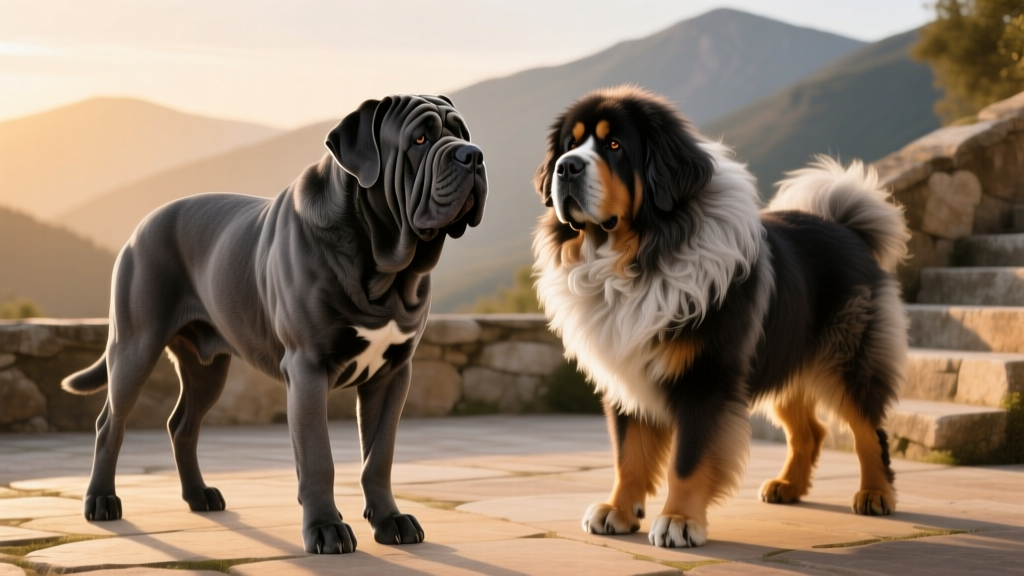
Choosing between a Neapolitan Mastiff and a Tibetan Mastiff means committing to one of the most physically imposing companion animals on the planet. Both breeds tip the scales well past 100 pounds, carry centuries of guardian heritage, and demand owners who understand giant-breed management. Yet beneath their shared mass, these two dogs diverge sharply in coat care, climate tolerance, trainability, and daily rhythm. This guide breaks down the Neapolitan Mastiff Tibetan Mastiff comparison with the specific numbers, health data, and real-world costs you need before signing a purchase contract or adoption application.
Breed Origins and Historical Purpose
The Neapolitan Mastiff (Mastino Napoletano) descends from the war dogs of the Roman legions, later refined on estates around Naples, Italy, where they served as property guardians. The modern breed was reconstructed after World War II by Piero Scanziani, who collected surviving specimens and drafted the first AKC-recognized standard in 2004. Males typically stand 26–31 inches (66–79 cm) and weigh 130–155 lb (59–70 kg); females 24–29 inches (61–74 cm) and 110–130 lb (50–59 kg). Lifespan averages 7–9 years.
The Tibetan Mastiff (Do-Khyi) evolved over millennia on the Himalayan plateau, where nomadic herders used them to protect livestock from snow leopards and wolves. Isolated by geography, the breed retained a primitive, independent temperament. The AKC recognized the Tibetan Mastiff in 2006. Males stand 26–30 inches (66–76 cm) and weigh 90–150 lb (41–68 kg); females 24–28 inches (61–71 cm) and 70–120 lb (32–54 kg). Lifespan is notably longer for a giant breed: 10–12 years, with some individuals reaching 14.
| Attribute | Neapolitan Mastiff | Tibetan Mastiff |
|---|---|---|
| Size Class | Giant | Giant |
| Male Weight | 130–155 lb / 59–70 kg | 90–150 lb / 41–68 kg |
| Female Weight | 110–130 lb / 50–59 kg | 70–120 lb / 32–54 kg |
| Male Height | 26–31 in / 66–79 cm | 26–30 in / 66–76 cm |
| Female Height | 24–29 in / 61–74 cm | 24–28 in / 61–71 cm |
| Coat | Short, dense, smooth | Long, double, heavy mane |
| Lifespan | 7–9 years | 10–12 years |
| Origin | Italy (Naples region) | Tibet / Himalayan plateau |
| Original Purpose | Estate & property guardian | Livestock & camp guardian |
Temperament and Personality: Core Trait Comparison
Both breeds are guardians first, companions second — but their guarding styles differ dramatically.
Neapolitan Mastiff Temperament
- Quiet intimidation. A well-bred Neo rarely barks without cause. They prefer to position themselves between their owner and a perceived threat, using body mass and a steady stare. Expect visitors to feel "watched" even when the dog is lying still.
- Extreme loyalty to household. Neos bond intensely with immediate family and can be aloof or suspicious with strangers indefinitely. They do not "warm up" to houseguests the way retrievers do.
- Low roaming drive. A Neo typically patrols a defined territory and shows little interest in chasing squirrels beyond the fence line. This makes them relatively easy to contain physically, though mental stimulation still matters.
- Stubborn independence. Bred to make autonomous guarding decisions, Neos question commands they perceive as pointless. Repetitive obedience drills produce shutdown, not compliance.
Tibetan Mastiff Temperament
- Nocturnal vigilance. Tibetan Mastiffs were selected to guard camps at night while herders slept. Many modern Tibs become more alert and vocal after sunset, barking at sounds humans cannot hear. Suburban owners often need to manage nighttime noise proactively.
- Feline independence. Tibs are frequently compared to cats: they groom themselves, choose their own resting spots, and seek affection on their own schedule. Do not expect a Tibetan Mastiff to follow you room-to-room.
- Strong territorial boundary sense. A Tib will define the perimeter of your property and patrol it methodically. Introducing new animals or frequent visitor turnover can trigger sustained alert behavior.
- Seasonal personality shifts. Intact males especially may become more reactive and less biddable during cooler months when their coat is fullest — a residual hormonal pattern linked to the breed's once-annual estrus cycle (females) and seasonal testosterone fluctuation (males).
Exercise and Activity Requirements
Giant breeds need carefully calibrated exercise: too little leads to obesity and joint deterioration; too much, especially during growth, damages developing growth plates.
| Life Stage | Neapolitan Mastiff | Tibetan Mastiff |
|---|---|---|
| Puppy (2–12 months) | 5 min per month of age, 2× daily — structured leash walks only, no forced running or stair repetition | Same 5-min-per-month rule; add scent-work games for mental fatigue |
| Young Adult (1–3 years) | 30–45 min/day: two 20-min leash walks + 5–10 min free yard time. Avoid jogging on pavement until growth plates close (~18–24 mo) | 40–60 min/day: two 20–25 min walks + 10–15 min off-leash in secure area if recall is reliable |
| Mature Adult (3–7 years) | 30–40 min/day; heat-sensitive — exercise before 8 AM or after 7 PM in summer | 45–60 min/day; cold-weather tolerant, but reduce duration above 80 °F (27 °C) |
| Senior (7+ years) | 20–30 min/day, split into 2–3 short walks; add joint-support supplement per vet guidance | 30–40 min/day; monitor for stiffness on rising — may indicate early arthritis |
Neither breed is a running partner. High-impact activities like agility, flyball, or sustained jogging accelerate joint wear in dogs over 100 lb. Swimming is ideal if available — it provides cardiovascular benefit without concussive loading.
Health Risks and Breed-Specific Conditions
Giant breeds carry disproportionate veterinary costs. Budget for higher-than-average spending and secure a breed-experienced veterinarian before bringing either dog home. Always consult your veterinarian for individualized screening and preventive care.
| Condition | Neapolitan Mastiff | Tibetan Mastiff |
|---|---|---|
| Hip Dysplasia | ~40% affected (OFA data) | ~20% affected (OFA data) |
| Elbow Dysplasia | ~25% affected | ~10% affected |
| Gastric Dilatation-Volvulus (Bloat) | High risk — deep-chested; prophylactic gastropexy recommended at spay/neuter | Moderate risk — less deep-chested but still giant-sized |
| Cherry Eye / Entropion / Ectropion | Very common due to heavy facial folds; surgical correction often needed ($800–$2,000 per eye) | Occasional entropion; less fold-related disease |
| Hypothyroidism | Uncommon | Recognized concern — estimated 8–12% prevalence; annual T4 screening advised |
| Canine Inherited Demyelinative Neuropathy (CIDN) | Not reported | Autosomal recessive; DNA test available — responsible breeders screen |
| Skin Fold Pyoderma | Very common; daily wrinkle cleaning required | Rare |
| Estimated Annual Vet Spend (Adult) | $1,200–$2,500 | $800–$1,600 |
Grooming and Coat Maintenance
This is where the two breeds diverge most dramatically in daily effort and cost.
Neapolitan Mastiff Grooming
- Coat brushing: Once weekly with a rubber curry brush (e.g., Kong ZoomGroom, ~$8). Shedding is moderate year-round.
- Wrinkle care: Daily wiping of facial folds with a damp cloth or veterinary-recommended chlorhexidine wipe (e.g., VET BASICS, ~$15 for 50-count). Moisture trapped in folds breeds yeast and bacterial pyoderma — the single most common dermatological complaint in the breed.
- Drool management: Neos are prolific droolers. Keep drool rags accessible; protect furniture with washable covers. Post-meal and post-drink drool is heaviest.
- Bathing: Every 6–8 weeks with a gentle oatmeal-based shampoo. Over-bathing strips natural oils and worsens skin-fold issues.
- Estimated annual grooming cost: $300–$600 if using professional groomers; $80–$150 for DIY supplies.
Tibetan Mastiff Grooming
- Coat brushing: 3–4 times per week with an undercoat rake and slicker brush (Chris Christensen Big G, ~$65). During the annual "blow" (typically late spring), daily brushing for 20–30 minutes is necessary for 2–4 weeks.
- No wrinkle maintenance required.
- Minimal drool compared to the Neo.
- Bathing: Every 8–12 weeks. Full coat dry with a high-velocity dryer (e.g., Metro Air Force Commander, ~$150) takes 45–90 minutes. Air-drying a Tibetan Mastiff coat in humid conditions risks hotspots.
- Estimated annual grooming cost: $800–$1,800 with professional groomers; $200–$400 for DIY tools and supplies.
Training, Intelligence, and Socialization
Neither breed ranks high on the Stanley Coren obedience-intelligence scale, but that metric measures willingness to comply with repetitive commands — not problem-solving ability. Both breeds are highly intelligent in the sense that they assess situations independently. The training challenge is motivation, not comprehension.
Trainability Ratings
| Dimension | Neapolitan Mastiff | Tibetan Mastiff |
|---|---|---|
| Biddability (obedience compliance) | 4/10 | 3/10 |
| Problem-solving intelligence | 7/10 | 8/10 |
| Socialization window urgency | Critical: 8–16 weeks — expose to 100+ people, surfaces, sounds | Critical: 8–14 weeks — slightly narrower window; breed matures faster socially |
| Recommended method | Positive reinforcement with high-value food rewards (freeze-dried liver, boiled chicken); short 5-min sessions, 3–4× daily | Same positive-reinforcement approach; add "nothing in life is free" protocol — dog offers sit/down before receiving meals, door access, affection |
| Aversive tools | Strongly discouraged — harsh corrections trigger shutdown or defensive aggression in a 140-lb dog | Strongly discouraged — breed has low pain sensitivity and will escalate rather than submit |
Professional training classes are not optional for either breed. Budget $400–$800 for a structured puppy socialization class and basic manners course with a certified trainer (look for CCPDT or IAABC credentials). Private sessions for guardian-breed-specific management typically run $100–$175 per hour.
Family Suitability: Kids, Pets, and Living Spaces
Children
Both breeds are generally patient with children within their own household, but their size creates unintentional hazard. A 140-lb Neo leaning against a toddler can cause a fall; a Tibetan Mastiff's tail at toddler-face-height can deliver a bruising blow during a wag. Supervision is mandatory, and neither breed should be left alone with children under 10. Teach children to respect the dog's resting space — guardian breeds can startle-react when awakened abruptly.
Other Pets
Same-species aggression is documented in both breeds, particularly among intact males. Neutering reduces but does not eliminate risk. Introducing either breed to an existing household dog is most successful when the resident dog is opposite-sex and non-dominant. Cats raised alongside a Neo or Tib puppy are usually tolerated; unfamiliar cats may trigger prey drive. Consult a certified behaviorist before introducing either breed to small pets (rabbits, poultry).
Apartment and Urban Living
Neither breed is well-suited to apartments. Reasons include: space requirements for a 100+ lb dog to move comfortably, noise potential (especially the Tibetan Mastiff's nighttime barking), breed-specific legislation in many rental complexes, and the logistical challenge of carrying an injured or ill 140-lb dog down stairwells. A fenced yard (minimum 5-foot fence for Neo; 6-foot for Tib, as they can be climbers) is strongly recommended.
Neapolitan Mastiff — Pros
- Minimal coat grooming
- Quiet in the home; rarely nuisance-barks
- Low roaming tendency
- Strong bonding with family
- Intimidating presence deters intruders without aggression
Neapolitan Mastiff — Cons
- Heavy drooling and slobber
- Daily wrinkle cleaning mandatory
- Higher orthopedic disease rates
- Shorter lifespan (7–9 years)
- Heat-intolerant; climate control essential
Tibetan Mastiff — Pros
- Longer lifespan for a giant breed (10–12 years)
- Clean, low-drool, catlike habits
- Cold-weather hardy
- Lower orthopedic disease prevalence
- Self-exercising in a large yard
Tibetan Mastiff — Cons
- Intensive coat grooming, especially during seasonal blow
- Nocturnal barking can disturb neighbors
- More independent; harder to train recall
- Not suited to warm climates without heavy air conditioning
- Higher purchase price from reputable breeders
Cost of Ownership: Purchase Price and Annual Budget
| Expense Category | Neapolitan Mastiff | Tibetan Mastiff |
|---|---|---|
| Puppy from health-tested breeder (OFA hips, elbows, cardiac; DNA panels) | $2,500–$5,000 | $3,000–$7,000 |
| Rescue/adoption fee | $400–$800 | $500–$1,000 |
| First-year veterinary (vaccines, spay/neuter, hip/elbow radiographs, microchip) | $1,800–$3,200 | $1,400–$2,600 |
| Annual food (premium large-breed kibble, e.g., Purina Pro Plan Large Breed or Orijen Large Breed) | $1,200–$1,800 (eats 6–8 cups/day) | $1,000–$1,600 (eats 5–7 cups/day) |
| Annual grooming | $300–$600 | $800–$1,800 |
| Annual preventive medications (heartworm, flea/tick — large-breed dosing) | $400–$700 | $400–$700 |
| Pet insurance (giant breed, accident + illness) | $120–$220/month ($1,440–$2,640/year) | $100–$200/month ($1,200–$2,400/year) |
| Training (first year) | $400–$800 | $500–$1,000 |
| Gear (XL crate, heavy-duty leash, elevated feeder, orthopedic bed) | $500–$900 | $500–$900 |
| Estimated first-year total | $8,500–$16,000 | $8,300–$18,000 |
| Annual recurring (years 2+) | $4,500–$8,000 | $4,000–$7,500 |
Frequently Asked Questions
Is either breed right for first-time dog owners?
Honestly, neither breed is ideal for a first-time owner. Both require experience reading canine body language, managing large powerful dogs on leash, and committing to extensive early socialization. If you are determined, pair your puppy with a certified behaviorist from day one and join a breed-specific mentorship program through the AKC parent club for your chosen breed.
How much exercise does a Neapolitan Mastiff or Tibetan Mastiff need daily?
Mature Neapolitan Mastiffs need 30–45 minutes of structured walking per day, split into two sessions. Tibetan Mastiffs require slightly more: 45–60 minutes. Neither breed should be jogged or subjected to high-impact activity. Mental enrichment (snuffle mats, frozen Kong toys, scent games) supplements physical exercise effectively.
What health problems is each breed prone to?
Neapolitan Mastiffs face high rates of hip and elbow dysplasia (~40% and ~25% respectively per OFA data), bloat, skin-fold infections, and eye conditions like cherry eye and entropion. Tibetan Mastiffs have lower orthopedic rates but are prone to hypothyroidism and the breed-specific neuropathy CIDN. Both breeds require cardiac screening. Responsible breeders provide OFA or PennHIP certifications — always request documentation before purchasing.
How big do these breeds get as adults?
Male Neapolitan Mastiffs reach 130–155 lb (59–70 kg) and 26–31 inches at the shoulder. Male Tibetan Mastiffs range from 90–150 lb (41–68 kg) and 26–30 inches. Females of both breeds are proportionally smaller. Growth continues until 18–24 months, with full chest width and muscling developing up to age 3.
Are these breeds good with children and other pets?
Both breeds are generally tolerant of children within their own family, but their sheer size poses an unintentional risk to toddlers. Neither breed should be unsupervised with young children. With other dogs, same-sex aggression is a documented concern — opposite-sex pairings are safer. Early, ongoing socialization is non-negotiable for safe multi-pet households.
How much does it cost to buy and maintain either breed?
Expect to spend $8,000–$18,000 in the first year (including puppy price, veterinary setup, food, gear, training, and insurance) and $4,000–$8,000 annually thereafter. Giant-breed pet insurance premiums alone run $1,200–$2,640 per year. Emergency bloat surgery, if needed, costs $3,000–$7,000 without insurance. These breeds are a significant long-term financial commitment.
This article is for informational purposes only and does not replace professional veterinary advice. Always consult your veterinarian for breed-specific health screening, nutrition planning, and preventive care decisions. For toxic ingestion emergencies, contact the ASPCA Animal Poison Control Center at (888) 426-4435 (24/7, consultation fee applies).
Robin Maitland
All our authors care for dogs every day — read more of their work on the authors page.


