Best Livestock Guard Dog Breeds: A Complete Working Farm Guide
Discover the best livestock guard dog breeds for farm protection.
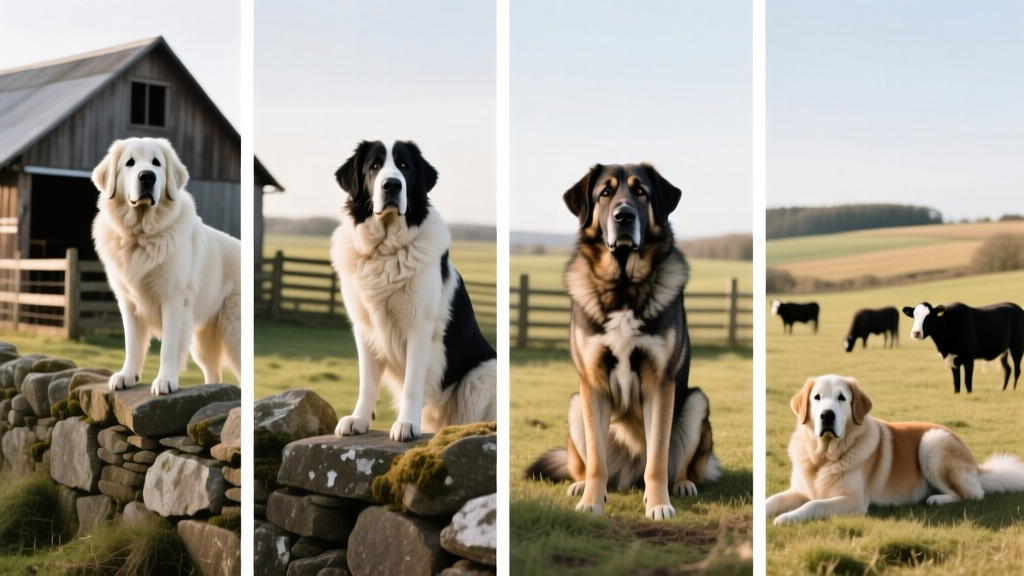
What Makes a Great Livestock Guard Dog?
A livestock guard dog (LGD) is not a herding dog. While herding breeds like Border Collies move stock under human direction, LGDs live full-time with flocks or herds, bonding with the animals they protect and making independent decisions about threats. According to the American Kennel Club, true LGD breeds share three core instincts: attentiveness to livestock, trustworthiness around stock, and protectiveness against predators.
Before we rank the top breeds, here are the selection criteria every dog on this list had to meet:
- Proven LGD Heritage: Breed must have documented history of at least 100+ years guarding livestock in working farm or pastoral settings.
- Predator Deterrence Record: Documented effectiveness against real-world predators (coyotes, wolves, bears, mountain lions, or foxes).
- Temperament Stability: Breed must demonstrate independent judgment — protective without being indiscriminately aggressive toward humans.
- Size Threshold: Minimum 70 lb (32 kg) for males to physically deter medium-to-large predators.
- Trainability for Farm Life: Must bond with livestock and tolerate outdoor, all-weather living conditions year-round.
Every breed below was evaluated against these five benchmarks. If you're considering an LGD for a hobby farm, homestead, or commercial ranch, this guide will help you match the right breed to your specific predator pressure, climate, and management style.
The 10 Best Livestock Guard Dog Breeds
Breeds are grouped by size class — starting with the most versatile mid-range options, then moving to the heavyweights built for large-scale predator deterrence.
1. Great Pyrenees
Size Class: Large (85–120 lb / 39–54 kg) | Key Trait: Calm, nocturnal patroller with strong bonding instinct
The Great Pyrenees is the most widely recognized LGD in North America, and for good reason. Originating in the Pyrenees Mountains between France and Spain, this breed has guarded sheep against wolves and bears for centuries. They're notably nocturnal — most active at night when predator pressure peaks — and tend to bark warnings before engaging physically. Their white coat blends with sheep flocks, a deliberate breed trait. Expect a 10–12 year lifespan with generally robust health, though hip dysplasia and bloat are known risks. Great Pyrenees are widely available from working-line breeders at $500–$1,500 for puppies with LGD parentage.
2. Anatolian Shepherd Dog
Size Class: Extra-Large (110–150 lb / 50–68 kg) | Key Trait: Speed and endurance for open-range predator pursuit
Bred in central Turkey to guard flocks across vast, arid rangeland against wolves, the Anatolian Shepherd is one of the fastest LGD breeds — capable of short sprints up to 30 mph. They're more independent and territorial than the Great Pyrenees, often requiring experienced handlers. The USDA's Wildlife Services has documented Anatolian Shepherds as highly effective against coyotes and wolves in controlled studies. Lifespan runs 11–13 years. Puppy prices from working-line breeders typically range $800–$2,000.
3. Maremma Sheepdog (Cane da Pastore Maremmano-Abruzzese)
Size Class: Large (75–100 lb / 34–45 kg) | Key Trait: Exceptional flock bonding, gentler with small stock
The Maremma hails from central Italy's Abruzzo region, where it has guarded sheep against wolves and brown bears for over 2,000 years. They're known for tighter flock bonding than many LGDs — less prone to roaming — making them ideal for smaller properties or farms near neighbors. Maremmas tend to be slightly more reserved with strangers than Great Pyrenees. Health is generally excellent with a 12–14 year lifespan. Working-line puppies cost $1,200–$2,500 in the US, as the breed is less common domestically.
4. Akbash
Size Class: Large (90–130 lb / 41–59 kg) | Key Trait: Long-legged agility for mountainous terrain
Another Turkish breed, the Akbash (meaning "white head") was developed in western Turkey for guarding sheep against wolves and jackals. They're notably more agile and athletic than the stockier Kangal or Anatolian, with longer legs suited to rugged, steep terrain. Akbash dogs are highly alert and tend to confront threats at greater distances from the flock. Lifespan averages 10–12 years. Availability in the US is limited; expect $800–$1,800 from specialized breeders.
5. Kangal Shepherd Dog
Size Class: Extra-Large (110–145 lb / 50–66 kg) | Key Trait: Highest bite force among LGDs, dominant against large predators
The Kangal, from Turkey's Sivas province, holds the distinction of having one of the strongest bite forces measured in domestic dogs — approximately 743 PSI according to biomechanical studies referenced in the Merck Veterinary Manual. This makes them the go-to breed for areas with apex predators like wolves, bears, or cougars. Kangals are intensely loyal to their flock and family but can be aloof with strangers. Turkey considers the Kangal a national treasure, and export restrictions make purebred US-available puppies costly: $2,000–$5,000. Lifespan is 12–15 years.
6. Kuvasz
Size Class: Large (70–115 lb / 32–52 kg) | Key Trait: Fierce family loyalty combined with flock guarding ability
The Hungarian Kuvasz was historically used to guard both livestock and noble estates. They're among the most human-bonded LGDs — equally effective at protecting a farmhouse and the family inside it. This dual role makes them a strong choice for homesteads where the dog will interact regularly with children and visitors. Kuvaszok (plural) are notably intelligent but can be strong-willed; early socialization is critical. Lifespan is 10–12 years. Puppies from working-line breeders run $1,000–$2,000.
7. Komondor
Size Class: Large (80–130 lb / 36–59 kg) | Key Trait: Corded coat provides camouflage and predator-bite protection
The Komondor's distinctive corded coat serves a functional purpose: it camouflages the dog within a flock and protects against bites from wolves or coyotes. Originating in Hungary, the Komondor is powerfully built and fiercely independent. They're not ideal for first-time LGD owners — their strong guarding instinct and wariness of strangers require experienced handling and thorough socialization. Grooming the cords is labor-intensive. Lifespan is 10–12 years. Puppy prices range $1,500–$2,500.
8. Tibetan Mastiff
Size Class: Extra-Large (85–150 lb / 39–68 kg) | Key Trait: Cold-climate specialist with extreme territorial range
Bred to guard nomadic herds and monasteries in the Himalayas at elevations above 15,000 feet, the Tibetan Mastiff thrives in harsh, cold environments where most breeds struggle. They're nocturnal barkers — a trait that serves well for predator deterrence but can create neighbor issues. Tibetan Mastiffs are notably independent and can be challenging to train off-property. They mature slowly, not reaching full physical and mental maturity until 3–5 years. Lifespan is 10–14 years. Puppy prices vary enormously: $1,500–$4,000 from reputable US breeders.
9. Caucasian Shepherd (Caucasian Ovcharka)
Size Class: Extra-Large (110–200 lb / 50–91 kg) | Key Trait: Maximum size and cold tolerance for extreme predator zones
From the Caucasus Mountains between Russia and Georgia, the Caucasian Shepherd is one of the largest LGD breeds alive. They were bred to defend flocks against wolves, bears, and jackals in brutal mountain winters. This is a serious working dog — not suited for suburban or hobby-farm settings without significant space and experienced handling. They're calm with their flock and family but extremely territorial. Lifespan is 10–12 years. US availability is limited; expect $1,500–$3,000 from specialized importers or domestic breeders.
10. Estrela Mountain Dog (Cão da Serra da Estrela)
Size Class: Large (88–110 lb / 40–50 kg) | Key Trait: Balanced temperament — strong guardian, approachable with family
Portugal's Estrela Mountain Dog has guarded sheep and goats in the Serra da Estrela mountains for centuries against wolves and Iberian lynx. They're among the most family-friendly LGDs — protective without being overly aggressive — making them a top choice for farms with frequent visitors or children. Estrelas are less common in the US but growing in popularity among small-scale farmers. Lifespan is 12–14 years, one of the longer-lived LGD breeds. Puppies cost $1,500–$3,000.
Breed Comparison: How Do Top LGDs Stack Up?
| Breed | Weight (lb/kg) | Predator Level | Climate Fit | Family Friendly | Price Range |
|---|---|---|---|---|---|
| Great Pyrenees | 85–120 / 39–54 | Medium (coyotes, foxes) | Cold/Temperate | ★★★★★ | $500–$1,500 |
| Anatolian Shepherd | 110–150 / 50–68 | High (wolves, cougars) | Hot/Arid | ★★★☆☆ | $800–$2,000 |
| Maremma Sheepdog | 75–100 / 34–45 | Medium-High | Temperate | ★★★★☆ | $1,200–$2,500 |
| Akbash | 90–130 / 41–59 | Medium-High | Hot/Temperate | ★★★☆☆ | $800–$1,800 |
| Kangal | 110–145 / 50–66 | Very High (bears, wolves) | Hot/Temperate | ★★★☆☆ | $2,000–$5,000 |
| Kuvasz | 70–115 / 32–52 | Medium | Temperate/Cold | ★★★★☆ | $1,000–$2,000 |
| Komondor | 80–130 / 36–59 | High | Temperate | ★★☆☆☆ | $1,500–$2,500 |
| Tibetan Mastiff | 85–150 / 39–68 | High | Cold/High-Altitude | ★★☆☆☆ | $1,500–$4,000 |
| Caucasian Shepherd | 110–200 / 50–91 | Very High | Extreme Cold | ★★☆☆☆ | $1,500–$3,000 |
| Estrela Mountain Dog | 88–110 / 40–50 | Medium-High | Temperate | ★★★★★ | $1,500–$3,000 |
How to Choose the Right Livestock Guard Dog for Your Farm
Choosing an LGD isn't about picking the "best" breed in a vacuum — it's about matching the dog's traits to your specific operation. Use this decision framework to narrow your top three:
- What predators are you facing?
- Coyotes, foxes, stray dogs → Great Pyrenees, Kuvasz, or Estrela Mountain Dog (medium threat level)
- Wolves, cougars, bears → Kangal, Anatolian Shepherd, or Caucasian Shepherd (high threat level)
- Mixed predator pressure → Maremma Sheepdog or Akbash (versatile mid-range)
- What's your climate?
- Hot/arid (Southwest US, desert ranchland) → Anatolian Shepherd, Kangal, or Akbash
- Cold/northern (Rockies, Upper Midwest, Alaska) → Tibetan Mastiff, Caucasian Shepherd, or Great Pyrenees
- Moderate/temperate → Maremma, Kuvasz, Komondor, or Estrela
- How much human interaction will the dog have?
- High (family farm, frequent visitors, children present) → Great Pyrenees, Estrela Mountain Dog, or Kuvasz
- Low (remote rangeland, minimal visitors) → Anatolian Shepherd, Kangal, Caucasian Shepherd, or Tibetan Mastiff
- What's your property size and fencing?
- Small acreage (under 20 acres) with secure fencing → Maremma, Great Pyrenees, or Estrela
- Large open range (100+ acres) → Anatolian Shepherd, Kangal, or Akbash
- What's your experience level with LGDs?
- First-time LGD owner → Great Pyrenees or Estrela Mountain Dog (most forgiving temperament)
- Experienced handler → Kangal, Komondor, or Caucasian Shepherd (require firm, consistent management)
Training and Management Essentials for Livestock Guard Dogs
Even the best-bred LGD requires proper bonding and management to succeed. Here are the non-negotiables based on guidance from the American Veterinary Medical Association and experienced ranchers:
- Bond early: Place the puppy with livestock between 7–16 weeks of age. This critical socialization window ensures the dog imprints on the animals it will guard.
- Correct unwanted behavior immediately: Use positive reinforcement to redirect chasing, nipping, or playing with stock. Never use physical punishment — LGDs respond to consistent redirection and reward-based training.
- Provide adequate fencing: Most LGDs patrol a perimeter. A minimum 5-foot fence (6-foot for athletic breeds like Akbash) prevents roaming while allowing the dog to survey its territory.
- Feed separately from livestock: Establish feeding stations away from stock to prevent food-guarding behavior near animals.
- Veterinary care: LGDs working outdoors face higher parasite exposure. Maintain a regular deworming and vaccination schedule — consult your veterinarian for a protocol suited to your region's disease risks.
- Spay/neuter working dogs: Unless you're breeding from proven working lines, altering your LGD reduces roaming behavior and heat-cycle disruptions to flock bonding.
Honorable Mentions and Breeds to Avoid
Honorable Mentions
These breeds have legitimate LGD heritage but didn't make the top 10 due to limited US availability, narrower use cases, or higher management difficulty:
- Polish Tatra Sheepdog: Excellent cold-climate guardian, closely related to the Great Pyrenees but rare outside Europe.
- Sarplaninac: Balkan breed effective against wolves and bears, but extremely scarce in the US and requires expert handling.
- Bucovina Shepherd: Romanian breed with strong protective instincts, gaining interest among US ranchers but very limited availability.
- Central Asian Shepherd (Alabai): Massive and powerful, but temperament can be unpredictable without extensive socialization.
Breeds to Avoid as Livestock Guard Dogs
These are commonly (and incorrectly) suggested as LGDs but lack the breeding for independent flock guarding:
- German Shepherd: A herding/protection breed, not an LGD. Will chase and harass stock rather than guard it.
- Rottweiler: Personal protection breed with no flock-bonding instinct. May view livestock as prey.
- Border Collie / Australian Shepherd: Herding breeds designed to move stock, not guard it. Their prey drive triggers chasing behavior.
- Doberman Pinscher: Bred for personal protection, not outdoor endurance or livestock bonding. Poor cold tolerance and no guarding instinct for stock.
Frequently Asked Questions About Livestock Guard Dogs
How many livestock guard dogs do I need?
For most operations, a minimum of two LGDs is recommended. Paired dogs provide mutual support, cover different patrol zones, and are more effective at deterring pack predators like coyotes. A general guideline from working ranchers is 1–2 dogs per 100 head of sheep or 50 head of cattle, adjusted upward for high predator pressure areas.
Can a livestock guard dog also be a family pet?
Yes, but with important caveats. Breeds like the Great Pyrenees and Estrela Mountain Dog transition well between farm guardian and family companion. However, LGDs are independent thinkers, prone to barking (especially at night), and may not respond to obedience commands as readily as herding breeds. They're best suited to families who understand and respect the breed's working nature rather than expecting a Golden Retriever temperament.
At what age should I introduce an LGD puppy to livestock?
Between 7 and 16 weeks of age, during the critical socialization period. Place the puppy in a pen adjacent to the livestock first, allowing visual and scent contact, then progress to supervised direct contact. Most working-line breeders begin this process before the puppy goes home at 8–10 weeks.
Do livestock guard dogs need supplemental feeding?
Absolutely. Despite myths that LGDs can survive solely on what they scavenge, working dogs burning calories patrolling large acreage need high-quality nutrition. Plan on 3–5 cups of premium large-breed kibble daily (minimum 22% protein, 12% fat for adult maintenance per AAFCO standards), plus fresh water available at all times. Budget $40–$80/month per dog for food alone.
What are common health issues in livestock guard dog breeds?
Most large LGD breeds are prone to hip dysplasia, elbow dysplasia, and gastric dilatation-volvulus (bloat). Some breeds have additional concerns: Komondors are susceptible to entropion, Kangals can develop lipomas, and Tibetan Mastiffs may carry the gene for hypertrophic neuropathy. Work with a breeder who provides OFA (Orthopedic Foundation for Animals) hip and elbow clearances, and consult your veterinarian about bloat prevention strategies including prophylactic gastropexy for high-risk breeds.
Beth Carrasco
All our authors care for dogs every day — read more of their work on the authors page.


