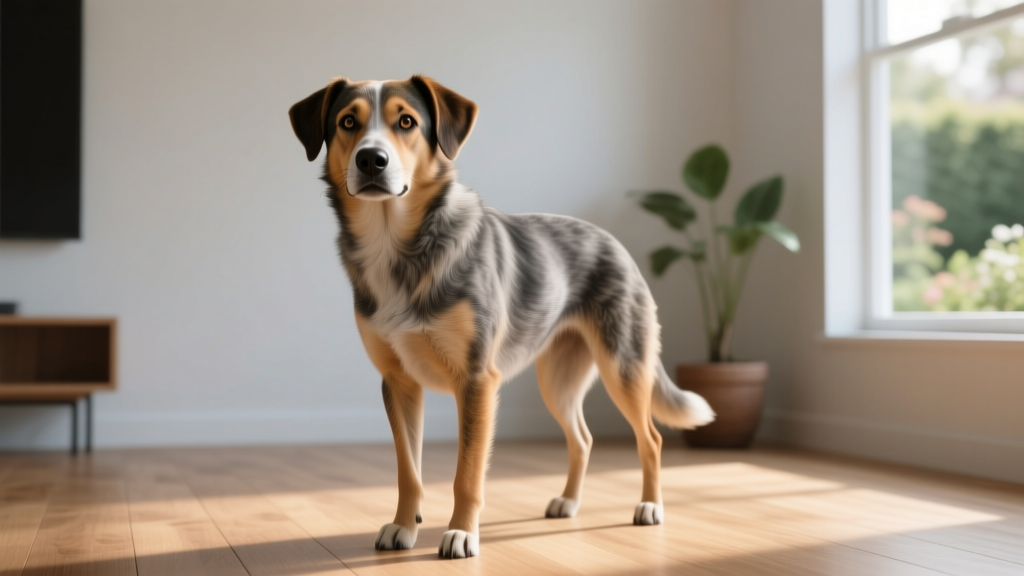
Husky German Shepherd Mix: Complete Breed Guide for Owners
Everything you need to know about the Husky German Shepherd mix — temperament, size, health risks, exercise needs, grooming, and real ownership costs.

What Is a Husky German Shepherd Mix?
The Husky German Shepherd mix — sometimes called the Gerberian Shepsky — is a designer crossbreed that combines the Siberian Husky and the German Shepherd Dog (GSD). This is not a recognized breed by the American Kennel Club, but it has grown steadily in popularity among active households looking for an athletic, intelligent companion. As a first-generation (F1) cross, the Gerberian Shepsky inherits traits from two working-line breeds, and the result is a dog that demands serious commitment in exercise, training, and mental stimulation.
Both parent breeds were developed for endurance work: the Siberian Husky for pulling sleds across Arctic distances, and the German Shepherd for herding, guarding, and later police and military service. When you cross them, you get a dog with a powerful prey drive, high intelligence, and a vocal, opinionated personality. This mix is not a casual pet — it's a lifestyle choice.
| Attribute | Details |
|---|---|
| Size Class | Large |
| Weight Range | 45–88 lb / 20–40 kg |
| Height Range | 20–25 inches / 51–64 cm at the shoulder |
| Lifespan | 10–14 years |
| Coat Type | Double coat, medium to long length; dense undercoat |
| Energy Level | Very high — 90+ minutes of vigorous activity daily |
| Grooming Frequency | Brushing 3–4x/week; daily during shedding seasons |
| Family Fit | Best for active families with yard access; not ideal for apartments |
Origin and Breed History
The deliberate crossing of Siberian Huskies and German Shepherds began gaining traction in North America during the early 2000s, part of a broader wave of designer breed development. Unlike purebred dogs with closed stud books and documented pedigrees going back over a century, the Gerberian Shepsky has no formal breed standard. Individual dogs can look dramatically different depending on which parent they favor.
The Siberian Husky was developed by the Chukchi people of northeastern Siberia as an endurance sled dog, later gaining international recognition during the 1925 Nome serum run. The German Shepherd was standardized by Captain Max von Stephanitz in Germany in 1899 as a versatile herding and working dog. Crossing these two breeds aims to blend the Husky's endurance and cold tolerance with the GSD's trainability and protective instinct — though outcomes in mixed breeds are inherently unpredictable.
Physical Characteristics: Size, Coat, and Appearance
Adult Husky German Shepherd mixes typically weigh between 45 and 88 lb (20–40 kg) and stand 20 to 25 inches (51–64 cm) at the shoulder. Males tend toward the upper end of these ranges. The wide variance comes from the parent breeds' differing sizes: a Siberian Husky male averages 45–60 lb, while a male GSD averages 65–90 lb.
Coat colors vary widely. Common combinations include black and tan (GSD-influenced), gray and white (Husky-influenced), sable, agouti, or solid black. Many inherit the Husky's striking blue eyes or exhibit heterochromia (one blue eye, one brown). Ears are typically erect, inherited from both parent breeds. The muzzle is moderately long — this is not a brachycephalic mix.
The double coat is nearly guaranteed. Both parent breeds have dense undercoats designed for cold climates, and the Gerberian Shepsky sheds heavily year-round with intense seasonal "blows" in spring and fall. Expect fur on furniture, clothing, and car interiors as a permanent fact of ownership.
Temperament and Personality: What to Expect
This cross produces dogs with complex, strong-willed temperaments. Here are the core behavioral traits owners consistently report:
1. High intelligence with independent thinking. The GSD parent contributes problem-solving ability and eagerness to work with handlers. The Husky parent contributes cleverness directed toward self-interest. The result is a dog that learns commands quickly but may choose to ignore them if something more interesting appears — like a squirrel, a jogger, or an open gate.
2. Vocal communication. Huskies are famously vocal — they howl, talk, whine, and "argue." GSDs bark to alert. A Gerberian Shepsky often combines both tendencies, producing a dog that vocalizes frequently. This is a significant consideration for apartment dwellers or anyone with close neighbors.
3. Strong prey drive. Both parent breeds have prey instincts. The Husky's prey drive targets small animals (cats, rabbits, squirrels), while the GSD's herding instinct can manifest as chasing moving objects including bicycles and running children. Early socialization is critical, and even well-socialized individuals may never be trustworthy off-leash around wildlife.
4. Pack-oriented loyalty. These dogs bond intensely with their families and can develop separation anxiety if left alone for extended periods. A Gerberian Shepsky left in a backyard for 8+ hours daily will likely develop destructive behaviors — digging, fence-testing, and howling.
5. Wariness with strangers. The GSD's natural suspicion of unfamiliar people often carries into the mix. Without deliberate socialization during the critical 3–14 week puppy window, this wariness can escalate into fear-based reactivity or aggression toward visitors.
Strengths
- Extremely loyal and bonded to family
- Highly intelligent and capable of advanced training
- Athletic and excellent outdoor companion
- Striking appearance with varied coloring
- Generally alert — makes an effective watchdog
Challenges
- Heavy shedding year-round with seasonal blowouts
- Requires 90+ minutes of intense daily exercise
- Prone to vocalization (howling, barking, talking)
- Strong prey drive — risky around cats and small animals
- Not suited for first-time or sedentary owners
- High separation anxiety risk if under-stimulated
Exercise and Activity Requirements
This is a working-line cross that needs a minimum of 90 to 120 minutes of vigorous activity per day. A 20-minute walk around the block will not satisfy this dog. Owners should plan for structured exercise that combines physical exertion with mental engagement:
| Activity Type | Duration | Frequency | Notes |
|---|---|---|---|
| Brisk walking or hiking | 45–60 minutes | Daily | Varied terrain preferred; avoid repetitive pavement routes |
| Off-leash running (secured area) | 20–30 minutes | 3–5x/week | Only in fully fenced areas — recall is unreliable around prey |
| Agility or obstacle work | 15–30 minutes | 2–3x/week | Excellent for mental stimulation; backyard courses work |
| Nose work / scent games | 10–20 minutes | Daily | Hide treats or toys; engages GSD tracking instinct |
| Puzzle feeders / training sessions | 10–15 minutes | Daily | Use frozen Kongs, snuffle mats, or flirt poles |
| Bikejoring or canicross | 20–40 minutes | 1–2x/week | Advanced activity for fit adult dogs over 18 months |
Without adequate exercise, a Gerberian Shepsky will create its own entertainment — typically by chewing furniture, digging through drywall, escaping yards, or barking incessantly. Behavioral problems in this mix are almost always exercise-deficit problems first.
Health Issues and Genetic Risks
Crossbreeding can provide hybrid vigor — the reduced risk of recessive genetic diseases that plague closed purebred gene pools. However, both parent breeds carry significant health predispositions, and the mix can inherit from either side. Always consult your veterinarian for breed-appropriate screening.
| Condition | Description | Parent Breed Risk | Estimated Prevalence |
|---|---|---|---|
| Hip Dysplasia | Malformation of the hip joint leading to arthritis and mobility loss | Both (GSD ~19%, Husky ~6% per OFA data) | 10–15% in mixed offspring |
| Elbow Dysplasia | Abnormal elbow joint development causing pain and lameness | Primarily GSD (~12% per OFA) | 5–10% |
| Degenerative Myelopathy (DM) | Progressive spinal cord disease causing hind limb paralysis; typically onset 8+ years | GSD (carrier rate ~35%) | Variable — depends on carrier inheritance |
| Eye Conditions (cataracts, PRA, corneal dystrophy) | Progressive vision loss or corneal opacity | Husky (cataracts, corneal dystrophy); GSD (PRA) | 5–8% |
| Gastric Dilatation-Volvulus (Bloat) | Life-threatening stomach torsion; deep-chested dogs at highest risk | GSD (top 10 at-risk breeds) | Exact rate unknown — elevated risk due to chest conformation |
Responsible breeders of this mix should provide OFA or PennHIP hip/elbow scores for both parents, DM genetic test results, and CERF (Canine Eye Registration Foundation) eye clearances. If a breeder cannot produce these documents, walk away. According to the Merck Veterinary Manual, early screening and weight management are the most effective strategies for reducing orthopedic disease progression.
- Distended, hard abdomen with unproductive retching (bloat/GDV — survival depends on intervention within 1–2 hours)
- Sudden hind limb weakness or dragging (possible DM onset or spinal injury)
- Acute lameness refusing to bear weight (possible ligament tear or fracture)
Grooming and Coat Maintenance
The double coat requires consistent maintenance. Plan for the following grooming schedule:
Routine brushing: 3–4 times per week using a slicker brush and an undercoat rake. Focus on the ruff (neck/chest), britches (hindquarters), and tail — these areas mat fastest.
Seasonal shedding ("blowing coat"): Occurs 1–2 times per year, typically spring and fall, lasting 2–4 weeks. During this period, daily brushing with a de-shedding tool (such as the Furminator or an equivalent undercoat rake) is necessary. You will remove startling volumes of undercoat.
Bathing: Every 8–12 weeks using a dog-specific shampoo. Over-bathing strips natural oils from the double coat and can cause skin dryness. Never shave a double-coated dog — the undercoat provides insulation against both heat and cold, and shaving can permanently damage coat regrowth.
Nail trimming: Every 3–4 weeks. Active dogs on varied terrain may wear nails down naturally, but dewclaws (if present) always require trimming.
Training and Intelligence
Trainability rating: 7.5/10 — High intelligence, but independence from the Husky side means compliance is inconsistent compared to a pure GSD.
This mix responds best to positive reinforcement methods — high-value treats (freeze-dried liver, chicken), toy rewards, and verbal praise. Force-free, LIMA (Least Intrusive, Minimally Aversive) training protocols produce the best outcomes. Shock collars, prong collars, and alpha rolls are counterproductive with this cross; they escalate reactivity and damage the handler-dog bond.
Key training priorities for a Gerberian Shepsky:
- Recall (come when called): Begin in low-distraction environments and build gradually. Even with extensive training, never trust recall in unsecured areas — the prey drive override is too strong.
- Leash manners: Both parent breeds pull — the Husky was literally bred to pull. Front-clip harnesses (e.g., Ruffwear Front Range) combined with loose-leash training reduce pulling more effectively than correction-based tools.
- Impulse control: "Leave it," "wait," and "settle" commands are essential for a dog this driven.
- Socialization: Structured exposure to diverse people, dogs, surfaces, sounds, and environments during the 3–14 week critical window prevents fear-based reactivity later. Puppy classes through an ASPCA-recommended trainer are strongly advised.
Family Suitability: Kids, Pets, and Living Spaces
Children: Gerberian Shepskies can do well with children when raised alongside them and when children are taught respectful interaction. However, the GSD's herding instinct may cause nipping at running children, and the Husky's exuberance can knock over toddlers. This mix is better suited to families with children aged 8 and up, with supervised interactions always.
Other dogs: Same-household dog compatibility depends on individual temperament and early socialization. Same-sex aggression can occur, particularly in intact males. Spaying/neutering reduces but does not eliminate this risk.
Cats and small animals: High risk. The Husky prey drive is significant, and many Gerberian Shepskies will chase, injure, or kill cats even when raised alongside them. If you have cats, this is a gamble — and the cat's safety should take priority.
Apartment living: Not recommended. The combination of high exercise needs, vocalization, and space requirements makes this mix a poor fit for apartments. A house with a securely fenced yard (minimum 6-foot fence — Huskies are notorious climbers and diggers) is strongly preferred.
Cost of Ownership
Here's a realistic breakdown of what owning a Husky German Shepherd mix costs:
| Expense Category | Estimated Cost |
|---|---|
| Puppy purchase (from health-tested breeder) | $800 – $2,500 |
| Adoption (rescue/shelter) | $150 – $500 |
| Initial supplies (crate, harness, leash, bowls, bed, toys) | $250 – $500 |
| Veterinary — first year (vaccines, spay/neuter, microchip, exams) | $600 – $1,200 |
| Annual veterinary care (adult, routine) | $500 – $900/year |
| Food (high-quality kibble, 30 lb bag/month) | $60 – $100/month ($720 – $1,200/year) |
| Pet insurance (accident + illness) | $40 – $80/month ($480 – $960/year) |
| Grooming supplies and occasional professional grooming | $100 – $300/year |
| Training classes (puppy + intermediate) | $200 – $600 |
| Emergency fund recommendation | $1,500 – $3,000 reserved |
Estimated first-year total: $3,500 – $7,500 depending on purchase source and veterinary needs. Ongoing annual cost: $1,800 – $3,500.
When looking for a puppy, prioritize breeders who perform OFA/PennHIP orthopedic screening, genetic testing for DM, and eye clearances on both parent dogs. Ask about take-back clauses — responsible breeders contractually require that the dog be returned to them at any point in its life if you cannot keep it. Adoption through breed-specific rescues (German Shepherd rescues or Husky rescues often take mixes) is an equally valid and often more affordable path.
Frequently Asked Questions
Is the Husky German Shepherd mix right for first-time dog owners?
Generally, no. This cross requires experienced handling, consistent training, and a significant daily time investment in exercise and mental stimulation. First-time owners who are committed to professional training classes and who lead highly active lifestyles can succeed, but the learning curve is steep. A lower-energy, more biddable breed is a safer choice for novice owners.
How much exercise does a Husky German Shepherd mix need daily?
A minimum of 90 to 120 minutes of vigorous activity per day, combining structured exercise (hiking, agility, running) with mental enrichment (training sessions, puzzle feeders, scent work). Casual walks alone will not meet this dog's needs and will lead to behavioral problems.
What health problems is this mix prone to?
The most significant risks are hip dysplasia (10–15% estimated prevalence), elbow dysplasia (5–10%), degenerative myelopathy (carrier-dependent), eye conditions including cataracts and progressive retinal atrophy (5–8%), and gastric dilatation-volvulus (bloat), which is a life-threatening emergency in deep-chested dogs. Health screening of parent dogs significantly reduces genetic disease risk.
How big does a Husky German Shepherd mix get?
Adults typically weigh 45–88 lb (20–40 kg) and stand 20–25 inches (51–64 cm) at the shoulder. Males are generally larger. The wide range reflects the size difference between parent breeds — a Husky-favoring individual may be 50 lb, while a GSD-favoring one may reach 85+ lb.
Is this mix good with children and other pets?
With children aged 8+, raised together and with supervised interaction, they can do well. With cats and small animals, the risk is high due to inherited prey drive. Dog-to-dog compatibility varies and depends heavily on socialization and individual temperament. Never leave any dog unsupervised with young children regardless of breed.
How much does a Husky German Shepherd mix cost?
Puppies from health-tested breeders range from $800 to $2,500. Adoption through rescues costs $150–$500. First-year expenses including veterinary care, supplies, and food typically total $3,500–$7,500. Ongoing annual costs run $1,800–$3,500 including food, routine veterinary care, insurance, and supplies.
Robin Maitland
All our authors care for dogs every day — read more of their work on the authors page.