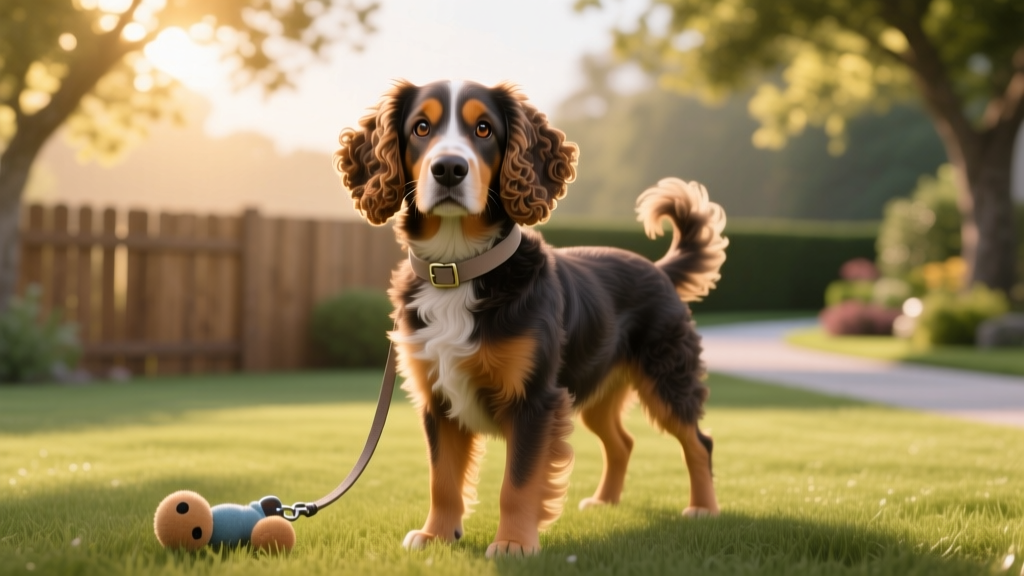
How to Groom a Golden Retriever: Complete Coat Care & Breed Guide
Learn how to groom a Golden Retriever with this complete guide covering coat care tools, brushing routines, breed health, temperament, and ownership costs.

The Golden Retriever's glorious double coat is one of the breed's most iconic features — and one of the most misunderstood when it comes to maintenance. If you've ever wondered how to groom a Golden Retriever without turning your home into a fur-blizzard zone, you're not alone. This breed profile covers everything from their dense undercoat to their friendly temperament, health predispositions, and real ownership costs so you can decide if a Golden is the right fit for your household.
Golden Retriever Breed Overview
Developed in the Scottish Highlands during the mid-19th century, the Golden Retriever traces its lineage to Lord Tweedmouth's estate at Guisachan, where he crossed a yellow retriever named Nous with a Tweed Water Spaniel named Belle starting around 1868. The goal was a versatile gun dog capable of retrieving waterfowl from both land and the cold rivers of the Scottish Highlands. The American Kennel Club recognized the breed in 1925, and Goldens have consistently ranked among the top five most popular breeds in the United States for decades.
Goldens are classified as a large breed in the Sporting Group. They are not a toy, small, medium, or giant breed — they sit squarely in the large category, built for endurance and athletic work in the field.
| Attribute | Detail |
|---|---|
| Size Class | Large (Sporting Group) |
| Weight (Male) | 65–75 lb / 29–34 kg |
| Weight (Female) | 55–65 lb / 25–29 kg |
| Height (Male) | 23–24 inches / 58–61 cm |
| Height (Female) | 21.5–22.5 inches / 55–57 cm |
| Coat Type | Dense, water-repellent double coat with moderate to heavy feathering |
| Lifespan | 10–12 years (median 11.3 years per Golden Retriever Club of America health survey) |
| Energy Level | High — 60–90 minutes of structured activity daily |
| Grooming Frequency | Thorough brushing 3–4 times/week; full grooming session every 6–8 weeks |
| Family Fit | Excellent with children, other dogs, and most cats; poor fit for very small apartments |
Temperament & Personality: What Living With a Golden Actually Looks Like
Goldens aren't just "friendly." That label undersells the nuanced, deeply social temperament that makes this breed both a joy and a management challenge. Here are the core traits you'll encounter daily:
- People-oriented to the point of impracticality: A Golden will follow you from room to room, rest their chin on your foot while you cook, and attempt to sit in your lap despite weighing 70 pounds. They are not independent dogs — they need to be near their people and can develop separation anxiety if left alone for 8+ hours regularly.
- Mouthy and carry-oriented: Bred to retrieve game, Goldens express affection by carrying things — your shoe, a stuffed toy, a dish towel — often presenting them to visitors as greeting gifts. This is not destructive chewing; it's breed-instinct retrieval behavior.
- Slow to mature mentally: Many Goldens retain puppy-level exuberance and mouthing behavior until 2–3 years of age. A 20-month-old Golden may have the body of an adult but the impulse control of a teenager. Patience and consistent training through this extended adolescence is essential.
- Low suspicion, poor watchdogs: A Golden is more likely to show a burglar where the silverware is than bark at them. They are not protective dogs. If you need a breed that alerts to strangers, this is not it.
- Highly social with other dogs: Goldens typically integrate well into multi-dog households and enjoy dog park play, though their exuberant greeting style (full-body wiggles, jumping) can overwhelm smaller or more reserved dogs.
How to Groom a Golden Retriever: Tools, Schedule & Techniques
The Golden Retriever's double coat consists of a soft, dense undercoat that insulates against heat and cold, and a longer, water-repellent outer coat with feathering on the legs, chest, belly, and tail. This coat should never be shaved or clipped short — removing the double coat destroys its thermoregulation properties and it may not grow back correctly.
Essential Grooming Tools
You don't need a professional groomer's arsenal, but you do need the right tools. Here's what works for the Golden coat specifically:
- Undercoat rake (long-tooth): The Chris Christensen Big G or a Furminator-style de-shedding tool (used carefully, once a week max) reaches the dense undercoat. Use during seasonal shedding blows in spring and fall.
- Slicker brush (medium-large, curved): For daily or every-other-day maintenance of the outer coat and feathering. The Hertzko Self-Cleaning Slicker Brush or Chris Christensen Baby G are reliable options ($15–$35).
- Steel greyhound comb: Run through feathering after slicker brushing to catch remaining tangles behind the ears and on the rear legs ($8–$15).
- Blunt-tipped thinning shears: For trimming paw pad hair, sanitary areas, and neatening hock feathering. Never use straight shears near a wiggling dog ($20–$40).
- High-velocity dryer (optional but game-changing): A dryer like the K-9 II or Metro Air Force Commander ($120–$200) blows out loose undercoat in 15–20 minutes, saving hours of brushing. This is the single biggest upgrade for Golden owners.
- Nail grinder (Dremel-style): Goldens often have thick, dark nails where guillotine clippers struggle. A cordless nail grinder ($25–$45) is safer and less stressful.
Weekly Grooming Schedule
| Frequency | Task | Time Required | Notes |
|---|---|---|---|
| Every 2–3 days | Slicker brush full body + comb feathering | 15–20 minutes | Focus behind ears, under front legs, and britches |
| Weekly | Undercoat rake session | 20–30 minutes | Work in sections, lift topcoat to reach undercoat |
| Weekly | Nail trim or grind | 10 minutes | Trim to just before the quick; grind smooth |
| Weekly | Ear check and clean | 5 minutes | Use vet-recommended ear cleaner; Goldens are prone to otitis externa |
| Every 6–8 weeks | Full bath with canine conditioner | 45–60 minutes | Use oatmeal-based or de-shedding shampoo; blow-dry completely |
| Every 6–8 weeks | Sanitary trim, paw pad trim, hock neatening | 15–20 minutes | Use thinning shears; keep feathering natural |
| Seasonal (spring/fall) | Intensive de-shedding ("coat blow") | 30–45 min daily for 2–3 weeks | High-velocity dryer + undercoat rake; expect massive fur loss |
Bathing Technique
Fill the tub or grooming sink with 3–4 inches of lukewarm water (98–102°F / 37–39°C). Wet the coat thoroughly before applying shampoo — a Golden's outer coat resists water and takes longer to saturate than single-coated breeds. Apply a canine-specific shampoo (look for AAFCO-compliant or veterinary-formulated brands like Earthbath, Burt's Bees for Dogs, or 4-Legger), lather from neck to tail, and rinse until water runs completely clear. Follow with a canine conditioner to restore coat oils, rinse again, and blow-dry on cool or warm (never hot) — air-drying a Golden can take 4–6 hours and leaves the undercoat damp, which promotes hot spots and fungal growth.
Exercise & Activity Requirements
Goldens are athletic, field-bred sporting dogs, not couch companions. Here are specific daily exercise targets:
- Minimum daily exercise: 60 minutes of structured activity (leash walks, fetch, swimming, structured play). This is a floor, not a ceiling.
- Ideal daily exercise: 90–120 minutes, split into two sessions — a 45-minute morning walk or run and a 30–45 minute evening fetch or swim session.
- Activity types that suit the breed: Retrieving games (bumper or tennis ball launchers like the Chuckit! Ultra Ball Launcher, $12–$18), swimming (Goldens are natural swimmers), hiking on varied terrain, dock diving, and scent work.
- Mental stimulation (equally important): 15–20 minutes of training drills, puzzle feeders (Kong Classic stuffed and frozen, $15–$18), or hide-and-seek games. A bored Golden will invent their own entertainment — usually by chewing furniture or digging in the yard.
- Puppy exercise caution: For Goldens under 18 months, limit forced running on hard surfaces to protect developing joints. Follow the "5 minutes per month of age, twice daily" guideline for structured walks until growth plates close.
Common Health Issues in Golden Retrievers
Goldens are generally robust, but the breed carries well-documented genetic predispositions. The Golden Retriever Club of America and the AKC recommend specific health screenings for responsible breeders. Always consult your veterinarian for diagnosis and treatment plans — this information is for awareness, not self-diagnosis.
| Condition | Description | Estimated Prevalence | Screening/Prevention |
|---|---|---|---|
| Hip Dysplasia | Malformation of the hip joint causing progressive arthritis and lameness | ~14–20% (OFA data) | OFA or PennHIP evaluation of breeding stock; maintain lean body condition score (BCS 4–5/9) |
| Elbow Dysplasia | Abnormal elbow joint development; often presents as front-leg lameness in puppies 4–10 months | ~10–14% (OFA data) | OFA elbow radiographs; avoid excessive high-impact exercise in growing puppies |
| Hemangiosarcoma | Aggressive cancer of blood vessel lining, often affecting the spleen or heart | ~20% of Golden deaths (GRCA health survey) | No reliable early screening; annual wellness exams; discuss baseline cardiac ultrasound with your vet at age 7+ |
| Lymphoma (Lymphosarcoma) | Cancer of lymphocytes; Goldens have one of the highest breed-specific rates | ~1 in 8 Goldens (12.5%) | Regular lymph node palpation during vet visits; early detection improves treatment options |
| Hypothyroidism | Underactive thyroid gland causing weight gain, lethargy, and coat thinning | ~5–8% | Annual thyroid panel (T4, free T4, TSH); treatable with daily levothyroxine ($15–$30/month) |
| Ichthyosis (ICH-1 and ICH-2) | Genetic skin disorder causing excessive flaking, scaling, and secondary infections | ~10–15% carrier rate | DNA test available; breeders should screen; managed with medicated shampoos and omega-3 supplementation |
Training & Intelligence
Goldens rank among the most trainable breeds — canine psychologist Stanley Coren placed them 4th in his working/obedience intelligence rankings. They typically learn a new command in fewer than 5 repetitions and obey a known command on the first attempt 95% of the time or better.
Recommended training methods: Use positive reinforcement exclusively — food rewards, toy rewards, and praise. Goldens are sensitive dogs that shut down under harsh correction. Force-free, LIMA (Least Intrusive, Minimally Aversive) methods produce the best long-term results. Never use shock collars, prong collars, or alpha rolls; these damage the trust-based bond Goldens rely on and can create fear-based behavioral problems.
Key training milestones:
- 8–12 weeks: Crate training, name recognition, basic sit, gentle mouth handling to reduce mouthing intensity
- 3–6 months: Reliable recall foundation, loose-leash walking, impulse control (wait for food, leave-it)
- 6–12 months: Proofing commands with distractions, structured fetch and retrieve games, introduction to canine sports foundations
- 12–24 months: Advanced obedience, Canine Good Citizen (CGC) certification, therapy dog preparation if desired
Family Suitability: Kids, Pets, and Living Spaces
With children: Goldens are among the best breeds for families with children, but their size and exuberance require management. A 70-pound adolescent Golden can accidentally knock over a toddler during greetings. Teach children to interact calmly, and supervise all interactions. Goldens tolerate ear-pulls and tail-grabs better than most breeds, but tolerance is not consent — intervene before the dog becomes stressed.
With other pets: Goldens generally coexist peacefully with other dogs and most cats, especially when introduced during puppyhood. Their retrieving instinct may trigger chasing of small animals (rabbits, chickens), so supervise outdoor access if you have small livestock or pocket pets.
Apartment living: A Golden can live in an apartment, but it's not ideal. They need significant daily exercise and their coat sheds heavily in confined spaces. If apartment-dwelling, commit to 90+ minutes of outdoor activity daily and invest in a quality vacuum. A home with a fenced yard (minimum 5-foot fence — Goldens are not typically escape artists but adolescence changes everything) is strongly preferred.
Cost of Ownership: Purchase Price & Annual Care Budget
Golden Retrievers are a significant financial commitment. Here are realistic 2026 cost ranges based on current market data:
Pros of Owning a Golden Retriever
- Highly trainable and eager to please
- Excellent with children and multi-pet homes
- Versatile — excels in obedience, agility, therapy work, and field trials
- Generally healthy with responsible breeding
- Strong community and breed club support
Cons of Owning a Golden Retriever
- Heavy year-round shedding with seasonal coat blows
- High cancer prevalence compared to many breeds
- Extended puppyhood (2–3 years of adolescent energy)
- Prone to separation anxiety if left alone long hours
- Not suitable as a guard or protection dog
| Expense | Estimated Cost Range |
|---|---|
| Puppy from a responsible breeder (health-tested parents, AKC registered) | $2,500–$5,000+ |
| Adoption from breed-specific rescue | $300–$600 |
| First-year veterinary care (vaccines, spay/neuter, microchip) | $800–$1,500 |
| Annual routine veterinary care (wellness exam, vaccines, heartworm/flea/tick prevention) | $600–$1,200/year |
| High-quality food (large-breed formula, 30 lb bag every 4–5 weeks) | $600–$1,000/year |
| Grooming supplies (brushes, shampoo, dryer, nail grinder — initial investment) | $150–$350 one-time |
| Professional grooming (if you opt out of DIY, every 6–8 weeks) | $60–$100 per session ($360–$650/year) |
| Pet insurance (recommended given cancer risk) | $50–$100/month ($600–$1,200/year) |
| Training classes (group puppy + basic obedience) | $200–$500 |
| Estimated first-year total (purchased puppy) | $5,000–$8,500 |
| Estimated annual cost after first year | $2,000–$4,500 |
Frequently Asked Questions
Is the Golden Retriever right for first-time owners?
Yes, with caveats. Goldens are forgiving of training mistakes and eager to please, which helps novice owners. However, their size, exercise needs, heavy shedding, and extended adolescence require commitment. First-time owners should budget for group training classes and educate themselves on large-breed puppy care before bringing one home. If you've never owned a dog, consider fostering through a Golden Retriever rescue first to test the fit.
How much exercise does a Golden Retriever need daily?
A minimum of 60 minutes of structured activity daily, with 90–120 minutes being ideal for most healthy adults. Split this into two sessions — a morning walk or jog and an evening retrieval or swimming session. Puppies under 18 months need shorter, more frequent play sessions to protect developing joints.
What health problems are Golden Retrievers prone to?
The breed's most significant health concerns include hip and elbow dysplasia (14–20% and 10–14% prevalence respectively), hemangiosarcoma and lymphoma (cancers account for approximately 60% of Golden Retriever deaths per the GRCA health survey), hypothyroidism, and certain skin conditions like ichthyosis. Always purchase from breeders who perform OFA hip, elbow, cardiac, and eye clearances, plus DNA testing for ICH-1 and ICH-2.
How big does a Golden Retriever get?
Adult males typically weigh 65–75 lb (29–34 kg) and stand 23–24 inches (58–61 cm) at the shoulder. Adult females typically weigh 55–65 lb (25–29 kg) and stand 21.5–22.5 inches (55–57 cm). English-type ("English Cream") Goldens from European lines tend to be stockier and heavier, sometimes reaching 80 lb (36 kg). Growth is largely complete by 18–24 months, though some Goldens continue filling out until age 3.
Is a Golden Retriever good with children and other pets?
Goldens are one of the most child-friendly breeds available, known for gentle mouths and patient temperaments. They typically get along well with other dogs and most cats. Always supervise interactions between any dog and young children, and teach children appropriate dog etiquette. Their retrieving drive may cause chasing of smaller animals like rabbits or birds.
How much does a Golden Retriever cost to buy and maintain?
Expect to pay $2,500–$5,000+ for a puppy from a health-tested, responsible breeder. Breed-specific rescues offer Goldens for $300–$600. Annual maintenance costs run $2,000–$4,500 after the first year, including food, veterinary care, preventive medications, grooming supplies, and pet insurance. Over a 10–12 year lifespan, total lifetime cost ranges from $25,000–$55,000 — a figure that underscores the importance of pet insurance given the breed's high cancer risk.
How often should I bathe my Golden Retriever?
Every 6–8 weeks for routine maintenance, or as needed if they swim in ponds, roll in something unpleasant, or develop a skin odor. Over-bathing (more than every 2–3 weeks) can strip natural coat oils and dry the skin. Always use a canine-specific, pH-balanced shampoo — never human shampoo, which disrupts the canine skin acid mantle (pH 6.2–7.4 vs. human 5.5).
Do Golden Retrievers shed a lot?
Yes. Goldens shed moderately year-round and experience two heavy "coat blows" per year (typically spring and fall) lasting 2–3 weeks each, during which the undercoat releases in large clumps. Daily brushing during coat blows and a high-velocity dryer are essential for managing the volume. If shedding is a dealbreaker, consider a lower-shedding breed like a Poodle or a Goldendoodle (F1B or multigen, which have more predictable low-shedding coats).
Jonas Cole
All our authors care for dogs every day — read more of their work on the authors page.