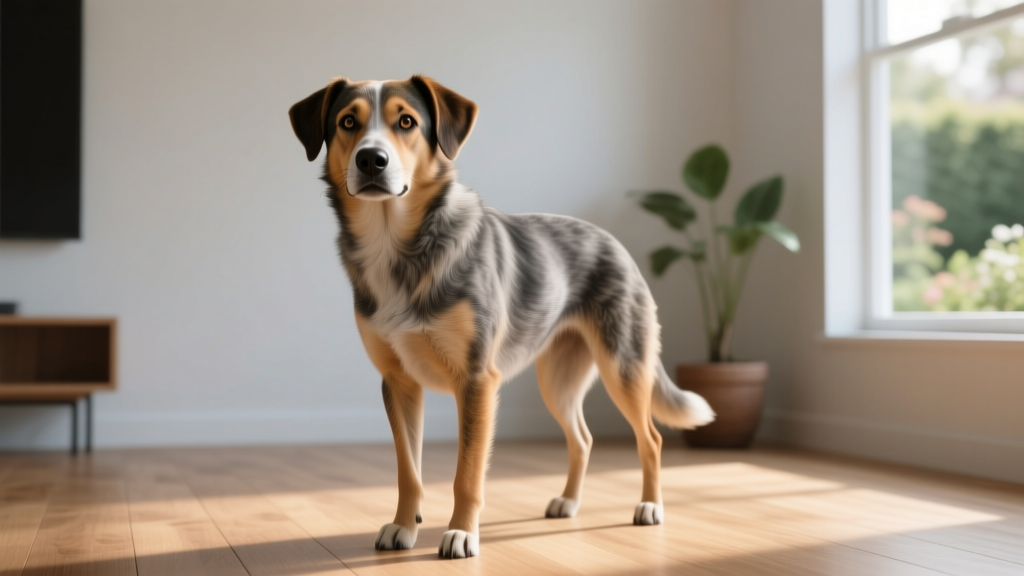
Greyhound Poodle Mix: The Complete Greydoodle Breed Guide
Greyhound poodle mix (Greydoodle): size, temperament, coat types, health risks, cost

The greyhound poodle mix — sometimes called the Greydoodle or Poodledane (not to be confused with the Great Dane-Poodle cross) — is one of the more unusual designer pairings you'll encounter. Unlike the ubiquitous Goldendoodle or Labradoodle, this combination pairs a sighthound built for explosive speed with a highly trainable, curly-coated companion breed. The result is a dog that can be genuinely stunning, but also deeply unpredictable in temperament, coat, and structure.
If you've stumbled across this mix — whether through a breeder, a rescue listing, or sheer curiosity — this guide breaks down exactly what you can (and absolutely cannot) expect. I've worked with enough mixed-breed dogs to tell you plainly: there is no "standard" Greydoodle. Every individual is a genetic roll of the dice.
What Two Breeds Make Up the Greyhound Poodle Mix?
The greyhound poodle mix is a first-generation or multigenerational cross between a Greyhound and a Poodle (typically a Standard Poodle, given the size compatibility). Occasionally you'll see a Miniature Poodle used, but this is rare and raises ethical concerns about size disparity in breeding. Let's look at each parent breed in detail.
| Trait | Greyhound | Standard Poodle |
|---|---|---|
| Weight | 60–70 lb (27–32 kg) | 40–70 lb (18–32 kg) |
| Height | 27–30 in (69–76 cm) | 15+ in (38+ cm), typically 22–27 in |
| Lifespan | 10–13 years | 12–15 years |
| Coat | Short, smooth, single coat | Curly, dense, single coat (hair, not fur) |
| Shedding | Low to moderate | Minimal (hair grows continuously) |
| Energy Level | Sprint-oriented; couch potato at home | High mental and physical energy |
| Trainability | Moderate; independent thinker | Very high; among the most trainable breeds |
| Prey Drive | Very high (sighthound instinct) | Moderate (retrieving background) |
| AKC Group | Hound | Non-Sporting (US) / Utility (UK) |
| Barking Level | Low | Moderate to high |
These two breeds sit at nearly opposite ends of the canine spectrum in several ways. The Greyhound is an ancient sighthound whose instincts are hardwired for visual pursuit — they chase anything small and fast. The Poodle is a versatile, people-oriented problem-solver originally bred for water retrieving. This contrast is precisely why the mix is so variable.
Understanding Generations: F1, F1B, F2, and Multigen
Generation Terminology for Designer Mixes
- F1 (First Generation): 50% Greyhound × 50% Poodle. The most common and genetically diverse pairing. Traits are the least predictable — one puppy in the litter may look almost entirely Greyhound, another nearly all Poodle.
- F1B (First Generation Backcross): An F1 Greydoodle bred back to one parent breed (usually the Poodle, to increase the chance of a curly, low-shedding coat). Result: ~75% Poodle, ~25% Greyhound.
- F2 (Second Generation): Two F1 Greydoodles bred together. This produces the widest variation — puppies can express traits from either grandparent breed in unexpected combinations.
- Multigen (F3+): Multiple generations of Greydoodle-to-Greydoodle breeding. Extremely rare for this particular mix; most Greydoodles you'll encounter are F1 crosses.
Practical note: Because this is an uncommon designer pairing, the vast majority of greyhound poodle mixes available are F1 crosses. Multigen breeding programs for this mix essentially don't exist at any meaningful scale as of 2026.
How Big Will a Greyhound Poodle Mix Get?
Size is one of the more predictable aspects of this cross — both parent breeds overlap significantly in weight and height, so you're unlikely to see extremes. However, individual variation within the expected range is still significant.
| Category | Minimum | Maximum | Most Common Range |
|---|---|---|---|
| Weight | 40 lb (18 kg) | 75 lb (34 kg) | 50–65 lb (23–29 kg) |
| Height at Shoulder | 20 in (51 cm) | 30 in (76 cm) | 23–27 in (58–69 cm) |
If the Poodle parent is a Miniature (15–17 lb / 7–8 kg), the resulting puppies will be considerably smaller — potentially 25–40 lb (11–18 kg). However, responsible breeders generally avoid this pairing due to the significant size mismatch and associated breeding risks. If you encounter a "mini Greydoodle," ask detailed questions about how the breeding was accomplished and whether artificial insemination and veterinary supervision were used.
Body structure is where unpredictability really shows. You might see a dog with the Greyhound's deep chest, tucked waist, and long legs paired with a Poodle's curlier coat — or a stockier, more moderate build that doesn't strongly resemble either parent. Ear carriage (folded rose ears vs. floppy Poodle ears), tail shape, and muzzle length all vary individually.
Coat Types, Shedding, and the Hypoallergenic Question
This is the trait people care about most, and unfortunately, it's one of the least predictable. Here's the reality:
Coat Possibilities in an F1 Greyhound Poodle Mix
| Coat Type | Likelihood (F1) | Shedding | Grooming Demand |
|---|---|---|---|
| Short, smooth (Greyhound-dominant) | ~30–40% | Low to moderate | Minimal; weekly wipe-down |
| Wavy/shaggy (intermediate) | ~35–45% | Low to moderate | Brushing 2–3× per week |
| Curly (Poodle-dominant) | ~15–25% | Very low | Professional grooming every 6–8 weeks |
Is the greyhound poodle mix hypoallergenic? No — and no dog truly is. The term "hypoallergenic" is misleading. Poodles produce less dander and shed minimally because their hair grows continuously rather than cycling through growth and shedding phases. However, the allergy-triggering protein (Can f 1) is present in all dogs' saliva and skin. An F1 mix has roughly a 15–25% chance of inheriting a Poodle-dominant coat, which may be better tolerated by some allergy sufferers — but there is zero guarantee. If allergies are a concern, spend time with the specific dog before committing, and consult an allergist.
Coat colors run the full spectrum: black, white, fawn, brindle, apricot, silver, parti-color, and combinations. Greyhound brindles and Poodle silvers can produce particularly striking patterns in offspring.
Temperament: What to Expect (and What Might Surprise You)
Temperament is the most variable — and most important — aspect of this mix. The Greyhound and Standard Poodle have fundamentally different behavioral profiles, and any given puppy may lean heavily toward one parent or express an unpredictable blend.
Best-Case Scenario
You get a dog that combines the Greyhound's gentle, calm household demeanor with the Poodle's intelligence and trainability. This dog is affectionate without being clingy, learns quickly with positive reinforcement training methods, enjoys moderate daily exercise, and settles beautifully on the couch for the evening. They're good with children, polite with visitors, and generally easy to live with.
Challenging Scenario
You get a dog that inherits the Greyhound's high prey drive and independence alongside the Poodle's sensitivity and tendency toward anxiety. This dog chases every squirrel, cat, and small dog on sight — making off-leash time impossible outside fully fenced areas. They may be skittish around strangers, develop separation anxiety if left alone for long hours, and show the Poodle's alertness as excessive barking. Recall training is an ongoing battle because the sighthound instinct to chase overrides learned commands.
Key Temperament Variables
- Prey drive: Greyhounds are sighthounds with a chase instinct refined over thousands of years. This is not something you "train out" — you manage it. If your Greydoodle inherits strong prey drive, you'll need a secure fence (minimum 5 feet / 1.5 m, as Greyhounds can clear 4-foot fences) and a lifelong commitment to leashed walks in unfenced areas.
- Sensitivity: Both breeds are sensitive in different ways. Greyhounds tend to shut down under harsh handling. Poodles are emotionally attuned and can develop stress-related behaviors in chaotic households. Force-free, reward-based training is not optional with this mix — it's essential.
- Social needs: Poodles are social dogs that bond closely with their people. Greyhounds are more independent but still enjoy companionship. Most Greydoodles do poorly if left alone for 8+ hours daily without enrichment.
- Energy pattern: Greyhounds are famous "45-mph couch potatoes" — they need one or two good sprints and then sleep the rest of the day. Poodles need sustained mental and physical engagement. Your dog's daily exercise needs could range from 30 minutes to 90+ minutes depending on which parent they favor.
Health Considerations: Inherited Conditions and the Hybrid Vigor Reality
Let's address a persistent myth first: hybrid vigor does not eliminate health problems. The concept of heterosis (hybrid vigor) is real in livestock production, but in dogs, crossing two purebreds does not guarantee healthier offspring. What it can do is reduce the probability of recessive genetic conditions that are common in one parent breed — but only if both parents were health-tested. If neither parent was screened, you're simply combining two unknown genetic profiles.
According to the Merck Veterinary Manual, mixed-breed dogs can and do inherit conditions from either parent breed. Here's what to watch for:
| Condition | Inherited From | Prevalence/Notes | Screening Test |
|---|---|---|---|
| Hip Dysplasia | Both breeds | Common in Standard Poodles; moderate in Greyhounds | OFA or PennHIP radiograph |
| Gastric Dilatation-Volvulus (Bloat) | Both breeds | Deep-chested dogs are at elevated risk; Greyhounds are particularly susceptible | No screening test; preventive gastropexy may be discussed with your vet |
| Osteosarcoma (Bone Cancer) | Greyhound | Greyhounds have higher-than-average rates; large, deep-chested dogs generally at risk | No genetic screening; early detection via veterinary exam |
| Addison's Disease | Poodle | Standard Poodles are predisposed; autoimmune condition affecting adrenal glands | ACTH stimulation test if symptomatic |
| Progressive Retinal Atrophy (PRA) | Poodle | Inherited eye condition leading to blindness | DNA test available; CERF/OFA eye exam |
| Hypothyroidism | Both breeds | Autoimmune thyroiditis; manageable with medication | Thyroid panel (T4, free T4, TSH) |
| Epilepsy (Idiopathic) | Both breeds | Both breeds show predisposition to idiopathic seizures | Diagnosis of exclusion by your veterinarian |
If you're working with a breeder, request documentation of health testing for both parent dogs. At minimum, this should include OFA hip evaluations, OFA thyroid panels, and PRA DNA testing for the Poodle parent. A reputable breeder will provide these without being asked. If they can't or won't, walk away.
Always consult your veterinarian for a personalized health plan. They can help you establish an appropriate screening schedule based on your individual dog's build, age, and inherited risk factors.
Grooming and Daily Care
Grooming requirements depend entirely on which coat type your dog inherits, and this won't be fully apparent until the puppy is 4–6 months old.
Short/Smooth Coat (Greyhound-Dominant)
- Weekly rub-down with a rubber grooming mitt or soft bristle brush
- Bathing only as needed (every 2–3 months unless dirty)
- Sunscreen on thinly haired areas (nose, belly) for light-colored dogs during summer — Greyhound-type skin burns easily
- Cold-weather coat or sweater for winter walks — short-coated dogs lose body heat rapidly below 45°F (7°C)
- Nail trims every 3–4 weeks
Wavy/Shaggy Intermediate Coat
- Brushing 2–3 times per week with a slicker brush to prevent matting
- Bathing every 4–6 weeks with a mild canine shampoo
- Professional grooming every 8–10 weeks for trimming around eyes, paws, and sanitary areas
- Nail trims every 3–4 weeks
Curly Coat (Poodle-Dominant)
- Daily or every-other-day brushing with a slicker brush and metal comb — mats form quickly in curly coats
- Professional grooming every 6–8 weeks (budget $60–$100 per session depending on your area)
- Regular ear cleaning — floppy, hairy ears trap moisture and predispose to ear infections (otitis externa)
- Nail trims every 3–4 weeks
Dental care applies regardless of coat type: Brush teeth 3–5 times per week with an enzymatic canine toothpaste. Both parent breeds can develop periodontal disease, and dental cleanings under anesthesia at your vet's office typically cost $300–$800 if you let it progress to that point.
Cost: What You'll Actually Spend
The greyhound poodle mix is uncommon enough that pricing varies wildly. Here's what the market looks like in 2026:
| Expense | Low End | Typical | High End |
|---|---|---|---|
| Puppy Purchase (from breeder) | $800 | $1,500–$2,500 | $3,500+ |
| Adoption/Rescue Fee | $150 | $300–$500 | $600 |
| First-Year Veterinary Care | $500 | $800–$1,200 | $2,000+ |
| Annual Ongoing Vet Care | $400 | $600–$900 | $1,500+ |
| Food (Monthly) | $40 | $60–$90 | $120+ |
| Grooming (Annual, if curly coat) | $0 (short coat) | $360–$600 | $800+ |
| Pet Insurance (Monthly) | $30 | $45–$70 | $100+ |
Breeder availability: Dedicated Greydoodle breeders are rare. You're more likely to find this mix through accidental litters, hobby breeders experimenting with sighthound crosses, or occasionally through Greyhound rescue organizations (retired racing Greyhounds sometimes end up in homes with intact Poodles). Check Adopt-a-Pet and Petfinder using both parent breed names as search terms.
Red flags when evaluating breeders: No health testing documentation, unwillingness to let you visit the breeding facility, multiple litters available year-round, pricing significantly below market ($500 or less for a "designer" puppy), or pressure to pay a deposit before meeting the puppy. These are signs of backyard breeders or puppy mills.
Who Is This Mix Best Suited For?
The greyhound poodle mix is not a beginner-friendly dog. The unpredictability of temperament, the potential for high prey drive, and the sensitivity inherited from both parent breeds make this a better fit for owners with some experience.
This Mix Suits You If:
- You have experience with either sighthounds or highly intelligent breeds (or both)
- You have access to a securely fenced yard (minimum 5 ft / 1.5 m fence height)
- You're home for a significant portion of the day (separation anxiety risk)
- You're committed to positive reinforcement training and understand that prey drive can't be fully trained away
- You're prepared for a 10–14 year commitment with a medium-to-large dog
- You don't have small pets (cats, rabbits, small dogs) unless the individual dog has been temperament-tested with them
Think Carefully If:
- You're a first-time dog owner — the variability in this mix requires confident handling
- You have cats or small animals in the home — Greyhound prey drive is a real safety concern
- You work long hours away from home — both parent breeds can develop behavioral issues when chronically under-stimulated
- You want a predictable, guaranteed temperament — adopt an adult dog whose personality is already established
- You live in an apartment with no nearby secure exercise area — a dog with possible sighthound sprint needs requires safe space to run
Frequently Asked Questions
Are greyhound poodle mixes good with children?
It depends heavily on the individual dog. Greyhounds are generally gentle and tolerant, and Poodles are intelligent and responsive. However, a sensitive Greydoodle may be overwhelmed by loud, unpredictable toddlers, and a dog with high prey drive may react poorly to fast-moving children running and screaming. Always supervise interactions, and teach children to respect the dog's space. An adult Greydoodle with a known temperament history is a safer choice for families with young children than a puppy of unknown disposition.
Can a greyhound poodle mix be off-leash?
Generally, no. If your dog inherits any meaningful Greyhound prey drive, they will chase small, fast-moving animals regardless of their recall training. Sighthound instinct operates at a neurological level that overrides learned commands. Only allow off-leash time in fully enclosed areas with fences at least 5 feet (1.5 m) tall. Some individuals with minimal prey drive may be reliable off-leash, but this is the exception, not the rule — and it cannot be predicted in a puppy.
How much exercise does a greyhound poodle mix need?
Expect 45–90 minutes of daily activity, but the type matters. A Greyhound-leaning dog may want one or two intense sprints (a flirt pole or a run in a fenced field) followed by lounging. A Poodle-leaning dog may prefer sustained walks, swimming, puzzle toys, and training sessions. Most Greydoodles do well with a 30–45 minute walk plus one higher-intensity activity per day. Adjust based on your individual dog's energy pattern.
Do greyhound poodle mixes shed a lot?
It depends on coat type. Short-coated (Greyhound-dominant) dogs shed low to moderate amounts — you'll find fine hairs on dark clothing and furniture. Curly-coated (Poodle-dominant) dogs shed minimally but require regular grooming to prevent matting. Wavy intermediate coats fall somewhere in between. You won't know for certain until the coat matures around 6–12 months of age.
What is the lifespan of a greyhound poodle mix?
Based on parent breed averages, expect 11–14 years. Greyhounds average 10–13 years and Standard Poodles average 12–15 years. Mixed-breed dogs in this size range tend to fall in the middle. Factors that influence longevity include maintaining a healthy body condition score (BCS of 4–5 on a 9-point scale), regular veterinary preventive care, and avoiding obesity — which is a significant risk factor for joint disease, cancer, and metabolic disorders in large dogs.
Are greyhound poodle mixes recognized by the AKC?
No. The American Kennel Club does not recognize any designer mixed breeds. Both parent breeds are individually AKC-registered, but the cross itself has no breed standard, no registry recognition, and no conformation showing pathway. Some mixed breeds can participate in AKC Canine Partners programs for performance events (agility, obedience, rally), which is a great outlet for an athletic, intelligent Greydoodle.
Dr. Hannah Wickes
All our authors care for dogs every day — read more of their work on the authors page.