Why Great Pyrenees Don't Break Eye Contact: Breed
Why do Great Pyrenees hold eye contact so intensely? Explore this breed's guarding instincts, temperament, health, costs, and care in our complete profile.
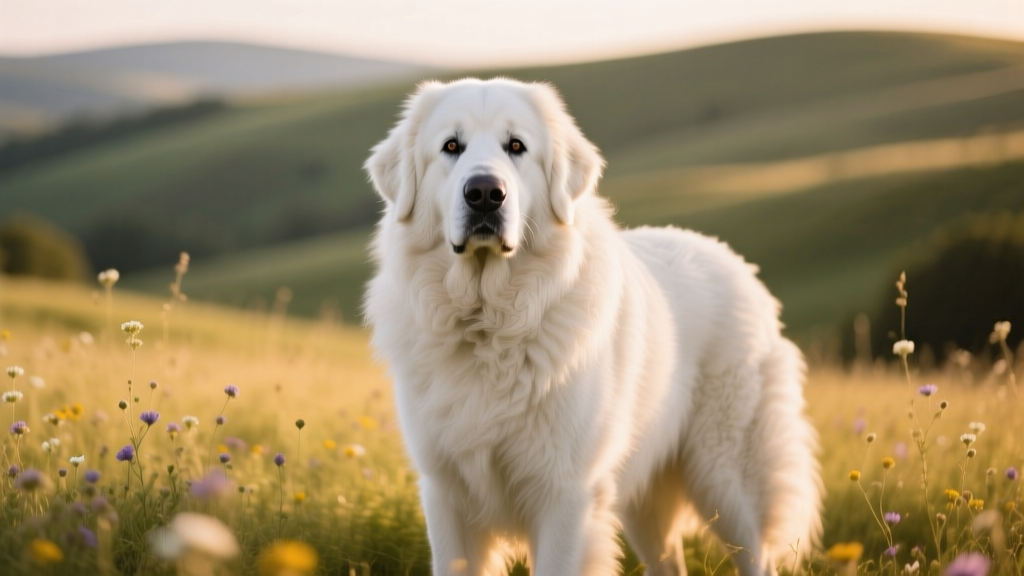
If you've ever been stared down by a 100-pound white dog who refuses to blink first, you've experienced one of the most defining behavioral quirks of the Great Pyrenees. Owners and strangers alike frequently ask: how come Great Pyrenees don't break eye contact? The answer lies deep in the breed's centuries-old role as a livestock guardian — and understanding it is the key to living successfully with this majestic, independent-minded giant.
This isn't aggression. It isn't dominance in the outdated sense. For the Great Pyrenees, sustained eye contact is a working behavior hardwired through generations of protecting flocks from wolves and bears in the Pyrenees Mountains. They assess threats by watching — intently, patiently, and without flinching. When your Pyr locks eyes with you, a visitor, or another animal, they're doing exactly what they were bred to do: evaluating whether you belong.
In this breed profile, we'll unpack the science and history behind this behavior, then cover everything you need to know about owning a Great Pyrenees in 2026 — from health predispositions and grooming schedules to real ownership costs.
Breed Overview: The Great Pyrenees at a Glance
| Attribute | Details |
|---|---|
| Size Class | Giant |
| Weight (Male) | 100–160 lb / 45–73 kg |
| Weight (Female) | 85–115 lb / 39–52 kg |
| Height (Male) | 27–32 in / 69–81 cm |
| Height (Female) | 25–29 in / 64–74 cm |
| Lifespan | 10–12 years |
| Coat Type | Double coat; long, flat, thick outer coat with dense undercoat |
| Color | White, sometimes with badger, gray, reddish-brown, or tan markings |
| Energy Level | Low to moderate |
| AKC Group | Working Group |
| Origin | Pyrenees Mountains (France/Spain border), dating to at least 3000 BC |
The Great Pyrenees — known as the Chien de Montagne des Pyrénées in France and simply "Pyr" among devoted owners — is one of the oldest livestock guardian breeds in existence. Fossil evidence places their ancestors in the Pyrenees region as far back as 3000 BC, making them contemporaries of ancient Sumerian civilization. They were recognized by the American Kennel Club (AKC) in 1933.
Their historical purpose was singular: protect sheep flocks from predators including wolves, bears, and lynx across rugged mountain terrain. This work required a dog that could think independently, remain calm for hours, and confront threats without unnecessary aggression. Those traits persist in the modern Pyr — for better and for more challenging.
The Stare Explained: Why Great Pyrenees Don't Break Eye Contact
The sustained gaze of a Great Pyrenees is one of the most searched behavioral traits of the breed, and it deserves a thorough explanation rooted in canine ethology (the study of animal behavior).
The Livestock Guardian Gaze
In working contexts, a livestock guardian dog (LGD) must continuously monitor its environment. Unlike herding breeds that use eye contact to control sheep movement (think Border Collies), the Pyr uses its gaze to assess and deter. When a predator approached a flock, the Pyr's first response wasn't to charge — it was to stand its ground, stare, bark, and posture. Breaking eye contact meant losing track of the threat.
This behavior translates to the home environment in several observable ways:
- Door watching: Your Pyr will stare at the front door when someone approaches, often before you hear a sound. Their auditory detection range extends to roughly 80 feet, and they lock onto the source visually once alerted.
- Stranger assessment: Meeting new people, a Pyr will typically hold eye contact for 10–30 seconds before deciding whether to accept the person. This isn't rudeness — it's a threat-evaluation protocol.
- Owner bonding: Pyrs stare at their owners as a form of social referencing. Research published in Science (Nagasawa et al., 2015) showed that mutual gaze between dogs and owners triggers oxytocin release in both species. The Pyr's guarding instinct amplifies this tendency.
- Resource monitoring: A Pyr guarding food, a toy, or a sleeping child will fix their gaze on anything approaching. This is normal protective behavior, not resource guarding pathology — though it requires management in multi-pet homes.
When the Stare Signals a Problem
While sustained eye contact is breed-typical, certain contexts warrant attention. If your Pyr's stare is accompanied by a stiff body, raised hackles, low growl, or whale eye (showing the whites of the eyes), this indicates genuine distress or aggression. Consult a certified force-free behaviorist (look for IAABC or CCPDT certification) if this pattern emerges, particularly around children or other dogs.
Temperament & Personality: 5 Core Traits
Strengths
- Calm and patient: A well-socialized Pyr can lie still for hours, making them surprisingly good house dogs despite their size.
- Deeply loyal to family: They form strong pair bonds and will position themselves between their owner and perceived threats.
- Gentle with children: Historically trusted around vulnerable lambs, Pyrs tend to be careful and tolerant with kids they've been raised with.
- Independent thinkers: They problem-solve without constant human direction — useful in working contexts.
- Low prey drive toward familiar animals: A Pyr raised with cats or small dogs typically views them as part of their flock.
Challenges
- Stubborn with commands: Independence means they question whether obedience is worth the effort. "Come" is often treated as a suggestion.
- Nocturnal barking: Bred to patrol at night, many Pyrs vocalize heavily between 10 PM and 4 AM.
- Wandering tendency: Their patrol instinct drives them to expand territory. A Pyr without secure fencing will roam — often for miles.
- Slow to warm to strangers: Not aggressive by default, but not friendly either. Socialization must be deliberate and ongoing.
- Heavy shedding: Expect white fur on every surface. Twice-yearly coat blows are intense.
Physical Characteristics: Built for Mountain Work
The Great Pyrenees is built for endurance over speed. Their body is slightly longer than tall, with a broad chest and strong hindquarters designed for climbing rocky terrain. The head is wedge-shaped with a gently rounded skull, small V-shaped ears that lie flat, and dark brown almond-shaped eyes — those eyes that hold your gaze so steadily.
Their most striking feature is the double coat. The outer coat is long (up to 5 inches on the ruff and tail), flat or slightly wavy, and weather-resistant. The undercoat is dense, fine, and woolly, providing insulation against sub-zero mountain temperatures. Males carry a pronounced mane around the neck and shoulders.
A notable physical trait: double dewclaws on the hind legs. Unlike most breeds where rear dewclaws are removed, the Great Pyrenees breed standard requires them. These extra claws provide stability on steep, icy terrain — an evolutionary adaptation to their mountain homeland.
Exercise & Activity Needs
Despite their giant size, Great Pyrenees are relatively low-energy dogs. Their working style was patience, not pursuit. However, "low energy" does not mean "no exercise." Here's what a Pyr actually needs:
| Activity | Duration | Frequency | Notes |
|---|---|---|---|
| Leashed walk | 30–45 minutes | Daily | Moderate pace; they are not jogging partners |
| Free-roam yard time | 1–2 hours | Daily | Secure 6-foot fence minimum; they patrol perimeters |
| Mental enrichment | 15–20 minutes | Daily | Scent work, puzzle feeders, or supervised livestock exposure |
| Hiking/outdoor adventure | 60–90 minutes | 2–3x/week | Excellent hiking companions in cool weather |
| Swimming | Variable | As desired | Most Pyrs tolerate water but aren't natural swimmers; use a canine life jacket |
Total daily exercise target: 45–90 minutes, split between structured walks and free exploration. Over-exercising a growing Pyr (under 18–24 months) risks joint damage — their growth plates close slowly due to their giant size.
In warm weather (above 75°F / 24°C), reduce exercise intensity and walk during early morning or evening hours. Their thick coat makes them heat-sensitive, and heatstroke is a genuine risk.
Common Health Issues in Great Pyrenees
The Great Pyrenees is generally hardy for a giant breed, with a lifespan of 10–12 years — respectable for a dog over 100 pounds. However, several breed-specific conditions deserve attention. Always consult your veterinarian for diagnosis and treatment planning.
| Condition | Description | Estimated Prevalence | Screening/Prevention |
|---|---|---|---|
| Hip Dysplasia | Abnormal hip joint formation leading to arthritis | ~12% (OFA data) | OFA/PennHIP screening of breeding stock; maintain lean body condition |
| Osteosarcoma (Bone Cancer) | Aggressive malignant bone tumor, most common in long-legged giant breeds | Higher than breed average for dogs >80 lb | Early detection via X-ray if lameness appears; limb-sparing surgery or amputation |
| Gastric Dilatation-Volvulus (Bloat/GDV) | Stomach fills with gas and twists — life-threatening emergency | Risk elevated in deep-chested breeds | Prophylactic gastropexy during spay/neuter; feed 2–3 small meals; no exercise 1 hour around meals |
| Hypomyelination (Trembler Puppies) | Neurological disorder causing tremors in puppies, typically appearing at 2–6 weeks | Rare but breed-specific | DNA test available; responsible breeders screen |
| Canine Multifocal Dysplasia (CMR) | Inherited eye condition causing retinal lesions | ~3–5% in tested populations | CERF/OFA ophthalmologist exam; DNA test available |
Bloat is the #1 emergency concern. If your Pyr shows a distended abdomen, unproductive retching, restlessness, or pale gums, go to an emergency vet immediately. GDV is fatal without surgical intervention within hours. Prophylactic gastropexy (tacking the stomach to the abdominal wall) costs $300–$800 when performed during a scheduled spay/neuter and dramatically reduces GDV risk.
Grooming Requirements
That magnificent white coat requires consistent maintenance — not optional pampering. Here's a realistic grooming schedule:
- Brushing: 2–3 times per week using a slicker brush and an undercoat rake (the Chris Christensen Big G or Furminator deShedding Tool for large breeds are reliable options, $35–$65 each). During shedding season (spring and fall), daily brushing is necessary to manage the undercoat blow.
- Bathing: Every 6–8 weeks, or as needed. Use a whitening shampoo formulated for dogs (e.g., BioSilk or Earthbath, $12–$18). Their coat naturally resists dirt — mud dries and falls off — but urban environments and drool stains require more frequent washing.
- Nail trimming: Every 3–4 weeks. Don't forget the double dewclaws, which don't wear down naturally and can curl into the skin if neglected.
- Ear cleaning: Weekly checks; clean with a vet-recommended ear solution (e.g., Epi-Otic Advanced, $15–$20) if debris accumulates. Their drop ears trap moisture.
- Professional grooming: Optional but helpful during heavy shed seasons. Expect to pay $80–$150 per session for a large-breed bath-and-brush-out.
Never shave a Great Pyrenees. Their double coat regulates both heat and cold. Shaving disrupts the coat's insulating structure, increases sunburn risk, and the undercoat may grow back matted or not at all.
Training & Intelligence
The Great Pyrenees is intelligent but ranks lower on obedience-based intelligence scales. In Stanley Coren's The Intelligence of Dogs, the breed falls in the "fair working intelligence" category — meaning they understand new commands after 25–40 repetitions and obey on the first command about 50% of the time. This is not stupidity; it's independence. A Pyr was bred to make its own decisions about flock threats without waiting for human instruction.
Training methods that work:
- Positive reinforcement only: High-value treats (freeze-dried liver, chicken), praise, and play. Force-free methods build trust; harsh corrections cause a Pyr to shut down entirely.
- Short sessions: 5–10 minutes maximum. They bore quickly with repetition.
- Recall reality: Accept that off-leash reliability is unlikely for most Pyrs. Their patrol instinct overrides trained recall when they spot something interesting at a distance. Invest in a secure yard and a long-line (15–30 ft) for safe exploration.
- Early socialization: Between 8–16 weeks, expose your Pyr puppy to 100+ people, surfaces, sounds, and other animals. This window is critical for preventing over-protective behavior later.
Never use shock collars, prong collars, or alpha rolls on a Great Pyrenees. Aversive methods damage the trust-based bond this breed requires and can trigger defensive aggression in a dog that outweighs most adult humans.
Family Suitability & Living Environment
With children: Great Pyrenees are generally excellent with children in their own family — patient, watchful, and physically sturdy enough to tolerate clumsy toddlers. However, their size poses an unintentional risk: a 120-lb Pyr can knock over a small child simply by turning around. Always supervise interactions, and teach children not to climb on or startle the dog.
With other pets: A Pyr raised alongside cats, smaller dogs, or even livestock typically accepts them as part of the flock. Introducing a new pet to an adult Pyr requires slow, managed introductions over 2–4 weeks. Same-sex dog aggression can occur, particularly between intact males.
Apartment living: Not recommended. While Pyrs are calm indoors, their size, barking tendencies (especially at night), and need for secure outdoor space make apartments a poor fit. A house with a fenced yard (minimum 6-foot fence, as Pyrs can scale shorter barriers) is strongly preferred. Some Pyrs do adapt to large condos with dedicated outdoor access, but this requires a committed exercise routine.
First-time owners: This breed is not ideal for first-time dog owners. Their independence, size, barking, and training resistance require patience and experience. That said, a first-time owner who invests in puppy classes, reads breed-specific resources, and commits to socialization can succeed — just go in with realistic expectations.
Cost of Ownership: What a Great Pyrenees Actually Costs
Owning a giant breed is a significant financial commitment. Here's a realistic 2026 breakdown:
| Expense Category | First Year | Annual (Ongoing) |
|---|---|---|
| Puppy purchase (responsible breeder) | $1,500–$3,500 | — |
| Adoption/rescue fee | $200–$600 | — |
| Food (premium large-breed kibble, 50–80 lb/month) | $900–$1,500 | $900–$1,500 |
| Veterinary care (wellness, vaccines, preventives) | $600–$1,200 | $500–$900 |
| Heartworm/flea/tick prevention | $200–$350 | $200–$350 |
| Grooming (professional, 4–6 sessions/year) | $320–$900 | $320–$900 |
| Pet insurance (optional but recommended for giant breeds) | $600–$1,200 | $600–$1,200 |
| Supplies (crate, bed, leash, bowls, toys) | $400–$800 | $100–$300 |
| Total estimated cost | $4,520–$9,450 | $2,620–$5,150 |
Emergency veterinary care for a giant breed can run $3,000–$8,000 for conditions like bloat surgery or orthopedic procedures. Pet insurance (companies like Trupanion, Healthy Paws, or Figo) is strongly recommended — premiums for a Pyr puppy typically run $50–$100/month depending on coverage level and deductible.
When sourcing a puppy, look for breeders who perform OFA hip, elbow, and eye clearances, provide a written health guarantee, and require a take-back clause. The Great Pyrenees Club of America maintains a breeder referral list. Adoption through breed-specific rescues (e.g., National Great Pyrenees Rescue) is an equally valid and often more affordable option.
Frequently Asked Questions
How come Great Pyrenees don't break eye contact?
The sustained gaze is a working behavior inherited from centuries of livestock guarding. In the Pyrenees Mountains, these dogs needed to continuously monitor predators without losing visual track. Today, this translates to your Pyr watching you, visitors, and the environment with an intensity that can feel unnerving but is entirely normal for the breed. It's assessment, not aggression.
Is the Great Pyrenees right for first-time owners?
Generally, no — this breed is better suited to owners with prior dog experience. Their independence, barking, size, and training resistance require patience and consistency. That said, dedicated first-time owners who invest in professional puppy training and socialization can succeed.
How much exercise does a Great Pyrenees need daily?
Plan for 45–90 minutes of combined activity per day: a 30–45 minute leashed walk plus 1–2 hours of supervised free-roaming in a secure yard. They are not endurance athletes and overheat easily in warm weather.
What health problems are Great Pyrenees prone to?
The most significant concerns are hip dysplasia (~12% prevalence), osteosarcoma (bone cancer), gastric dilatation-volvulus (bloat), and inherited eye conditions like canine multifocal dysplasia. Responsible breeders screen for these via OFA and DNA testing.
How big does a Great Pyrenees get?
Adult males typically weigh 100–160 lb (45–73 kg) and stand 27–32 inches (69–81 cm) at the shoulder. Females weigh 85–115 lb (39–52 kg) and stand 25–29 inches (64–74 cm). Some males exceed these ranges, reaching 175+ lb.
Is the Great Pyrenees good with children and other pets?
Yes, with important caveats. Pyrs are patient and protective with children in their family but can accidentally knock over small children due to their size. They accept other household pets when raised together, though introducing new animals to an adult Pyr requires slow, managed introductions over several weeks.
How much does a Great Pyrenees cost to buy and maintain?
Puppies from responsible breeders cost $1,500–$3,500. Adoption fees range from $200–$600. First-year total costs (including food, vet care, supplies, and insurance) run $4,520–$9,450. Ongoing annual costs are $2,620–$5,150.
For additional breed health information, the Merck Veterinary Manual provides comprehensive canine health references, and the AVMA pet owner resources cover general care best practices for giant breeds.
Beth Carrasco
All our authors care for dogs every day — read more of their work on the authors page.


