Great Dane Boxer Mix: Size, Temperament, Health & Care Guide
Great Dane Boxer mix: size ranges, temperament variability, inherited health risks, grooming needs, costs
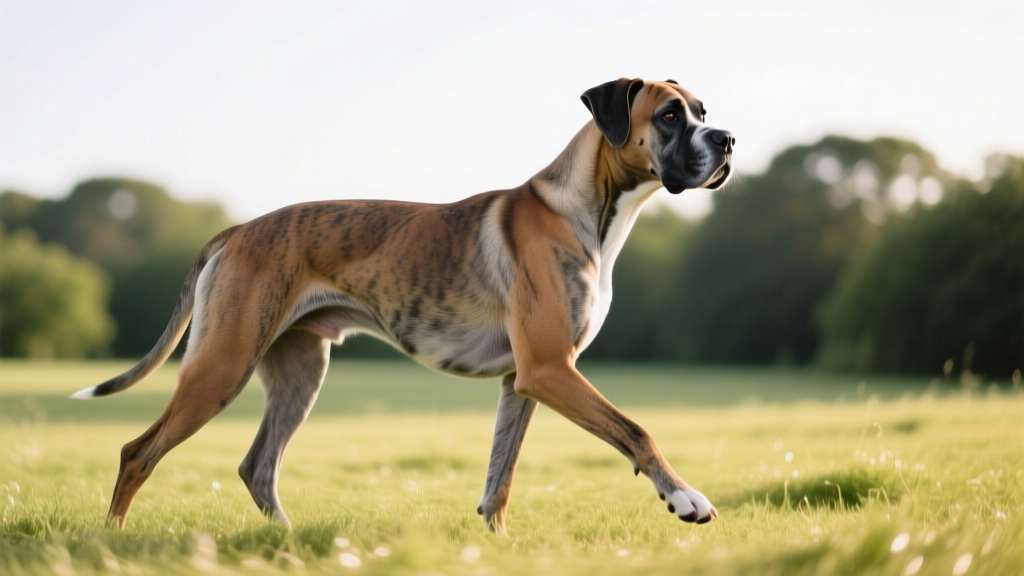
If you've encountered a dog with the towering frame of a Great Dane but the muscular, compact energy of a Boxer, you may have met a Great Dane Boxer mix — sometimes called a "Boxane." This designer crossbreed pairs two of the most recognizable working breeds in the world, producing a large-to-giant dog that can be a gentle family companion or a handful for unprepared owners.
Unlike purebreds with predictable breed standards, mixed-breed dogs inherit traits in unpredictable combinations. This guide breaks down what you can reasonably expect from a Great Dane Boxer mix, where variation is likely, and how to decide whether this crossbreed fits your lifestyle — based on veterinary data, breed standards, and real-world ownership experience.
The Parent Breeds: Great Dane and Boxer at a Glance
Understanding any mixed breed starts with its foundation. The Great Dane and the Boxer are both AKC-recognized working breeds, but they differ significantly in build, energy, and health profiles.
| Trait | Great Dane | Boxer |
|---|---|---|
| Weight | 110–175 lb (50–79 kg) | 50–80 lb (23–36 kg) |
| Height | 28–32 in (71–81 cm) | 21.5–25 in (55–64 cm) |
| Lifespan | 7–10 years | 10–12 years |
| AKC Group | Working | Working |
| Coat | Short, smooth, single coat | Short, smooth, single coat |
| Energy Level | Moderate (bursts of activity) | High (sustained play drive) |
| Original Purpose | Boar hunting, estate guardian | Bull-baiting, military/working dog |
| Shedding | Moderate, seasonal | Moderate, year-round |
| Temperament | Gentle, patient, people-oriented | Playful, alert, loyal, high-drive |
Both breeds share short coats and a working-dog heritage, but the Great Dane's calm demeanor contrasts with the Boxer's persistent energy and clownish playfulness. A Great Dane Boxer mix may land anywhere on this spectrum.
How Big Will a Great Dane Boxer Mix Get?
This is the most common question prospective owners ask — and the hardest to answer precisely. Because the size gap between the two parent breeds is so large (a Great Dane can weigh more than double a Boxer), the offspring's adult size depends heavily on which parent's genes dominate and whether the Great Dane parent is the sire or dam.
| Measurement | Low End | High End | Most Common Range |
|---|---|---|---|
| Weight (adult) | 70 lb (32 kg) | 140 lb (64 kg) | 85–115 lb (39–52 kg) |
| Height (at shoulder) | 23 in (58 cm) | 30 in (76 cm) | 25–28 in (64–71 cm) |
Practical note: Most F1 Great Dane Boxer mixes tend to land closer to the middle — roughly 90–110 lb — but outliers are common. If the Boxer parent is the dam (mother), puppies may trend smaller due to uterine environment constraints. Litters can also vary: one pup may hit 130 lb while a littermate stops at 80 lb.
Expect your dog to reach near-adult height by 12–14 months but continue filling out in chest and muscle mass until 18–24 months. Giant-breed growth plates close later than smaller breeds, so avoid high-impact exercise (agility, long-distance running on hard surfaces) until your vet confirms skeletal maturity via X-ray, typically around 18 months.
Generations Explained: F1, F1B, and Beyond
Unlike Poodle-based designer breeds (Goldendoodles, Labradoodles), the Great Dane Boxer mix is almost exclusively bred as a first-generation (F1) cross. Here's what the generation labels mean and why they matter:
- F1 (First Generation): One purebred Great Dane × one purebred Boxer. Maximum genetic diversity. Most common for this mix. Traits are the least predictable.
- F1B (Backcross): An F1 Boxane bred back to one of the parent breeds (e.g., F1 Boxane × Great Dane). Rare for this mix. Shifts traits closer to the backcross parent.
- F2 (Second Generation): Two F1 Boxanes bred together. Extremely rare. Trait expression becomes more variable, not more predictable — recessive genes from both breeds can surface.
- Multigen (F3+): Multiple generations of Boxane-to-Boxane breeding. Virtually nonexistent for this cross. Unlike Poodle mixes, there is no established multigen Boxane breeding program.
If a breeder advertises "F2 Boxane puppies," ask for documentation of both parents. In most cases, you'll be looking at an F1 litter, which is perfectly fine — but know that F1 means maximum trait variability between individual puppies.
Temperament: What to Expect (and What Might Surprise You)
Both Great Danes and Boxers are known for being people-oriented, loyal, and good with children when properly socialized. That's the encouraging baseline. But temperament in a crossbreed is a spectrum, not a guarantee.
Best-Case Temperament Scenario
Your Boxane inherits the Great Dane's calm, patient nature combined with the Boxer's playful spirit. The result: a dog that's energetic during play sessions but settles easily indoors, greets visitors with wagging enthusiasm rather than suspicion, and shows patience with children and other household pets. This is the temperament most owners report in well-socialized F1 Boxanes.
Challenging Temperament Scenarios
Some Boxanes inherit the Boxer's high prey drive and jumpiness combined with the Great Dane's size — creating a dog that's 100+ pounds of exuberant, mouthy, leash-pulling energy. Boxers were originally bred for physically demanding work, and that drive doesn't disappear in a crossbreed. Specific challenges to prepare for:
- Jumping up: A 100-lb dog that jumps on guests is a liability. Start "four on the floor" training from puppyhood using positive reinforcement — reward all four paws on the ground, never punish jumping with knee-to-chest or physical corrections.
- Mouthiness: Boxers are notoriously mouthy. Your Boxane may carry objects, nip during play, or "talk" with pawing and mouthing well into adulthood. Redirect to appropriate chew toys; never use alpha rolls or muzzle-grabbing.
- Same-sex dog reactivity: Both parent breeds can show same-sex aggression, particularly intact males. Early socialization and neutering (discuss timing with your vet — giant breeds may benefit from delayed neutering at 12–18 months) can reduce this risk.
- Separation distress: Both breeds bond intensely with their people. A Boxane left alone 8+ hours daily is likely to develop destructive behaviors or separation anxiety.
Even within a single F1 litter, you can get one puppy that's a couch potato and another that needs 90 minutes of structured activity daily. Meeting both parent dogs (if possible) gives clues, but genetics aren't destiny. Budget time and training resources for the more demanding end of the spectrum.
Coat, Shedding, and Grooming
Here's one area where predictability is high: the Great Dane Boxer mix is not hypoallergenic and is not low-shedding. Both parent breeds have short, smooth, single-layer coats that shed moderately year-round with seasonal increases. Your Boxane will almost certainly inherit this coat type.
| Attribute | Typical Expression |
|---|---|
| Coat Length | Short (0.5–1 inch) |
| Coat Texture | Smooth, close-lying |
| Shedding Level | Moderate — year-round with seasonal peaks in spring/fall |
| Hypoallergenic? | No. Produces standard dander levels. |
| Brushing Frequency | 1–2 times per week with a rubber curry brush or bristle brush |
| Bathing | Every 6–8 weeks or as needed (over-bathing strips natural oils) |
| Nail Trimming | Every 2–3 weeks — large dogs on soft surfaces wear nails unevenly |
| Ear Cleaning | Weekly check; clean with vet-approved ear solution if floppy-eared |
Color possibilities include fawn, brindle, black, harlequin (if the Great Dane parent carries the merle gene), and various white markings inherited from the Boxer's flash pattern. Note: if the Great Dane parent carries the merle gene, breeding it to a non-merle Boxer produces merle puppies safely, but never breed two merle carriers together — double-merle puppies face severe hearing and vision defects.
Health Considerations: Hybrid Vigor vs. Reality
Let's address a persistent myth: hybrid vigor does not eliminate inherited health conditions. The concept of heterosis (hybrid vigor) is real in livestock breeding and can improve traits like fertility and growth rate. But in dogs, crossbreeding does not magically erase the genetic diseases both parent breeds carry. What it can do is reduce the probability of inheriting two copies of the same recessive mutation — assuming the parents are from unrelated lines.
According to the Merck Veterinary Manual, both Great Danes and Boxers carry significant breed-specific health risks. A Boxane can inherit conditions from either side:
| Condition | Parent Breed Origin | Prevalence/Notes |
|---|---|---|
| Dilated Cardiomyopathy (DCM) | Both breeds | Boxers have a well-documented genetic form (Boxer cardiomyopathy). Great Danes are also predisposed. Ask your vet about annual cardiac screening starting at age 3. |
| Gastric Dilatation-Volvulus (GDV/Bloat) | Great Dane primarily | Great Danes have the highest breed risk for bloat — a life-threatening stomach torsion. Deep-chested Boxanes are at elevated risk. Discuss prophylactic gastropexy with your vet during spay/neuter surgery. |
| Hip Dysplasia | Both breeds | OFA data shows ~12% of Great Danes and ~14% of Boxers rated dysplastic. Request OFA or PennHIP scores from both parents. |
| Aortic Stenosis | Boxer primarily | Congenital heart defect. Screening via echocardiogram recommended before breeding. |
| Hypothyroidism | Boxer primarily | Autoimmune thyroiditis. Annual thyroid panel recommended from age 4. |
| Wobbler Syndrome (Cervical Spondylomyelopathy) | Great Dane primarily | Spinal cord compression causing hind-limb instability. Onset typically 3–7 years. Surgical treatment costs $3,000–$8,000. |
| Cancer (mast cell tumors, lymphoma, osteosarcoma) | Both breeds | Boxers have one of the highest cancer rates among purebreds. Great Danes are predisposed to osteosarcoma. Regular wellness exams are critical. |
If your Great Dane Boxer mix shows any of these signs, seek emergency veterinary care — do not wait:
- Distended, hard abdomen with unproductive retching (bloat/GDV — survival drops with every hour)
- Sudden collapse or rear-leg weakness (possible Wobbler's or spinal event)
- Labored breathing, blue-tinged gums (cardiac emergency)
- Seizure activity lasting more than 2 minutes
ASPCA Animal Poison Control: (888) 426-4435 (24/7, consultation fee applies) if your dog ingests a toxic substance.
Preventive care budget: Expect to spend $600–$900 annually on preventive veterinary care for a giant-breed dog, including heartworm prevention (Heartgard Plus or Interceptor Plus, dosed by weight — a 100-lb Boxane requires the highest dose tier at roughly $100–$130/year), flea/tick prevention (NexGard, Simparica Trio, or similar at $150–$250/year for large-breed formulations), and annual bloodwork starting at age 4.
Exercise and Training Needs
A Great Dane Boxer mix typically needs 45–75 minutes of structured exercise daily, adjusted for age and individual energy level. This is not a breed mix that thrives with a single 10-minute backyard potty break.
Exercise Breakdown by Life Stage
- Puppy (2–12 months): Short, frequent play sessions (5 minutes per month of age, twice daily). Avoid forced running, jumping from heights, or stairs-repetition — growth plates are open and vulnerable. Free play on grass is ideal.
- Young Adult (1–3 years): 60–75 minutes daily: two 20–30 minute leash walks plus structured play (fetch, flirt pole, swimming). Swimming is excellent for giant breeds — low-impact on joints.
- Mature Adult (3–7 years): 45–60 minutes daily. Many Boxanes settle into the Great Dane's "gentle giant" pattern — a good walk and some play, then lounging.
- Senior (7+ years): 20–30 minutes of gentle walking, adjusted for arthritis or cardiac status. Regular vet checks determine safe activity levels.
For training, use positive reinforcement methods exclusively — reward-based training with food, toys, and praise. Both parent breeds are sensitive and respond poorly to harsh corrections. A front-clip harness (such as the Ruffwear Front Range or the 2 Hounds Design No-Pull Harness, sized for large/giant breeds at $30–$45) gives you control over a strong-pulling dog without tracheal pressure. Avoid prong collars, shock collars, and choke chains — these cause physical and psychological harm and are opposed by the American Veterinary Medical Association and major veterinary behaviorist organizations.
Cost: Purchase Price and Lifetime Ownership
Great Dane Boxer mix puppies are not as commonly bred as Poodle-based designer dogs, which affects both availability and pricing.
| Expense Category | Estimated Cost (USD) |
|---|---|
| Puppy from a breeder (F1) | $500–$1,500 |
| Adoption/rescue fee | $150–$400 |
| First-year veterinary costs (vaccines, spay/neuter, microchip) | $800–$1,500 |
| Annual food (large/giant breed formula, 60–80 lb bag) | $600–$1,000 |
| Annual preventive medications | $250–$400 |
| Crate (XXL, 48-inch, e.g., MidWest iCrate or ProValu) | $80–$150 |
| Orthopedic bed (giant-breed size, e.g., Big Barker 7-inch or FurHaven Orthopedic) | $120–$350 |
| Emergency fund recommendation (annual reserve) | $1,000–$2,000 |
| Estimated first-year total | $3,500–$7,000 |
| Estimated annual cost after year one | $1,800–$3,500 |
Because this mix is uncommon, you're more likely to find a Great Dane Boxer mix through breed-specific rescues (Great Dane rescue networks, Boxer rescue organizations) or general large-breed rescues than through dedicated breeders. Petfinder and Adopt-a-Pet frequently list Dane and Boxer mixes. If you do find a breeder, insist on seeing health clearances for both parents: OFA hip scores, OFA cardiac evaluation, and a Boxer-specific arrhythmogenic right ventricular cardiomyopathy (ARVC) genetic test.
Is a Great Dane Boxer Mix Right for You?
This crossbreed works best in specific living situations. Here's an honest assessment:
This Mix Suits You If:
- You have experience with large or giant breeds (or are committed to working with a certified professional dog trainer from day one)
- Your home has space for a 90–120 lb dog — apartments are possible if you commit to daily outdoor exercise, but a house with a fenced yard is strongly preferred
- You're home most of the day or can arrange midday visits — this mix does not tolerate long isolation well
- You have a realistic budget for giant-breed costs: food, medications dosed by weight, potential emergency surgery (GDV treatment averages $3,000–$7,000)
- You want an affectionate, people-oriented dog and accept the shorter lifespan that comes with giant breeds (expect 8–11 years)
Think Twice If:
- You're a first-time dog owner without access to professional training support
- You have very young children — a 100-lb dog can accidentally knock over a toddler, even with the best intentions
- You rent and face breed or size restrictions (many landlords cap dogs at 50–75 lb)
- You cannot afford pet insurance or an emergency fund — giant-breed emergencies are expensive and not rare
- You want a predictable dog — mixed breeds are inherently variable in temperament, size, and health
Frequently Asked Questions
What two breeds make up the Great Dane Boxer mix?
The Great Dane Boxer mix (sometimes called a Boxane) is a cross between a purebred Great Dane and a purebred Boxer. Both are AKC Working Group breeds with short coats and loyal temperaments, but they differ dramatically in size and energy level.
How big will a Great Dane Boxer mix get?
Most adults weigh between 85 and 115 lb (39–52 kg) and stand 25–28 inches (64–71 cm) at the shoulder. However, the full possible range is 70–140 lb and 23–30 inches. Ask the breeder for both parents' exact measurements for the best estimate.
What will the temperament be like?
Typically friendly, people-oriented, and playful — but individual variation is significant. Expect anywhere from a calm, Dane-like lounger to a high-energy, Boxer-like athlete. Early socialization (before 16 weeks) and ongoing positive reinforcement training shape temperament as much as genetics do.
Is this mix hypoallergenic or low-shedding?
No. Both parent breeds shed moderately and produce standard levels of dander. If you have dog allergies, a Great Dane Boxer mix is not a suitable choice. Consider consulting an allergist before committing to any short-coated breed.
What health issues might this mix inherit?
The most significant inherited risks are dilated cardiomyopathy (from both breeds), gastric dilatation-volvulus/bloat (primarily from the Great Dane side), hip dysplasia (both breeds), and cancer (Boxers are particularly predisposed). Always consult your veterinarian about breed-appropriate screening protocols — annual cardiac exams, hip evaluations, and proactive bloat prevention discussions are essential for this mix.
How much does a Great Dane Boxer mix cost?
Puppies from breeders typically cost $500–$1,500, while rescue adoption fees range from $150–$400. First-year total ownership costs (including veterinary care, food, supplies, and preventive medications) typically fall between $3,500 and $7,000. Ongoing annual costs are $1,800–$3,500.
Are Great Dane Boxer mixes good with children?
Generally yes — both parent breeds are known for being patient and affectionate with kids. However, the dog's large size means supervision is essential with children under 8. Teach children never to climb on, ride, or startle the dog, and always provide the dog with a child-free retreat space.
How long do Great Dane Boxer mixes live?
Expect 8–11 years, which falls between the Great Dane's typical 7–10 years and the Boxer's 10–12 years. Some individuals live to 12 or 13, but giant-breed lifespans are inherently shorter. Proactive health screening and maintaining a lean body condition score (BCS 4–5 on the 9-point scale) support longevity.
Beth Carrasco
All our authors care for dogs every day — read more of their work on the authors page.


