German Shepherd Mix Puppies: A Complete Guide to Popular Crossbreeds
Everything you need to know about German Shepherd mix puppies — size, temperament, health risks, cost, and which GSD crossbreed fits your lifestyle.
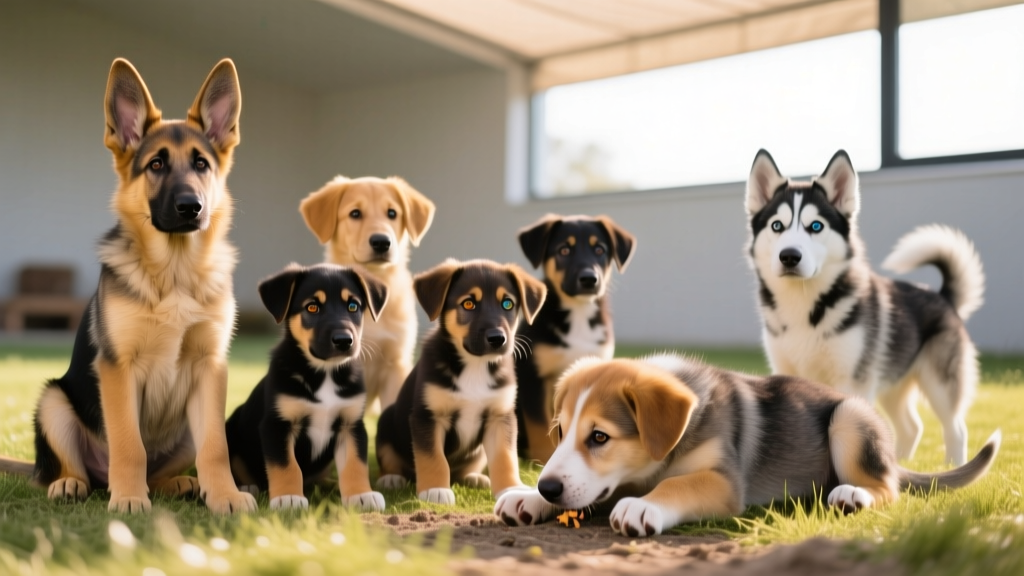
If you've been searching for German Shepherd mix puppies, you've likely discovered just how many variations exist. From the muscular Shepsky (GSD + Husky) to the gentle Golden Shepherd (GSD + Golden Retriever), these crossbreeds combine the intelligence and loyalty of the German Shepherd Dog with traits from a wide range of partner breeds. But unlike purebred dogs with predictable breed standards, mixed-breed puppies are a genetic lottery — and understanding what you might get is critical before you commit.
This guide breaks down the most popular German Shepherd crossbreeds, explains generation terminology, maps out realistic size and temperament ranges, and gives you honest health data so you can make an informed decision. Whether you're working with a breeder or browsing rescue listings, you'll know exactly what questions to ask.
The Parent Breed Breakdown: What Each Side Brings
Every German Shepherd mix puppy inherits traits from two distinct genetic lines. Understanding the parent breeds is the single most useful tool for predicting what your dog might become.
The German Shepherd Dog (GSD) — Parent Breed Profile
The German Shepherd Dog, as recognized by the American Kennel Club, is a large herding breed originally developed in Germany in the late 1800s for livestock management. Modern GSDs serve in police, military, search-and-rescue, and service work, but they're equally common as family companions.
- Weight: 50–90 lb (23–41 kg)
- Height: 22–26 in (56–66 cm) at the shoulder
- Lifespan: 7–10 years
- Coat: Double coat, medium length; heavy seasonal shedding
- Energy: High — needs 60–90+ minutes of structured activity daily
- Temperament: Confident, courageous, intelligent, loyal, aloof with strangers
- Trainability: Exceptionally high — ranks #3 in Stanley Coren's intelligence rankings
- Key health risks: Hip dysplasia, elbow dysplasia, degenerative myelopathy, bloat (GDV), hemangiosarcoma
Common Partner Breeds in German Shepherd Mixes
| Partner Breed | Mix Name | Typical Traits Contributed | Size Influence |
|---|---|---|---|
| Siberian Husky | Shepsky / Gerberian Shepsky | High energy, vocalization, striking eye color, independence | Medium-large (45–80 lb) |
| Golden Retriever | Golden Shepherd | Softer temperament, friendliness, retrieving instinct | Large (55–85 lb) |
| Labrador Retriever | Sheprador / German Sheprador | Food motivation, sociability, lower prey drive | Large (55–90 lb) |
| Rottweiler | Shepweiler | Guarding instinct, muscular build, confidence | Large to extra-large (70–115 lb) |
| Belgian Malinois | Shepinois | Extreme drive, agility, working intensity | Large (55–80 lb) |
| Chow Chow | Chow Shepherd | Independence, thick coat, wariness of strangers | Medium-large (45–75 lb) |
| Standard Poodle | Shepadoodle | Lower-shedding coat, intelligence, sensitivity | Large (50–80 lb) |
| Doberman Pinscher | Doberman Shepherd | Sleek build, alertness, bonding intensity | Large (60–95 lb) |
How Big Will a German Shepherd Mix Get?
Size is one of the most common questions from prospective owners, and with mixes, the honest answer is: it depends. The puppy's adult size falls somewhere within the range defined by both parent breeds, but which parent's genes dominate varies by individual.
| Mix | Min Weight | Max Weight | Min Height | Max Height |
|---|---|---|---|---|
| Shepsky (GSD × Husky) | 45 lb / 20 kg | 80 lb / 36 kg | 20 in / 51 cm | 25 in / 64 cm |
| Golden Shepherd (GSD × Golden) | 55 lb / 25 kg | 85 lb / 39 kg | 22 in / 56 cm | 26 in / 66 cm |
| Sheprador (GSD × Lab) | 55 lb / 25 kg | 90 lb / 41 kg | 22 in / 56 cm | 26 in / 66 cm |
| Shepweiler (GSD × Rottweiler) | 70 lb / 32 kg | 115 lb / 52 kg | 23 in / 58 cm | 27 in / 69 cm |
| Shepadoodle (GSD × Poodle) | 50 lb / 23 kg | 80 lb / 36 kg | 22 in / 56 cm | 26 in / 66 cm |
| Chow Shepherd (GSD × Chow) | 45 lb / 20 kg | 75 lb / 34 kg | 19 in / 48 cm | 24 in / 61 cm |
Practical tip: If you're evaluating a specific puppy, ask the breeder for the exact weight and height of both parents. A puppy typically grows to within 10–15% of the average of its parents' weights. For rescue puppies of unknown parentage, paw size at 12–16 weeks offers a rough indicator — disproportionately large paws suggest a larger adult frame.
Understanding Generations: F1, F1B, F2, and Multigen
Generation terminology matters most for designer mixes where breeders intentionally cross specific lines across multiple generations. While more common in Poodle mixes (Doodles), you'll sometimes see these terms applied to Shepadoodles and other GSD crosses.
- F1 (First Generation): One purebred GSD × one purebred partner breed. Maximum genetic diversity, but highest trait variability. Each puppy in the litter may look and behave quite differently.
- F1B (First Generation Backcross): An F1 mix bred back to one of the parent breeds. For example, an F1 Shepadoodle bred to a Standard Poodle produces an F1B Shepadoodle that is 75% Poodle and 25% GSD. This is typically done to increase the likelihood of a low-shedding coat.
- F2 (Second Generation): Two F1 mixes bred together. Genetic variability actually increases here — this generation is the most unpredictable in terms of coat, size, and temperament.
- F2B: An F2 mix bred back to a parent breed.
- F3 / Multigen: Breeding beyond the F2 generation. By F3+, if breeders have been selecting for consistent traits, you begin to see more predictability — but this is still not equivalent to a purebred breed standard.
For most German Shepherd mixes (Shepsky, Sheprador, Golden Shepherd), generation tracking is less formal because breeders are not typically building toward a new recognized breed. The F1 cross is by far the most common. You'll mainly encounter F1B and multigen terminology with Shepadoodles, where coat type predictability matters to buyers seeking lower-shedding dogs.
Temperament: What to Expect (and What Can Go Wrong)
The German Shepherd is a strong-willed, high-drive working breed. When you mix that with another breed, the resulting temperament falls on a spectrum — and the range can be wide.
Best-Case Temperament Scenarios
When a GSD mix inherits the Shepherd's intelligence and trainability paired with the partner breed's softer or more sociable traits, you get an outstanding companion:
- Golden Shepherd: The Golden Retriever's friendliness can soften the GSD's aloofness, producing a dog that is both trainable and genuinely welcoming to visitors. Often excellent with children.
- Sheprador: The Labrador's food motivation and eagerness to please can make training easier, while the GSD's focus adds more sustained attention than a typical Lab.
- Shepadoodle: The Poodle's sensitivity and intelligence combined with the GSD's loyalty can produce an exceptionally responsive, bonded companion.
Challenging Temperament Scenarios
Mixes can also inherit the more difficult traits from both parents simultaneously:
- Shepsky: The Husky's independence and vocal tendencies combined with the GSD's guarding instinct can produce a dog that is both stubborn with commands and reactive to strangers. This is not a beginner-friendly mix.
- Shepweiler: Two guarding breeds combined means a dog with strong protective instincts that requires extensive, ongoing socialization from 8–16 weeks and beyond. Without proper socialization, wariness can escalate to fear-based aggression.
- Chow Shepherd: The Chow's cat-like independence and stranger wariness combined with GSD loyalty can produce a one-person dog that is difficult to manage in multi-person households or public settings.
Socialization and Training Requirements
Regardless of which mix you choose, German Shepherd crossbreeds need structured socialization during the critical window of 3 to 14 weeks of age. This means positive, controlled exposure to:
- At least 10–15 different people (varying ages, genders, appearances)
- Other vaccinated, friendly dogs in controlled settings
- Novel surfaces, sounds, and environments
- Handling exercises (paw touching, ear inspection, mouth opening)
Training should use positive reinforcement and force-free methods exclusively. German Shepherd mixes are sensitive and intelligent — aversive tools like shock collars, prong collars, or alpha rolls damage the human-dog bond and can escalate fear-based reactivity. Instead, use high-value food rewards (freeze-dried liver, boiled chicken), clicker marking, and reward-based shaping. If you're new to training, invest in a 6–8 week puppy class with a certified trainer (look for CCPDT or KPA certification) — expect to pay $150–$300 for a group class series.
Coat Types, Shedding, and Grooming Needs
One of the most frequently asked questions about German Shepherd mix puppies is whether they'll be low-shedding. Here's the reality: most GSD mixes are moderate to heavy shedders.
Coat Inheritance Patterns
| Mix | Most Likely Coat Type | Shedding Level | Grooming Frequency |
|---|---|---|---|
| Shepsky | Dense double coat, medium-long | Heavy — seasonal blowouts | Brush 3–4×/week; daily during shedding season |
| Golden Shepherd | Medium-long double coat, feathered legs/tail | Moderate to heavy | Brush 3–4×/week |
| Sheprador | Short to medium double coat | Moderate — year-round | Brush 2–3×/week |
| Shepweiler | Short to medium, dense | Moderate | Brush 2×/week |
| Shepadoodle (F1) | Unpredictable — wavy to straight, medium-long | Low to moderate (variable) | Brush daily; professional grooming every 6–8 weeks |
| Shepadoodle (F1B) | Curly to wavy, higher Poodle influence | Low (more predictable) | Brush daily; professional grooming every 6–8 weeks |
| Chow Shepherd | Very dense double coat, possible mane | Heavy — intense seasonal blowouts | Brush 4–5×/week; daily during shedding |
Is any German Shepherd mix hypoallergenic? No dog is truly hypoallergenic, but F1B Shepadoodles (75% Poodle) are the closest option for allergy-sensitive households. Even then, there's no guarantee — the allergenic protein (Can f 1) is found in saliva and dander, not just fur. An F1 Shepadoodle may inherit the GSD's shedding double coat entirely, negating any low-allergen benefit. If allergies are a concern, spend at least 2–3 hours with the specific puppy before committing, and consult an allergist.
Grooming Tools and Routine
For double-coated mixes (Shepsky, Golden Shepherd, Chow Shepherd), invest in:
- Undercoat rake: For removing loose undercoat without damaging guard hairs (e.g., Furminator deShedding Tool — Large, $35–$45)
- Slicker brush: For topcoat smoothing and tangle removal
- High-velocity dryer: For blowing out loose coat during shedding season (professional groomers use these; home models like the B-Air dryer run $80–$150)
Never shave a double-coated GSD mix. The undercoat insulates against both heat and cold, and shaving can cause permanent coat damage (post-clipping alopecia) where the coat grows back patchy or not at all.
Health Considerations: Hybrid Vigor vs. Reality
Let's address the elephant in the room: hybrid vigor does not eliminate health problems. The concept of heterosis (hybrid vigor) is real in agricultural genetics, but its application to designer dog breeds is widely overstated. A first-generation cross may have slightly lower risk for conditions caused by recessive genes shared within a single breed — but if both parent breeds are prone to the same condition, the mix inherits risk from both sides.
Health Conditions Shared Across GSD Mixes
According to data referenced in the Merck Veterinary Manual, the following conditions appear in German Shepherds at elevated rates and may transfer to their mixed-breed offspring:
| Condition | GSD Prevalence | Also Common In | Combined Risk in Mix |
|---|---|---|---|
| Hip dysplasia | ~19% (OFA data) | Labrador, Golden Retriever, Rottweiler | Moderate to high — both parents may carry risk |
| Elbow dysplasia | ~15% (OFA data) | Rottweiler, Chow Chow | Moderate |
| Degenerative myelopathy (DM) | Carrier rate ~35% | Rare in most partner breeds | Lower in F1 unless partner is also a carrier breed |
| Gastric dilatation-volvulus (bloat) | Elevated risk (deep-chested breed) | Standard Poodle, Doberman, Rottweiler | Moderate to high for deep-chested mixes |
| Hemangiosarcoma | Elevated risk | Golden Retriever | Golden Shepherd may carry compounded risk |
| Exocrine pancreatic insufficiency (EPI) | GSD is the most affected breed | Rare in most partner breeds | Low-moderate in F1 |
What Responsible Breeders Should Test For
If you're purchasing a German Shepherd mix puppy from a breeder, request documentation of the following health tests on both parent dogs:
- OFA or PennHIP hip evaluation (radiographs scored by a veterinary radiologist) — $200–$400 per parent
- OFA elbow evaluation — included with hip submission
- DM genetic test (Embark or Paw Print Genetics) — $60–$170
- Cardiac evaluation (OFA cardiologist clearance) — $100–$200
- Eye examination (CERF/OFA ophthalmologist) — $50–$100
If a breeder tells you "the parents are healthy so no testing is needed," that's a red flag. Many heritable conditions — especially hip dysplasia and DM — can be carried by dogs that show no symptoms themselves. Always consult your veterinarian about breed-specific health screening if you're unsure what to ask for.
Bloat Prevention for Deep-Chest Mixes
Gastric dilatation-volvulus (GDV), commonly called bloat, is a life-threatening emergency common in deep-chested breeds. For GSD mixes over 50 lb (23 kg), take these preventive steps:
- Feed 2–3 smaller meals per day instead of one large meal
- Use a slow-feeder bowl (e.g., Outward Hound Fun Feeder, $10–$15) to reduce air swallowing
- Avoid vigorous exercise for 60 minutes before and after meals
- Discuss prophylactic gastropexy with your vet if your dog is high-risk — this surgical procedure tacks the stomach to the abdominal wall and reduces GDV recurrence from ~70% to under 5%
Cost Breakdown: Purchase Price, First-Year Expenses, and Ongoing Care
German Shepherd mix puppies vary widely in price depending on the source, the specific cross, and your region.
Purchase and Adoption Costs
| Source | Typical Cost Range | What's Usually Included |
|---|---|---|
| Backyard breeder / online listing | $200–$600 | Little to no health testing; no take-back guarantee |
| Responsible hobby breeder | $800–$2,000 | Health-tested parents, first vaccines, deworming, microchip, early socialization, contract with take-back clause |
| Specialty designer breeder (Shepadoodle multigen) | $1,500–$3,500 | Generation documentation, extensive health testing, coat-type guarantees, puppy curriculum |
| Breed-specific rescue (GSD rescue) | $200–$500 | Spay/neuter, vaccines, microchip, behavioral assessment, foster history |
| Municipal shelter / humane society | $50–$250 | Spay/neuter, basic vaccines, microchip |
First-year total cost estimate: Beyond the purchase price, budget $2,500–$4,500 for the first year, including veterinary care (initial exam, vaccine series, spay/neuter if not included, heartworm prevention), food ($50–$90/month for a large-breed formula), training classes, crate, leash gear, grooming tools, and pet insurance ($40–$80/month for comprehensive coverage).
Finding German Shepherd Mixes Through Rescue
German Shepherd Dogs and their mixes are among the most commonly surrendered breeds in U.S. shelters. Organizations like ASPCA partner shelters, as well as breed-specific rescues like American German Shepherd Rescue Association (AGSRA) and Mid-Atlantic German Shepherd Rescue (MAGSR), frequently have GSD mixes available. Rescue advantages include:
- Many dogs are already in foster homes, so you get real behavioral data (house-trained? cat-friendly? leash manners?)
- Adult dogs' size, coat, and temperament are already established — no guessing
- Significantly lower cost with veterinary care included
Who Is the Right Owner for a German Shepherd Mix?
Not every household is a good match for a GSD crossbreed. These dogs tend to be large, intelligent, active, and emotionally bonded to their people. Here's a realistic suitability assessment:
Ideal Owner Profile
- Experience level: Intermediate to advanced. First-time dog owners can succeed with Golden Shepherds or Shepradors, but Shepsky, Shepweiler, and Chow Shepherd mixes are better suited to experienced handlers.
- Activity level: Active. Plan for 60–90 minutes of physical exercise daily plus 15–20 minutes of mental enrichment (puzzle toys, scent work, training sessions).
- Living situation: House with a securely fenced yard is ideal. Apartment living is possible with dedicated exercise routines but more challenging for high-drive mixes.
- Time commitment: These dogs bond closely and do not do well left alone for 8+ hours daily. Separation anxiety is common in GSD crosses.
- Family composition: Golden Shepherds and Shepradors tend to do well with children when socialized early. Shepweilers and Chow Shepherds require careful management around young children and unfamiliar visitors.
Red Flags — This Mix May Not Be Right If:
- You want a low-maintenance, couch-potato companion
- You're away from home 10+ hours daily with no dog-walker or daycare option
- You have no experience managing large, strong dogs on leash
- You live in housing with breed restrictions (GSD mixes are often included in breed-specific legislation — check your local ordinances and lease agreements)
- You're unwilling to invest in ongoing training and socialization beyond puppyhood
Frequently Asked Questions About German Shepherd Mix Puppies
What two breeds make up a German Shepherd mix?
A German Shepherd mix is a cross between a purebred German Shepherd Dog and any other breed. The most common partner breeds are Siberian Husky, Golden Retriever, Labrador Retriever, Rottweiler, Chow Chow, Standard Poodle, and Belgian Malinois. The specific combination determines the mix's name (Shepsky, Golden Shepherd, Sheprador, etc.) and influences its traits.
How big will my German Shepherd mix puppy get?
Adult size depends on the partner breed. Most GSD mixes range from 45 to 115 lb (20–52 kg) and 20 to 27 inches (51–69 cm) tall. The puppy's adult weight typically falls within 10–15% of the average of both parents' weights. If parent sizes are unknown, a DNA test (Embark, ~$199) can identify the breed composition and provide a size estimate.
What will the temperament of a GSD mix be like?
Temperament is variable and depends on which parent's behavioral genes are more strongly expressed, the puppy's early socialization, and ongoing training. In general, expect a loyal, intelligent dog with moderate to high energy and some degree of wariness around strangers. The partner breed significantly modulates this — Golden Retriever and Labrador crosses tend to be softer and more sociable, while Rottweiler and Chow Chow crosses tend to be more guarding and independent.
Is any German Shepherd mix hypoallergenic or low-shedding?
No German Shepherd mix is truly hypoallergenic. The Shepadoodle (GSD × Standard Poodle), particularly the F1B generation (75% Poodle), has the highest likelihood of a low-shedding coat. However, even F1B puppies within the same litter can inherit different coat types. All other GSD mixes (Shepsky, Sheprador, Golden Shepherd, etc.) are moderate to heavy shedders.
What health issues might a German Shepherd mix inherit?
The most significant shared risks are hip dysplasia (affecting ~19% of GSDs per OFA data), elbow dysplasia, degenerative myelopathy, gastric dilatation-volvulus (bloat), and certain cancers. The specific risk profile depends on the partner breed — for example, Golden Shepherds may face elevated hemangiosarcoma risk from both parent lines. Request health clearances on both parents and discuss a screening schedule with your veterinarian.
How much does a German Shepherd mix puppy cost?
Prices range from $50–$250 at shelters, $200–$500 through breed rescues, $800–$2,000 from responsible hobby breeders, and $1,500–$3,500 from specialty designer breeders (particularly multigen Shepadoodles). First-year total ownership costs including food, veterinary care, training, and supplies typically run $2,500–$4,500 beyond the purchase price.
Are German Shepherd mixes good family dogs?
Golden Shepherds and Shepradors are often excellent family dogs when properly socialized from puppyhood. They tend to be loyal, patient, and playful with children. Shepskies, Shepweilers, and Chow Shepherds require more experienced handling and careful management around young children and visitors due to stronger guarding or independent instincts. Regardless of the mix, always supervise interactions between dogs and children under 10 years old.
How long do German Shepherd mixes live?
Most GSD mixes live 9–13 years, which is generally 1–3 years longer than the purebred GSD's typical 7–10 year lifespan. Smaller mixes (those crossed with medium breeds) tend to live longer than larger mixes. Maintaining a lean body condition score (BCS 4–5 on a 9-point scale), feeding a nutritionally complete diet, and keeping up with preventive veterinary care are the most impactful things you can do to maximize lifespan.
Anouk Beaumont
All our authors care for dogs every day — read more of their work on the authors page.


