German Names for German Shepherd Males: 75+ Strong Picks
Discover 75+ authentic German names for your male German Shepherd, plus a complete breed profile covering size, health, training, and care costs.
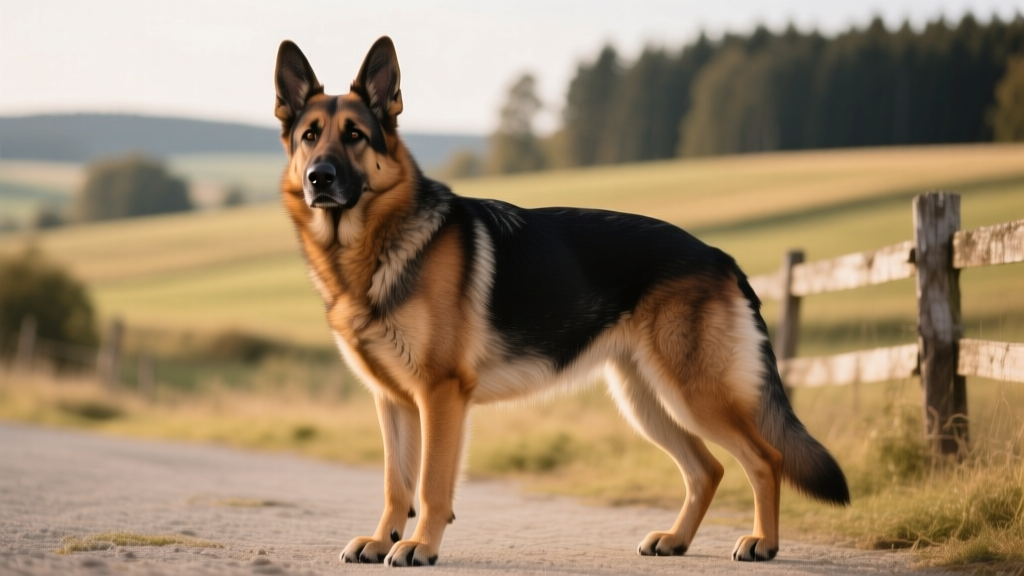
You've brought home a striking male German Shepherd — or you're about to — and now comes a decision that feels surprisingly weighty: what do you name him? For a breed with such deep German heritage, choosing an authentic German name isn't just a nod to his lineage; it's a name that carries the strength, discipline, and nobility the breed is known for. This guide gives you over 75 handpicked German names for your male German Shepherd, organized by meaning and personality type, alongside a full breed profile so you know exactly what to expect from life with a GSD.
75+ German Names for Male German Shepherds
German names often carry strong, descriptive meanings rooted in nature, battle, nobility, and loyalty — traits that mirror the German Shepherd's character perfectly. Below, names are grouped by the personality or impression they evoke, so you can match the name to your dog's emerging temperament.
Strong & Commanding Names
| Name | Pronunciation | Meaning |
|---|---|---|
| Adler | AHD-ler | Eagle |
| Alaric | AH-lah-rik | Ruler of all |
| Bruno | BROO-noh | Brown bear |
| Donner | DOH-ner | Thunder |
| Eberhard | AY-ber-hart | Strong as a wild boar |
| Falko | FAHL-koh | Falcon |
| Gunther | GOON-ter | Battle warrior |
| Heinrich | HINE-rikh | Ruler of the home |
| Kaiser | KYE-zer | Emperor |
| Konrad | KOHN-raht | Bold counselor |
| Ludwig | LOOD-vig | Famous warrior |
| Magnus | MAHG-noos | Great one |
| Ragnar | RAHG-nar | Warrior of judgment |
| Siegfried | ZEEK-freet | Victorious peace |
| Wolfgang | VOOLF-gahng | Wolf path / traveling wolf |
Noble & Regal Names
| Name | Pronunciation | Meaning |
|---|---|---|
| Baron | BAH-ron | Nobleman |
| Dietrich | DEE-trikh | Ruler of the people |
| Edel | AY-del | Noble |
| Friedrich | FREE-drikh | Peaceful ruler |
| Gerhard | GAYR-hart | Brave spear |
| Hermann | HAIR-mahn | Soldier / army man |
| Karl | KAHRL | Free man |
| Leopold | LAY-oh-pold | Bold leader |
| Otto | OHT-toh | Wealthy / prosperous |
| Reinhard | RYNE-hart | Brave counsel |
| Rudolf | ROO-dolf | Famous wolf |
| Sigmund | ZEEK-moont | Victorious protector |
| Werner | VAIR-ner | Defending army |
| Wilhelm | VIL-helm | Resolute protector |
Nature & Working-Dog Names
| Name | Pronunciation | Meaning |
|---|---|---|
| Bär | BAIR | Bear |
| Blitz | BLITS | Lightning |
| Dachs | DAHKS | Badger |
| Eiche | AY-kheh | Oak tree |
| Fuchs | FOOKS | Fox |
| Hirsch | HEERSH | Stag / deer |
| Jäger | YAY-ger | Hunter |
| Kliff | KLIF | Cliff |
| Sturm | SHTOORM | Storm |
| Wald | VAHLT | Forest |
| Wolf | VOOLF | Wolf |
| Zahn | TSAHN | Tooth / fang |
Loyal & Protective Names
| Name | Pronunciation | Meaning |
|---|---|---|
| Baldur | BAHL-door | Brave / bold |
| Eckhart | EK-hart | Brave edge / sword |
| Frido | FREE-doh | Peaceful guardian |
| Hartmut | HART-moot | Brave spirit |
| Helmut | HEL-moot | Helmet / protector |
| Riko | REE-koh | Powerful ruler |
| Schäfer | SHEH-fer | Shepherd |
| Treu | TROY | Faithful / loyal |
| Wächter | VEHK-ter | Guardian / watchman |
| Waldo | VAHL-doh | Powerful ruler |
Playful & Everyday Names
| Name | Pronunciation | Meaning |
|---|---|---|
| Bello | BEL-loh | Classic German dog name ("beautiful") |
| Brötchen | BROHT-khen | Little bread roll (affectionate) |
| Emil | AY-meel | Eager / industrious |
| Felix | FAY-liks | Lucky / happy |
| Gretel's Bruder | GRAY-tels BROO-der | Gretel's brother (whimsical) |
| Hans | HAHNS | God is gracious |
| Klaus | KLOWS | Victory of the people |
| Liebling | LEEB-ling | Darling / sweetheart |
| Max | MAHKS | Short for Maximilian — "greatest" |
| Mops | MOHPS | Pug / chubby cutie |
| Pfeil | PFY-le | Arrow |
| Rex | REKS | King (Latin, but iconic in Germany) |
| Schnucki | SHNOO-kee | Sweetie / cutie (diminutive) |
| Uli | OO-lee | Short for Ulrich — "noble ruler" |
| Volker | FOHL-ker | People's defender |
Breed Overview: The German Shepherd Dog
Before settling on a name, it helps to understand the full picture of the breed you're committing to for the next decade-plus. The German Shepherd Dog (GSD) — Deutscher Schäferhund in German — was developed in 1899 by Captain Max von Stephanitz, a German cavalry officer who wanted to create the ultimate herding and working dog. He purchased a dog named Horand von Grafrath at a show and registered him as the first GSD. Von Stephanitz founded the Verein für Deutsche Schäferhunde (SV), the breed's original registry, and established the standard that prioritized working ability over appearance.
Originally bred to herd sheep across rugged German terrain, the GSD quickly proved so versatile that by World War I, they were serving as Red Cross dogs, messengers, and search-and-rescue animals. The breed was officially recognized by the American Kennel Club (AKC) in 1908 and has remained consistently in the top 5 most popular breeds in the United States for decades.
| Size Class | Large |
| Male Weight | 65–90 lb (29–41 kg) |
| Male Height | 24–26 inches (61–66 cm) at the shoulder |
| Female Weight | 50–70 lb (23–32 kg) |
| Female Height | 22–24 inches (56–61 cm) at the shoulder |
| Lifespan | 9–13 years (median: 10.5 years) |
| Coat Type | Double coat — medium or long; dense undercoat |
| Color Variants | Black & tan, sable, all-black, black & red, bi-color, white (UKC-recognized) |
| Energy Level | High — 60–120 minutes of structured activity daily |
| Grooming Needs | Moderate to high — weekly brushing, daily during shedding season |
| Trainability | Exceptional — ranked #3 in Stanley Coren's The Intelligence of Dogs |
| Family Fit | Good with older children; supervision needed with toddlers; can coexist with other pets if socialized early |
| Apartment Suitability | Possible with dedicated exercise; better suited to homes with yard access |
Temperament & Personality: What Living With a Male GSD Is Really Like
Male German Shepherds tend to be slightly larger, more confident, and more territorial than females. Understanding these core traits will help you decide whether names like Kaiser or Wächter truly fit your dog's personality — or whether he's more of a Liebling.
1. Fiercely Loyal to Family (Not Generic "Loyalty")
A male GSD typically forms his strongest bond with one person, though he'll be devoted to the whole household. This isn't casual friendliness — it's a working-dog bond. He'll position himself between you and a stranger at the door, watch your kids play at the park with visible attentiveness, and often follow his primary person from room to room. This trait, called "velcro dog" behavior by GSD owners, means he doesn't do well with long periods of isolation. Expect 8+ hours alone daily to trigger destructive behavior or anxiety.
2. Confident and Aloof With Strangers
The AKC breed standard describes the GSD as having "a certain aloofness that does not lend itself to immediate and indiscriminate friendships." In practice, this means your male GSD will observe new people carefully before deciding they're safe. He won't typically greet strangers with a wagging tail like a Labrador. Proper socialization between 8–16 weeks is critical — without it, this natural wariness can harden into fear-based reactivity or aggression.
3. High Prey Drive and Herding Instinct
Bred to control livestock, male GSDs often try to "herd" running children, bicycles, or smaller pets by nipping at heels. This isn't aggression — it's instinct. Redirect this behavior through structured activities like agility, herding trials, or flirt pole sessions rather than punishing it.
4. Problem-Solving Intelligence
A bored male GSD will invent his own entertainment — opening doors, dismantling furniture, or figuring out latch mechanisms on gates. According to Merck Veterinary Manual, working breeds require mental stimulation equal in importance to physical exercise. Puzzle feeders, scent work, and obedience training sessions are non-negotiable for this breed.
5. Vocal and Expressive
GSDs are not excessive barkers without reason, but they are vocal dogs. Expect "talking" — grumbles, whines, and huffs — during play and when communicating needs. They'll bark to alert you to someone at the door, and a male's bark is deep and resonant, carrying significant deterrent value.
Physical Characteristics: Size, Build, and Coat
A mature male German Shepherd is a substantial, athletic dog. Per the AKC breed standard, males should stand 24–26 inches (61–66 cm) at the highest point of the shoulder blade and weigh 65–90 lb (29–41 kg). However, working-line GSDs from European bloodlines can sometimes exceed these ranges, reaching 95–100 lb (43–45 kg) while remaining lean and athletic.
The body is longer than tall, with a ratio of approximately 10:8.5. The breed's distinctive sloping topline (in show lines) has been controversial — working-line GSDs tend to have straighter backs, which many veterinarians believe reduces hip dysplasia risk.
Coat Types:
- Medium coat (Stockhaar): The most common — a dense, straight or slightly wavy outer coat 1–3 inches long with a thick undercoat. Water-resistant and low-maintenance relative to the long coat.
- Long coat (Langstockhaar): Outer coat exceeds 3 inches with feathering on ears, legs, and tail. More prone to matting and requires more frequent grooming.
Shedding Pattern: GSDs shed moderately year-round and experience two major "coat blows" annually (spring and fall) where the undercoat sheds in large clumps for 2–4 weeks. During these periods, daily brushing with an undercoat rake is essential.
Exercise & Activity: What a Male GSD Actually Needs
This is where many first-time GSD owners underestimate the commitment. "A walk around the block" will not suffice — an under-exercised male GSD is a destructive, anxious, and potentially reactive dog.
| Activity Type | Duration | Frequency | Examples |
|---|---|---|---|
| Structured Walking | 30–45 minutes | Twice daily | Leash walks with sniff breaks, varied routes |
| Off-Leash Running | 20–30 minutes | Daily (secure area) | Fenced yard time, dog parks (if well-socialized), hiking |
| Mental Stimulation | 15–30 minutes | Daily | Obedience training, puzzle toys, scent work, hide-and-seek |
| Working Activities | 30–60 minutes | 2–3x/week | Agility, Schutzhund/IGP, herding, tracking, dock diving |
| Socialization Outings | Variable | Weekly | New environments, people, surfaces, sounds |
Total daily minimum: 90–120 minutes of combined physical and mental activity.
Important puppy note: For GSD puppies under 18 months, forced exercise (long runs, repetitive jumping) should be limited to prevent joint damage. The general guideline is 5 minutes of structured exercise per month of age, twice daily. A 4-month-old puppy gets ~20-minute sessions. Free play on soft surfaces is fine in addition to this.
Health Issues: What Male German Shepherds Are Prone To
German Shepherds carry genetic predispositions to several serious conditions. Responsible breeders screen for these through OFA (Orthopedic Foundation for Animals) and genetic testing. Always ask for health clearances before purchasing a puppy.
| Condition | Prevalence in GSDs | Onset | Treatment Cost Range |
|---|---|---|---|
| Hip Dysplasia | ~19.8% (OFA data) | Signs often appear 4–12 months | $1,500–$7,000 (surgical) |
| Elbow Dysplasia | ~16.2% | 4–10 months | $1,500–$5,000 (surgical) |
| Degenerative Myelopathy (DM) | ~22% carry mutated gene | Usually 8+ years | $500–$2,000/year (management; no cure) |
| Gastric Dilatation-Volvulus (Bloat) | Higher risk than average (deep-chested breed) | Any age; most common 4–7 years | $3,000–$7,000 (emergency surgery) |
| Hemangiosarcoma | GSDs are overrepresented | Typically 8–12 years | $5,000–$12,000 (surgery + chemo) |
| Exocrine Pancreatic Insufficiency (EPI) | GSDs account for ~70% of EPI cases | 1–5 years | $100–$300/month (lifelong enzyme replacement) |
Degenerative Myelopathy (DM) deserves special attention: it's a progressive spinal cord disease that causes rear-limb weakness and eventual paralysis. There is no cure. A DNA test (available through the Merck Veterinary Manual's referenced labs) can determine if your dog carries the SOD1 mutation. Ask your breeder for clear parent results.
Bloat Prevention: Feed 2–3 smaller meals daily instead of one large meal. Avoid vigorous exercise for 60 minutes before and after eating. Discuss prophylactic gastropexy (stomach tacking) with your veterinarian, especially if you have a family history of bloat — this procedure can be done during neuter surgery.
Always consult your veterinarian for personalized health screening schedules and preventive care plans specific to your dog's age, lineage, and lifestyle.
Grooming Requirements
A male GSD's double coat requires consistent maintenance, but it's manageable with the right tools and schedule.
| Task | Frequency | Tools Needed |
|---|---|---|
| Brushing (maintenance) | 2–3 times/week | Slicker brush + metal comb |
| Undercoat raking | Weekly (daily during coat blow) | Undercoat rake or deshedding tool (e.g., Furminator Large Short Hair) |
| Bathing | Every 6–8 weeks (or as needed) | Oatmeal-based dog shampoo; avoid human products |
| Nail trimming | Every 2–3 weeks | Guillotine or scissor clippers; styptic powder on hand |
| Ear cleaning | Weekly check; clean monthly | Veterinary ear cleaner; cotton balls (never Q-tips) |
| Teeth brushing | Daily ideal; 3x/week minimum | Enzymatic dog toothpaste + finger brush |
Never shave a GSD. The double coat regulates temperature in both heat and cold. Shaving disrupts the coat's structure, can cause permanent alopecia, and removes UV and insect protection.
Training & Intelligence
The German Shepherd ranks #3 in working/obedience intelligence according to Stanley Coren's research, meaning most GSDs learn a new command in fewer than 5 repetitions and obey a known command on the first attempt 95% of the time or better. This makes them extraordinarily trainable — but also means they learn bad habits just as quickly.
Recommended training approach: Positive reinforcement and force-free methods exclusively. Use high-value treats (freeze-dried liver, chicken), toy rewards, and praise. GSDs are sensitive dogs despite their tough exterior — harsh corrections, prong collars, shock collars, and alpha rolls damage the trust bond and increase anxiety-based reactivity.
Training milestones for male GSDs:
- 8–16 weeks: Focus on socialization (100+ positive new experiences), name recognition, sit, down, recall foundation, bite inhibition
- 4–6 months: Leash manners, place/mat training, impulse control games, continued socialization
- 6–12 months: Advanced obedience, introduction to structured sports, proofing commands with distractions
- 12–24 months: Specialized training (therapy, sport, service work), reliability at distance, off-leash recall (if safe environment)
Budget $300–$800 for a structured puppy training program (6–8 weeks of group classes) or $80–$150 per session for private instruction. This investment prevents behavioral issues that cost thousands to remediate later.
Family Suitability: Kids, Pets, and Living Spaces
With Children: Well-socialized male GSDs are generally excellent with children in their own family — protective, patient, and watchful. However, their herding instinct may cause them to nip at running toddlers' heels, and their large size (80+ lb) means an accidental body-slam can knock over a small child. Best suited for families with children aged 8+ or families committed to active supervision and training both the dog and children on boundaries. Never leave any dog unsupervised with young children.
With Other Pets: Male GSDs can coexist peacefully with other dogs and even cats if introduced during the critical socialization window (8–16 weeks) or gradually as adults. Same-sex dog aggression can occur, particularly with intact males. Spaying/neutering reduces but doesn't eliminate this risk. Small pets (rabbits, hamsters) may trigger prey drive and should be kept securely separated.
Apartment Living: A male GSD can live in an apartment, but it requires commitment: two 45-minute walks daily, access to off-leash areas, and dedicated mental stimulation. Without this, the dog will develop nuisance barking and destructive behavior. A house with a securely fenced yard (minimum 6-foot fence — GSDs are capable jumpers) is the more practical setup.
Cost of Ownership: Buying and Maintaining a Male GSD
German Shepherds are a significant financial commitment. Here's a realistic breakdown for 2026:
| Expense Category | First Year | Annual (Ongoing) |
|---|---|---|
| Puppy Purchase (responsible breeder, health-tested parents) | $1,500–$4,000 | — |
| Adoption (rescue/shelter) | $200–$600 | — |
| Veterinary (vaccines, neuter, wellness, preventives) | $800–$1,500 | $600–$1,200 |
| Food (premium large-breed kibble, ~60 lb/month) | $600–$1,000 | $600–$1,000 |
| Training (group classes + private sessions) | $500–$1,500 | $200–$600 |
| Grooming Supplies & Professional Grooming | $150–$400 | $100–$300 |
| Insurance (comprehensive plan) | $600–$1,200 | $600–$1,200 |
| Supplies (crate, bed, leash, toys, puzzle feeders) | $300–$600 | $150–$300 |
| Total Estimated | $4,650–$10,800 | $2,250–$4,600 |
Pet insurance is strongly recommended for this breed. Given the prevalence of hip dysplasia, bloat, and hemangiosarcoma, a single emergency surgery can exceed $7,000. Look for plans with annual limits of $10,000+ and coverage for hereditary conditions. Companies like Trupanion, Healthy Paws, and Nationwide offer breed-appropriate plans.
Pros of Owning a Male GSD
- Exceptionally intelligent and trainable
- Deeply loyal and protective family guardian
- Versatile — excels in sports, service, therapy, and companionship
- Striking, athletic appearance
- Strong bond with primary handler
- Generally healthy with responsible breeding
Cons to Consider Honestly
- High exercise demands (90–120 min/day)
- Heavy shedding — fur on everything
- Prone to expensive health conditions (hips, bloat, DM)
- Requires experienced handling or committed training education
- Not ideal for long work-from-away hours alone
- Can develop reactivity without proper early socialization
Frequently Asked Questions
Is the German Shepherd a good breed for first-time dog owners?
A GSD can work for a first-time owner, but only if that person is committed to structured training classes, daily exercise, and educating themselves on canine behavior. The breed's intelligence, size, and sensitivity mean mistakes in training compound quickly. Many experienced trainers recommend starting with a more forgiving breed (Labrador, Golden Retriever) and working up to a GSD. That said, a first-time owner who invests in professional training and socializes thoroughly can absolutely succeed.
How much exercise does a male German Shepherd need every day?
Minimum 90–120 minutes of combined physical and mental activity daily. This should include two structured leash walks (30–45 minutes each), off-leash running time in a secure area, and at least 15–30 minutes of training or puzzle work. GSDs who don't receive adequate exercise develop behavioral problems including excessive barking, digging, chewing, and leash reactivity.
What health problems are German Shepherds most prone to?
The most significant breed-specific risks are hip dysplasia (~19.8% prevalence), elbow dysplasia (~16.2%), degenerative myelopathy (22% carrier rate), gastric dilatation-volvulus (bloat), hemangiosarcoma, and exocrine pancreatic insufficiency. Buy from breeders who provide OFA hip/elbow scores and DM DNA test results for both parents.
How big will my male German Shepherd get?
Adult males typically reach 65–90 lb (29–41 kg) and stand 24–26 inches (61–66 cm) at the shoulder. Most males reach their full height by 18 months but continue filling out in chest and muscle mass until 2.5–3 years of age. Working-line European bloodlines may be slightly larger.
Are German Shepherds good with children and other pets?
Well-socialized GSDs are protective and patient with children in their own family, best suited for homes with kids aged 8+. Their herding instinct may cause heel-nipping with running toddlers. With other dogs and cats, early socialization is key — same-sex aggression can occur between intact males. Small pets may trigger prey drive and need secure separation.
How much does it cost to buy and maintain a German Shepherd?
Expect $1,500–$4,000 for a puppy from a responsible breeder (or $200–$600 from rescue). First-year total costs run $4,650–$10,800 including purchase, veterinary care, food, training, and supplies. Ongoing annual costs range $2,250–$4,600. Pet insurance ($50–$100/month) is strongly recommended given the breed's predisposition to expensive conditions.
What's the best German name for a protective male German Shepherd?
Names that convey guardianship work beautifully: Wächter (guardian), Helmut (protector), Kaiser (emperor), or Gunther (battle warrior). Choose a two-syllable name with a hard consonant start — these are easiest for dogs to distinguish from background noise and respond to reliably during training.
Priya Sutaria
All our authors care for dogs every day — read more of their work on the authors page.


