Full Grown Great Dane: Size, Care, Health & What to Expect
Everything about a full grown Great Dane: adult size, weight, temperament, health risks, exercise needs, grooming, and real ownership costs explained.
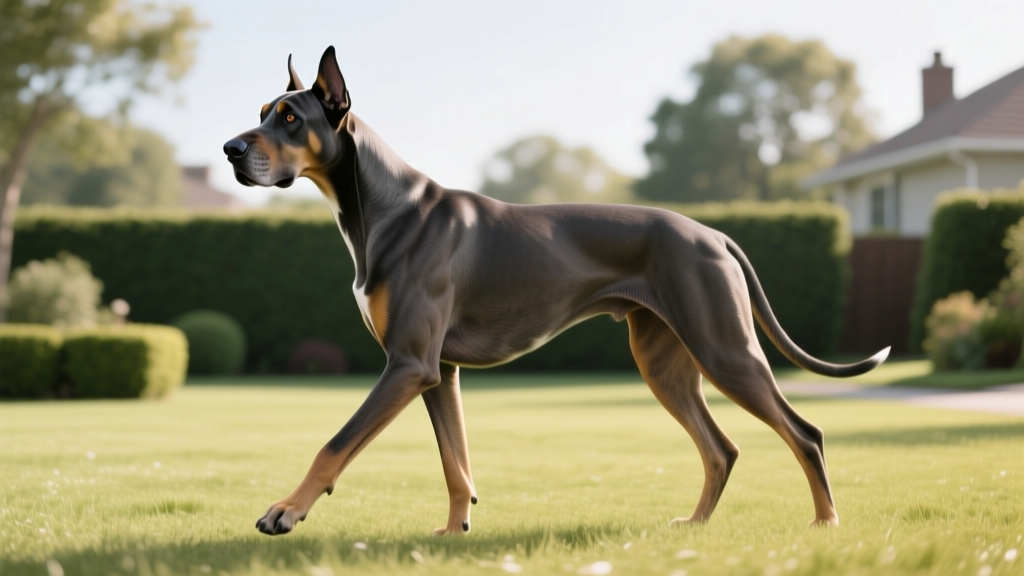
What to Expect From a Full Grown Great Dane
If you've ever stood next to a full grown Great Dane, you already know the headline: these dogs are enormous. But what surprises most first-time Dane owners isn't the height — it's the personality crammed into that towering frame. Great Danes are famously gentle, deeply attached to their people, and shockingly lazy for their size. They're the breed that will try to sit on your lap at 160 pounds.
The Great Dane originated in Germany, where they were bred as boarhounds (Deutsche Dogge) as early as the 16th century. German nobility used them to hunt wild boar — a job requiring speed, courage, and a powerful jaw. By the late 1800s, breeders had shifted focus from working ability to conformation and companionship, producing the tall, elegant, even-tempered dogs recognized by the American Kennel Club in 1887.
Today, the Great Dane sits firmly in the giant breed category. They carry one of the shortest lifespans in the canine world — typically 7 to 10 years — which makes understanding their health risks and care requirements essential before you commit.
| Attribute | Details |
|---|---|
| Size Class | Giant |
| Weight (Male) | 140–175 lb (64–79 kg) |
| Weight (Female) | 110–140 lb (50–64 kg) |
| Height (Male) | 30–32 in (76–81 cm) at shoulder |
| Height (Female) | 28–30 in (71–76 cm) at shoulder |
| Lifespan | 7–10 years |
| Coat Type | Short, smooth, single coat |
| Energy Level | Moderate (lower than expected for size) |
| Grooming | Low — weekly brushing |
| Family Fit | Excellent with children; good with other pets when socialized early |
How Big Does a Full Grown Great Dane Actually Get?
A full grown Great Dane male typically stands 30 to 32 inches (76–81 cm) at the shoulder and weighs between 140 and 175 pounds (64–79 kg). Females are slightly smaller at 28 to 30 inches (71–76 cm) and 110 to 140 pounds (50–64 kg). Some males exceed these ranges — it's not unusual to encounter a Dane pushing 200 lb (90 kg), though this often indicates overweight status rather than breed-standard size.
Growth timeline matters for giant breeds. Great Danes grow rapidly during their first 12 to 18 months but may not reach full skeletal maturity until 24 to 30 months of age. Their chest continues to broaden and muscle mass fills out through the second and even third year. This extended growth period is precisely why veterinarians recommend large-breed-specific puppy food (formulated to slow growth rate) and why strenuous exercise should be limited until growth plates close — usually around 18 to 24 months, confirmed by veterinary X-ray.
Size Reality Check: A full grown Great Dane standing on its hind legs can easily reach 5 to 6 feet tall — eye level with most adults. Plan your home accordingly: countertops, dining tables, and low shelves are all within tail-sweep range.
Temperament & Personality: The Gentle Giant Reputation
The Great Dane's temperament is one of the most predictable among giant breeds. Five core traits define the breed:
- People-oriented attachment: Danes form intense bonds with their primary caregivers. They follow owners room-to-room and are prone to separation anxiety if left alone for long stretches (more than 6–8 hours regularly). This isn't independence — it's devotion that requires management.
- Gentle with children: Well-socialized Danes show remarkable patience with kids, often tolerating ear tugs and clumsy handling that would provoke other breeds. That said, a 150-pound dog can accidentally knock over a toddler with a tail wag, so supervision is non-negotiable with young children.
- Low reactivity: Compared to similarly sized guardian breeds (Mastiffs, Rottweilers), Danes show lower territorial aggression and less suspicion of strangers. They typically greet visitors with curiosity rather than alarm.
- Moderate play drive: Danes enjoy short bursts of activity — a sprint across the yard, a game of chase — but they're not endurance athletes. Most are content with two moderate walks and then 18 hours of couch time.
- Sensitive disposition: Danes respond poorly to harsh corrections. Raised voices or physical punishment shut them down rather than motivate compliance. They read human emotional states acutely and will withdraw if the household atmosphere is tense.
What Owners Love
- Deeply affectionate and loyal
- Calm indoors — excellent house companions
- Minimal barking compared to most breeds
- Good with other dogs when properly socialized
- Easy grooming routine
- Intimidating size deters intruders without aggression
Common Challenges
- Very short lifespan (7–10 years)
- High food costs ($80–$150/month)
- Prone to bloat (GDV) — a life-threatening emergency
- Drooling, especially after eating and drinking
- Destructive as puppies if under-stimulated
- Difficult to physically manage if untrained (160 lb dog pulling on leash)
Exercise & Activity Requirements
Despite their size, adult Great Danes need a surprisingly manageable 30 to 60 minutes of exercise per day. This typically breaks down as:
- Two leash walks: 20–30 minutes each, moderate pace on flat terrain
- Free play: 10–15 minutes of off-leash running in a fenced yard, 2–3 times per week
- Mental stimulation: Puzzle feeders, scent games, or short training sessions (10–15 minutes) on non-walk days
Activity restrictions by age are critical for this breed:
| Age | Recommended Activity | Avoid |
|---|---|---|
| 8–16 weeks | 5 minutes of structured play per month of age, twice daily; short socialization walks on soft surfaces | Forced running, stairs, jumping on/off furniture |
| 4–12 months | 20–30 minutes of leash walking twice daily; free play in yard | Long-distance running, agility equipment, repetitive fetching on hard surfaces |
| 12–24 months | 30–45 minutes total daily exercise; can begin light hiking on soft trails | Running alongside bicycles, jumping from heights, intense agility |
| 2+ years (adult) | 45–60 minutes daily; hiking, swimming, and moderate jogging acceptable | Exercise in extreme heat (brachycephalic-adjacent heat sensitivity) |
| 7+ years (senior) | 20–30 minutes of gentle walking; adjust based on joint health | High-impact activity, long sessions without rest breaks |
Swimming is one of the best exercises for Danes at any life stage — it's zero-impact on joints while building cardiovascular fitness. If you have access to a dog-friendly pool or calm lake, introduce water early.
Health Issues in Full Grown Great Danes
Great Danes carry a heavier disease burden than most breeds, which directly contributes to their shortened lifespan. Every prospective owner should understand these conditions — and budget for them. Always consult your veterinarian about screening tests and preventive care specific to your dog.
| Condition | Description | Estimated Prevalence | Typical Treatment Cost |
|---|---|---|---|
| Gastric Dilatation-Volvulus (GDV / Bloat) | Stomach fills with gas and twists, cutting off blood supply. Life-threatening emergency requiring immediate surgery. | ~5.3% of Great Danes (highest of any breed) | $3,000–$7,000 emergency surgery |
| Dilated Cardiomyopathy (DCM) | Heart muscle weakens and enlarges, leading to congestive heart failure. Often diagnosed at 4–6 years. | Estimated 10–15% of Danes over age 5 | $500–$2,000 initial diagnostics; $150–$400/month ongoing medication |
| Hip Dysplasia | Malformation of the hip joint causing progressive arthritis and pain. | ~12% based on OFA data | $3,500–$7,000 per hip for total replacement |
| Wobbler Syndrome (Cervical Spondylomyelopathy) | Spinal cord compression in the neck causing unsteady gait, weakness, and potential paralysis. | Estimated 5–8% of the breed | $4,000–$8,000 for surgical stabilization |
| Osteosarcoma (Bone Cancer) | Aggressive bone tumor, most commonly in the limbs. Great Danes are among the most predisposed breeds. | Approximately 1 in 8 Danes over age 7 | $5,000–$10,000 (amputation + chemotherapy); prognosis typically 6–12 months post-treatment |
Bloat Prevention — A Critical Protocol: According to the Merck Veterinary Manual, Great Danes have the highest breed-specific risk for GDV. Reduce risk by: feeding 2–3 smaller meals per day instead of one large meal, using a slow-feeder bowl, avoiding exercise for 60 minutes before and after eating, and discussing prophylactic gastropexy (surgical tacking of the stomach) with your vet — especially if you're spaying/neutering, as it can be done during the same anesthesia event.
Additional conditions to screen for include hypothyroidism, autoimmune thyroiditis, and eye conditions such as entropion and ectropion. The Orthopedic Foundation for Animals (OFA) recommends that Great Dane breeders complete hip evaluations, cardiac exams, thyroid panels, and eye certifications before breeding.
Grooming & Maintenance
Great Danes are one of the lowest-maintenance breeds in terms of grooming, which partially offsets their high food and medical costs.
- Brushing: Once weekly with a rubber curry brush (such as a Kong ZoomGroom, ~$8–$12) or a medium-bristle brush. During seasonal shedding in spring and fall, increase to 2–3 times per week.
- Bathing: Every 6–8 weeks or as needed. Use a dog-specific oatmeal shampoo. Bathing a Dane requires a walk-in shower or a raised grooming tub — standard bathtubs are too small for most adults.
- Nail trimming: Every 2–3 weeks. Dane nails grow thick and can split if overgrown. A heavy-duty guillotine clipper or a Dremel 7300-PT pet nail grinder (~$30–$40) works best.
- Ear cleaning: Weekly inspection; clean with a veterinarian-recommended ear wash every 1–2 weeks. Dane ears are prone to yeast infections, especially in humid climates.
- Dental care: Daily brushing with enzymatic dog toothpaste or, at minimum, 3–4 times per week. Dental disease accelerates in giant breeds due to jaw structure.
Training & Intelligence
Great Danes are moderately intelligent and highly trainable when you work with their sensitive nature. They rank in the middle of the pack for working/obedience intelligence (Stanley Coren's classification places them around 48th out of 138 breeds), but this ranking underestimates their actual trainability in a positive environment.
Recommended methods: Positive reinforcement exclusively. Use high-value treats (small pieces of chicken, cheese, or commercial training treats like Zuke's Mini Naturals), verbal praise, and play rewards. Force-free, LIMA (Least Intrusive, Minimally Aversive) methods produce the best results. Shock collars, prong collars, and alpha rolls are counterproductive — Danes shut down under aversive pressure and can develop fear-based reactivity.
Priority training goals for Dane puppies:
- Loose-leash walking: This is non-negotiable. A 160-pound dog that pulls is unmanageable and dangerous. Start at 8 weeks. Use a front-clip harness (such as the Ruffwear Front Range, ~$40) to redirect pulling without neck pressure.
- Settle/mat training: Teach your Dane to go to a designated mat and lie calmly. This manages their size in public settings and around guests.
- Handling desensitization: Get your puppy comfortable with paw handling, ear inspection, and mouth opening early. Vet visits and grooming become exponentially harder if a full grown Great Dane resists handling.
- Recall: Reliable recall is essential for safety. Practice in low-distraction environments and build up gradually.
Family Suitability & Living Arrangements
With children: Great Danes are among the best breeds for families with kids, provided children are taught to respect the dog's space and the dog is socialized early. Their low reactivity and high patience make them forgiving of the noise and unpredictability that children bring. However, toddlers and Danes should always be supervised — an accidental body-check from a 150-pound dog can cause real injury.
With other pets: Danes generally coexist well with other dogs and even cats when introduced properly and socialized from puppyhood. Same-sex aggression can occur in intact males, so spaying/neutering reduces this risk. Their prey drive is typically low compared to sighthounds or terriers.
Apartment living: Surprisingly viable. Despite their size, Danes are low-energy indoors and spend most of their time lying down. A ground-floor apartment with nearby park access can work if you commit to the daily 30–60 minutes of outdoor exercise. The challenge is logistical: stairways, narrow hallways, and small doorways are physically difficult for a dog this size, especially as they age and develop joint issues.
Cost of Ownership: What a Full Grown Great Dane Really Costs
Great Danes are expensive dogs to maintain. Budget realistically before committing.
| Expense Category | Estimated Cost Range |
|---|---|
| Puppy from a responsible breeder (health-tested parents, OFA certifications) | $1,500–$3,500 |
| Adoption from breed rescue | $300–$600 |
| Food (premium large-breed kibble, ~60–80 lb/month) | $80–$150/month ($960–$1,800/year) |
| Routine veterinary care (annual exams, vaccines, heartworm, flea/tick prevention) | $600–$1,200/year |
| Preventive gastropexy (optional but recommended) | $300–$800 if combined with spay/neuter |
| Pet insurance (comprehensive plan) | $60–$120/month ($720–$1,440/year) |
| Supplies (XL crate, raised feeder, orthopedic bed, harness, toys) | $400–$800 initial setup |
| Emergency medical fund recommendation | $5,000–$10,000 accessible savings |
First-year total estimate: $4,500–$8,500 (including puppy purchase). Ongoing annual cost: $2,500–$4,500, excluding major emergencies.
According to the AVMA, giant breed ownership costs consistently rank among the highest of any size category, driven primarily by food volume, medication dosages (priced by weight), and emergency surgery costs that scale with patient size.
Frequently Asked Questions
Is a Great Dane right for first-time dog owners?
Yes, with caveats. Great Danes are forgiving of handler mistakes due to their low reactivity and eagerness to please. However, first-time owners must commit to early obedience training (ideally with a certified positive-reinforcement trainer), understand the financial commitment, and be physically capable of managing a 150-pound dog on a leash. If you've never owned a dog, consider enrolling in puppy classes before bringing your Dane home.
How much exercise does a full grown Great Dane need daily?
An adult Great Dane needs 30 to 60 minutes of exercise daily, typically split into two leash walks of 20–30 minutes each with occasional off-leash play sessions. They are not endurance athletes and should not be used as running partners for long distances, especially in warm weather.
What health problems are Great Danes most prone to?
The most critical health risks are gastric dilatation-volvulus (bloat), dilated cardiomyopathy, hip dysplasia, Wobbler syndrome, and osteosarcoma. Bloat is the most immediately life-threatening — know the signs (distended abdomen, unproductive retching, restlessness) and identify your nearest emergency veterinary hospital before an incident occurs.
How big does a full grown Great Dane get?
Adult males typically reach 30–32 inches at the shoulder and weigh 140–175 pounds. Females reach 28–30 inches and weigh 110–140 pounds. Full physical maturity, including chest broadening and muscle development, may take 24 to 30 months.
Are Great Danes good with children and other pets?
Yes. Great Danes are patient, gentle, and low-reactive with children when properly socialized. They generally get along well with other dogs and cats. Always supervise interactions between any large dog and small children, and teach children to respect the dog's resting space.
How much does it cost to buy and maintain a Great Dane?
Expect to pay $1,500–$3,500 for a puppy from a responsible breeder, or $300–$600 through a breed rescue. Annual maintenance costs range from $2,500 to $4,500, covering food, routine veterinary care, insurance, and supplies. Emergency veterinary bills for conditions like bloat can exceed $7,000, making pet insurance or a dedicated emergency fund essential.
Dr. Hannah Wickes
All our authors care for dogs every day — read more of their work on the authors page.


