Different Breeds of German Shepherd Dogs: Complete 2026...
Explore the different breeds of German Shepherd dogs — from West Show to DDR working lines. Compare traits, health, costs, and find your ideal GSD type.
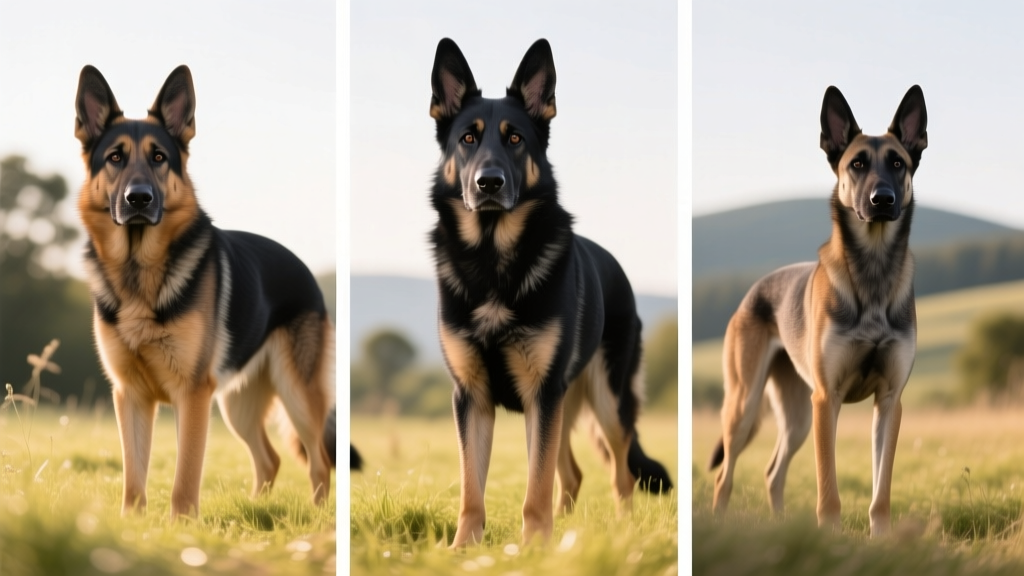
If you've ever searched for "German Shepherd" and ended up bewildered by terms like Czech working line, West German show line, or White Swiss Shepherd, you're not alone. The German Shepherd Dog (GSD) isn't a single, uniform breed in practice — it's a family of distinct bloodlines and closely related breeds that share common ancestry but differ significantly in temperament, structure, health, and purpose.
Understanding the different breeds of German Shepherd dogs — meaning the recognized GSD lines plus spin-off breeds like the Shiloh Shepherd and White Swiss Shepherd — is essential before you commit to a puppy. A Czech patrol-line GSD and an American show-line GSD may look similar to a casual observer, but their daily needs, trainability, and health profiles can be worlds apart.
This guide breaks down each major type with specific data on size, temperament, exercise needs, health risks, and ownership costs so you can make an informed decision.
German Shepherd Breed Overview & Origin
The German Shepherd Dog was developed in Germany in 1899 by Captain Max von Stephanitz, who founded the Verein für Deutsche Schäferhunde (SV) to standardize the herding dogs of rural Germany into a versatile working breed. The foundation sire, Horand von Grafrath, established the genetic template that all modern GSD lines trace back to.
Over the past 127 years, selective breeding in different countries and for different purposes has produced distinct lines. Some prioritize conformation and appearance (show lines), while others select for drive, nerve stability, and working ability (working lines). A few have diverged enough to become separate recognized breeds entirely.
The GSD is classified as a large breed in the Herding Group by the American Kennel Club (AKC). Below is a consolidated snapshot of the standard GSD, followed by detailed breakdowns of each line.
| Attribute | Detail |
|---|---|
| Weight (Male) | 65–90 lb / 29–41 kg |
| Weight (Female) | 50–70 lb / 23–32 kg |
| Height (Male) | 24–26 in / 61–66 cm |
| Height (Female) | 22–24 in / 56–61 cm |
| Lifespan | 9–13 years (varies by line) |
| Size Class | Large |
| Coat Type | Double coat, medium or long; colors include black/tan, sable, solid black, bi-color |
| Energy Level | High to very high (line-dependent) |
| Grooming | Moderate to high — weekly brushing, heavy seasonal shedding |
| AKC Group | Herding |
The Major German Shepherd Lines Explained
When people talk about the "different breeds of German Shepherd dogs," they're usually referring to one of two categories: bloodline variations within the GSD breed, or derivative breeds that split off from GSD ancestry. Here are the most important ones to know.
1. West German Show Line (High Line)
Bred primarily for conformation to the SV breed standard, these dogs have the classic sloped topline and rich black-and-red saddle coloring. They tend to be calmer than working lines, making them more suitable as family companions. However, the exaggerated rear angulation in some show lines has drawn criticism for contributing to hip and joint problems. Expect a drive level that's moderate — they'll enjoy obedience and agility but won't demand 4 hours of intense work daily.
2. West German Working Line
These dogs are selected for performance in Schutzhund (IGP), police work, and protection sports. They're typically sable or bi-colored, with a straighter topline and more athletic build than show lines. Drive levels are high to extreme — they need structured jobs, not just walks. Not recommended for first-time owners or sedentary households.
3. East German / DDR Working Line (Czech Line)
Developed behind the Iron Curtain in the former German Democratic Republic, DDR lines were bred for border patrol and military work under strict government-controlled breeding programs. After reunification, Czech breeders continued these programs. These dogs are known for dark sable or solid black coats, exceptional nerve stability, strong prey drive, and a more compact, powerful build. They excel in detection work, personal protection, and advanced obedience. They require experienced handlers and significant daily mental and physical stimulation.
4. American Show Line
American-bred GSDs selected for AKC conformation shows often have more extreme rear angulation and a narrower head than European lines. They tend to be taller and lighter-boned. Temperament can vary widely because the American show ring has historically weighted structure more heavily than working temperament. Some individuals are quite soft and sensitive; others can be reactive if not well-socialized.
5. White Swiss Shepherd (Berger Blanc Suisse)
Recognized by the FCI as a separate breed since 2011, the White Swiss Shepherd descends from white-coated GSDs that were excluded from the German breed standard. They're generally softer in temperament, less driven, and slightly lighter in build (males 66–88 lb / 30–40 kg). They're popular in Europe as family and therapy dogs. The AKC does not recognize them as a separate breed — in the US, white GSDs are shown within the GSD breed but disqualified from conformation.
6. Shiloh Shepherd
Developed in the United States starting in the 1970s by Tina Barber, the Shiloh Shepherd was created by crossing GSDs with Alaskan Malamutes and other large breeds to produce a larger, gentler, healthier dog. Males can reach 120–140 lb / 54–64 kg and stand 28–30 inches tall. They're recognized by the International Shiloh Shepherd Registry (ISSR) but not by the AKC. Their temperament is notably calmer and more family-oriented than a working-line GSD.
7. King Shepherd
A designer breed created in the 1990s by crossing GSDs with Shiloh Shepherds, Great Pyrenees, and Alaskan Malamutes. Males weigh 90–150 lb / 41–68 kg. They're bred for size and companionship rather than working ability. Health data is limited due to the small gene pool.
Pros of GSD Lines (General)
- Exceptional intelligence — ranked #3 in Stanley Coren's canine intelligence rankings
- Versatile: excel in obedience, agility, scent work, protection, therapy, and service work
- Deep loyalty and bonding with family
- Wide range of energy levels available across lines to match different lifestyles
- Strong trainability with positive reinforcement methods
Cons of GSD Lines (General)
- Heavy shedding — nicknamed "German Shedders" for a reason
- High prevalence of hip and elbow dysplasia across all lines
- Working lines can be overwhelming for unprepared owners
- Prone to separation anxiety if under-stimulated or left alone excessively
- Potential for reactivity without proper early socialization (critical window: 3–14 weeks)
Temperament & Personality Across Lines
While all GSDs share core traits — intelligence, loyalty, protectiveness, and a strong work ethic — temperament varies significantly by line:
- Confidence & Nerve Stability: DDR/Czech working lines are bred for unflappable nerves under pressure. A well-bred Czech-line GSD will assess a threat calmly rather than reacting with fear-based aggression. American show lines can be more sensitive and may shut down under harsh training methods.
- Prey Drive: Working lines (especially West German and Czech) have intense prey drive — they'll chase squirrels, bikes, and joggers with focus. This makes recall training critical. Show lines tend to have moderate prey drive.
- Handler Focus: GSDs are famously "one-person dogs" in that they form an intense working bond with their primary handler. They're typically polite but aloof with strangers — not naturally gregarious like a Golden Retriever.
- Protective Instinct: All GSD lines have a genetic predisposition to guard their home and family. This is territorial alertness, not aggression — a well-socialized GSD will bark at a stranger at the door but settle once the owner signals all is well.
- Energy & Drive: Working lines need 90–120+ minutes of structured activity daily. Show lines are often satisfied with 60–90 minutes. Shiloh Shepherds and King Shepherds may be content with 45–60 minutes of moderate exercise.
Exercise & Activity Requirements by Line
Vague advice like "GSDs need lots of exercise" doesn't help you plan your day. Here are specific daily activity targets:
| GSD Line | Min. Daily Exercise | Activity Types | Mental Stimulation |
|---|---|---|---|
| West German Show | 60–90 minutes | Brisk walks, fetch, swimming, hiking | 30 min obedience/puzzle toys |
| West German Working | 90–120+ minutes | Running, bikejoring, IGP training, agility | 60+ min structured training/scent work |
| DDR / Czech Working | 90–120+ minutes | Patrol-style work, tracking, endurance running, tug | 60+ min detection/protection training |
| American Show | 60–90 minutes | Walks, gentle jogging, rally obedience | 30 min trick training/puzzles |
| White Swiss Shepherd | 45–75 minutes | Hiking, swimming, herding balls, therapy visits | 30 min gentle training/puzzles |
| Shiloh Shepherd | 45–60 minutes | Leisurely walks, swimming, cart pulling | 20–30 min basic obedience/puzzles |
| King Shepherd | 45–60 minutes | Walks, light hiking, yard play | 20 min basic training/food puzzles |
Important: Puppies of all GSD lines should avoid forced exercise (running on-leash, jogging alongside bikes) until growth plates close — typically 18–24 months for large breeds. Free play and short, structured sessions are safer for developing joints. Consult your veterinarian for a puppy-specific exercise plan.
Common Health Issues Across GSD Types
The German Shepherd is predisposed to several serious hereditary conditions. Prevalence varies by line, with working lines generally having lower rates of structural issues due to stricter breeding criteria (e.g., SV requires hip certification before breeding). The Merck Veterinary Manual identifies hip dysplasia as one of the most common orthopedic conditions in large breeds.
| Condition | Description | Estimated Prevalence | Lines Most Affected |
|---|---|---|---|
| Hip Dysplasia | Malformation of the hip joint causing arthritis and pain | ~19% (OFA data) | American show lines highest; working lines lower |
| Elbow Dysplasia | Developmental abnormality of the elbow joint | ~15–20% | All lines; heavier-built lines at greater risk |
| Degenerative Myelopathy (DM) | Progressive spinal cord disease leading to hind limb paralysis | ~10–15% carriers | All lines; genetic test available (SOD1 mutation) |
| Gastric Dilatation-Volvulus (Bloat) | Life-threatening stomach torsion; emergency surgery required | ~5–8% lifetime risk | All large, deep-chested GSD types |
| Hemangiosarcoma | Aggressive cancer of blood vessel lining, often in spleen/heart | GSDs 2.7× higher risk than average | All lines |
| Exocrine Pancreatic Insufficiency (EPI) | Pancreas fails to produce digestive enzymes | ~1–2% | Higher in German-bred lines |
| Pannus (Chronic Superficial Keratitis) | Autoimmune eye disease causing corneal scarring | Breed-predisposed | All lines; UV exposure worsens |
- Unproductive retching, distended abdomen, restlessness (bloat/GDV — survival drops every hour)
- Sudden hind limb weakness or dragging (possible DM or IVDD)
- Acute lameness with reluctance to rise (possible hip/elbow subluxation)
- Unexplained bleeding, pale gums, collapse (possible hemangiosarcoma rupture)
Health testing you should demand from any breeder: OFA or PennHIP hip certification, OFA elbow certification, DM genetic test (SOD1), cardiac evaluation, and ophthalmologist exam. Responsible breeders will provide documentation for both parents. Always consult your veterinarian to develop a preventive care plan tailored to your dog's specific line and risk factors.
Grooming, Training & Family Suitability
Grooming Requirements
All GSD types have a double coat — a dense, harsh outer coat over a soft undercoat. Shedding is year-round with two major "blow-out" periods in spring and fall.
- Brushing: 3–4 times per week with an undercoat rake (e.g., Furminator or Greyhound Comb) during shedding season; 1–2 times weekly off-season
- Bathing: Every 6–8 weeks or as needed; over-bathing strips coat oils
- Nail trims: Every 3–4 weeks
- Ear cleaning: Weekly check; clean with vet-approved ear solution as needed — GSDs' erect ears are prone to debris buildup but less infection-prone than floppy ears
- Never shave a GSD: The double coat provides insulation against both heat and cold. Shaving disrupts the coat's thermoregulation and may cause permanent coat damage.
Training & Intelligence
The GSD ranks #3 in working/obedience intelligence according to canine psychologist Stanley Coren's research, meaning they can learn a new command in fewer than 5 repetitions and obey on first command 95% of the time or better.
Recommended training approach: Positive reinforcement (food rewards, toy rewards, play) with clear, consistent boundaries. Force-free methods build confidence and strengthen the handler bond. Working lines respond exceptionally well to marker-based training (clicker or verbal marker) and can handle high repetition. Show lines and softer-tempered types (White Swiss, Shiloh) may shut down with excessive pressure — keep sessions short (10–15 minutes) and end on a success.
Early socialization is non-negotiable. The critical socialization window closes around 14 weeks of age. Expose your GSD puppy to diverse people, surfaces, sounds, and environments during this period to prevent fear-based reactivity later. Enroll in a well-run puppy kindergarten class that uses positive reinforcement methods.
Never use shock collars, prong collars, or alpha rolls with a GSD. These methods can trigger defensive aggression in a dog that's genetically wired to respond to threats — the exact opposite of the confident, stable companion you want.
Family Suitability
- Children: Well-socialized GSDs are generally excellent with children in their own family — patient, watchful, and protective. However, their herding instinct may cause them to "herd" running children by nipping at heels. Teach children to respect the dog's space, especially during eating and sleeping. Always supervise interactions between dogs and young children.
- Other Pets: GSDs raised with other pets typically coexist well. Same-sex dog aggression can occur, particularly in working lines. Cat compatibility depends on individual prey drive — a working-line GSD with high prey drive may never be trustworthy with cats, while a show-line or Shiloh Shepherd may live peacefully with feline housemates.
- Apartment Living: Not ideal for most GSD types. Working lines and high-drive show lines need space to move and will become frustrated in small apartments without extraordinary daily exercise commitments. A Shiloh Shepherd or lower-drive American show line can adapt to apartment life if given 60+ minutes of vigorous daily exercise, but a house with a securely fenced yard is strongly preferred.
Cost of Ownership: What to Budget
The cost of acquiring and maintaining a GSD varies dramatically by line, breeder reputation, and your location. Here's a realistic breakdown based on 2026 market data:
| GSD Type | Puppy Price Range | First-Year Total Cost | Annual Cost (Years 2+) |
|---|---|---|---|
| West German Show Line | $2,000–$3,500 | $4,500–$6,500 | $2,000–$3,500 |
| West German Working Line | $2,500–$5,000 | $5,000–$8,000 | $2,500–$4,000 |
| DDR / Czech Working Line | $2,500–$4,500 | $5,000–$7,500 | $2,500–$4,000 |
| American Show Line | $1,500–$3,000 | $3,500–$5,500 | $1,800–$3,000 |
| White Swiss Shepherd | $2,500–$4,000 | $4,500–$6,500 | $2,000–$3,200 |
| Shiloh Shepherd | $2,000–$3,500 | $4,500–$7,000 | $2,200–$3,800 |
| King Shepherd | $1,500–$3,000 | $4,000–$6,500 | $2,000–$3,500 |
Annual cost breakdown (typical adult GSD):
- High-quality kibble (AAFCO complete-and-balanced, large-breed formula): $600–$1,000/year
- Preventive medications (heartworm, flea/tick — e.g., Simparica Trio, NexGard): $250–$450/year
- Annual veterinary exams, vaccines, bloodwork: $300–$600/year
- Pet insurance (recommended for this breed): $600–$1,200/year (varies by deductible and coverage)
- Training classes / sport memberships: $300–$1,500/year
- Grooming supplies and professional grooming: $150–$400/year
- Emergency fund (recommended): $1,000–$3,000 set aside for unexpected vet visits
Working-line owners should also budget for sport-specific equipment (bite sleeves, tracking harnesses, agility equipment) and titration trial fees ($50–$150 per event).
Which GSD Type Is Right for You?
Here's a decision framework to match your lifestyle to the right line:
- If you're a first-time dog owner → Consider a West German show line, American show line, or White Swiss Shepherd. Avoid working lines until you've gained handling experience.
- If you want a family companion with moderate energy → Shiloh Shepherd, White Swiss Shepherd, or a lower-drive American show line are your best matches.
- If you're interested in dog sports (IGP, agility, obedience trials) → West German working line or a sport-bred Czech line will give you the drive and trainability you need.
- If you need a personal protection or detection dog → Czech/DDR working line with proven titled parents. Work with a professional trainer experienced in protection sports.
- If you live in an apartment → This is a challenging fit for most GSD types. A Shiloh Shepherd or calm show-line individual with a committed daily exercise plan is your best option.
- If you have young children and other pets → Prioritize temperament-tested parents. Shiloh Shepherds and well-bred show lines tend to have softer, more adaptable temperaments for busy family environments.
Regardless of line, always purchase from a breeder who health-tests both parents, raises puppies with early neurological stimulation (ENS) protocols, and offers a take-back clause. Adoption through GSD-specific rescues like ASPCA-affiliated shelters or breed rescues is also a wonderful option — many adult GSDs in rescue are surrendered due to owner lifestyle changes, not behavioral problems.
Frequently Asked Questions
Is the German Shepherd right for first-time owners?
It depends heavily on the line. Show-line GSDs (especially American and West German show) and derivative breeds like the Shiloh Shepherd can work for committed first-time owners who invest in professional training classes and prioritize socialization. Working lines (Czech, DDR, West German working) are generally not recommended for novices — their intensity, drive, and sensitivity to inconsistent handling can overwhelm inexperienced owners.
How much exercise does a German Shepherd need daily?
Between 60 and 120+ minutes per day, depending on the line. Working lines need 90–120+ minutes of vigorous, structured activity plus mental stimulation. Show lines and derivative breeds (Shiloh, King Shepherd) are typically satisfied with 45–90 minutes. All GSDs benefit from activities that engage both body and mind — hiking, swimming, nose work, and structured training sessions are better than repetitive ball-throwing alone.
What health problems are German Shepherds prone to?
The most significant breed-specific conditions are hip dysplasia (~19% prevalence per OFA), elbow dysplasia (15–20%), degenerative myelopathy (10–15% carrier rate), bloat/GDV (5–8% lifetime risk), hemangiosarcoma (GSDs are 2.7× more susceptible than the average breed), and exocrine pancreatic insufficiency. Reputable breeders screen for these conditions; always ask for health certificates before purchasing a puppy.
How big does a German Shepherd get?
Standard GSD males weigh 65–90 lb (29–41 kg) and stand 24–26 inches (61–66 cm) at the shoulder. Females weigh 50–70 lb (23–32 kg) and stand 22–24 inches (56–61 cm). Derivative breeds are larger: Shiloh Shepherd males can reach 120–140 lb (54–64 kg) and King Shepherd males up to 150 lb (68 kg).
Are German Shepherds good with children and other pets?
Well-bred, well-socialized GSDs are typically excellent with children in their own family — watchful, patient, and naturally protective. They may try to herd running children by nipping at heels, which requires redirection. With other dogs, same-sex aggression can occur, especially in working lines. Cat compatibility is individual and depends on prey drive. Early socialization (before 14 weeks) is the single most important factor in shaping a GSD's comfort around children, other animals, and novel situations.
How much does a German Shepherd cost to buy and maintain?
Puppy prices range from $1,500 to $5,000 depending on the line and breeder reputation. First-year costs (including puppy price, veterinary care, food, training, supplies, and preventive medications) typically total $3,500–$8,000. Ongoing annual costs for an adult GSD range from $1,800 to $4,000 per year. Pet insurance is strongly recommended given the breed's predisposition to expensive orthopedic and oncological conditions — expect to pay $600–$1,200/year for a comprehensive policy.
What's the difference between a Belgian Malinois and a German Shepherd?
While both are herding-group working dogs, the Belgian Malinois is smaller (40–80 lb / 18–36 kg), faster-maturing, and typically higher-drive than even a working-line GSD. Malinois are often described as "more intense" — they have a faster "off-switch" deficit and require even more structured activity. They're not a substitute for a GSD if you're looking for a calmer family dog.
Tom Renshaw
All our authors care for dogs every day — read more of their work on the authors page.


