Corgi Dachshund Mix Puppies: The Dorgi Breed Guide for
Everything about Corgi Dachshund mix puppies (Dorgis): size, temperament, health risks, coat types, cost, and whether this designer breed fits your family.
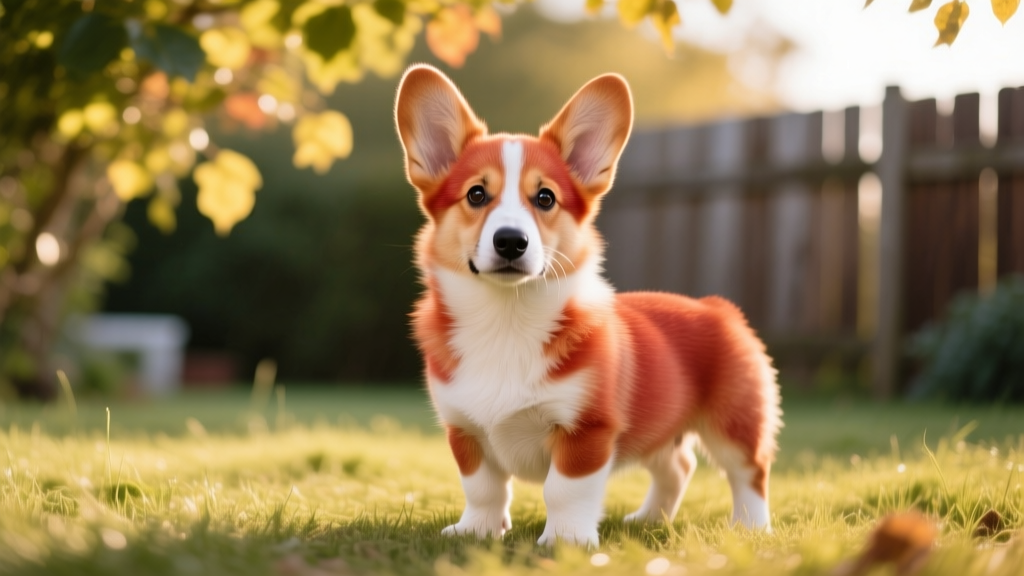
If you've been searching for Corgi Dachshund mix puppies, you've likely encountered the "Dorgi" — a compact, long-bodied designer cross between the Pembroke Welsh Corgi and the Dachshund. These low-slung dogs have surged in popularity thanks to their expressive faces and portable size. But before you commit to bringing one home, you need a clear picture of what this mix actually involves: the trait variability, the real health risks from both parent breeds, and the practical costs of ownership.
I've worked with dozens of Dorgi owners through puppy consultations and behavioral follow-ups, and the most common regret I hear is: "I didn't realize how much variation there'd be." This guide breaks down everything you need to know — with specifics, not generalizations.
Parent Breed Breakdown: Pembroke Welsh Corgi Meets Dachshund
Understanding a Dorgi starts with understanding its two parent breeds. Both are herding/hunting dogs with strong opinions and surprising stamina for their size.
| Trait | Pembroke Welsh Corgi | Dachshund (Standard) |
|---|---|---|
| AKC Group | Herding | Hound |
| Weight Range | 25–30 lb / 11–14 kg | 16–32 lb / 7–15 kg |
| Height at Shoulder | 10–12 in / 25–30 cm | 8–9 in / 20–23 cm |
| Coat Types | Medium-length double coat | Smooth, longhaired, or wirehaired |
| Original Purpose | Cattle herding (low stature to dodge kicks) | Badger/burrowing animal hunting |
| Energy Level | High — needs 45–60 min daily activity | Moderate — 30–45 min daily |
| Vocalization | Frequent barker, alert-driven | Deep bark for size, prone to barking |
| Lifespan | 12–13 years | 12–16 years |
The Corgi contributes herding instinct, a denser double coat, and a tendency to nip at heels. The Dachshund contributes prey drive, digging behavior, and the characteristic long-spine structure. When these combine, you get a dog that wants to chase small animals and round up children — often in the same afternoon.
How Big Will a Corgi Dachshund Mix Get?
This is where variability hits hard. Even within a single litter, Dorgi puppies can differ by 5–8 lb at maturity depending on which parent's size genes dominate and whether the Dachshund parent is standard or miniature.
| Size Category | Weight (lb / kg) | Height at Shoulder (in / cm) | Typical When |
|---|---|---|---|
| Small end | 15–20 lb / 7–9 kg | 8–10 in / 20–25 cm | Miniature Dachshund parent + smaller Corgi genes |
| Average range | 20–28 lb / 9–13 kg | 9–12 in / 23–30 cm | Standard Dachshund parent, balanced inheritance |
| Large end | 28–35 lb / 13–16 kg | 11–13 in / 28–33 cm | Corgi-dominant inheritance, larger-framed parents |
Key rule: Ask the breeder for the exact weight and height of both parents. A Dorgi from a 12 lb miniature Dachshund and a 25 lb Corgi will be substantially smaller than one from a 30 lb standard Dachshund and a 30 lb Corgi. There's no single "Dorgi size" — only probabilities.
Most Dorgis reach their full height by 10–12 months but continue filling out in chest and muscle until 14–18 months.
Coat Types, Shedding, and the Hypoallergenic Myth
Let me be direct: no Dorgi is hypoallergenic. Neither parent breed is low-shedding, and this mix inherits moderate to heavy shedding from both sides.
The coat your Dorgi puppy develops depends on which Dachshund coat variant is in play:
- Smooth-coated Dorgi: Short, dense fur similar to a smooth Dachshund. Sheds consistently year-round. Easiest to groom — a weekly rubber curry brush session removes loose hair.
- Medium double-coated Dorgi: Inherits the Corgi's weather-resistant double coat. This is the most common type. Expect significant seasonal "blowing" of the undercoat in spring and fall, requiring daily brushing for 2–3 weeks during those periods. A slicker brush plus an undercoat rake (like the FURminator deShedding tool for small dogs, ~$30–$40) handles this well.
- Wirehaired Dorgi: Rare, only possible if the Dachshund parent is wirehaired. Produces a wiry, rough coat that needs hand-stripping or clipping every 8–12 weeks. Closest to "lower shedding" but still not hypoallergenic.
- Longhaired Dorgi: Possible if the Dachshund parent is longhaired. Silky, feathered fur on ears, chest, legs, and tail. Requires brushing 3–4 times per week to prevent matting behind the ears and in the armpits.
Temperament: What to Expect (and What Might Surprise You)
Dorgi temperament sits on a spectrum between the Corgi's outgoing confidence and the Dachshund's independent stubbornness. Here's what that looks like in practice:
Best-Case Scenario
- Alert and playful without being hyperactive
- Forms strong bonds with all family members
- Good with children when socialized early (8–14 weeks critical period)
- Intelligent and responsive to positive reinforcement training
- Adapts to apartment life with adequate daily walks
Challenging Scenario
- Heel-nipping from Corgi herding instinct (painful for toddlers)
- Dachshund-style resource guarding of food, toys, or furniture
- Persistent barking at every door knock, passerby, and squirrel
- Digging destruction in yards and potted plants
- Stubbornness that makes recall unreliable off-leash
- Wariness or aggression toward unfamiliar dogs without early socialization
The challenging traits aren't rare — they're common enough that you should plan for them. A Dorgi with strong herding instinct will try to control movement in your home by nipping ankles and heels. This isn't aggression; it's hardwired behavior that needs redirection through positive reinforcement training, not punishment.
Training approach that works: Force-free, reward-based methods using high-value treats (small pieces of freeze-dried liver or chicken, ~1/4 inch cubes). Keep sessions to 5–8 minutes, 2–3 times daily. Dorgis check out mentally during long drills. Focus on "leave it," recall, and "go to your mat" as foundational behaviors.
Health Considerations: Hybrid Vigor Reality Check
Here's the truth about "hybrid vigor" in designer breeds: it only reduces risk for conditions caused by recessive genes that both parents carry in homozygous form. It does not protect against structural problems that both parent breeds share. And the Corgi and Dachshund share a critical vulnerability — chondrodysplasia, the genetic mutation that produces their short legs and long spines.
This means Dorgis are at elevated risk for the same spinal conditions that plague both parent breeds. According to the Merck Veterinary Manual, intervertebral disk disease (IVDD) affects approximately 25% of Dachshunds during their lifetime, and Pembroke Corgis are also overrepresented in IVDD cases.
| Health Condition | Inherited From | Estimated Prevalence | Prevention/Management |
|---|---|---|---|
| IVDD (Intervertebral Disk Disease) | Both parents (chondrodysplasia) | 15–25% lifetime risk | No jumping from furniture, ramp access, maintain lean body weight (BCS 4-5/9) |
| Hip Dysplasia | Primarily Corgi side | ~17% of Corgis (OFA data) | Parent OFA hip scores, controlled puppy exercise, joint supplements |
| Patellar Luxation | Both parents | Common in small breeds | Parent OFA patella evaluation, avoid obesity |
| Progressive Retinal Atrophy (PRA) | Both parents | Variable, ~5–10% | Parent CERF/OFA eye exams, DNA test for prcd-PRA |
| Obesity | Both breeds are food-motivated | Very high without management | Measured meals, no free-feeding, regular BCS assessment |
| Degenerative Myelopathy (DM) | Primarily Corgi side | Corgis are high-risk breed | Parent SOD1 DNA test; no treatment available, only management |
What responsible breeders test for: Both parents should have OFA (Orthopedic Foundation for Animals) hip evaluations, OFA patella evaluations, CERF eye exams within the past 12 months, and DNA testing for DM (SOD1 gene) and PRA. Ask for documentation — not verbal assurances. The AKC recommends verifying all health clearances through the OFA database before purchasing any puppy.
Generations Explained: F1, F1B, and Backcross Dorgis
Generation Guide
F1 (First Generation): One purebred Pembroke Welsh Corgi parent × one purebred Dachshund parent. Maximum genetic diversity. Traits are the most unpredictable — puppies in the same litter can look dramatically different. This is the most common Dorgi type.
F1B (Backcross): An F1 Dorgi bred back to one of the parent breeds (usually the Corgi for sturdier build, or the Dachshund for smaller size). Produces puppies that lean more predictably toward one parent breed in appearance and temperament.
F2 (Second Generation): Two F1 Dorgis bred together. Genetic variation actually increases here — you get the widest range of traits, including some puppies that look almost entirely like one grandparent breed.
Multigen (F3+): Multiple generations of Dorgi-to-Dorgi breeding. Rare for this mix. Still does not produce the trait consistency of a purebred because the gene pool remains small and unstandardized.
For most buyers, an F1 Dorgi from health-tested parents is the most straightforward option. The F1B backcross is useful if you specifically want a smaller dog (backcrossed to miniature Dachshund) or a sturdier, more Corgi-like build. Avoid breeders who can't tell you exactly which generation they're producing.
Cost Breakdown: What Dorgi Puppies Actually Cost in 2026
Pricing varies significantly based on breeder practices, location, and parent breed quality. Here's what I'm seeing in the current market:
| Source | Price Range | What's Included |
|---|---|---|
| Responsible breeder (health-tested parents) | $1,800–$3,500 | OFA/DNA health clearances, first vaccinations, deworming, microchip, health guarantee (typically 1–2 years), spay/neuter contract, take-back clause |
| Casual/backyard breeder | $500–$1,200 | Usually just the puppy, maybe first shots. Rarely includes health testing of parents. Higher risk of inherited conditions. |
| Breed-specific rescue | $200–$600 | Spay/neuter, vaccinations, microchip, behavioral assessment. Usually adult dogs, occasionally puppies from surrendered litters. |
| Puppy mill/pet store | $800–$2,000 | Avoid entirely. No health testing, poor early socialization, frequent behavioral and medical issues. |
First-year total cost of ownership (beyond purchase price): expect $2,200–$4,000 including veterinary care (initial exam, vaccination series, spay/neuter at 6–12 months: $800–$1,500), quality food (small-breed formula like Royal Canin Small Adult or Purina Pro Plan Small Breed, ~$40–$65/month), supplies (crate, harness, ramps, grooming tools: $200–$400), pet insurance ($35–$65/month for accident-and-illness coverage), and training classes ($150–$300 for a 6-week puppy course).
Look for Dorgis through ASPCA-affiliated shelters, Pembroke Welsh Corgi rescue networks (Pembroke Welsh Corgi Club of America rescue committee), and Dachshund rescue organizations (Dachshund Rescue of North America). Mixed breeds frequently appear in these pipelines.
Who Should (and Shouldn't) Get a Dorgi?
Based on years of matching dogs with households, here's my honest assessment of Dorgi fit:
Ideal Dorgi households:
- Adults or families with children aged 8+ who understand not to pick up the dog improperly (always support chest and hindquarters simultaneously)
- Homes with fenced yards OR committed to 2–3 daily leash walks of 15–20 minutes each
- Owners who work from home or can arrange midday visits — Dorgis are prone to separation distress when left alone 8+ hours
- People who enjoy training sessions and mental enrichment (puzzle feeders, snuffle mats, scent work)
- Households without pet rodents, rabbits, or pet birds — the Dachshund prey drive makes cohabitation risky
Poor Dorgi fit:
- Families with toddlers under 5 — the heel-nipping instinct and the dog's fragile spine create mutual risk
- Ultra-quiet apartments with noise-sensitive neighbors (Dorgis bark at stimuli)
- Owners seeking an off-leash hiking companion — recall is unreliable due to prey drive
- First-time dog owners who aren't prepared for stubborn, opinionated training sessions
- Anyone wanting a hypoallergenic or low-shedding dog
Frequently Asked Questions About Corgi Dachshund Mix Puppies
Are Dorgis good with other dogs?
Generally yes, if socialized during the 8–16 week critical window. Some Dorgis inherit the Dachshund's tendency toward same-sex aggression or the Corgi's bossy herding behavior with other dogs. Structured introductions and supervised play in controlled settings (not chaotic dog parks) work best. Puppy socialization classes starting at 10–12 weeks (after second DHPP vaccination) are strongly recommended.
How much exercise does a Dorgi need daily?
Plan for 30–45 minutes of structured activity, split into 2–3 sessions. This includes leash walks, indoor training games, and supervised yard time. Avoid high-impact activities like agility jumps, frisbee, or long-distance running on hard surfaces — these stress the spine. Swimming (with a canine life jacket for safety) is excellent low-impact exercise if your Dorgi enjoys water.
Do Dorgis have a strong prey drive?
Yes. The Dachshund was bred to chase animals into burrows, and the Corgi was bred to chase cattle. This combination means squirrels, rabbits, cats (sometimes), and any small moving creature will trigger pursuit instinct. Always walk your Dorgi on a secure harness — never a collar, which puts pressure on the neck and spine — with a 4–6 foot leash. Retractable leashes give too much freedom for a dog with this prey drive.
Can Dorgis be left alone during the workday?
Adult Dorgis (18+ months) can typically handle 4–5 hours alone if properly crate-trained and exercised beforehand. Beyond that, expect problem behaviors: destructive chewing, excessive barking, and house-soiling. If you work full-time outside the home, budget for a dog walker (~$15–$25 per midday visit) or doggy daycare 2–3 days per week ($25–$45/day depending on your area).
What should I feed a Dorgi puppy?
Choose an AAFCO-certified small-breed puppy formula with a named first ingredient (chicken, lamb, or salmon — not "meat meal" generically). Feed measured meals 3 times daily until 6 months, then twice daily. Target a body condition score of 4–5 on the 9-point scale — you should feel ribs easily without pressing hard, and see a visible waist from above. Overfeeding a Dorgi puppy adds dangerous stress to developing vertebrae. Consult your veterinarian for specific caloric needs based on your puppy's growth curve.
How long do Dorgis typically live?
Most Dorgis live 12–15 years with proper care. The Dachshund parent contributes longevity (many live to 15–16), while the Corgi side averages 12–13 years. Key longevity factors: maintaining lean body weight, preventing spinal injuries through environmental management, keeping up with dental cleanings (professional cleaning under anesthesia every 1–2 years starting at age 3), and annual veterinary wellness exams with bloodwork after age 7.
Tom Renshaw
All our authors care for dogs every day — read more of their work on the authors page.


