Boston Terrier Colors: AKC-Recognized Coats & Genetics
Explore all recognized Boston Terrier colors, including AKC standards, rare shades, genetics, and what every prospective owner should know about coat variations.
Understanding Boston Terrier Colors: More Than Just Black and White
Boston Terriers, often called the "American Gentleman" due to their tuxedo-like markings, come in a surprising variety of coat colors. While most people picture the classic black-and-white "tuxedo" pattern, the breed actually has a more nuanced color palette governed by genetics and breed standards. Whether you're considering bringing a Boston Terrier into your home or you're already a proud owner curious about your pup's coat, understanding Boston Terrier colors helps set realistic expectations and identifies potential health considerations tied to certain pigments.
| Attribute | Details |
|---|---|
| Size Class | Small |
| Weight Range | 12–25 lb (5.4–11.3 kg) |
| Height Range | 15–17 inches (38–43 cm) |
| Lifespan | 11–13 years |
| Coat Type | Short, smooth, fine-textured |
| AKC Group | Non-Sporting |
| Energy Level | Moderate |
| Origin | Boston, Massachusetts, USA (1870s) |
AKC-Recognized Boston Terrier Colors & Patterns
The American Kennel Club recognizes specific Boston Terrier colors as standard for conformation shows. According to the AKC breed standard, acceptable colors include:
- Black & White: The classic "tuxedo" look — black body with white chest, muzzle, and band around the neck. This is the most iconic and commonly seen Boston Terrier color.
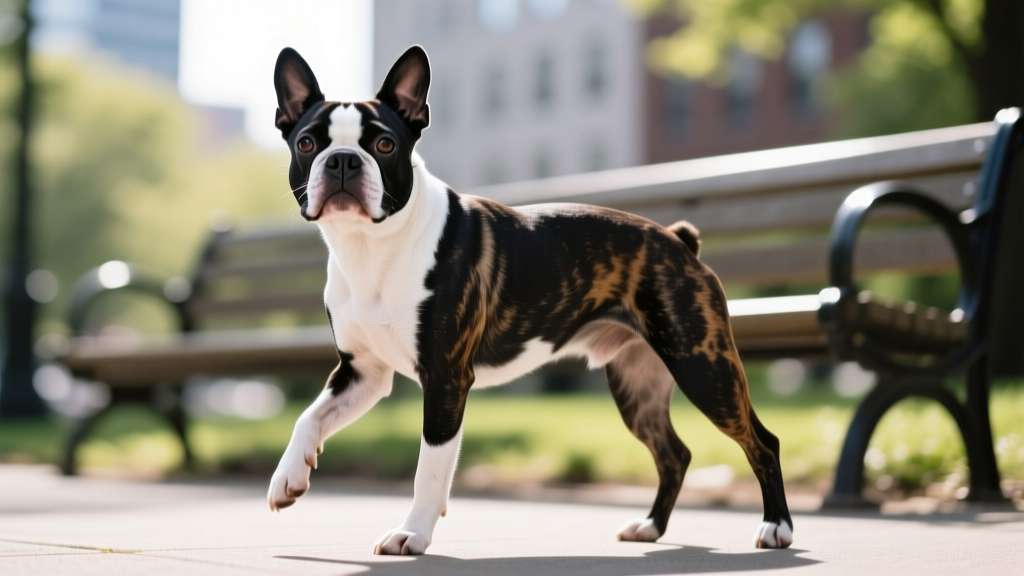
- Black Brindle & White: A dark brindle (tiger-striped) base coat with white markings. Brindle appears as subtle dark stripes over a lighter background, giving a rich, complex appearance.
- Brindle & White: Lighter brindle patterns with prominent white markings. The brindle can range from golden to dark brown striping.
- Seal & White: "Seal" appears black in dim light but shows a reddish or brown cast in bright sunlight. This is a uniquely Boston Terrier color term.
White markings are required on the muzzle, between the eyes, and on the chest. A white collar and white on the forelegs and hind legs below the hocks are preferred but not mandatory. The AKC disqualifies Boston Terriers with solid black, solid brindle, solid seal, liver (brown), or mouse gray coats from conformation — though these dogs are perfectly healthy and make wonderful pets.
Rare & Non-Standard Boston Terrier Colors Explained
Beyond the AKC standard, Boston Terriers can appear in several non-standard colors. These shades result from recessive genes and are sometimes marketed as "rare" or "designer" colors by breeders charging premium prices. Here's what you need to know:
- Blue (Mouse Gray): A dilute black coat appearing slate-gray or steel-blue. This results from the dilution gene (D-locus). Blue Bostons may be prone to color dilution alopecia, a condition causing hair thinning and skin flakiness.
- Liver (Chocolate/Brown): A warm brown coat caused by the B-locus recessive gene. Liver Bostons have brown noses and eye rims instead of black. They may have slightly higher rates of certain eye conditions.
- Red/Fawn: A warm tan or reddish coat, sometimes with brindle overlay. Less common but genetically possible within the breed.
- Cream/White: Extremely pale coats approaching white. True albinism is virtually nonexistent in Bostons, but very light cream coats do occur.
- Merle: A mottled, patchy pattern with swirls of color. Merle is NOT naturally occurring in Boston Terriers — it indicates crossbreeding with another breed (often Chihuahuas or French Bulldogs). Merle-to-merle breeding carries serious health risks including deafness and blindness.
Boston Terrier Color Genetics: What Determines Coat Shade?
Coat color in Boston Terriers is controlled by multiple gene loci. The primary ones include:
| Gene Locus | Function | Boston Terrier Expression |
|---|---|---|
| A (Agouti) | Controls banding patterns on individual hairs | Typically solid or brindle |
| B (Brown) | Black vs. liver (brown) pigment | Most are B/B (black); b/b produces liver |
| D (Dilution) | Dilutes pigment intensity | D/D full color; d/d produces blue/gray |
| K (Dominant Black) | Controls solid vs. brindle expression | KB produces solid; kbr allows brindle |
| S (Spotting) | White marking distribution | Extreme white spotting creates tuxedo pattern |
Understanding these genetic mechanisms helps explain why two black-and-white Boston Terriers can produce brindle, seal, or even liver puppies if both parents carry recessive alleles. Reputable breeders use DNA testing (through labs like Embark or UC Davis Veterinary Genetics Laboratory) to predict litter colors and screen for health-linked genes.
Temperament & Personality: What Makes Bostons Tick
Boston Terriers are known for their friendly, adaptable, and surprisingly sturdy personalities despite their compact size. Core temperament traits include:
- Affectionate Companionship: Bostons form deep bonds with their people and prefer to be nearby — often following owners room-to-room. They're not typically "velcro dogs" that demand constant physical contact, but they do insist on proximity.
- Playful Energy Bursts: Expect zoomies. Bostons are known for sudden sprints around the house or yard, often described as "the Boston spin" — a tight, joyful circle run.
- Alert Watchdog Instinct: They'll announce visitors with a bark or two but rarely become nuisance barkers. Their alertness makes them good apartment dogs who won't disturb neighbors excessively.
- Stubborn Streak: Bostons are intelligent but can be willful. If they don't see the point of a command, they may simply ignore it. This isn't defiance — it's breed-typical independence.
- Social with Other Dogs: Most Bostons get along well with other dogs when properly socialized. Some intact males may show same-sex aggression, but this is manageable with early training and neutering.
Exercise & Activity Needs: Keeping Your Boston Healthy
Boston Terriers require moderate daily exercise, but their brachycephalic (flat-faced) structure means you must be strategic about intensity and timing.
| Activity Type | Duration | Frequency | Notes |
|---|---|---|---|
| Leash walks | 20–30 minutes | Twice daily | Avoid midday heat; use harness not collar |
| Indoor play | 15–20 minutes | Daily | Fetch, tug, puzzle toys |
| Training sessions | 5–10 minutes | 3–5x per week | Short bursts prevent boredom |
| Off-leash yard time | 15–30 minutes | Daily if available | Fenced area only — Bostons can bolt |
Total daily exercise: 45–75 minutes, split across multiple sessions. Bostons overheat easily due to their shortened airways. In temperatures above 80°F (27°C), walk early morning or late evening, carry water, and watch for excessive panting, blue-tinged gums, or collapse — these are veterinary emergencies.
Common Health Issues in Boston Terriers
While generally healthy, Boston Terriers are predisposed to several breed-specific conditions. Always ask breeders for health clearances from the Orthopedic Foundation for Animals (OFA) or equivalent testing.
| Condition | Description | Estimated Prevalence | Prevention/Management |
|---|---|---|---|
| Brachycephalic Obstructive Airway Syndrome (BOAS) | Narrowed airways causing breathing difficulty, snoring, exercise intolerance | ~40–60% of brachycephalic breeds | Weight management, harness use, avoid heat; surgical correction in severe cases |
| Patellar Luxation | Kneecap slipping out of place, causing lameness or "skipping" gait | ~5–8% of Bostons | Maintain healthy weight; avoid high-impact jumping; surgical repair if grade III/IV |
| Cataracts | Clouding of the lens leading to vision impairment | Hereditary; ~10–15% develop by age 8 | Annual veterinary ophthalmologist exams; surgical removal available |
| Corneal Ulcers | Eye surface injuries due to prominent, exposed eyes | Common; exact rate unknown | Avoid rough play with larger dogs; seek vet care immediately for squinting/redness |
| Allergies (Atopic Dermatitis) | Skin reactions to environmental allergens (pollen, dust mites) or food | ~20–30% of Bostons | Identify triggers; Apoquel or Cytopoint injections; limited-ingredient diets |
When to see the vet immediately: Difficulty breathing, blue/purple gums, collapse, sudden blindness, severe limping, or persistent vomiting/diarrhea. Brachycephalic breeds can deteriorate rapidly in respiratory distress.
Grooming Requirements: Low-Maintenance but Not Zero-Maintenance
Boston Terriers have short, smooth coats that shed moderately year-round. Their grooming routine is straightforward:
- Brushing: Once weekly with a rubber curry brush or bristle brush (e.g., Kong ZoomGroom or Hertzko Self-Cleaning Slicker). This removes loose hair and distributes skin oils.
- Bathing: Every 4–8 weeks or as needed. Use a gentle, dog-specific shampoo (oatmeal-based formulas work well for sensitive Boston skin).
- Facial wrinkle care: Wipe the folds around the nose and eyes 2–3x per week with a damp cloth or dog-safe wipe to prevent yeast/bacterial infections.
- Nail trimming: Every 2–4 weeks. Overgrown nails affect gait and can cause joint pain.
- Ear cleaning: Monthly with a veterinary ear cleaner. Bostons' erect ears generally stay cleaner than floppy-eared breeds, but debris still accumulates.
- Dental care: Daily tooth brushing ideal; at minimum, dental chews 3–4x per week. Small breeds are prone to periodontal disease by age 3.
Training & Intelligence: Smart but Selectively Motivated
Boston Terriers rank moderately high in working/obedience intelligence but are not "border collie-level" eager-to-please dogs. They respond best to:
- Positive reinforcement: Food rewards, praise, and play. Bostons are often food-motivated, making treat-based training highly effective.
- Short, varied sessions: 5–10 minutes max. Repetitive drills cause Bostons to "check out" mentally.
- Early socialization: Puppy classes (starting at 8–10 weeks, after first DHPP vaccine) prevent fear-based reactivity later.
- Consistency: Everyone in the household must enforce the same rules. Bostons exploit inconsistency quickly.
Avoid aversive methods like shock collars, prong collars, or alpha rolls. These damage trust and can trigger fear-based aggression in sensitive breeds like Bostons. Force-free, LIMA (Least Intrusive, Minimally Aversive) methods yield better long-term results.
Family Suitability: Kids, Pets, and Apartment Living
Boston Terriers are excellent family dogs for the right household:
- With children: Good with respectful kids ages 6+. Their small size (12–25 lb) makes them fragile around toddlers who may drop or squeeze them. Supervision is non-negotiable with young children.
- With other dogs: Generally good, especially when raised together. Some intact males may posture or challenge other male dogs; neutering reduces this tendency.
- With cats: Variable. Early introduction helps, but some Bostons have high prey drive toward small animals.
- Apartment living: Excellent. Their moderate energy, low barking tendency, and small size make them well-suited to apartments and condos.
- First-time owners: Yes, Bostons are a solid choice for novice owners. Their trainability, manageable size, and forgiving nature make them less overwhelming than high-drive breeds.
Cost of Ownership: Budgeting for a Boston Terrier
Owning a Boston Terrier involves both upfront and ongoing expenses. Here's a realistic 2026 cost breakdown:
| Expense Category | Cost Range |
|---|---|
| Puppy from reputable breeder | $1,800–$3,500 |
| Adoption/rescue fee | $200–$600 |
| First-year veterinary care (vaccines, spay/neuter, microchip) | $600–$1,200 |
| Annual routine care (checkups, vaccines, preventives) | $400–$800 |
| High-quality food (annual) | $300–$600 |
| Pet insurance (monthly) | $35–$70/month ($420–$840/year) |
| Grooming supplies & occasional professional grooming | $50–$150/year |
| Emergency fund recommendation | $1,000–$3,000 set aside |
First-year total: Expect to spend $3,500–$6,500 in the first year (including puppy cost). Subsequent years average $1,500–$2,500 annually, excluding emergencies. Pet insurance is highly recommended given the breed's predisposition to BOAS and eye conditions, which can require costly interventions.
Is a Boston Terrier right for first-time dog owners?
Yes. Boston Terriers are forgiving of training mistakes, adaptable to various living situations, and their moderate energy level won't overwhelm a novice owner. Their small size also makes them easier to manage physically compared to large breeds.
How much exercise does a Boston Terrier need daily?
Plan for 45–75 minutes total, split into two walks plus indoor play or training sessions. Avoid intense exercise in hot weather due to their brachycephalic airway limitations.
What health problems are Boston Terriers prone to?
Key concerns include Brachycephalic Obstructive Airway Syndrome (BOAS), patellar luxation, cataracts, corneal ulcers, and allergies. Work with a breeder who tests for these conditions and maintain regular veterinary checkups.
How big does a Boston Terrier get?
Adult Bostons typically weigh 12–25 lb (5.4–11.3 kg) and stand 15–17 inches (38–43 cm) tall at the shoulder. Males tend toward the upper end of these ranges.
Are Boston Terriers good with children and other pets?
They're generally good with respectful children ages 6+ and other dogs. Supervision is essential with toddlers due to the dog's small, fragile build. Cat compatibility varies by individual.
How much does a Boston Terrier cost to buy and maintain?
Puppies from reputable breeders cost $1,800–$3,500. First-year expenses total $3,500–$6,500. Ongoing annual costs average $1,500–$2,500, excluding emergencies. Pet insurance is strongly recommended.
What Boston Terrier colors are recognized by the AKC?
The AKC recognizes black & white, black brindle & white, brindle & white, and seal & white. Liver, blue, and merle are not standard and may indicate crossbreeding or health-linked dilution genes.
Finding a Healthy Boston Terrier: Breeder vs. Rescue
If you're ready to bring a Boston Terrier into your life, you have two excellent options:
- Reputable breeders: Look for breeders who perform OFA health testing (patellas, eyes, cardiac), provide a written health guarantee, require a take-back clause if you can't keep the dog, and raise puppies in their home with early socialization. The Boston Terrier Club of America maintains a breeder referral directory.
- Rescue organizations: Groups like Boston Terrier Rescue and regional breed-specific rescues place adult Bostons and puppies in need of homes. Adoption fees typically cover veterinary care, spay/neuter, and microchipping.
Regardless of source, always meet the dog in person, ask for health records, and trust your instincts. A healthy Boston Terrier — in any recognized color — will bring years of companionship, laughter, and those signature zoomies into your home.
Disclaimer: This article provides general breed information and should not replace professional veterinary advice. Always consult your veterinarian for health concerns specific to your dog.
Dr. Hannah Wickes
All our authors care for dogs every day — read more of their work on the authors page.


