Black and Tan Dachshund
Everything you need to know about the black and tan dachshund — temperament, health risks like IVDD, exercise needs, grooming, and 2026 ownership costs.
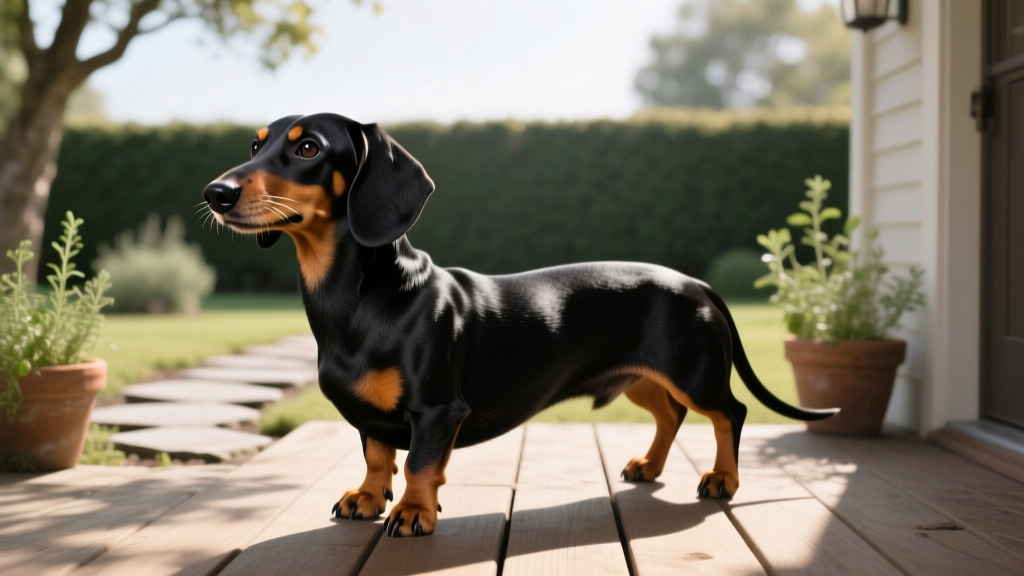
If you've ever spotted a sleek, low-slung dog with a jet-black coat marked by rich mahogany points above the eyes, on the muzzle, chest, and legs, you've met a black and tan dachshund. This color variety is arguably the most iconic representation of the breed — the classic "wiener dog" silhouette that has appeared in everything from Renaissance paintings to modern Instagram feeds. But behind that unmistakable look is a serious scent hound with a bold personality, specific health vulnerabilities, and care requirements that first-time owners often underestimate.
This guide covers everything from the genetics behind the black and tan coat to realistic ownership costs, IVDD prevention strategies, and whether this breed fits your household. Whether you're considering a standard or miniature black and tan dachshund, you'll find the specific data you need to make an informed decision.
Breed Overview: Origin, Size, and Lifespan
The dachshund originated in Germany, with the breed's development dating back to the 15th century, though the modern breed standard was formalized in the late 1800s. The name literally translates to "badger dog" — Dachs (badger) and Hund (dog). German foresters bred them to enter badger setts and fox dens, requiring a dog that was fearless, low-to-ground, and persistent. The black and tan coloration is one of the breed's oldest recognized patterns and is controlled by the Agouti signaling protein (ASIP) gene, where the "at" allele produces the tan-point pattern over a black base coat.
The dachshund comes in three coat varieties — smooth, longhaired, and wirehaired — and two size classifications recognized by the American Kennel Club (AKC): Standard and Miniature. The black and tan pattern appears across all three coat types, though it is most commonly associated with the smooth-coated variety.
| Attribute | Standard | Miniature |
|---|---|---|
| Weight | 16–32 lb (7.3–14.5 kg) | 11 lb and under (5 kg and under) |
| Height at Withers | 8–9 inches (20–23 cm) | 5–6 inches (13–15 cm) |
| Lifespan | 12–16 years | 12–16 years |
| Coat Types | Smooth, Longhaired, Wirehaired | |
| Size Class | Small (Toy for Miniatures) | |
| AKC Group | Hound Group | |
| Energy Level | Moderate | |
| Trainability | Moderate — independent thinker | |
| Grooming Needs | Low (smooth) to Moderate (longhaired/wirehaired) | |
Physical Characteristics: What Defines the Black and Tan Dachshund
The black and tan pattern is genetically specific. The base coat is solid black, with clearly defined tan (ranging from light chestnut to deep mahogany) markings appearing in these locations:
- Above each eye — oval "eyebrow" spots, typically 0.5–1 inch in diameter
- Muzzle and cheeks — tan shading on the lower half of the face
- Chest — a tan patch on the underside, sometimes extending to the throat
- Lower legs and paws — tan from the carpus (wrist) and tarsus (ankle) downward
- Underside of tail — lighter tan on the ventral surface
- Inside of ears — tan shading on the inner ear leather (more visible in longhaired varieties)
The body structure follows the breed standard: a long, muscular torso with a pronounced keel (breastbone), short powerful legs with slightly turned-out front feet for digging, a deep chest providing ample lung capacity, and a tapered muzzle built for entering burrows. The dachshund's elongated spine contains the same number of vertebrae as other dogs but with proportionally longer individual vertebrae — this is the anatomical feature that makes them prone to intervertebral disc disease.
Eye color in black and tan dachshunds is dark brown, almost black, with an almond shape. Nose leather is always black. The ears are rounded at the tips (not pointed), set high on the skull, and frame the face when the dog is alert. The tail is a natural extension of the spine, carried in line with the back — never curled over.
Temperament and Personality: Five Core Traits
Dachshunds were bred to work independently underground, confronting aggressive prey with no human backup. This history produces a personality profile that surprises many new owners who expected a docile lap dog.
1. Boldness Bordering on Fearlessness
A black and tan dachshund will typically confront dogs ten times its size without hesitation. In practice, this means your 12-pound miniature may bark aggressively at a Great Dane at the dog park or attempt to chase a coyote on a hiking trail. This trait requires vigilant leash management in unsecured areas — dachshunds have been killed by larger dogs and wildlife because their confidence exceeds their physical capability.
2. Stubborn Independence
Unlike retrievers bred to work cooperatively with humans, dachshunds were bred to make their own decisions underground. When you call a dachshund, it will often pause, evaluate whether compliance serves its interests, and then decide. This is not a deficiency in intelligence — it's a working-dog trait. Expect to negotiate rather than command. A dachshund who "doesn't listen" is often a dachshund who has decided the current activity (sniffing a mole tunnel, watching a squirrel) is more rewarding than your recall cue.
3. Vocal Alertness
The dachshund's deep, resonant bark — disproportionately loud for its body size — was selected for hunters to locate their dogs underground. In a home setting, this translates to a dog that announces every delivery driver, passing dog, falling leaf, and mysterious noise. Black and tan dachshunds living in apartments or shared-wall housing can generate noise complaints if barking is not managed early with positive reinforcement training.
4. Burrowing Instinct
Expect your dachshund to dig under blankets, burrow into couch cushions, and excavate garden beds. This is hardwired behavior, not a phase. Many owners report their dachshunds sleeping completely submerged under bedding — only a nose visible. Providing designated burrowing outlets (a snuffle mat, a dedicated "digging box" with shredded paper, or a covered dog bed like the Best Friends by Sheri Donut Bed) channels this instinct productively.
5. Intense Loyalty to One Person
Dachshunds tend to bond most strongly with a single household member, following them room-to-room and showing wariness toward strangers. They are not typically "everyone's friend" the way a Golden Retriever is. Socialization from 8–16 weeks is critical to prevent this loyalty from developing into resource guarding or fear-based reactivity toward visitors.
Exercise and Activity Requirements
Despite their small legs, dachshunds are athletic dogs with genuine stamina. The misconception that they need minimal exercise contributes to the breed's high obesity rates — estimated at 30–35% of the dachshund population according to the Association for Pet Obesity Prevention.
| Life Stage | Minutes/Day | Activity Types | Notes |
|---|---|---|---|
| Puppy (3–6 months) | 15–20 minutes | Short leash walks, indoor sniff games | 5 min per month of age rule; avoid stairs and jumping |
| Puppy (6–12 months) | 20–30 minutes | Leash walks, controlled play sessions | Still developing spinal strength; no roughhousing |
| Adult (1–7 years) | 30–60 minutes | Two daily walks (15–30 min each), scent work, swimming | Swimming is ideal — supports spine without impact |
| Senior (8+ years) | 20–40 minutes | Gentle walks, low-impact indoor games | Watch for stiffness; reduce duration if IVDD symptoms appear |
Activities to prioritize:
- Scent work and nose games — satisfies the breed's primary drive; scatter kibble in grass, use snuffle mats, or enroll in AKC Scent Work trials
- Swimming — excellent low-impact exercise for spinal health; use a canine life jacket (Ruffwear Float Coat is a reliable option at ~$95) as dachshunds are not natural swimmers due to their body proportions
- Leash hiking — dachshunds handle moderate terrain well but should be carried over technical sections with large drops
Activities to avoid or limit:
- Repeated stair climbing (carrying up/down is recommended for miniatures)
- Jumping on/off furniture (use ramps — the Solvit PupSTEP Plus, ~$45, supports up to 200 lb)
- High-impact agility involving jumps over 8 inches
- Running alongside bicycles or on hard pavement for extended distances
Health Issues: Breed-Specific Conditions and Prevalence
The dachshund's unique body structure creates specific health vulnerabilities that every owner should understand. Always consult your veterinarian for personalized health assessments — the information below helps you prepare for conversations with your vet, not replace them.
| Condition | Prevalence | Typical Onset | Treatment Cost Range | Prevention Strategy |
|---|---|---|---|---|
| Intervertebral Disc Disease (IVDD) | ~25% of dachshunds (highest breed risk) | 3–7 years | $3,000–$8,000 (surgery); $500–$2,000 (conservative) | Weight management, no jumping, harness only (never collar-only walking), ramps for furniture |
| Patellar Luxation | ~5–8% of miniatures | Any age, often noted by 1 year | $1,500–$3,500 (surgical repair per knee) | Maintain lean body condition; avoid obesity stress on joints |
| Progressive Retinal Atrophy (PRA) | ~2–4% (higher in miniatures) | 3–9 years (progressive vision loss) | No cure; $200–$400 for diagnosis (ERG testing) | Buy from breeders who perform CERF/OFA eye exams on parents |
| Lafora Disease (Late-Onset Epilepsy) | ~5–10% in miniature wirehaired lines; lower in smooths | 5–7 years | $500–$2,000/year for anti-seizure medication management | DNA test available (Lafora test via Animal Health Trust protocol); avoid affected breeding lines |
| Obesity-Related Complications | ~30–35% of breed population | Any age | Variable — exacerbates IVDD, diabetes, joint disease | Body Condition Score (BCS) of 4–5/9; measured feeding; no free-choice kibble |
Understanding IVDD: The Dachshund's Greatest Health Risk
Intervertebral disc disease is the single most important health concern for any dachshund owner. The condition occurs when the gel-like center of a spinal disc (nucleus pulposus) hardens and then extrudes upward into the spinal canal, compressing the spinal cord. In dachshunds, this process is accelerated by chondrodysplasia — the same genetic trait that produces their short legs also causes premature disc degeneration.
IVDD symptom progression to watch for:
- Grade 1: Back pain, reluctance to move, arched back, trembling — dog can still walk normally
- Grade 2: Weakness in hind legs, wobbling (ataxia), knuckling of toes
- Grade 3: Partial paralysis — hind legs drag but deep pain sensation remains
- Grade 4: Full paralysis with deep pain sensation intact
- Grade 5: Full paralysis with loss of deep pain sensation — surgical emergency with a narrower window for recovery (ideally within 24–48 hours)
If your dachshund shows sudden back pain, hind leg weakness, or inability to walk, this is an emergency — seek veterinary care immediately. Early surgical intervention (hemilaminectomy) has a 90–95% success rate for Grades 1–4, dropping to approximately 50–60% for Grade 5 if surgery is delayed beyond 48 hours, according to data cited in the Merck Veterinary Manual.
- Sudden inability to use hind legs
- Crying out when picked up or touched along the back
- Loss of bladder/bowel control
- Dragging rear legs or knuckling
Time is critical. Every hour of spinal cord compression reduces the chance of full recovery.
Grooming Requirements by Coat Type
Grooming demands for a black and tan dachshund vary significantly depending on coat variety. Here's what each requires:
| Task | Smooth Coat | Longhaired Coat | Wirehaired Coat |
|---|---|---|---|
| Brushing | Weekly — rubber curry brush (Kong ZoomGroom, ~$12) | 3–4 times/week — slicker brush + metal comb; focus on feathering behind ears, legs, belly | Weekly — slicker brush; hand-stripping 2–3 times/year by a professional groomer (~$50–$80 per session) |
| Bathing | Every 6–8 weeks or as needed | Every 4–6 weeks; use conditioner to prevent matting | Every 6–8 weeks; avoid over-bathing which softens wire texture |
| Nail Trimming | Every 2–3 weeks; dachshund nails grow quickly and long nails alter foot angle, increasing spinal strain | ||
| Ear Cleaning | Weekly — dachshund drop ears trap moisture; use a vet-approved ear cleaner (Epi-Otic Advanced, ~$16); watch for yeast infections | ||
| Dental Care | Daily tooth brushing ideal; minimum 3x/week; small breeds have accelerated periodontal disease — professional cleaning every 1–2 years ($300–$700) | ||
| Shedding | Low-moderate year-round | Moderate; seasonal increases | Low; dead hair is removed by stripping rather than natural shedding |
Training and Intelligence: Working With an Independent Thinker
On the Stanley Coren intelligence scale, dachshunds rank 49th out of 138 breeds for "working/obedience intelligence" — meaning they typically require 25–40 repetitions to learn a new command and obey a known command on the first attempt about 50% of the time. This ranking reflects their independent breeding, not a lack of cognitive ability. Dachshunds excel at problem-solving tasks, spatial reasoning, and scent discrimination — they simply prioritize differently than biddable breeds like Border Collies.
Training methods that work for dachshunds:
- Positive reinforcement only — food rewards (high-value treats like freeze-dried liver or small pieces of chicken), toy rewards, and enthusiastic praise. Force-free, LIMA (Least Intrusive, Minimally Aversive) methods are the only recommended approach.
- Short sessions — 5–10 minutes, 2–3 times daily. Dachshunds lose focus quickly in repetitive drills.
- High-value motivation — standard kibble rarely competes with a scent trail. Use real meat treats for recall training and outdoor work.
- Early socialization — critical window is 8–16 weeks. Expose to diverse people, surfaces, sounds, and other animals using AVSAB-recommended positive exposure protocols.
Never use: shock collars, prong collars, choke chains, alpha rolls, or any aversive technique. Dachshunds are physically fragile (especially the cervical and thoracolumbar spine) and aversive methods risk both physical injury and fear-based aggression — a particular concern given the breed's tendency toward reactivity when stressed.
Priority training goals for dachshunds:
- Reliable recall — challenging due to prey drive but essential for safety; practice in fenced areas with a long line (15–30 ft) before attempting off-leash
- Crate training — provides a safe den and prevents destructive behavior; also critical for post-IVDD surgery confinement (often 6–8 weeks of strict crate rest)
- Handling desensitization — practice touching paws, ears, mouth, and back from puppyhood; vet visits and grooming will be easier, and you'll be better at detecting early IVDD pain responses
- "Leave it" and "drop it" — dachshunds are notorious for scavenging and resource guarding; these cues are safety-critical
Family Suitability: Kids, Pets, and Living Spaces
With Children
Dachshunds can coexist well with children, but the combination requires careful management. The primary risk is spinal injury from a child picking up, dropping, or stepping on the dog. Dachshunds also tend to snap when startled or handled roughly — they are not a breed that tolerates ear-pulling or tail-grabbing with the patience of a Labrador.
Best fit: Families with children aged 8+ who can be taught proper handling (supporting the chest and rear simultaneously when lifting). Always supervise interactions between dachshunds and children under 10.
With Other Pets
Dachshunds generally coexist with other dogs, especially when raised together, but their bossy nature means they often try to dominate dogs much larger than themselves. With cats, results vary — a dachshund raised with a cat typically accepts it as a household member but may still chase unfamiliar cats outdoors due to prey drive. Small mammals (hamsters, rabbits, guinea pigs) should never be left unsupervised with a dachshund — the breed's hunting instinct is triggered by small, fast-moving prey.
Apartment and Urban Living
Dachshunds adapt well to apartments in terms of space, but the barking can be a significant issue in shared-wall buildings. Invest early in training a "quiet" cue and provide adequate mental stimulation (puzzle feeders, snuffle mats, frozen Kongs) to prevent boredom-driven vocalization. The critical apartment modification is eliminating stair access — carry miniatures up and down stairs, and install ramps for furniture access.
- Small physical footprint
- Adaptable to indoor play on bad-weather days
- Generally quiet when adequately exercised and mentally stimulated
- No yard required if daily walks are maintained
- Alert barking may disturb neighbors
- Stairs in multi-floor buildings are a spinal risk
- Digging instinct may damage rental flooring or landscaping
- Separation anxiety can develop — they bond intensely and dislike being left alone for 8+ hours
Cost of Ownership: Purchase Price and Annual Care Budget
Budgeting realistically for a black and tan dachshund prevents unpleasant financial surprises. Costs below reflect 2025–2026 US market data.
| Expense Category | Low Range | Mid Range | High Range |
|---|---|---|---|
| Puppy Purchase (AKC-registered, health-tested parents) | $1,500 | $2,500 | $4,000+ |
| Adoption/Rescue | $200 | $450 | $600 |
| First-Year Veterinary (vaccines, spay/neuter, microchip, baseline exams) | $600 | $1,000 | $1,500 |
| Annual Veterinary Care (adult, routine) | $400 | $700 | $1,200 |
| High-Quality Food (annual) | $300 | $500 | $800 |
| Pet Insurance (annual premium) | $400 | $600 | $900 |
| Grooming (longhaired/wirehaired, professional) | $0 (smooth) | $300 | $600 |
| Supplies (crate, ramp, harness, bed, toys) | $200 | $400 | $600 |
| Estimated First-Year Total (purchased puppy) | $3,600 | $6,150 | $10,600 |
| Estimated Annual Ongoing Cost (years 2+) | $1,300 | $2,500 | $4,500 |
Important cost notes:
- IVDD surgery is not included in routine costs — a single episode can cost $3,000–$8,000, and some dachshunds experience multiple episodes. Pet insurance with a high annual maximum ($10,000–$30,000) is strongly recommended. Companies like Trupanion, Healthy Paws, and Nationwide cover hereditary conditions including IVDD, but verify that the policy does not exclude intervertebral disc disease specifically.
- Responsible breeder pricing — breeders performing OFA spine evaluations, eye exams (CERF), Lafora DNA testing, and ENCI/FCI health certifications invest $2,000–$4,000 per litter in health screening alone. Puppies priced below $1,200 from "AKC registered" parents often indicate that health testing was not performed.
- Adoption alternative — breed-specific rescues like Dachshund Rescue of North America (DRNA) and All American Dachshund Rescue regularly have black and tan dachshunds available, often already spayed/neutered and vetted.
Frequently Asked Questions
Is the black and tan dachshund a separate breed?
No. The black and tan dachshund is a color variety within the standard dachshund breed, not a separate breed or subtype. Black and tan is recognized by the AKC as one of 15 standard colors for the breed and is eligible for conformation showing. The same dog can compete in obedience, rally, scent work, and earthdog trials regardless of coat color.
Is this breed right for first-time dog owners?
A black and tan dachshund can work for a first-time owner, but it's not the easiest breed to start with. The combination of stubborn independence, barking tendency, prey drive, and serious spinal health risks means first-time owners need to invest significantly in education before bringing one home. Breeds that are generally easier for first-time owners include Cavalier King Charles Spaniels, Bichon Frises, and Labrador Retrievers. If you're committed to a dachshund as a first dog, enrolling in a positive-reinforcement puppy class and connecting with a dachshund-experienced veterinarian are essential first steps.
How much exercise does a black and tan dachshund need daily?
Adult dachshunds need 30–60 minutes of daily exercise, ideally split into two sessions. This should include structured leash walks plus mental enrichment activities like scent work, puzzle feeders, or supervised sniffing time. Swimming is an excellent addition if available. The key is consistency — dachshunds who get insufficient exercise develop obesity (which dramatically increases IVDD risk) and behavioral problems like excessive barking and destructive digging.
Are black and tan dachshunds more prone to health problems than other colors?
The black and tan color itself does not carry additional health risks beyond those inherent to the breed. All dachshunds, regardless of color, share the same IVDD risk (~25% lifetime prevalence). However, certain color-linked conditions exist in other patterns — for example, the dapple (merle) pattern carries risks of deafness and ocular abnormalities when two dapples are bred together. Black and tan is genetically straightforward and does not carry these color-linked risks.
How big does a black and tan dachshund get?
Standard dachshunds reach 16–32 lb (7.3–14.5 kg) and stand 8–9 inches (20–23 cm) at the withers. Miniatures weigh 11 lb (5 kg) or less and stand 5–6 inches (13–15 cm). Some dachshunds fall between these categories — informally called "tweenies" — weighing 12–15 lb. The FCI (Fédération Cynologique Internationale) additionally recognizes a third size category, the "rabbit dachshund" (Kaninchenteckel), measured by chest circumference rather than weight, but this classification is not used by the AKC.
Is the black and tan dachshund good with children and other pets?
With proper socialization and supervision, yes — but with caveats. Dachshunds do best with respectful children aged 8+ who understand how to support the dog's back when handling. They generally get along with other household dogs but may attempt to boss much larger dogs. Cats raised alongside a dachshund are usually accepted, but small pocket pets (hamsters, gerbils) are at genuine risk due to the breed's hunting instincts. Never leave a dachshund unsupervised with small animals.
How much does a black and tan dachshund cost to buy and maintain?
Expect to pay $1,500–$4,000 for a well-bred puppy from health-tested parents, or $200–$600 through breed rescue. First-year costs including veterinary care, supplies, and food typically range from $3,600–$10,600 depending on your choices. Ongoing annual costs for a healthy adult dachshund range from $1,300–$4,500. The major financial risk is IVDD surgery at $3,000–$8,000 per episode, making pet insurance with hereditary condition coverage a wise investment — budget $400–$900 annually for premiums.
For any health concerns about your dachshund, always consult your veterinarian. If you suspect your dog has ingested a toxic substance, contact the ASPCA Animal Poison Control Center at (888) 426-4435 (24/7, consultation fee applies) or the Pet Poison Helpline at (855) 764-7661.
Tom Renshaw
All our authors care for dogs every day — read more of their work on the authors page.


