Are Great Danes Good Guard Dogs? Breed Profile & Protection Facts
Are Great Danes good guard dogs? Explore the breed's protective instincts, temperament, size, health risks, training needs, and real cost of ownership
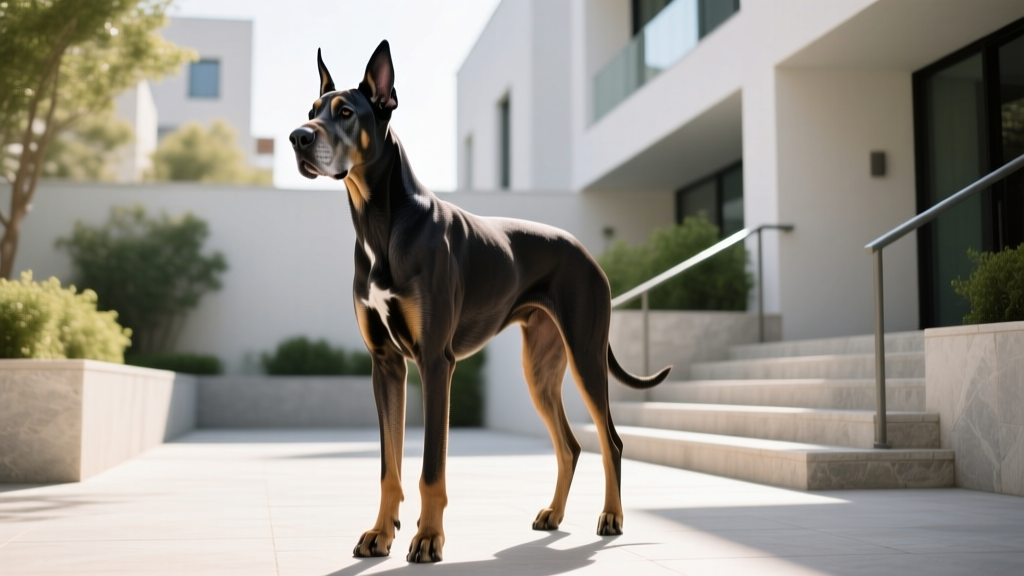
The Great Dane Paradox: Gentle Giant or Capable Protector?
If you've ever watched a 150-pound Great Dane lean against a stranger's leg at the dog park asking for belly rubs, you might wonder whether this breed can actually protect your home. The question are Great Danes good guard dogs comes up constantly among prospective owners — and the honest answer requires separating internet myths from canine behavioral science.
Great Danes are outstanding watchdogs but inconsistent guard dogs. The distinction matters. A watchdog alerts you to unusual activity through barking and body language. A guard dog actively confronts, restrains, or attacks intruders on command. Great Danes excel at the first role almost universally; the second depends heavily on individual temperament, training lineage, and socialization history.
This profile covers everything you need to know about the breed — from their 16th-century German boar-hunting origins to the $3,000–$8,000 annual cost of keeping one healthy in 2026. Whether you're evaluating protection potential or simply researching your next family dog, the data below will help you make an informed decision.
Breed Overview: Origin, Classification & Vital Statistics
The Great Dane (Deutsche Dogge in German) traces its lineage to 16th-century Germany, where nobility crossed English Mastiffs with Irish Wolfhounds to produce a dog capable of hunting wild boar — one of Europe's most dangerous game animals. The breed was formally recognized by the American Kennel Club in 1887 and has since transitioned entirely from working hunter to companion animal.
| Attribute | Details |
|---|---|
| Size Class | Giant breed |
| Weight (Male) | 140–175 lb / 63.5–79.4 kg |
| Weight (Female) | 110–140 lb / 49.9–63.5 kg |
| Height (Male) | 30–32 inches / 76–81 cm at the shoulder |
| Height (Female) | 28–30 inches / 71–76 cm at the shoulder |
| Coat Type | Short, smooth, single coat; colors include fawn, brindle, blue, black, harlequin, mantle, merle |
| Lifespan | 7–10 years (median 8.5 years per Merck Veterinary Manual) |
| Energy Level | Moderate — lower than expected for their size |
| Origin | Germany, 16th century (boar-hunting working dog) |
| AKC Group | Working Group |
Despite the name "Dane" — which originated from a French naturalist, Comte de Buffon, who mistakenly associated the breed with Denmark in the 1700s — Germany claims the breed's true development. The German Kennel Club officially renamed them "Deutsche Dogge" in 1880, though the English-speaking world never adopted the change.
Temperament & Personality: Five Core Traits That Define the Breed
Understanding Great Dane temperament is essential to answering whether they function well as guard dogs. Their personality profile reveals why they're better suited as deterrents than defenders.
1. People-Oriented and Affectionate
Great Danes are famously physical with their families. They lean against legs, rest heads on laps (despite weighing more than most toddlers), and follow owners from room to room. This attachment style means they typically greet strangers with curiosity rather than suspicion — a trait that undermines guard-dog reliability but makes them exceptional therapy dogs.
2. Confident but Not Aggressive
A well-bred Dane carries themselves with quiet confidence. They don't typically bark without cause, and they rarely display fear-based reactivity. However, the AKC breed standard specifically calls for a "friendly, dependable" temperament, noting that "spirited" is acceptable but aggression is a disqualifying fault. This breeding selection has systematically reduced protective aggression over generations.
3. Alert and Observant
Danes notice changes in their environment. A delivery truck pulling up, a person walking past the fence line, or an unusual sound at 2 AM will typically earn a low, rumbling alert bark. This watchdog instinct is reliable and requires no training — it's an inherent trait from their working-dog ancestry.
4. Patient and Tolerant
Properly socialized Danes show remarkable tolerance, particularly with children. They tend to disengage from overstimulation rather than react — walking away from a toddler pulling an ear rather than snapping. This patience is a family asset but a protection liability; a dog that tolerates rough handling from children will likely tolerate an intruder's presence.
5. Moderately Stubborn but Food-Motivated
Danes are intelligent but not biddable in the way Border Collies or Golden Retrievers are. They process commands and then decide whether compliance is worth their effort. High-value food rewards and short, varied training sessions produce the best results. Force-based methods backfire spectacularly with this breed — a 160-pound dog that refuses to comply cannot be physically compelled.
✅ Protection Strengths
- Imposing physical presence (up to 32 inches tall, 175 lb)
- Deep, resonant bark audible through walls and fences
- Natural alertness to environmental changes
- Strong territorial bonding to home and family
- Speed and power when genuinely threatened
❌ Protection Limitations
- Innately friendly toward unfamiliar people
- Low suspicion drive compared to livestock guardian breeds
- Slow to escalate from alert to confrontation
- Short attention span for sustained patrol behavior
- Poor cold tolerance limits outdoor guarding in winter
Physical Characteristics: Understanding the Build Behind the Deterrent
The Great Dane's protective value lies almost entirely in appearance. Standing at the shoulder, a male Dane is eye-level with many adults. Their rectangular body frame, deep chest, and muscular neck create a silhouette that triggers instinctive caution in unfamiliar humans — regardless of the dog's actual intent.
The coat is short, smooth, and lies flat against the body. It requires minimal maintenance but provides almost no insulation. Danes lack an undercoat, which means they lose body heat rapidly in temperatures below 40°F (4°C). This is directly relevant to guard-dog discussions: a Great Dane cannot be stationed outdoors as a perimeter guard in cold climates without risk of hypothermia.
Accepted coat colors per the AKC standard include:
- Fawn: Golden yellow with a black mask
- Brindle: Fawn base with black chevron striping
- Blue: Steel gray (dilute black)
- Black: Solid glossy black
- Harlequin: White base with irregular black patches
- Mantle: Black blanket over body with white collar, chest, and legs
- Merle: Gray base with black patches (recognized but not preferred in conformation)
Exercise & Activity Needs: Realistic Daily Requirements
Despite their racing-dog silhouette, Great Danes are moderate-energy animals that require less exercise than many medium-sized breeds. Their giant physiology means joints and growth plates are vulnerable during the first 18–24 months, and over-exercising puppies can cause permanent orthopedic damage.
| Life Stage | Daily Duration | Recommended Activities | Activities to Avoid |
|---|---|---|---|
| Puppy (2–6 months) | 15–25 minutes, split into 3 sessions | Free play on grass, short leash walks, sniffing games | Forced running, stairs, jumping, slippery floors |
| Adolescent (6–18 months) | 30–45 minutes total | Leash walks, swimming, gentle hiking on soft ground | Agility equipment, long-distance running, concrete jogging |
| Adult (18 months–6 years) | 45–60 minutes total | Brisk walks, hiking, swimming, fetch in fenced yard | Extreme heat exercise, marathon-distance running |
| Senior (6+ years) | 20–40 minutes, low intensity | Gentle walks, swimming, sniffing enrichment | High-impact activity, stairs, jumping onto furniture |
A critical note for owners considering a Dane for property protection: this breed's exercise tolerance does not support sustained patrol work. A German Shepherd can jog a 5-mile perimeter route daily; a Great Dane will overheat, fatigue, or develop joint inflammation under the same regimen. Their protection value is passive — presence and bark — not active patrol.
Common Health Issues: Breed-Specific Conditions and Prevalence
The Great Dane's shortened lifespan is the direct consequence of giant-breed physiology. Rapid growth, massive cardiac workload, and skeletal stress create a cluster of breed-specific health risks that every prospective owner must understand — and budget for.
| Condition | Prevalence | Typical Onset | Treatment Cost Range |
|---|---|---|---|
| Gastric Dilatation-Volvulus (GDV/Bloat) | Up to 40% of Danes may experience in lifetime; 5.3% of all Great Danes die from GDV | Any age; peak 4–7 years | $3,000–$7,000 emergency surgery; prophylactic gastropexy $400–$800 |
| Dilated Cardiomyopathy (DCM) | Estimated 10–15% of the breed | 4–8 years | $500–$2,000 diagnosis; $150–$400/month ongoing medication |
| Hip Dysplasia | Approximately 12% per OFA database | 6–24 months (developmental) | $3,500–$7,000 per hip for total replacement |
| Wobbler Syndrome (Cervical Spondylomyelopathy) | Breed-predisposed; exact rate unknown but disproportionately high | 10 months–5 years | $4,000–$10,000 surgical intervention |
| Osteosarcoma (Bone Cancer) | Great Danes are among the top 5 highest-risk breeds | 6–10 years (median 8) | $5,000–$12,000 amputation + chemotherapy |
GDV (bloat) deserves special emphasis. This is a life-threatening emergency where the stomach fills with gas and twists on itself, cutting off blood supply. Without surgery within hours, it is fatal. Many responsible Dane owners opt for a prophylactic gastropexy — surgically tacking the stomach to the abdominal wall — during spay/neuter surgery. If you own a Great Dane, learn the signs: unproductive retching, distended abdomen, restlessness, and pale gums. Go to the nearest emergency vet immediately.
Training & Intelligence: What Protection Training Actually Looks Like
Great Danes rank in the average range for working/obedience intelligence — typically learning a new command in 25–40 repetitions and obeying a known command on the first attempt about 50% of the time. This places them well below breeds like Belgian Malinois or Doberman Pinschers in trainability, which directly impacts guard-dog suitability.
For basic household manners, Danes respond beautifully to positive reinforcement methods. Clicker training paired with high-value treats (freeze-dried liver, chicken, cheese) produces reliable sit, down, stay, and recall behaviors. Keep sessions to 10–15 minutes maximum — Danes bore quickly and disengage from repetitive drills.
Regarding protection-specific training: professional protection dog programs typically require 12–18 months of intensive work and cost $15,000–$50,000 for a finished dog. Most reputable protection trainers will decline to train a Great Dane for personal protection because the breed lacks the genetic drive for sustained defensive aggression. Attempting to force protective behavior through aversive methods — shock collars, prong collars, or intimidation — creates a dangerous, unpredictable animal rather than a reliable protector.
What you can effectively train:
- Alert barking on command: Teach "speak" and "quiet" cues so the dog barks on request and stops when told
- Door manners: Sit and wait at entry points rather than bolting outside
- Stranger approach protocol: Calm sit-and-stay when visitors enter, rather than jumping or hiding
- Leash neutrality: Walking past strangers and other dogs without pulling or lunging
Family Suitability: Kids, Other Pets & Living Spaces
With children: Great Danes are among the best giant breeds for families with kids. Their patience, low prey drive, and gentle mouth make them reliable around children who understand basic dog etiquette. However, a Dane's tail is a whip at child-face-level, and an excited 130-pound dog can accidentally knock over a toddler. Supervision is mandatory with children under 6.
With other dogs: Same-sex aggression can occur in intact Danes, particularly males. Spayed/neutered Danes typically integrate well into multi-dog households when introduced gradually. Early puppy socialization (8–16 weeks) with diverse dogs, people, and environments is critical for long-term stability.
With cats and small animals: Most Danes have low prey drive and coexist peacefully with household cats, especially when raised together. Their original prey was large game (boar), not small mammals, which reduces instinctive chase triggers.
Apartment living: Surprisingly feasible, and this is where many first-time Dane owners are caught off guard. Adult Danes are notorious couch-dwellers who sleep 14–16 hours per day. A third-floor apartment with two daily leash walks can work — but you must have elevator access (carrying a 150-pound injured dog down three flights of stairs is a genuine concern) and a nearby park for off-leash exercise. The bigger issue is lease restrictions: many landlords cap dog weight at 50–75 lb, excluding Danes entirely.
Cost of Ownership: Purchase Price and Annual Budget Breakdown
Great Danes are expensive dogs to acquire and maintain. Their giant size drives up every variable cost — food, medication (dosed by weight), crate sizes, beds, and veterinary care. Budget realistically before committing.
| Expense Category | Low End | Average | High End |
|---|---|---|---|
| Puppy from responsible breeder (health-tested parents, AKC registered) | $1,800 | $2,500 | $4,000+ |
| Adoption from breed-specific rescue | $300 | $500 | $750 |
| Annual food (giant-breed formula, ~8–12 lb/month) | $720 | $1,100 | $1,800 |
| Annual veterinary care (wellness + preventives) | $800 | $1,200 | $2,000 |
| Heartworm/flea/tick preventives (weight-based dosing) | $300 | $500 | $700 |
| Pet insurance (giant breed, comprehensive) | $600 | $1,000 | $1,500 |
| Supplies (XL crate, orthopedic bed, harness, elevated bowls) | $400 | $700 | $1,200 |
| Estimated Annual Total (after first year) | $2,820 | $4,500 | $7,900 |
First-year costs are substantially higher due to puppy vaccinations (typically 3 rounds of DHPP at $25–$45 each, plus rabies), spay/neuter surgery ($400–$900 for giant breeds), microchipping ($50–$75), and initial supply purchases. Plan for $4,000–$8,000 in total first-year expenditure if purchasing from a breeder.
Pet insurance is strongly recommended for this breed. A single GDV surgery can cost $7,000, and osteosarcoma treatment can exceed $12,000. Policies from providers like Trupanion, Healthy Paws, or Nationwide that cover hereditary conditions typically run $80–$130/month for a Great Dane puppy enrolled before 6 months of age.
Grooming Requirements: Low-Maintenance Coat, High-Maintenance Nails
The Great Dane's short, single coat is one of the breed's most practical features. Grooming demands are modest compared to double-coated or long-haired breeds.
- Brushing: Once weekly with a rubber curry brush (e.g., Kong ZoomGroom, ~$8) or bristle brush. This removes loose hair and distributes skin oils. Danes shed moderately year-round with seasonal increases in spring and fall.
- Bathing: Every 6–8 weeks or as needed. Use a gentle, canine-specific shampoo. Bathing a 150-pound dog requires a walk-in shower or professional grooming tub — standard home bathtubs are a logistical challenge.
- Nail trimming: Every 2–3 weeks. Dane nails grow quickly and overgrown nails alter gait, stressing already-vulnerable joints. Use heavy-duty guillotine or scissor clippers rated for giant breeds, or a high-torque Dremel (e.g., Dremel 7300-PT).
- Ear cleaning: Weekly inspection; clean with a veterinarian-recommended ear wash if debris accumulates. Danes with natural (uncropped) ears are prone to moisture buildup and secondary ear infections.
- Dental care: Daily brushing with enzymatic dog toothpaste or, at minimum, dental chews 3–4 times per week. Giant breeds are susceptible to periodontal disease, which correlates with cardiac disease risk.
Frequently Asked Questions
Is the Great Dane a good choice for first-time dog owners?
Conditionally yes, but with significant caveats. Danes are not difficult to train or manage behaviorally — their challenge is logistical. A first-time owner must be prepared for the physical demands (a 150-pound dog that pulls on a leash can cause injury), the financial commitment ($4,000+ annually), and the emotional reality of a 7–10 year lifespan. If you can handle those realities, the breed's easygoing temperament actually makes them more forgiving of novice-owner mistakes than high-drive breeds like Belgian Malinois or Siberian Huskies.
How much daily exercise does a Great Dane need?
Adult Great Danes need 45–60 minutes of exercise daily, typically split into two leash walks of 20–30 minutes each. This is moderate for their size and lower than many owners expect. Avoid exercising within one hour before or two hours after meals to reduce GDV (bloat) risk — a critical precaution for deep-chested breeds.
What health problems are Great Danes most prone to?
The five most significant breed-specific risks are gastric dilatation-volvulus (bloat), dilated cardiomyopathy (DCM), hip dysplasia, Wobbler syndrome (cervical spinal compression), and osteosarcoma (bone cancer). Responsible breeders screen for cardiac and orthopedic conditions through OFA-certified evaluations. Ask any breeder for documentation of parental health clearances before purchasing.
How large does an adult Great Dane get?
Adult males typically reach 140–175 lb (63.5–79.4 kg) and stand 30–32 inches (76–81 cm) at the shoulder. Females reach 110–140 lb (49.9–63.5 kg) and stand 28–30 inches (71–76 cm). Some males exceed 200 lb, though this often reflects obesity rather than healthy structure. The tallest recorded Great Dane, Zeus, measured 44 inches at the shoulder.
Are Great Danes good with children and other household pets?
Yes, with supervision. Great Danes are patient, gentle, and tolerant with children who have been taught respectful dog interaction. Their tail height and body mass create accidental-injury risk for toddlers, so direct supervision is essential. With other dogs and cats, properly socialized Danes integrate well, particularly when raised together from puppyhood.
How much does it cost to buy and maintain a Great Dane?
Purchase price from a responsible breeder ranges from $1,800–$4,000+. Annual maintenance costs average $3,000–$5,000, covering food, veterinary care, preventives, insurance, and supplies. First-year costs (including puppy vaccines, spay/neuter, and initial supplies) typically total $4,000–$8,000. Adoption through a breed-specific rescue costs $300–$750 and often includes initial veterinary work.
Will a Great Dane protect my family from intruders?
A Great Dane will almost certainly deter casual intruders through size, appearance, and alert barking. Most people will not test a 150-pound dog standing in a doorway. However, if an intruder is determined, calm under pressure, or willing to use food to pacify the dog, a Great Dane is unlikely to escalate to physical defense. For reliable personal protection, breeds with stronger defensive drives — German Shepherds, Belgian Malinois, Doberman Pinschers — are more appropriate choices.
Dr. Hannah Wickes
All our authors care for dogs every day — read more of their work on the authors page.


