American Bulldog Boxer Mix Dog: Complete Breed Guide & Care Tips
Everything about the American Bulldog Boxer mix dog — size, temperament, health risks, coat types, cost.
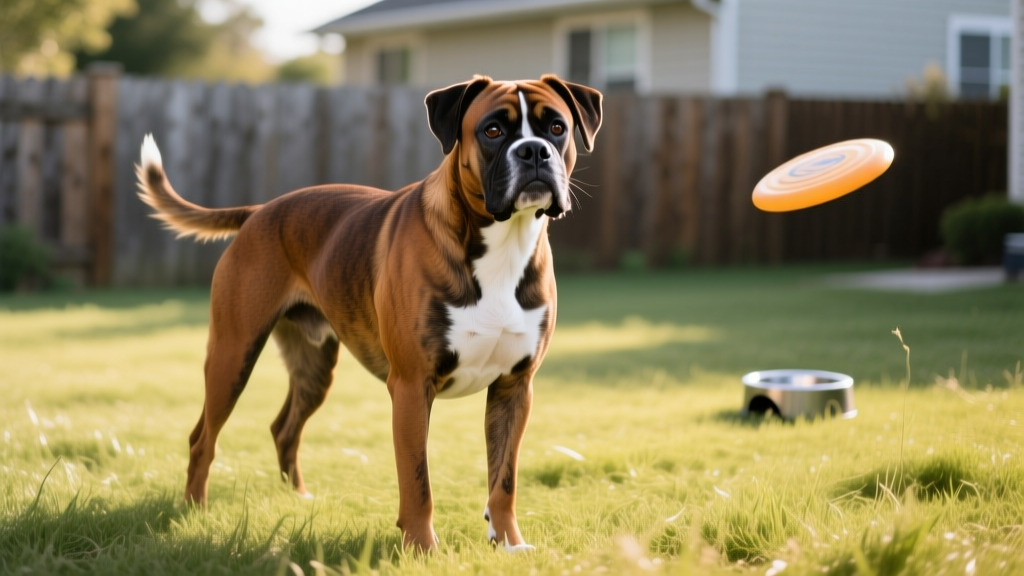
What Two Breeds Make Up the American Bulldog Boxer Mix?
The American Bulldog Boxer mix dog — sometimes called a "Bulloxer" — is a designer cross between the American Bulldog and the Boxer. Both parent breeds share mastiff-type ancestry, athletic builds, and devoted temperaments, but they bring distinct traits to the table. Understanding each parent breed is essential before predicting what any individual puppy might look or act like.
American Bulldog Parent
Originally bred as a farm utility dog in the southeastern United States, the American Bulldog is a powerful, confident working breed. According to the AKC Foundation Stock Service, American Bulldogs stand 20–28 inches tall and weigh 60–120 lb (27–54 kg). They come in two main types: the stockier Johnson (bully) line and the leaner Scott (standard/performance) line. They're known for loyalty, protectiveness, and high pain tolerance.
Boxer Parent
Developed in Germany as a hunting and working dog, the Boxer is a medium-to-large breed recognized by the American Kennel Club. Boxers stand 21.5–25 inches and weigh 50–80 lb (23–36 kg). They're famously playful, energetic, and people-oriented — often described as the "clown" of the dog world. Boxers mature slowly, retaining puppy-like exuberance well into their third or fourth year.
| Trait | American Bulldog | Boxer |
|---|---|---|
| Weight Range | 60–120 lb (27–54 kg) | 50–80 lb (23–36 kg) |
| Height | 20–28 in (51–71 cm) | 21.5–25 in (55–64 cm) |
| Energy Level | Moderate to high | High to very high |
| Guard Instinct | Strong | Moderate |
| Prey Drive | Moderate to high | High |
| Typical Lifespan | 10–16 years | 10–12 years |
| Trainability | Moderate (independent thinker) | Moderate to high (eager but distractible) |
| Coat | Short, smooth | Short, smooth |
How Big Will an American Bulldog Boxer Mix Get?
Because both parent breeds fall in the large-dog category, most American Bulldog Boxer mixes land squarely in that range — but there's real variability depending on which parent a puppy favors and whether the American Bulldog parent is from a Johnson or Scott line.
| Category | Weight | Height at Shoulder |
|---|---|---|
| Small End (favors Boxer parent) | 50–65 lb (23–29 kg) | 21–23 in (53–58 cm) |
| Average Range | 65–90 lb (29–41 kg) | 22–26 in (56–66 cm) |
| Large End (favors Johnson-type Bulldog) | 90–110 lb (41–50 kg) | 25–28 in (64–71 cm) |
Males tend to cluster toward the upper ranges, while females often fall 10–15 lb (4.5–7 kg) lighter. Growth plate closure typically occurs between 14–18 months for dogs in this size range, so don't expect full skeletal maturity until well past the first birthday.
What Will the Temperament Be Like?
Both parent breeds share some temperament traits — loyalty, courage, and strong bonding with their families — but they differ in important ways that create a range of possible outcomes in the mix.
Best-Case Temperament Scenario
A well-socialized American Bulldog Boxer mix dog inherits the Boxer's playful sociability and the Bulldog's steady confidence. The result is an athletic, affectionate dog that's great with children, friendly with familiar people, alert without being excessively reactive, and responsive to positive reinforcement training. These dogs thrive in active households where they get structured exercise and mental enrichment daily.
Challenging Temperament Scenarios
Some individuals inherit the American Bulldog's territorial guarding instinct combined with the Boxer's high arousal level. Without proper socialization during the critical 3–14 week window, these dogs can develop leash reactivity, dog selectiveness, or resource guarding tendencies. Both breeds carry moderate-to-high prey drive, which means cats, rabbits, and small dogs may trigger chase behavior unless the puppy is raised alongside them.
With Children and Other Pets
Both breeds generally do well with children in their own family, but their large size and boisterous play style can overwhelm toddlers. Supervision is essential. Dog-to-dog compatibility varies individually — early and ongoing socialization with dogs of different sizes, breeds, and play styles gives you the best outcome. Intact males of either parent breed may show same-sex dog aggression, which is one more reason spay/neuter discussions with your vet matter.
Coat, Shedding, and Grooming: Is This Mix Low-Shedding?
No. Neither parent breed carries a low-shedding or hypoallergenic coat gene. Both the American Bulldog and the Boxer have short, single-layered, smooth coats that shed moderately year-round with seasonal increases in spring and fall.
What to Expect
- Coat length: Short (0.5–1 inch), smooth, and close-lying
- Shedding level: Moderate — you'll find short white or fawn hairs on dark clothing and furniture regularly
- Hypoallergenic: No. This mix produces typical levels of dander and is not suitable for allergy-sensitive households
- Color range: White, fawn, brindle, red, or combinations including patches. White markings on the face, chest, and paws are very common
Grooming Routine
Grooming requirements are minimal compared to double-coated or long-haired breeds:
- Brushing: Once or twice weekly with a rubber curry brush (like the Kong ZoomGroom, ~$8–$12) or a bristle brush to remove loose hair and distribute skin oils
- Bathing: Every 6–8 weeks or as needed. Use a gentle, dog-formulated shampoo — human shampoos disrupt canine skin pH (which sits at 6.2–7.4 vs. human skin at 5.5)
- Facial wrinkles: If your mix inherits the Boxer's facial wrinkles or the Bulldog's loose jowls, wipe skin folds 2–3 times weekly with a damp cloth or veterinary wipes (e.g., Mal-A-Ket wipes, ~$15/pack) to prevent yeast and bacterial infections
- Nails: Trim every 2–4 weeks. If you hear clicking on hard floors, they're too long
- Ears: Check weekly. Both breeds have floppy or semi-prick ears prone to moisture buildup. Clean with a veterinary ear cleanser as needed
Health Considerations: Hybrid Vigor vs. Reality
One of the most persistent myths in designer dog marketing is that mixed breeds automatically enjoy "hybrid vigor" — the idea that crossbreeding eliminates health problems. The reality is more nuanced. While Merck Veterinary Manual and peer-reviewed research confirm that outcrossing can reduce the incidence of recessive genetic diseases that are concentrated within closed breed registries, it does not eliminate shared health risks between parent breeds.
Conditions Both Parent Breeds Share
Because the American Bulldog and Boxer are both large, deep-chested, brachycephalic-to-mesocephalic breeds, their mix inherits elevated risk for several conditions:
| Condition | Description | Prevalence Notes | Screening/Cost |
|---|---|---|---|
| Hip Dysplasia | Malformation of the hip joint causing arthritis | Both breeds affected; estimated 10–20% in Bulldogs, ~12% in Boxers per OFA data | OFA/PennHIP screening: $200–$400 |
| Degenerative Myelopathy (DM) | Progressive spinal cord disease causing hind limb paralysis | Boxers are a known carrier breed; Bulldogs also carry the SOD1 mutation | DNA test: $65–$150 (Embark, UC Davis) |
| Cardiac Disease (Aortic Stenosis, Cardiomyopathy) | Structural heart defects and heart muscle disease | Boxers are heavily predisposed to Boxer cardiomyopathy (ARVC); Bulldogs carry aortic stenosis risk | Cardiology exam + echocardiogram: $300–$600 |
| Gastric Dilatation-Volvulus (Bloat/GDV) | Life-threatening stomach torsion | Both breeds are deep-chested; GDV risk increases with chest depth-to-width ratio | Emergency surgery: $3,000–$7,000+; preventive gastropexy: $400–$800 |
| Hypothyroidism | Underactive thyroid causing weight gain, lethargy, skin issues | Common in both breeds; estimated 2–5% prevalence | Thyroid panel: $80–$150 annually |
| Brachycephalic Obstructive Airway Syndrome (BOAS) | Breathing difficulty from shortened skull structure | Boxers are mildly brachycephalic; Bulldogs more so. Mix may inherit mild to moderate features | Varying; surgical correction $1,500–$5,000 if severe |
| Cancer (Mast Cell Tumors, Lymphoma) | Boxers have one of the highest cancer rates among breeds | ~25% of Boxers develop cancer; Bulldog risk is moderate | Oncology consult: $200–$500; treatment varies widely |
What Hybrid Vigor Actually Does
Crossbreeding reduces risk for conditions caused by recessive genes that are concentrated within a single breed — for example, a condition requiring two copies of a defective gene. If the Bulldog parent carries a different set of recessive mutations than the Boxer parent, puppies are less likely to inherit two copies of any single defect. However, polygenic conditions (hip dysplasia, cardiac disease) and structural risks (deep chest → bloat) are not fixed by a single generation of outcrossing.
Preventive Health Checklist
- Ask the breeder for OFA or PennHIP hip scores for both parents
- Request cardiac screening results (echocardiogram, Holter monitor for ARVC in the Boxer parent)
- Consider a DNA health screen (Embark or Wisdom Panel, $150–$200) at your first vet visit
- Discuss prophylactic gastropexy with your vet if your dog exceeds 70 lb (32 kg) — this can be done during spay/neuter surgery
- Maintain a lean body condition score (BCS 4–5 on a 9-point scale) to reduce joint and cardiac stress
- Feed using a slow-feeder bowl and avoid vigorous exercise 1 hour before and after meals to reduce bloat risk
Who Is This Mix Best Suited For?
The American Bulldog Boxer mix dog is not a low-maintenance, apartment-friendly, first-time-owner breed. Here's a realistic breakdown of who thrives with this dog — and who should reconsider.
Ideal Owner Profile
- Experience level: Intermediate to experienced. You've owned at least one large, strong dog before and understand leash reactivity management and impulse control training
- Activity level: Active — capable of providing 60–90 minutes of structured exercise daily (long walks, jogging, fetch, flirt pole sessions, swimming)
- Living space: House with a securely fenced yard (minimum 5–6 ft fence; both breeds are athletic jumpers). Apartments can work only with a serious daily exercise commitment
- Family composition: Families with school-age children (6+) do well. Homes with infants or toddlers should wait — the dog's size and exuberance create knockdown risk
- Time commitment: Home regularly. Both breeds are prone to separation anxiety if left alone for 8+ hours daily
Who Should Think Twice
- First-time dog owners who haven't managed a powerful, strong-willed breed
- Households with multiple intact same-sex dogs (dominance conflicts are more likely)
- Owners seeking a truly hypoallergenic or low-shedding dog
- Those who cannot commit to early socialization classes (starting by 8–10 weeks) and ongoing training through adolescence (up to 24 months)
- Homes with small pets (cats, rabbits, small dogs) unless the puppy is raised with them from a young age and prey drive is carefully managed
Cost: What Does an American Bulldog Boxer Mix Dog Cost?
Because this is not a highly commercialized designer breed like the Goldendoodle or Cavapoo, pricing is generally more moderate — but it varies based on breeder practices and location.
| Source | Price Range | Notes |
|---|---|---|
| Responsible Breeder (health-tested parents) | $800–$2,000 | Includes health guarantees, early socialization, first vaccines, microchip. Breeders performing OFA hips, cardiac screening, and DM testing charge at the higher end |
| Casual/Backyard Breeder | $300–$700 | No health testing, no guarantees. Higher risk of inherited conditions and behavioral issues from poor early socialization |
| Rescue/Shelter Adoption | $50–$350 | Bulloxers do appear in breed-specific rescues and general shelters, particularly in the Southeast US. Includes spay/neuter, vaccines, and microchip in most cases |
First-Year Budget Estimate
Beyond the purchase price, plan for realistic first-year costs:
- Food: $600–$1,000/year (large-breed formula, 4–6 cups/day depending on size; brands like Purina Pro Plan Large Breed, Royal Canin, or Orijen)
- Veterinary care: $500–$1,200 (initial exam, vaccine series, heartworm prevention, spay/neuter if not included)
- Pet insurance: $40–$80/month ($480–$960/year) for comprehensive coverage. Companies like Trupanion, Healthy Paws, and Fetch cover hereditary conditions if enrolled before symptoms appear
- Supplies: $300–$500 (crate, heavy-duty leash and harness, bed, bowls, toys, slow-feeder)
- Training classes: $150–$400 (puppy socialization + basic obedience, 6–8 week sessions)
Total realistic first-year cost: $2,800–$6,000 depending on source, insurance choice, and any unexpected health issues.
Exercise and Training Needs
This is a high-energy, powerful dog that needs both physical and mental outlets. Under-exercised Bulloxers develop destructive behaviors — chewing, digging, excessive barking, and escape attempts.
Daily Exercise Minimums
- 60–90 minutes of structured activity per day for adults
- Split into 2–3 sessions (morning walk, afternoon play, evening training)
- Include both aerobic exercise (running, fetch, swimming) and mental work (sniffing games, puzzle feeders, obedience drills)
- Puppies: follow the 5-minute-per-month-of-age rule for structured walks (a 4-month-old gets ~20 minutes of leash walking per session)
Training Priorities
- Loose-leash walking — start immediately. A 90-lb dog that pulls is dangerous. Use a front-clip harness (e.g., Ruffwear Front Range, ~$40) and reward-based methods
- Impulse control — "leave it," "wait," and "drop it" are essential for a dog with prey drive
- Recall — begin in low-distraction environments and build up. Both breeds can be unreliable off-leash due to prey drive
- Crate training — provides a safe space and prevents destruction during alone time. Introduce gradually with positive associations
- Socialization — expose to diverse people, dogs, surfaces, sounds, and environments between 8–16 weeks. Puppy kindergarten classes are highly recommended
Frequently Asked Questions
What two breeds make up the American Bulldog Boxer mix?
The American Bulldog and the Boxer. Both are mastiff-type breeds with working dog heritage — the American Bulldog from US farm stock and the Boxer from German hunting and working lines.
How big will my American Bulldog Boxer mix get?
Most fall between 65–90 lb (29–41 kg) and 22–26 inches (56–66 cm) at the shoulder, though individuals can range from 50 lb (23 kg) on the small end to 110 lb (50 kg) if the Bulldog parent is from a large Johnson line.
Is the American Bulldog Boxer mix hypoallergenic?
No. Both parent breeds have short, smooth, moderate-shedding coats. This mix is not suitable for people with dog allergies.
What health issues might this mix inherit?
Shared risks include hip dysplasia, cardiac disease (especially Boxer cardiomyopathy/ARVC), degenerative myelopathy, bloat (GDV), hypothyroidism, and certain cancers. Ask your vet about breed-appropriate screening. Responsible breeders test parents for hips, cardiac health, and known genetic mutations.
How much does an American Bulldog Boxer mix cost?
Expect $800–$2,000 from a responsible breeder who health-tests parents, $300–$700 from casual breeders, or $50–$350 through rescue adoption. First-year total costs (including food, vet care, supplies, and insurance) typically range from $2,800–$6,000.
Is this mix good with children?
Generally yes with school-age children (6+) when properly socialized. Their large size and energetic play style make them risky around toddlers. Always supervise interactions between any dog and young children.
Can this mix live in an apartment?
It's possible but challenging. These dogs need 60–90 minutes of daily exercise and do best with yard access. Apartment living requires a committed owner who provides structured walks, park visits, and mental enrichment multiple times daily.
What's the typical lifespan?
Expect 10–14 years. The Boxer's shorter lifespan (10–12 years) and cancer predisposition can influence the mix's longevity, but some individuals reach 15+ years with excellent preventive care and a lean body condition.
Jonas Cole
All our authors care for dogs every day — read more of their work on the authors page.


