African Lion Hunting Dog Breeds: The Rhodesian Ridgeback & More
Discover the African lion hunting dog breeds built for big-game tracking, including the Rhodesian Ridgeback. Compare traits, care needs, and costs.
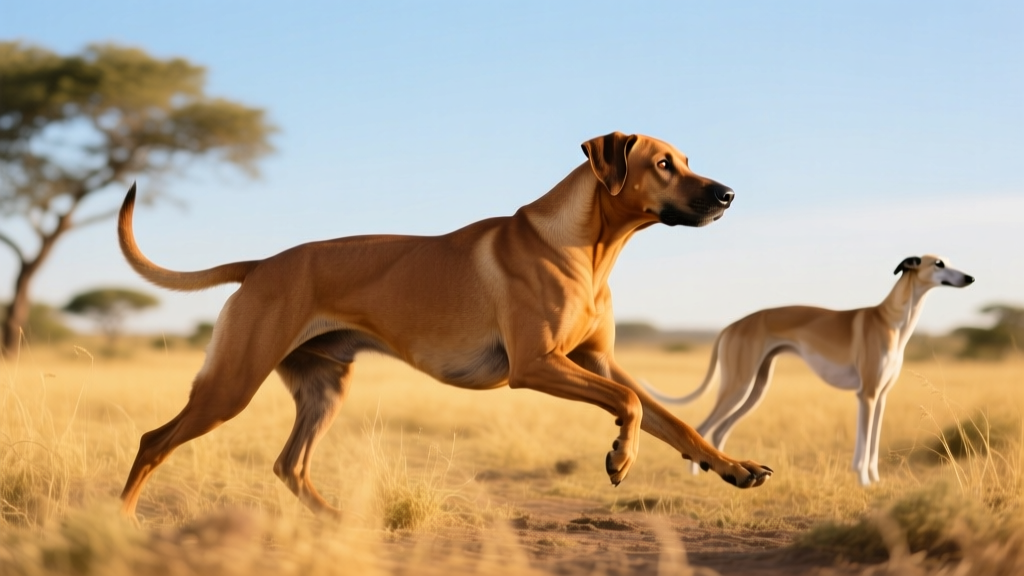
What Is an African Lion Hunting Dog?
When people search for "African lion hunting dog," they're almost always looking for the Rhodesian Ridgeback — the only breed historically developed in southern Africa specifically to track, corner, and hold lions at bay until human hunters arrived. But the Ridgeback isn't the only breed with roots in African big-game hunting. Several other breeds share this lineage, from the Basenji's ancient Central African tracking heritage to the Boerboel's role as a South African farm protector that also confronted large predators.
This guide breaks down every breed with legitimate claims to the "African lion hunting dog" label, explains what made them suited to this dangerous work, and helps you decide whether any of these powerful, independent-minded dogs fit your household in 2026.
Selection Criteria for This List
To qualify for this roundup, a breed must meet at least two of the following conditions:
- Geographic origin: Developed in sub-Saharan Africa
- Historical function: Documented use in hunting, tracking, or confronting large game (lion, leopard, wild boar, antelope)
- Physical capability: Muscular build, speed over 25 mph, and prey drive sufficient for large-animal encounters
- Temperament profile: Courage, independence, and biddability sufficient for coordinated hunting with humans
Breeds are grouped into three tiers: Primary Lion Hunters, African Big-Game Trackers & Guardians, and Related Heritage Breeds.
Primary Lion Hunters: Breeds Built to Face Big Cats
1. Rhodesian Ridgeback — The Original African Lion Hunting Dog
Size class: Large (70–85 lb / 32–39 kg; 24–27 in / 61–69 cm at shoulder)
Key trait: Bred specifically to track lions, keep them at bay using agility and intelligence, and hold position until the hunter arrived.
Profile: The Rhodesian Ridgeback is the African lion hunting dog. Developed in the 19th and early 20th centuries by Boer farmers in what is now Zimbabwe (formerly Rhodesia), the breed was created by crossing European hunting dogs — Greyhounds, Great Danes, Bloodhounds, and Mastiffs — with the semi-domesticated ridged hunting dogs of the Khoikhoi people. The result was a dog fast enough to keep up with lions across the veldt, tough enough to survive an encounter, and intelligent enough to avoid a direct attack. Ridgebacks hunted in packs, using their speed to harass and distract lions rather than engage in a fight they couldn't win. The distinctive ridge of hair along the spine, growing in the opposite direction, is the breed's signature trait and a genetic marker shared with dogs from Southeast Asia, suggesting ancient trade-route connections.
Ranking rationale: #1 because this is the only breed with a documented, deliberate breeding program targeting lion-hunting ability. The AKC breed standard still references courage, endurance, and the ability to track large game.
2026 ownership snapshot: Expect to pay $1,800–$3,500 for a Ridgeback puppy from a responsible breeder conducting OFA hip and elbow evaluations, thyroid screening, and degenerative myelopathy (DM) DNA testing. Annual care costs run $1,500–$2,200 including food, preventive medications, and routine veterinary visits. Ridgebacks need a minimum of 60–90 minutes of vigorous daily exercise — these dogs were built to run 20+ miles across open terrain and a backyard stroll won't cut it.
2. Africanis — The Indigenous Southern African Hunter
Size class: Medium (55–75 lb / 25–34 kg; 20–24 in / 50–61 cm)
Key trait: Naturally evolved landrace breed that hunted alongside indigenous African peoples for thousands of years, including encounters with lions and other large predators.
Profile: The Africanis is not a standardized kennel-club breed — it's a landrace, meaning it developed through natural selection and functional breeding by indigenous southern African communities rather than formal breed standards. These dogs hunted everything from small antelope to assisting in drives that cornered larger game. The Africanis is recognized by the Kennel Union of Southern Africa (KUSA) and the Africanis Society of Southern Africa. They are exceptionally hardy, with natural resistance to many parasites and diseases that devastate imported breeds in sub-Saharan climates. Their genetic diversity gives them robust health, though it also means appearance varies significantly.
Ranking rationale: #2 because the Africanis predates the Ridgeback by millennia and represents the original African hunting dog from which the Ridgeback's Khoikhoi ancestors descended. However, they are extremely rare outside southern Africa.
2026 ownership snapshot: Nearly impossible to source outside South Africa. Import costs including quarantine, health certification, and air freight can exceed $5,000–$8,000. Not AKC-recognized, so no U.S. breed-club infrastructure exists.
African Big-Game Trackers, Guardians & Coursing Breeds
3. Azawakh — The Saharan Sighthound
Size class: Large, lean (33–55 lb / 15–25 kg; 23.5–29 in / 60–74 cm)
Key trait: West African sighthound bred by Tuareg nomads to hunt gazelle and protect camps from predators including lions and hyenas.
Profile: Originating in the Sahel region of Mali, Niger, and Burkina Faso, the Azawakh served Tuareg and other nomadic peoples as both a coursing hunter and a fierce guardian. These dogs hunted gazelle across the Sahara at speeds exceeding 35 mph and were expected to confront jackals, hyenas, and occasionally lions that threatened livestock or camps. They are extremely lean, built for heat dissipation and endurance running in desert conditions. Their temperament is notably aloof with strangers and intensely bonded to their family — a trait honed by centuries of guarding nomadic camps.
Ranking rationale: Included for documented predator-defense duties in lion-range habitat, though their primary function was gazelle coursing rather than lion tracking.
2026 ownership snapshot: $2,000–$3,500 from AKC breeders. Requires experienced sighthound handlers — Azawakhs are sensitive, independent, and can be dog-aggressive. They need secure fencing (minimum 6-foot) and do poorly in cold climates without insulated coats.
4. Basenji — The Barkless African Tracker
Size class: Small-Medium (22–24 lb / 10–11 kg; 16–17 in / 41–43 cm)
Key trait: Ancient Central African hunting dog that tracked game through dense forest using sight and scent; too small to hunt lions but historically present in lion-range territories.
Profile: The Basenji originated in the Congo Basin, where Pygmy and Bantu peoples used them to drive small-to-medium game into nets. Their signature trait — they don't bark, instead producing a yodeling sound called a "baroo" — evolved because barking would alert prey in dense forest and potentially attract dangerous predators. While Basenjis never hunted lions, they lived alongside communities in lion habitat and their alertness served as an early-warning system. DNA studies place Basenjis among the most basal (ancient) dog breeds, diverging from wolves earlier than most modern breeds.
Ranking rationale: Included for African origin and historical presence in lion-range habitat, though their small size excludes them from direct big-cat confrontation.
2026 ownership snapshot: $1,500–$2,800. Prone to Fanconi syndrome (kidney disorder) — responsible breeders conduct annual urine strip tests. Basenjis are notoriously difficult to train off-leash due to extreme prey drive and independence. Not recommended for first-time owners.
5. Boerboel — The South African Lion Guardian
Size class: Giant (150–200 lb / 68–91 kg; 22–27 in / 56–69 cm)
Key trait: South African mastiff developed to protect homesteads from lions, leopards, and other predators while also assisting in big-game hunts.
Profile: The Boerboel ("farmer's dog" in Afrikaans) was bred by Dutch, French, and German settlers in South Africa from Bullenbeisser-type mastiffs crossed with local African dogs. These dogs needed to guard isolated farms against lion and leopard attacks on livestock and children — and they did so with a combination of size, power, and territorial instinct that few breeds can match. Boerboels also accompanied farmers on hunts, tracking and holding wounded game. They are confident, territorial, and require experienced handlers who understand powerful guardian breeds.
Ranking rationale: Included for documented lion-defense duties and South African big-game hunting heritage. Their guardian function was arguably more important than their hunting role.
2026 ownership snapshot: $2,000–$4,500. Hip and elbow dysplasia screening is essential — the AKC recommends OFA evaluations. Boerboels need firm, experienced handlers and extensive socialization from 8–16 weeks. Food costs run $120–$180/month for a quality large-breed diet. Note: Boerboels are restricted or banned in several countries and some U.S. municipalities under breed-specific legislation — check your local regulations.
6. Sloughi — The North African Coursing Hound
Size class: Large (55–65 lb / 25–29 kg; 24–29 in / 61–74 cm)
Key trait: North African sighthound used by Berber tribes to hunt gazelle, hare, and wild boar; occasionally confronted desert lions in the Atlas Mountain region.
Profile: The Sloughi (pronounced "SLOO-ghee") is Morocco's national sighthound, closely related to the Azawakh and the Saluki. Berber hunters used Sloughis to course game across semi-arid terrain, and historical accounts describe their use in hunts that sometimes intersected with Barbary lion territory in the Atlas Mountains (the Barbary lion was declared extinct in the wild by the mid-20th century). Sloughis are more biddable than Azawakhs but still require sighthound-experienced owners who can provide secure running space and understand prey-drive management.
Ranking rationale: Included for North African big-game coursing heritage and historical overlap with lion-range habitat.
2026 ownership snapshot: $1,500–$3,000. Rare in the U.S. — the AKC recognized the Sloughi in 2016, and the breeder pool remains small. Health screening should include autoimmune thyroiditis testing. Daily exercise: 45–60 minutes of running in a secure area.
Related Heritage Breeds With Big-Game Hunting Roots
7. Dogo Argentino — The South American Big-Game Specialist
Size class: Large (88–100 lb / 40–45 kg; 23.5–27 in / 60–68 cm)
Key trait: Developed in Argentina specifically to hunt wild boar and puma (cougar) — the New World equivalent of lion-hunting dogs.
Profile: While not African, the Dogo Argentino deserves mention because it is the closest functional equivalent to the Rhodesian Ridgeback outside Africa. Dr. Antonio Nores Martinez created the breed in the 1920s by crossing the now-extinct Cordoba Fighting Dog with Great Danes, Boxers, Spanish Mastiffs, Bull Terriers, and other breeds to produce a white, powerful pack hunter capable of tackling puma and wild boar. Dogos hunt using the same "track, corner, hold" strategy that Ridgebacks used on lions. They are intensely loyal, athletic, and require experienced handlers.
Ranking rationale: Included as the most direct non-African parallel to the lion-hunting function. Puma hunting requires the same courage, strength, and pack coordination as lion hunting.
2026 ownership snapshot: $2,000–$3,500. Deafness is a concern in white-coated breeds — BAER (Brainstem Auditory Evoked Response) testing is essential. Dogo Argentinos are banned in several countries including the UK, Australia, and parts of the U.S. under breed-specific legislation. Check your local laws before committing.
8. Thai Ridgeback — The Asian Ridge-Bearing Hunter
Size class: Medium-Large (35–75 lb / 16–34 kg; 20–24 in / 51–61 cm)
Key trait: Shares the distinctive dorsal ridge with the Rhodesian Ridgeback and served as a versatile hunting dog in Thailand, tracking everything from wild boar to deer.
Profile: The Thai Ridgeback is one of only three breeds worldwide (along with the Rhodesian Ridgeback and the Phu Quoc Ridgeback of Vietnam) that carry the characteristic ridge of reverse-growing hair along the spine. Used for centuries in eastern Thailand to hunt wild boar, deer, and birds, and to guard carts and property, Thai Ridgebacks are athletic, independent, and wary of strangers. Genetic research suggests the ridge mutation may have originated in Southeast Asia and spread to Africa through ancient trade routes, or vice versa — the direction of travel remains debated.
Ranking rationale: Included for genetic connection to the Rhodesian Ridgeback and documented big-game (wild boar) hunting ability.
2026 ownership snapshot: $1,800–$3,000. Very rare in the U.S. — few AKC-registered breeders exist. Dermoid sinus (a neural tube defect associated with the ridge gene) occurs in approximately 5–10% of Ridgeback puppies worldwide and requires surgical correction.
9. Cão de Castro Laboreiro — The Portuguese Livestock Guardian Against Wolves & Big Cats
Size class: Large (77–88 lb / 35–40 kg; 22–26 in / 56–66 cm)
Key trait: Portuguese mountain guardian historically used to defend livestock from wolves and Iberian lynx — a European parallel to African lion-guardian breeds.
Profile: While geographically distant from Africa, the Cão de Castro Laboreiro fills the same ecological niche as the Boerboel: a powerful guardian breed that defended livestock and families from large predators. Originating in the mountains of northern Portugal, these dogs confronted wolves and the Iberian lynx (a wild cat species) nightly. They are independent thinkers with strong protective instincts and require experienced handlers.
Ranking rationale: Included as a functional parallel — big-cat predator defense — though geographically removed from Africa.
2026 ownership snapshot: Extremely rare outside Portugal. Import costs can exceed $4,000–$6,000. Not AKC-recognized. Best suited for rural properties with livestock-guardian experience.
10. Saluki — The Ancient Desert Coursing Hound
Size class: Large (40–65 lb / 18–29 kg; 23–28 in / 58–71 cm)
Key trait: Middle Eastern/North African sighthound that hunted gazelle and hare across desert terrain historically overlapping with lion range.
Profile: The Saluki is among the oldest known dog breeds, with depictions in Egyptian tombs dating to at least 2100 BCE. Used by Bedouin hunters to course gazelle across the Arabian Peninsula and North Africa, Salukis operated in territories where Asiatic lions and Barbary lions existed until the 19th and 20th centuries. While Salukis were not used to hunt lions directly, their speed (up to 42 mph), endurance, and desert adaptations made them invaluable hunting partners in lion-range ecosystems.
Ranking rationale: Included for historical presence in lion-range habitat and big-game (gazelle) coursing function in the broader Middle Eastern/North African region.
2026 ownership snapshot: $2,000–$3,500. Salukis need daily sprinting opportunities in secure areas and do best with sighthound-experienced owners. Cardiac screening (echocardiogram) is recommended due to breed predisposition to certain heart conditions.
Breed Comparison: African Lion Hunting Dogs at a Glance
| Breed | Weight (lb / kg) | Lion-Hunting Role | Exercise Need (min/day) | Family Fit | Puppy Cost (2026) |
|---|---|---|---|---|---|
| Rhodesian Ridgeback | 70–85 / 32–39 | Direct (track & bay) | 60–90 | Good with older kids | $1,800–$3,500 |
| Africanis | 55–75 / 25–34 | Direct (indigenous hunter) | 60–90 | Good | $5,000+ (import) |
| Azawakh | 33–55 / 15–25 | Guardian & courser | 45–60 | Experienced homes only | $2,000–$3,500 |
| Basenji | 22–24 / 10–11 | Indirect (small game) | 30–45 | Moderate | $1,500–$2,800 |
| Boerboel | 150–200 / 68–91 | Guardian & tracker | 45–60 | Experienced homes only | $2,000–$4,500 |
| Sloughi | 55–65 / 25–29 | Courser (gazelle) | 45–60 | Moderate | $1,500–$3,000 |
| Dogo Argentino | 88–100 / 40–45 | Direct (puma/boar) | 60–90 | Experienced homes only | $2,000–$3,500 |
| Thai Ridgeback | 35–75 / 16–34 | Versatile (boar/deer) | 45–60 | Moderate | $1,800–$3,000 |
| Cão de Castro Laboreiro | 77–88 / 35–40 | Guardian (wolf/lynx) | 45–60 | Experienced homes only | $4,000+ (import) |
| Saluki | 40–65 / 18–29 | Courser (gazelle) | 45–60 | Good with older kids | $2,000–$3,500 |
Honorable Mentions & Breeds to Avoid for Lion-Hunting Heritage
Honorable Mentions
- Phu Quoc Ridgeback (Vietnam): The third ridge-bearing breed worldwide. Used for hunting and guarding on Phu Quoc Island. Extremely rare outside Vietnam — no AKC recognition and virtually no U.S. breeder infrastructure.
- Ibizan Hound: Mediterranean coursing hound with North African ancestry theories. Excellent hunter of rabbits and small game, but no documented big-game or lion-range heritage.
- Pharaoh Hound: Malta's national dog, often linked to ancient Egyptian hunting dogs through romantic (but genetically unsupported) origin theories. No verified lion-hunting connection.
Breeds Often Mislabeled as "Lion Hunting Dogs"
Leonberger: Despite the name meaning "lion dog" in German, the Leonberger was bred as a multipurpose farm and water-rescue dog, not a lion hunter. The name references the lion crest of the town of Leonberg, not any big-cat hunting function.
Tibetan Mastiff: Sometimes described as "lion-like" due to their massive mane, Tibetan Mastiffs guarded livestock from wolves and snow leopards — impressive predators, but the breed has no African origin or lion-hunting history.
Chow Chow / Löwchen: Both nicknamed "lion dogs" due to their traditional lion-cut grooming styles. Neither has any hunting connection to lions or Africa.
Decision Framework: Which African Lion Hunting Dog Breed Fits Your Life?
Choosing between the top breeds on this list depends on your experience level, living situation, and what you want from a dog. Here's a practical decision framework:
Choose Based on Your Situation
- Are you a first-time or moderately experienced dog owner living in a suburban home with a fenced yard?
→ Rhodesian Ridgeback — The most accessible, well-supported breed on this list. AKC breeders are plentiful, health testing infrastructure is established, and Ridgebacks adapt to family life with proper exercise and training. Invest in puppy socialization classes starting at 8–10 weeks and commit to 60+ minutes of daily vigorous exercise. - Are you an experienced sighthound owner with acreage or access to large secure running areas?
→ Azawakh or Saluki — Both breeds reward experienced handlers with deep loyalty and breathtaking athleticism. They require understanding of sighthound prey drive, secure 6-foot fencing, and climate considerations (Azawakhs struggle in cold; Salukis need winter coats in northern U.S. climates). - Do you need a powerful guardian for a rural property or farm?
→ Boerboel — If you have livestock to protect, significant acreage, and experience with mastiff-type breeds, the Boerboel's territorial instinct and predator-deterrent ability are unmatched. This is not a breed for casual ownership — budget for professional training ($2,000–$4,000 for a comprehensive program) and check your local breed-specific legislation before committing. - Do you want an African heritage dog in a smaller, apartment-compatible package?
→ Basenji — The only breed on this list that realistically fits apartment living. However, Basenjis are notoriously challenging to train, have extreme prey drive (never trustworthy off-leash in unfenced areas), and require patient owners who understand that "independent" is an understatement. Budget for Fanconi syndrome screening ($50–$100/year for urine strip tests).
Training, Health & Care Considerations for African Hunting Breeds
Regardless of which breed you choose, African hunting dogs share several care requirements that distinguish them from typical companion breeds:
Training Approach
These breeds were selected for independent decision-making during hunts — a Ridgeback had to decide when to press a lion and when to retreat without waiting for human commands. This independence translates to training challenges. Use positive reinforcement and force-free methods exclusively. Aversive tools like shock collars, prong collars, or alpha rolls are counterproductive with these breeds and can trigger fear-based aggression. Work with a certified trainer (CPDT-KA or IAABC-credentialed) who has experience with primitive or sighthound breeds.
Exercise Requirements
Every breed on this list requires substantially more exercise than the average dog. Plan for:
- Minimum 45–90 minutes of vigorous daily activity (running, lure coursing, hiking — not just leash walking)
- Secure fencing of at least 5–6 feet — several of these breeds can clear lower fences
- Mental stimulation through scent work, tracking exercises, or structured play
Health Screening Priorities
Before purchasing any puppy from this list, verify that the breeder conducts breed-appropriate health testing. Consult your veterinarian about the specific conditions common to your chosen breed. For Ridgebacks, request OFA hip and elbow evaluations, thyroid panels, and DM DNA test results. For Boerboels, request hip/elbow scores and cardiac evaluations. For sighthounds (Azawakh, Sloughi, Saluki), ask about autoimmune thyroiditis screening and cardiac evaluations.
Always consult your veterinarian before beginning any new exercise program with your dog, especially for giant breeds like the Boerboel where joint stress during growth phases (0–18 months) requires careful management. The Merck Veterinary Manual provides breed-specific health guidance you can review before your first vet visit.
Frequently Asked Questions
Is the Rhodesian Ridgeback the only true African lion hunting dog?
Yes, in the strictest sense. The Rhodesian Ridgeback is the only breed deliberately developed through a documented breeding program specifically targeting lion-hunting ability. The Africanis is an indigenous landrace that hunted alongside African peoples in lion territory, but it was not selectively bred for lion hunting in the formal sense. Other breeds on this list had adjacent roles — guardian duty, gazelle coursing, or big-game hunting of non-lion species.
Can a Rhodesian Ridgeback actually kill a lion?
No. Ridgebacks were never expected to kill lions. They hunted in packs of two or more dogs, using speed and agility to harass, distract, and corner a lion — keeping it in place and preventing it from fleeing until the human hunter arrived on foot with a rifle. A single Ridgeback confronting a lion directly would almost certainly be killed. The breed's intelligence lay in knowing how to stay just out of reach while maintaining the lion's attention.
Are Rhodesian Ridgebacks good family dogs?
Yes, with important caveats. Ridgebacks are loyal, calm indoors, and generally good with children they're raised with. However, they are strong-willed, have high prey drive (not suitable for homes with cats or small animals unless carefully socialized from puppyhood), and require consistent training. They are best suited to families with children aged 8+ who understand how to interact respectfully with a large, powerful dog. Early socialization (8–16 weeks) is critical.
How much does it cost to own an African lion hunting dog breed?
First-year costs for a Rhodesian Ridgeback typically total $4,500–$7,500 including puppy purchase ($1,800–$3,500), initial veterinary visits and vaccinations ($400–$800), spay/neuter ($300–$700), crate, leash, and supplies ($300–$500), training classes ($200–$600), and food ($600–$900). Ongoing annual costs run $1,500–$2,200 for food, preventive care, and routine veterinary visits. For larger breeds like the Boerboel, add 30–50% to food and medication costs due to body weight.
Do any of these breeds have breed-specific legislation restrictions?
Yes. The Boerboel and Dogo Argentino are restricted or banned in several countries and some U.S. municipalities under breed-specific legislation (BSL). The Rhodesian Ridgeback is generally not subject to BSL. Before committing to any breed, check your city and county ordinances, your homeowner's insurance policy, and your lease agreement (if renting). The AVMA opposes breed-specific legislation and provides resources on alternatives.
Can I adopt an African lion hunting dog breed from a rescue?
Yes. Rhodesian Ridgeback rescue organizations operate across the U.S. — the Rhodesian Ridgeback Club of the United States maintains a rescue network. Rescue dogs typically cost $300–$600 in adoption fees and are often already spayed/neutered, vaccinated, and temperament-evaluated. Rescue is an excellent option for experienced owners willing to work with a dog that may have behavioral challenges from inadequate prior socialization or training. Boerboel and Azawakh rescues are less common but do exist through breed-specific networks.
Aaron Whyte
All our authors care for dogs every day — read more of their work on the authors page.


