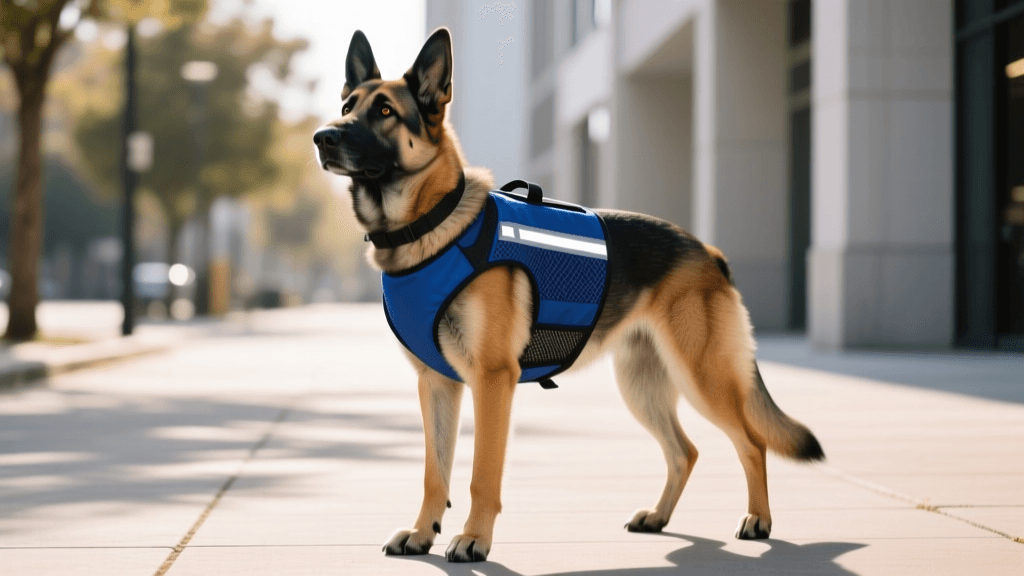
Best 2026 Cooling Vests for Working Dogs: Beat Heat Stress
Discover the best 2026 cooling vests and heat stress prevention protocols for working and service dogs. Keep your K9 partner safe in extreme temperatures.
The Critical Reality of Canine Heat Stress in 2026
Working dogs, including search and rescue (SAR) teams, detection canines, police K9s, and mobility service dogs, perform vital roles that often push their physical limits to the absolute edge. As we navigate the increasingly extreme summer temperatures of 2026, with global temperature averages continuing to climb and prolonged heatwaves becoming more frequent, managing a working dog's core temperature is no longer just a comfort issue—it is a critical, life-saving protocol. Heat stress remains one of the leading causes of preventable line-of-duty fatalities and long-term health complications for working canines. This comprehensive guide explores the latest 2026 cooling vest technologies, field hydration strategies, and veterinary-recommended work/rest cycles to ensure your canine partner thrives in the heat and enjoys a long, healthy career.
The Physiology of Canine Thermoregulation
Unlike humans, dogs lack widespread eccrine sweat glands. They rely primarily on panting and vasodilation in their paw pads, ear flaps, and mucous membranes to dissipate heat. When ambient environmental temperatures approach or exceed a dog's normal core temperature (101.0°F to 102.5°F), panting becomes highly inefficient. This is especially dangerous in high-humidity environments where the evaporative cooling effect of panting fails entirely.
According to the American Kennel Club, heatstroke in dogs can trigger a catastrophic cascade of systemic failures, including disseminated intravascular coagulation (DIC), acute kidney injury, hepatic necrosis, and central nervous system damage. For a working dog driven by high prey drive, task focus, or a deep desire to please their handler, they will often ignore their own physiological warning signs to complete a mission. This makes it the handler's absolute responsibility to enforce thermal limits and utilize advanced cooling gear.
Recognizing the Subtle Signs of Heat Exhaustion
Before a dog reaches full heatstroke, they will exhibit signs of heat exhaustion. In 2026, veterinary sports medicine specialists emphasize training handlers to recognize the subtle, early-stage indicators before the dog's condition becomes critical. Early signs include:
- Excessive, frantic panting: The tongue may appear unusually wide, spatulate, or dark red.
- Delayed capillary refill time: Pressing on the gums results in a slow return to pink (longer than 2 seconds).
- Sticky or dry mucous membranes: A lack of normal saliva production.
- Behavioral changes: A highly trained detection dog may suddenly lose interest in their target odor, or a mobility dog may lag behind and seek shade.
- Muscle tremors or ataxia: Stumbling or weakness in the hindquarters indicates dropping blood pressure and impending systemic shock.
Top 2026 Cooling Vest Technologies for Working Dogs
The market for canine thermal regulation has advanced significantly over the last few years. In 2026, handlers have three primary categories of cooling gear to choose from, each suited to different operational environments and deployment lengths.
1. Evaporative Cooling Vests
These vests utilize specialized multi-layer fabrics that retain water while keeping the dog's outer coat relatively dry. By soaking the vest in water and wringing it out, the slow evaporation process pulls heat away from the dog's core. They are highly effective in dry, arid climates but lose efficacy in high humidity. Modern 2026 iterations feature integrated solar-reflective outer layers to prevent the sun from heating the water trapped in the fabric.
2. Phase Change Material (PCM) and Ice-Pack Vests
For humid environments or extended deployments where water resupply is limited, PCM vests are the gold standard. These vests use insertable frozen packs or chemical coolants that maintain a safe, consistent surface temperature (usually around 55°F to 60°F). This specific temperature range is crucial; applying ice directly to a dog's skin causes localized vasoconstriction, which traps heat in the core organs. PCM technology safely draws heat away without shocking the vascular system.
3. Solar Reflective Barrier Coats
Often used in conjunction with evaporative layers or worn alone for light duty, these coats feature advanced metallic or ceramic-infused textiles that reflect up to 90% of solar radiation. They are essential for detection dogs working on open tarmac, rooftops, or desert terrain where ground reflection amplifies solar heat.
2026 Working Dog Cooling Gear Comparison Chart
| Brand & Model | Cooling Method | Active Duration | Best Environment | 2026 Est. Price |
|---|---|---|---|---|
| Ruffwear Swamp Cooler Evo | Evaporative / Solar Reflective | 2-4 Hours | Dry, Arid, Direct Sun | $95.00 |
| Hurtta Cooling Vest | Evaporative / UV Blocking | 1-3 Hours | Moderate Humidity, High UV | $85.00 |
| K9 Top Coat (PCM Insert) | Phase Change Material | 3-5 Hours | High Humidity, No Water Source | $140.00 |
| Glacier Tek K9 Cooling Vest | Flexible Ice Packs | 2-3 Hours | Extreme Heat, Tactical Deployment | $165.00 |
Advanced Field Hydration and Electrolyte Protocols
Water alone is insufficient for a working dog burning thousands of calories in the heat. Excessive water consumption without electrolyte replacement can lead to hyponatremia (water toxicity), a potentially fatal condition where the sodium levels in the blood become dangerously diluted. Furthermore, gulping large amounts of water rapidly increases the risk of gastric dilatation-volvulus (bloat), a leading killer of large-breed working dogs.
Veterinary sports medicine specialists in 2026 recommend specialized canine electrolyte pastes or powders formulated with sodium, potassium, and chloride, alongside B-vitamins for metabolic support. Products like K9 Power Go Dog and Bully Max Performance Electrolytes remain top choices for professional handlers.
Hydration Schedule: Offer 4 to 8 ounces of water mixed with a canine-safe electrolyte supplement every 20 minutes during active deployment. The U.S. Food and Drug Administration (FDA) emphasizes that pets must have constant access to fresh, cool water, but for working dogs, structured, measured hydration intervals prevent both dehydration and gastrointestinal emergencies. Never allow a working dog to drink from stagnant puddles or unknown water sources, which in 2026 carry heightened risks of cyanobacteria (blue-green algae) and leptospirosis.
Work/Rest Cycles and Acclimatization
A dog cannot be thrown into extreme heat and expected to perform at peak capacity. Proper acclimatization takes 14 to 21 days of gradually increasing workload in the target temperature, allowing the dog's cardiovascular system and sweat gland equivalents to adapt.
Once acclimated, strict work/rest cycles must be enforced. Washington State University’s Veterinary Teaching Hospital notes that resting in the shade is not enough; active cooling (fans, misting, cooling mats) must be applied during rest periods to bring the core temperature down before the next work cycle begins.
The 2026 Tactical Work/Rest Matrix
- 75°F - 80°F (Low Risk): 45 minutes work / 15 minutes active rest.
- 81°F - 87°F (Moderate Risk): 20 minutes work / 20 minutes active rest with cooling vest.
- 88°F - 95°F (High Risk): 10 minutes work / 30 minutes active rest with PCM cooling and electrolytes.
- Above 95°F (Extreme Risk): Deploy only for life-saving emergencies. Continuous biometric monitoring required.
Biometric Monitoring: Taking the Guesswork Out
In 2026, elite K9 units and professional service dog organizations rely heavily on biometric telemetry to protect their canine partners. Ingestible temperature sensors, such as the HQInc CorTemp, are administered orally prior to deployment. These sensors transmit real-time core temperature data via radio frequency to a handler's ruggedized smartphone or smartwatch.
When the dog's core temperature hits 103.5°F, the handler receives an automated haptic alert to pull the dog off the line immediately. This technology removes the guesswork and prevents the dog from crossing the 105.0°F threshold, where irreversible cellular damage and multi-organ failure begin. For handlers who cannot use ingestible sensors, advanced smart collars equipped with tympanic (ear canal) infrared sensors offer a non-invasive, albeit slightly less accurate, alternative for continuous thermal monitoring.
Post-Deployment Recovery and Veterinary Care
The risk of heat-related illness does not end the moment the dog is placed in an air-conditioned vehicle. Post-deployment recovery is a critical phase of canine wellbeing. Handlers must continue to monitor the dog's respiratory rate and gum color for at least two hours after work ceases. Offer small, frequent amounts of cool (not ice-cold) water and a high-quality, easily digestible protein meal to aid in muscle recovery.
Annual veterinary evaluations for working dogs should include comprehensive blood panels to check kidney and liver function, ensuring that cumulative heat exposure has not caused subclinical organ damage. By combining cutting-edge 2026 cooling gear, rigorous hydration protocols, and advanced biometric monitoring, handlers can ensure their working and service dogs remain healthy, focused, and safe, regardless of the mercury's height.
marcus-aldridge
All our authors care for dogs every day — read more of their work on the authors page.