Top 4 Puppy Breeds for Remote Workers in 2026: Health Guide
Discover the top 4 puppy breeds for remote workers in 2026. Learn about their mental health needs, joint care, and ideal home-office wellness routines.
The Rise of the Work-From-Home Dog in 2026
As remote and hybrid work models continue to dominate the professional landscape in 2026, the home office has evolved into a shared sanctuary for both humans and their canine companions. Bringing a puppy into a remote work environment offers profound benefits, but it also requires a strategic approach to canine health, mental stimulation, and ergonomic wellness. According to the Human Animal Bond Research Institute (HABRI), interacting with dogs significantly lowers cortisol levels, reduces feelings of isolation, and improves overall cardiovascular health among remote workers.
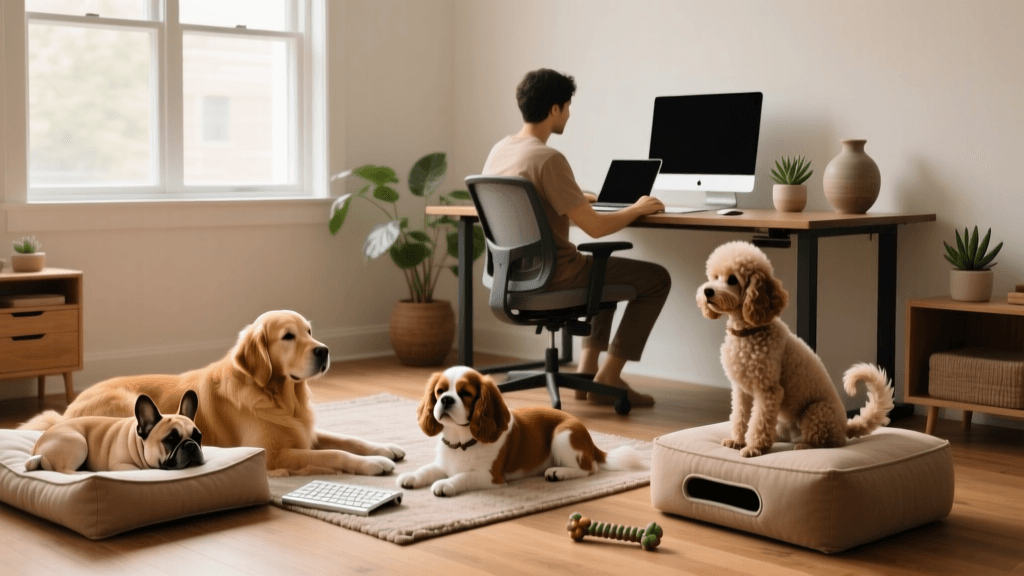
However, not all breeds thrive in a home-office setting. High-energy working breeds may develop destructive behaviors out of boredom during your eight-hour Zoom marathon, while overly vocal breeds can disrupt important virtual meetings. For remote workers, the ideal canine companion balances low-to-moderate indoor energy with high emotional intelligence. In this comprehensive 2026 wellness guide, we explore the top four puppy breeds perfectly suited for remote workers, focusing on their specific health profiles, joint care needs, and mental wellbeing requirements.
Top 4 Puppy Breeds for the Home Office
1. Cavalier King Charles Spaniel: The Empathetic Co-Worker
The Cavalier King Charles Spaniel is widely considered the ultimate lap dog, making them an exceptional choice for remote workers who spend long hours seated at a desk. They are deeply empathetic, often sensing when their owner is stressed during a difficult project and offering quiet, physical comfort. Their exercise needs are easily met with a 30-minute morning walk and a brief evening stroll, leaving them perfectly content to snooze under your standing desk for the remainder of the workday.
Health & Wellbeing Focus: Cavaliers require proactive cardiac care. They are genetically predisposed to Mitral Valve Disease (MVD). In 2026, veterinary cardiologists recommend annual echocardiograms starting at age three. Additionally, they are prone to syringomyelia, a neurological condition. To support their wellbeing, invest in a supportive, low-profile orthopedic bed that allows them to rest their neck and spine in a neutral position while sleeping near your workspace.
2. French Bulldog: The Quiet Supervisor
French Bulldogs have maintained their status as a favorite among urban remote workers due to their compact size, minimal barking, and comical personalities. They are the quintessential 'supervisors'—happy to sit on a nearby sofa and watch you type without demanding constant physical interaction. Their low stamina means they are entirely satisfied with indoor play and short outdoor potty breaks, fitting seamlessly into a busy remote schedule.
Health & Wellbeing Focus: As a brachycephalic (flat-faced) breed, Frenchies are susceptible to Brachycephalic Obstructive Airway Syndrome (BOAS). Temperature regulation is a critical component of their wellbeing. Your home office must be climate-controlled; never place a Frenchie's bed near a sunny window or a heat-generating PC tower. Furthermore, their unique spinal structure makes them prone to Intervertebral Disc Disease (IVDD). Preventative care includes using ramps to help them access higher furniture and strictly managing their weight to reduce spinal load.
3. Greyhound: The Sprint-and-Snooze Colleague
It may surprise some to see a racing breed on a list for remote workers, but Greyhounds are famously known as '45-mph couch potatoes.' They are incredibly quiet, gentle, and sleep up to 18 hours a day. For a remote worker who enjoys a vigorous morning run or a long walk before logging on, a Greyhound is an ideal match. Once their morning sprint is complete, they transform into serene, unobtrusive office mates who rarely interrupt calls.
Health & Wellbeing Focus: Greyhounds have very low body fat and thin skin, making them highly sensitive to cold and hard surfaces. Joint care and pressure sore prevention are paramount. A thick, memory-foam orthopedic bed is non-negotiable to prevent hygromas (fluid-filled swellings on the elbows) and joint stiffness. Nutritionally, they require a diet tailored to lean muscle maintenance, and their deep chests put them at risk for bloat (GDV), so utilize slow-feeder bowls and enforce a strict resting period after meals.
4. Bichon Frise: The Cheerful Morale Booster
If your home office lacks natural light or you struggle with the winter blues, the Bichon Frise is a natural antidote. Known for their cheerful, resilient disposition, Bichons are highly adaptable and thrive on being near their humans. They are also a premier choice for remote workers with mild pet allergies, as their hair-like coat produces less dander. Their playful nature provides excellent mental breaks during your workday, encouraging you to step away from the screen for a quick game of indoor fetch.
Health & Wellbeing Focus: Bichons are notorious for dental disease and patellar luxation (slipping kneecaps). A rigorous daily dental care routine using veterinary-approved enzymatic toothpaste is essential. To protect their joints, avoid letting them jump repeatedly off high office chairs. Mental stimulation is also key; while they are small, they are highly intelligent and require puzzle toys to prevent boredom-induced chewing on your office cables.
Comparison Chart: WFH Breed Wellness Profiles
| Breed | Energy Level | Primary Health Focus | Home Office Vibe | Barking Tendency |
|---|---|---|---|---|
| Cavalier King Charles Spaniel | Low to Moderate | Cardiac Health (MVD) | The Empathetic Foot-Warmer | Low |
| French Bulldog | Low | Airway & Spinal Health | The Quiet Supervisor | Very Low |
| Greyhound | Moderate (Sprint) | Joint Care & Bloat Prevention | The Sprint-and-Snooze Colleague | Low |
| Bichon Frise | Moderate | Dental & Patellar Health | The Cheerful Morale Booster | Moderate |
Home Office Ergonomics and Canine Wellness
Creating a healthy home office in 2026 goes beyond ergonomic chairs and monitor heights; it requires designing a space that supports your dog's physical and mental health. Prolonged exposure to the dry heat of computer exhausts, combined with hard flooring, can lead to canine respiratory irritation and joint degradation.
- Climate & Air Quality: Run a HEPA air purifier in your office space. This not only captures pet dander to keep your own allergies at bay but also filters out dust that can irritate brachycephalic breeds like the French Bulldog.
- Orthopedic Zoning: Position your dog's bed in a 'quiet zone' at least three feet away from your primary workspace to protect them from the high-frequency whine of computer fans and the stress of sudden keyboard clatter.
- Cable Management: Puppies explore with their mouths. Use braided cable sleeves and cord concealers to prevent accidental electrocution or intestinal blockages from chewed wires.
Nutrition and Metabolic Health for the WFH Dog
One of the most significant health risks for work-from-home dogs is obesity. When you are at your desk snacking, it is incredibly tempting to share treats with the puppy sitting expectantly by your chair. In 2026, veterinary nutritionists warn that 'grazing' throughout the workday disrupts a dog's metabolic rhythm and leads to rapid weight gain, exacerbating joint issues and cardiac strain.
Instead of random treats, incorporate your dog's daily kibble allowance into training and enrichment. Use interactive snuffle mats or frozen lick mats during your long virtual meetings. This provides vital mental stimulation, keeps them quietly occupied, and ensures their caloric intake remains strictly controlled. For expert guidance on maintaining a healthy weight, the American Kennel Club's health resources offer excellent breed-specific caloric guidelines and body condition scoring charts.
Preventing Separation Anxiety in WFH Puppies
Perhaps the most critical mental health challenge for remote work puppies is separation anxiety. Because you are home 24/7, the puppy learns to expect your constant presence. When you eventually need to leave for a dental appointment, a grocery run, or a rare in-office corporate retreat, the sudden absence can trigger severe panic, destructive behavior, and vocalization.
The ASPCA guidelines on separation anxiety emphasize the importance of proactive desensitization. To safeguard your puppy's mental wellbeing, you must artificially create alone time. Implement the 'Departure Desensitization Protocol':
- Every workday, schedule a 20-minute 'away' block during your lunch break.
- Place your puppy in a safe, enriched crate or pen with a long-lasting chew.
- Leave the house completely. Do not just go to another room.
- Return calmly, ignoring the puppy until they are settled and quiet.
This daily practice normalizes your absence and builds emotional resilience, ensuring your dog remains confident and relaxed whether you are on a video call in the next room or out of the house entirely.
Conclusion
Integrating a puppy into your remote work life in 2026 is a deeply rewarding endeavor that enhances your mental health and brings joy to your daily routine. By selecting a breed that aligns with your lifestyle—such as the empathetic Cavalier, the quiet Frenchie, the relaxed Greyhound, or the cheerful Bichon—and prioritizing their specific ergonomic, nutritional, and psychological needs, you create a harmonious home office. Remember that a healthy, well-adjusted work-from-home dog is the result of intentional care, proactive veterinary partnerships, and a commitment to their holistic wellbeing.
aaron-whyte
All our authors care for dogs every day — read more of their work on the authors page.