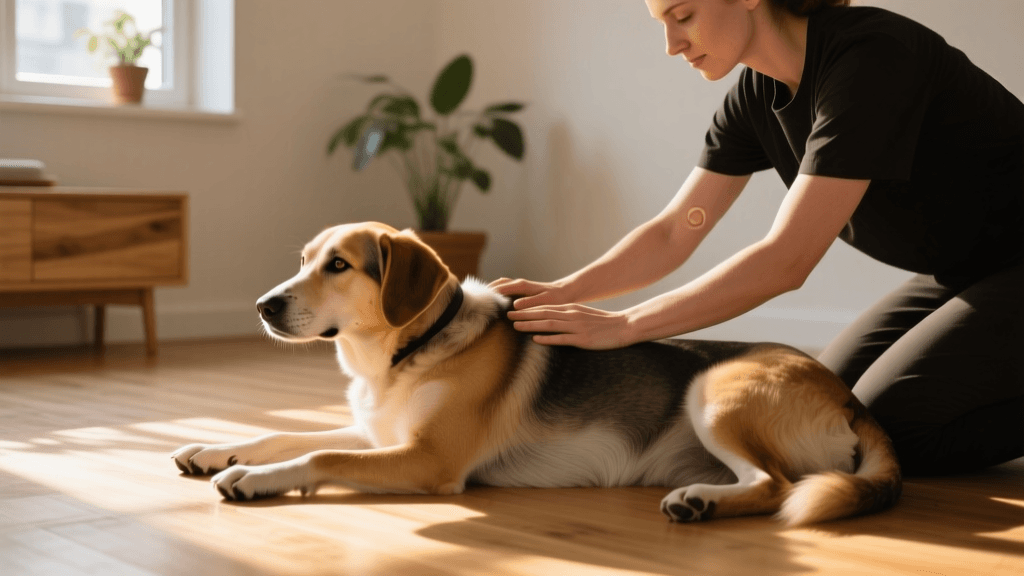
Tellington TTouch Massage for Rescue Dog Bonding in 2026
Discover how Tellington TTouch massage techniques reduce rescue dog anxiety and deepen your bond. Learn actionable steps and benefits for 2026.
The Neurobiology of the Human-Canine Bond
Adopting a rescue dog is a profound commitment, but many dogs entering our homes in 2026 carry the invisible weight of past trauma, neglect, or chronic stress. While traditional obedience training addresses behavioral symptoms, it often fails to heal the underlying nervous system dysregulation that rescue dogs experience. To truly build a relationship rooted in trust, we must look beyond commands and tap into the neurobiology of touch.
When you engage in mindful, intentional physical contact with your dog, both of your brains release oxytocin, often referred to as the 'love hormone' or 'bonding hormone.' Simultaneously, cortisol, the primary stress hormone, begins to decrease. According to the American Veterinary Medical Association (AVMA), the human-animal bond is a mutually beneficial and dynamic relationship that is deeply influenced by emotional, psychological, and physical interactions. For a rescue dog, physical touch can either be a trigger for fear or a powerful conduit for healing, depending entirely on how that touch is applied.
What is Tellington TTouch?
Developed in the 1970s by Linda Tellington-Jones and continually refined through modern veterinary behavioral science, Tellington TTouch is a globally recognized method of bodywork and movement exercises. Unlike traditional canine massage, which primarily focuses on manipulating muscle tissue to relieve physical tension, TTouch focuses on the nervous system. It utilizes non-habitual, gentle touch to activate cellular intelligence, encouraging the dog's brain to form new neural pathways.
For rescue dogs, habitual touch (like vigorous chest rubbing or patting) can sometimes be overwhelming or associated with past negative experiences. TTouch introduces novel, gentle sensations that bypass the dog's habitual fear responses, inviting the nervous system to shift from a sympathetic state (fight or flight) into a parasympathetic state (rest and digest). In 2026, certified veterinary behaviorists increasingly recommend TTouch as a foundational pillar for rehabilitation and relationship building in fearful or reactive dogs.
Core TTouch Techniques for Trauma Recovery
To begin your bonding journey, find a quiet space free from household chaos. Sit on the floor near your dog, allowing them to initiate the proximity. Never force a rescue dog into a restrained position for massage. Here are three foundational TTouch techniques you can use to build trust:
1. The Clouded Leopard
This is the most fundamental TTouch technique, designed to be deeply soothing and grounding. The name comes from the large, padded paws of the clouded leopard.
- Hand Position: Curve your hand gently, keeping your thumb and fingers slightly apart. Imagine you are holding a small, delicate bird in the palm of your hand.
- The Movement: Place the pads of your fingers lightly on your dog's shoulder or back. Apply very gentle pressure—just enough to move the skin, not slide over the fur. Move the skin in a slow, one-and-a-quarter circle. Imagine a clock face: start at 6 o'clock, push gently up and around to 9, 12, 3, and end at 9 o'clock. Pause, lift your hand, and move to an adjacent spot.
- The Benefit: This non-habitual circular movement stimulates nerve endings in the skin, sending calming signals directly to the brain. It is highly effective for dogs who flinch when approached from above.
2. The Python Lift
The Python Lift is excellent for releasing deep-seated tension along the spine and promoting blood circulation without the friction of traditional rubbing.
- Hand Position: Use your whole hand, placing your thumb on one side of a fold of skin and your fingers on the other.
- The Movement: Gently lift the skin and underlying tissue away from the body, hold for a brief second, and slowly release. Move systematically down the dog's back, avoiding the spine itself but focusing on the thick muscles on either side.
- The Benefit: Rescue dogs often carry immense physical armoring in their back and hindquarters due to chronic hyper-vigilance. The Python Lift gently encourages these muscles to let go of their defensive posturing, signaling to the dog that they are safe in their environment.
3. Ear TTouches and Strokes
The canine ear is incredibly rich in nerve endings and acupuncture points that correlate to internal organs and the parasympathetic nervous system.
- The Movement: Gently stroke from the base of the ear out to the tip using your thumb and index finger. Alternatively, use the Clouded Leopard technique to make tiny, gentle circles at the base of the ear where it meets the skull.
- The Benefit: Ear work is profoundly relaxing and can even lower a dog's heart rate. It is an excellent technique to use during stressful events like thunderstorms, fireworks, or veterinary visits. However, always observe your dog's reaction; some dogs with a history of ear infections or abuse may be sensitive to head handling.
Reading Consent and Calming Signals
The cornerstone of relationship building with a rescue dog is consent-based handling. In 2026, force-free training and handling paradigms dictate that we must become fluent in canine body language. According to resources provided by the American Kennel Club (AKC), dogs communicate their emotional state through a complex array of subtle physical cues.
Before and during your TTouch sessions, practice the 'Five-Second Rule.' Pet or touch your dog gently for five seconds, then remove your hands and observe. If your dog leans in, nudges your hand, or offers a soft, relaxed gaze, they are granting consent to continue. If they turn their head away, lick their lips, yawn, freeze, or show the whites of their eyes (whale eye), they are displaying calming signals that indicate stress or overstimulation. Respecting these boundaries is the fastest way to build trust with a traumatized animal. By honoring their 'no,' you prove that their 'yes' matters.
Your 2026 Weekly TTouch Integration Plan
Consistency is vital for nervous system regulation. Below is a structured, actionable weekly schedule designed to integrate TTouch into your rescue dog's wellness routine without causing overstimulation.
| Day | Activity Focus | Duration | Target Area & Technique |
|---|---|---|---|
| Monday | Grounding & Connection | 10 Minutes | Shoulders & Chest (Clouded Leopard) |
| Tuesday | Rest & Recovery | No Touch | Passive Bonding (Reading together in the same room) |
| Wednesday | Tension Release | 15 Minutes | Back & Hips (Python Lift) |
| Thursday | Sensory Soothing | 5 Minutes | Ears & Jaw (Gentle Strokes) |
| Friday | Active Bonding | 20 Minutes | Scent Work / Sniffari Walk |
| Saturday | Full Body Integration | 15 Minutes | Combination of all techniques based on consent |
| Sunday | Environmental Enrichment | Variable | Lure Coursing or Puzzle Toys |
Complementary Holistic Therapies
While TTouch is a powerful standalone modality, combining it with other holistic wellness strategies can accelerate your rescue dog's emotional rehabilitation. As we navigate the advancements in canine wellness in 2026, consider integrating the following complementary approaches:
- Canine Pheromone Therapy: Utilizing synthetic dog-appeasing pheromones (DAP) via diffusers or collars can create a baseline of chemical calm in your home, making your dog more receptive to physical touch.
- Bioacoustic Music: Specially designed psychoacoustic music, which slows the heart rate and masks jarring environmental noises, provides an ideal auditory backdrop for your TTouch sessions.
- Somatic Grounding for the Owner: Dogs are highly attuned to human heart rate variability (HRV) and breathing patterns. Before you begin touching your dog, take five deep, diaphragmatic breaths. Regulating your own nervous system is a prerequisite for co-regulating your dog's nervous system.
Conclusion: A Journey of Mutual Healing
Healing a rescue dog is not a linear process; it is a spiral of progress, setbacks, and profound breakthroughs. Tellington TTouch offers a unique, science-backed language of touch that speaks directly to the canine nervous system, bypassing the cognitive barriers that trauma creates. By dedicating just ten to fifteen minutes a day to these mindful, consent-based techniques, you are doing far more than relaxing your dog's muscles. You are actively rewiring their brain to associate human hands with safety, comfort, and love. As you move through 2026, let your touch be the anchor that grounds your rescue dog in the present moment, transforming a shared history of uncertainty into a future of unbreakable trust.
For more information on the foundational principles of this modality, you can explore the resources available at the official Tellington TTouch website, which offers extensive guides and directories for finding certified practitioners in your area.
aaron-whyte
All our authors care for dogs every day — read more of their work on the authors page.