Top Snuffle Mats & Foraging Puzzles for Puppies 2026
Discover the best snuffle mats and foraging puzzles for puppies in 2026. Boost mental enrichment with top toys, DIY games, and expert training tips.
The Science of Puppy Mental Enrichment in 2026
As we navigate puppy ownership in 2026, the veterinary and behavioral communities have reached a unified consensus: physical exercise alone is not enough to raise a well-adjusted dog. Mental enrichment, particularly through foraging and puzzle games, is now considered a foundational pillar of early canine development. When a puppy uses their nose and brain to hunt for food, their heart rate actually decreases, and their brain releases dopamine—the neurochemical associated with pleasure and reward.
According to the RSPCA's comprehensive guidelines on environmental enrichment, allowing dogs to engage in natural foraging behaviors significantly reduces stress, boredom, and the likelihood of destructive household behaviors. For high-energy breeds like Border Collies, Australian Shepherds, and even seemingly laid-back retrievers, a fifteen-minute session with a snuffle mat can provide the same caloric and mental burn as a one-mile walk. This is especially crucial during the critical socialization window and the intense teething phases between 12 and 24 weeks of age.
Top 4 Snuffle Mats and Foraging Puzzles for Puppies
With the pet industry expanding its cognitive toy lines this year, selecting the right puzzle for your puppy's developmental stage is vital. Here are the top-rated mental enrichment tools dominating the market in 2026.
1. PAW5 Wooly Snuffle Mat
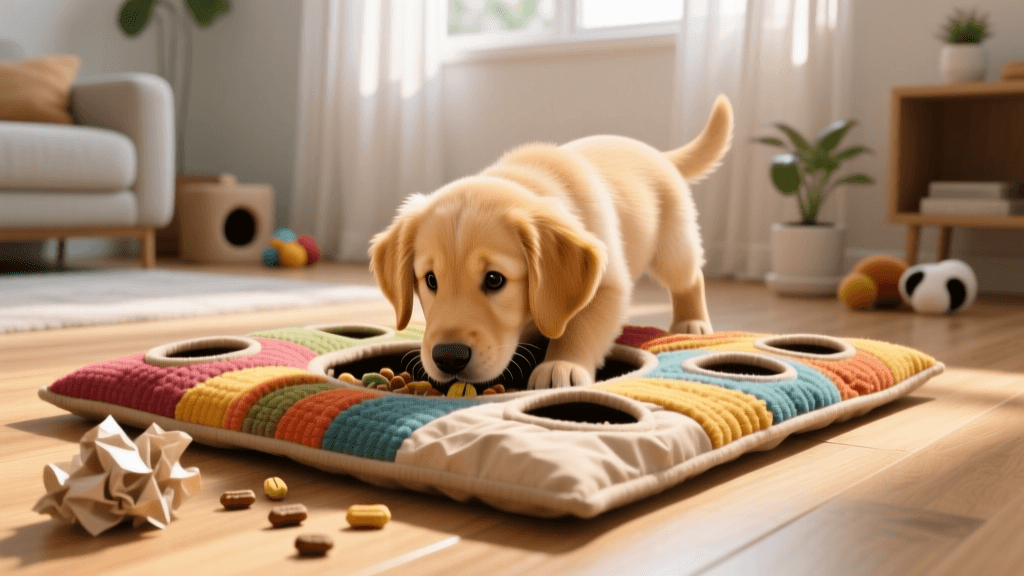
The PAW5 Wooly Snuffle Mat remains the gold standard for introductory foraging. Handcrafted from upcycled, machine-washable cotton and poly-fleece, this mat mimics the tactile sensation of foraging in deep grass. For an 8-to-12-week-old puppy, the Wooly Mat is exceptionally safe because it lacks hard plastic pieces that could damage developing teeth or pose a choking hazard. In 2026, PAW5 introduced an 'Extra Deep' version specifically designed for scent hounds and highly food-motivated puppies, retailing around $48. Simply scatter your puppy's daily kibble allocation deep into the fabric strands and let their olfactory senses take over.
2. Nina Ottosson Dog Brick Interactive Puzzle
Once your puppy has mastered basic snuffle mats, the Nina Ottosson Dog Brick (Level 2) is the perfect next step. Priced at approximately $35, this puzzle features sliding blocks and removable bone-shaped covers. It requires the puppy to use their paws and snout in coordinated movements to reveal hidden treats. The 2026 models are constructed with BPA-free, phthalate-free, and PVC-free materials, addressing growing owner concerns regarding microplastics in pet products. Because it contains removable parts, it is strictly recommended for puppies over 16 weeks who have passed the most intense 'mouthing and swallowing' phase of early teething.
3. KONG Wobbler
The KONG Wobbler is an action-oriented foraging toy that dispenses kibble when batted with a paw. Unlike the classic rubber KONG, the Wobbler sits upright and wobbles erratically, triggering a puppy's prey drive and encouraging physical engagement alongside mental problem-solving. Retailing for about $25, it is an excellent tool for fast eaters, as it slows down meal consumption and prevents gastric distress. We recommend introducing the Wobbler around the 5-month mark when your puppy has developed better paw-eye coordination and the adult teeth are beginning to settle in.
4. Outward Hound Hide-A-Squirrel Plush Puzzle
For puppies who are more motivated by squeaky toys than food, the Hide-A-Squirrel puzzle offers a brilliant alternative. Priced around $20, this plush tree trunk comes with several squeaky squirrels that must be pulled out from various holes. It taps into the extraction instinct. To elevate the mental challenge in 2026, behaviorists recommend rubbing a small amount of puppy-safe peanut butter on the base of the squirrels or hiding high-value treats inside the trunk alongside the plush toys. Always supervise play, as determined chewers can quickly dismantle the plush seams.
2026 Puppy Puzzle Toy Comparison Chart
| Product | Best Age Range | Difficulty Level | Primary Skill Targeted | Approx. 2026 Price |
|---|---|---|---|---|
| PAW5 Wooly Snuffle Mat | 8+ weeks | Beginner | Olfactory foraging | $48 |
| Outward Hound Hide-A-Squirrel | 10+ weeks | Beginner | Extraction & prey drive | $20 |
| Nina Ottosson Dog Brick | 16+ weeks | Intermediate | Paw-snout coordination | $35 |
| KONG Wobbler | 20+ weeks | Intermediate | Paw targeting & pacing | $25 |
DIY Household Foraging Games for Puppies
You do not need to spend a fortune to provide top-tier mental enrichment. Many effective puzzle games can be created using common household items. These DIY methods are highly recommended by certified trainers for owners looking to rotate toys and keep their puppies engaged without constant purchasing.
The Muffin Tin Shell Game
Take a standard 12-cup metal or silicone muffin tin. Place a few pieces of high-value training treats or kibble into several of the cups. Then, cover all the cups with tennis balls or crumpled balls of paper. Your puppy must figure out how to nose or paw the balls out of the way to access the food. This is an excellent, low-cost introduction to puzzle-solving for 8-week-old puppies.
The Towel Burrito
Lay a clean, medium-sized bath towel flat on the floor. Scatter your puppy's meal evenly across the towel. Starting from one short end, roll the towel up tightly into a burrito shape. For an added challenge, tie the rolled towel into a loose knot. The puppy must use their teeth and paws to unroll and untie the towel to access their food. This is particularly soothing for teething puppies, as the fabric provides a gentle massage for sore gums.
The Cardboard Box Treasure Hunt
Save your delivery boxes and use them for an afternoon of enrichment. Place a few treats inside a small cardboard box, close the flaps, and place that box inside a slightly larger box. Repeat this for three or four layers. Puppies love the tactile sensation of shredding cardboard, and the multi-layered extraction process keeps them occupied for up to twenty minutes. Just be sure to supervise closely and remove any large pieces of ingested cardboard to prevent intestinal blockages.
How to Introduce Puzzles to a Young Puppy
A common mistake new owners make is presenting a complex puzzle to an 8-week-old puppy and expecting immediate success. If a puzzle is too difficult, the puppy will experience frustration, leading to abandonment of the toy or destructive chewing. The Fear Free Happy Home initiative emphasizes the importance of setting your pet up for success by gradually increasing cognitive demands.
Step 1: Start with the toy on the easiest possible setting. For a snuffle mat, leave the kibble resting right on top of the fabric strands where it is easily visible.
Step 2: Encourage and praise. Use a cheerful voice and point to the treats to help the puppy understand the game.
Step 3: Gradually increase difficulty. Once the puppy is confidently eating from the surface, push the treats deeper into the mat or add a secondary barrier, like a light towel over the puzzle.
Step 4: End on a high note. Always put the puzzle away while the puppy is still enjoying it, rather than waiting until they are bored or frustrated. This maintains high anticipation for the next session.
Critical Safety and Hygiene Protocols
While mental enrichment is overwhelmingly positive, it requires strict safety oversight. Puppies explore the world with their mouths, and their sharp deciduous teeth can easily tear fabric or chip plastic.
- Supervision is Mandatory: Never leave a puppy unattended with a puzzle toy, especially those containing removable parts, squeakers, or fabric that can be shredded and swallowed.
- Inspect for Wear and Tear: Check snuffle mats and plush toys daily. If the fabric is tearing or plastic components are developing sharp edges, discard the toy immediately.
- Maintain Hygiene: Puppy drool and raw food residues can harbor harmful bacteria like Salmonella or E. coli. Wash fabric snuffle mats weekly in a gentle, pet-safe detergent. Wipe down plastic puzzles with a vinegar-and-water solution after every use.
- Caloric Awareness: The treats used in puzzles count toward your puppy's daily caloric intake. To prevent rapid weight gain during the developmental months, use your puppy's measured daily kibble allowance as the primary reward in foraging games, reserving high-value treats only for specific training milestones.
Final Thoughts on Puppy Brain Games
Investing time in mental enrichment during your puppy's first year yields lifelong dividends. A puppy that learns to problem-solve, forage, and engage their mind is a puppy that grows into a confident, resilient, and focused adult dog. By integrating top-tier tools like the PAW5 Wooly Snuffle Mat and the Nina Ottosson Dog Brick into your 2026 daily routine, alongside creative DIY household games, you are setting the stage for a harmonious and deeply bonded relationship with your canine companion.
anouk-beaumont
All our authors care for dogs every day — read more of their work on the authors page.