Moving With a Senior Dog in 2026: Stress Relief & Setup Guide
Discover the ultimate 2026 guide to moving with a senior dog. Learn stress-relief tactics, Adaptil usage, and safe ramp setups for your new home.
The Unique Challenges of Relocating an Aging Canine
Relocating to a new home is widely considered one of the most stressful life events for humans, but for our canine companions, the disruption can be deeply unsettling. When you are moving with a senior dog, the stakes are significantly higher. Aging dogs thrive on predictability, established scent markers, and familiar spatial layouts. Uprooting them from the environment they have navigated for years can trigger acute anxiety, exacerbate underlying health conditions, and accelerate cognitive decline.
According to the ASPCA, senior dogs require specialized care that accounts for decreased mobility, sensory loss, and potential joint pain. In 2026, veterinary behaviorists emphasize that a successful move with an older dog is not just about physical transport; it is about meticulous environmental management and proactive stress mitigation. This comprehensive guide will walk you through the exact protocols, products, and home-setup strategies required to ensure your aging dog transitions into your new home safely and comfortably.
Understanding Canine Cognitive Dysfunction (CCD) During a Move
Before packing a single box, it is crucial to assess your dog for Canine Cognitive Dysfunction (CCD), a condition similar to dementia in humans. The American Kennel Club notes that CCD affects a significant percentage of dogs over the age of ten. Symptoms include disorientation, altered sleep-wake cycles, and house-soiling.
Moving to a new house strips away the familiar spatial memory cues that a dog with CCD relies on to navigate. A hallway they have walked down a thousand times is replaced by an unfamiliar layout, which can lead to severe nighttime pacing, vocalization, and panic. If your senior dog exhibits signs of CCD, your 2026 moving strategy must heavily incorporate smart-home lighting and scent-mapping techniques to help them build a new mental map of their environment without triggering night terrors.
Pre-Move Preparation: Desensitization and Packing
The chaos of packing is often more stressful for a senior dog than the actual move. The constant shifting of furniture, the presence of cardboard boxes, and the disruption of daily routines can elevate cortisol levels in aging pets.
The "Safe Room" Strategy
Designate one room in your current house as your dog's sanctuary. This room should remain completely untouched by the moving process until the very last day. Keep their orthopedic bed, water bowl, and favorite toys in this space. By maintaining one stable environment amidst the chaos, you provide a psychological anchor for your dog.
Scent Preservation
Do not wash your dog's bedding right before the move. The natural oils and familiar scents embedded in their blankets provide immense comfort. When you pack these items, place them in a clearly marked, easily accessible bin so they can be the very first things unpacked in the new house.
Top Calming Aids and Pheromone Tech for 2026
Modern veterinary science offers excellent tools for managing relocation anxiety. Fear Free Happy Homes strongly recommends the use of synthetic pheromones and pressure-wrap therapy to mitigate environmental stress.
- Adaptil Calm Home Diffuser: Plug this diffuser into the wall of your dog's "Safe Room" at least two weeks before the move, and plug a second one into the main living area of your new home a week before your dog arrives. Adaptil releases a synthetic copy of the dog-appeasing pheromone (DAP), which signals safety and security.
- ThunderEase Dog Calming Pheromone Spray: Ideal for travel day. Spray the interior of your dog's crate or the car's cargo area 15 minutes before loading your dog. Never spray it directly on the animal.
- ThunderShirt or Calming Wraps: Gentle, constant pressure on the torso can reduce anxiety in senior dogs, particularly during the noisy transit phase of the move.
- Nutraceuticals: Consult your veterinarian about starting a calming supplement containing L-theanine or Zylkene one week prior to moving day to build up a baseline of calm.
Travel Day: Safe Transit for Arthritic Joints
Getting a senior dog with osteoarthritis or hip dysplasia into an SUV or moving truck requires careful planning. Forcing or lifting a large, aging dog can result in severe joint flare-ups or spinal injuries.
Invest in a High-Quality Telescoping Ramp
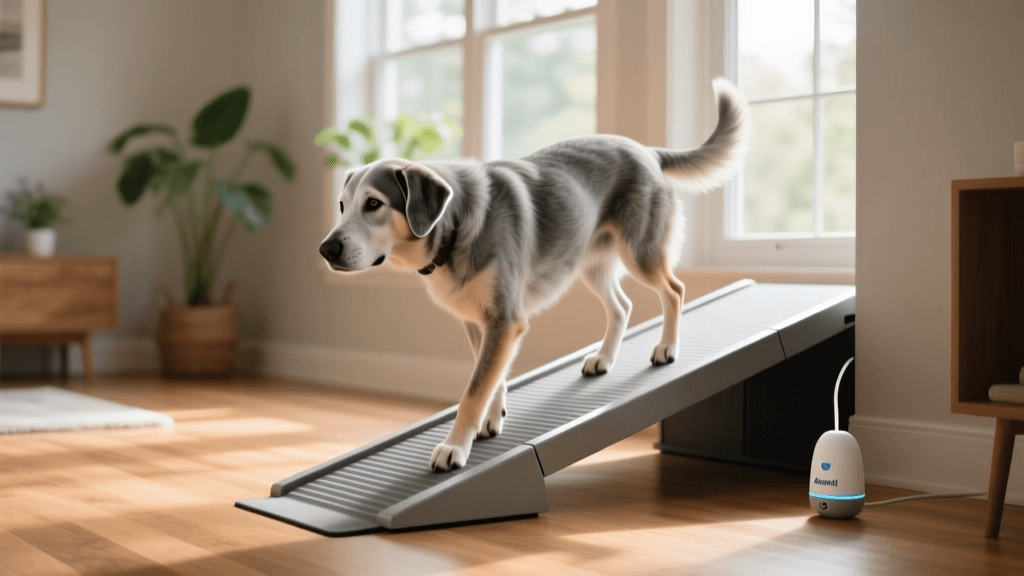
In 2026, the gold standard for vehicle loading is the PetSafe Happy Ride Extra Long Telescoping Pet Ramp. Weighing only 18 pounds, it extends up to 72 inches, providing a gentle, low-angle incline that is vital for dogs with compromised rear-leg strength. The high-traction surface prevents paw slippage, which is a common fear for older dogs with worn paw pads.
Orthopedic Travel Bedding
Line the cargo area or back seat with a high-density memory foam travel mat. Standard blankets do not provide adequate shock absorption for aging joints during transit. Ensure the climate control is directed toward your dog, as senior dogs struggle to regulate their body temperature and can easily become chilled in air-conditioned vehicles or overheated in the sun.
Setting Up the New Home: Senior-Proofing Your Space
Before bringing your senior dog into the new house, you must senior-proof the environment. Aging dogs experience diminished vision, reduced proprioception (awareness of body position), and joint stiffness. The following table outlines the essential modifications required for a 2026 senior-friendly home.
| Area of Home | Potential Hazard for Seniors | 2026 Solution & Product Recommendation |
|---|---|---|
| Hardwood / Tile Floors | Slipping, splaying, joint pain | Interlocking foam mats or low-pile, non-slip area rugs (e.g., Gorilla Grip Rug Pads) |
| Stairs | Arthritis flare-ups, falls | Pet stairs with high-traction felt or a pet gate to block access entirely |
| Dark Hallways | Nighttime disorientation (CCD) | Philips Hue Motion-Sensor Smart Nightlights set to warm, dim amber |
| High Beds / Sofas | Jumping down causes joint impact | PetSafe CozyUp Folding Wood Pet Steps placed next to all elevated furniture |
| Outdoor Entries | Stepping over high thresholds | Rubber threshold ramps to create a seamless indoor-outdoor transition |
Leveraging Smart Home Tech for Aging Dogs
The integration of smart home technology in 2026 has been a game-changer for owners of senior dogs. If your dog suffers from CCD or nighttime anxiety, navigating a dark, unfamiliar house is terrifying. By installing motion-activated smart lighting along baseboards and in hallways, you provide automatic, low-level illumination that guides your dog to their water bowl or potty pad without startling them with bright overhead lights.
Additionally, smart thermostats can be programmed to maintain a consistently warm ambient temperature. Senior dogs, particularly those with low body fat or thinning coats, are highly susceptible to cold drafts, which can cause their arthritic joints to stiffen painfully. Keeping the new home at a stable 72°F (22°C) ensures their muscles remain relaxed during the critical first few weeks of adjustment.
Post-Move Routine: Re-establishing Security
Once you arrive at the new home, resist the urge to let your dog explore the entire house immediately. This can lead to sensory overload. Instead, lead them directly to their pre-established "Safe Room"—a bedroom or quiet den where you have already set up their unwashed bedding, water, and the Adaptil diffuser.
Allow them to decompress in this single room for the first 24 to 48 hours. Take them outside on a leash for potty breaks and short, low-stimulation sniffaris in the new yard. Gradually, over the course of a week, open the doors to the rest of the house, allowing them to map the new territory at their own pace. Maintain their exact feeding and walking schedule from your old home; routine is the ultimate antidote to relocation anxiety.
Conclusion
Moving with a senior dog in 2026 requires a shift in perspective. It is no longer just a logistical challenge of moving boxes; it is a carefully orchestrated veterinary and behavioral transition. By utilizing synthetic pheromones, investing in joint-saving ramps, senior-proofing your floors, and leveraging smart lighting, you can transform a potentially traumatic event into a smooth, comfortable new beginning for your aging best friend.
jonas-cole
All our authors care for dogs every day — read more of their work on the authors page.