Best Cooling Vests for Service Dogs 2026: Heat Stress Guide
Discover the best evaporative cooling vests for service dogs in 2026. Compare Ruffwear and Hurtta gear and learn heat stress protocols for working dogs.
The Rising Challenge of Heat Stress in Working Dogs in 2026
As global temperature anomalies continue to set records throughout 2026, managing the core body temperature of working and service dogs has never been more critical. Unlike companion pets that can remain in climate-controlled environments during peak summer hours, mobility assistance dogs, guide dogs, and detection canines often have rigorous outdoor shifts. A dog's primary method of thermoregulation is panting, which is highly inefficient in high-humidity environments. When a working dog's core temperature exceeds 104°F (40°C), they enter the danger zone for heat exhaustion and potentially fatal heat stroke. According to the American Veterinary Medical Association, brachycephalic breeds, thick-coated northern breeds, and large working breeds like Labrador Retrievers and German Shepherds are at an exponentially higher risk when performing physical tasks in the heat.
For service dog handlers, recognizing the subtle early signs of thermal fatigue is essential. A working dog is trained to push through discomfort to assist their handler, meaning they may not voluntarily stop working even when their physiological limits are being breached. This makes proactive heat management, utilizing advanced evaporative cooling gear and strict hydration protocols, an absolute necessity for any professional or volunteer handler in 2026.
Recognizing Thermal Fatigue in the Field
Before deploying cooling interventions, handlers must be adept at reading their canine partner's physiological cues. The American Kennel Club outlines several stages of heat-related distress that every working dog handler must memorize:
- Stage 1: Early Heat Stress. Excessive panting with a widened tongue, thick ropy saliva, and mild restlessness. The dog may seek shade or break their working heel position.
- Stage 2: Heat Exhaustion. Bright red or purplish gums, rapid heart rate, uncoordinated movements (ataxia), and vomiting. The dog's focus on their handler's commands will noticeably degrade.
- Stage 3: Heat Stroke. A life-threatening medical emergency characterized by pale gums, collapse, seizures, and a core temperature above 105°F (40.5°C). Immediate veterinary intervention is required.
Because working dogs are highly driven, Stage 1 can easily be mistaken for normal post-exercise panting. This is where objective data, such as monitoring the dog's resting respiratory rate and utilizing wearable canine biometric monitors, becomes invaluable in 2026.
The Science of Evaporative Cooling vs. Ice Packs
A common mistake among novice handlers is applying ice packs or freezing cold water to an overheated working dog. While this seems intuitive, extreme cold causes rapid peripheral vasoconstriction—the narrowing of blood vessels near the skin's surface. This traps the dangerous core heat inside the dog's vital organs while artificially cooling the skin, tricking the brain into halting the panting response. Evaporative cooling vests, conversely, mimic the human sweating process. By retaining water in a specialized multi-layer fabric matrix, these vests slowly release moisture into the air. As the water transitions from liquid to gas, it pulls ambient heat away from the dog's core, providing a sustained, safe drop in body temperature without shocking the vascular system.
2026 Evaporative Cooling Vest Comparison Chart
To help service dog organizations and independent handlers make informed purchasing decisions, we have tested and compared the top three evaporative cooling vests available on the market in 2026. The criteria include chest coverage (vital for cooling major arteries), water retention capacity, and harness compatibility for working dogs.
| Brand & Model | 2026 Retail Price | Core Technology | Chest & Belly Coverage | Best Use Case |
|---|---|---|---|---|
| Ruffwear Swamp Cooler Evap | $84.95 | 3-Layer Evaporative Matrix | Excellent (Full wrap) | Long-duration mobility & guide work |
| Hurtta Cooling Vest | $79.90 | Houndtex Cooling Fabric | Good (Moderate belly) | Active detection & search dogs |
| Kurgo Core Cooling Vest | $59.99 | Ripstop Evaporative Shell | Fair (Minimal belly) | Light urban assistance tasks |
Deep Dive: Top Gear for Service Dog Handlers
Ruffwear Swamp Cooler Evap
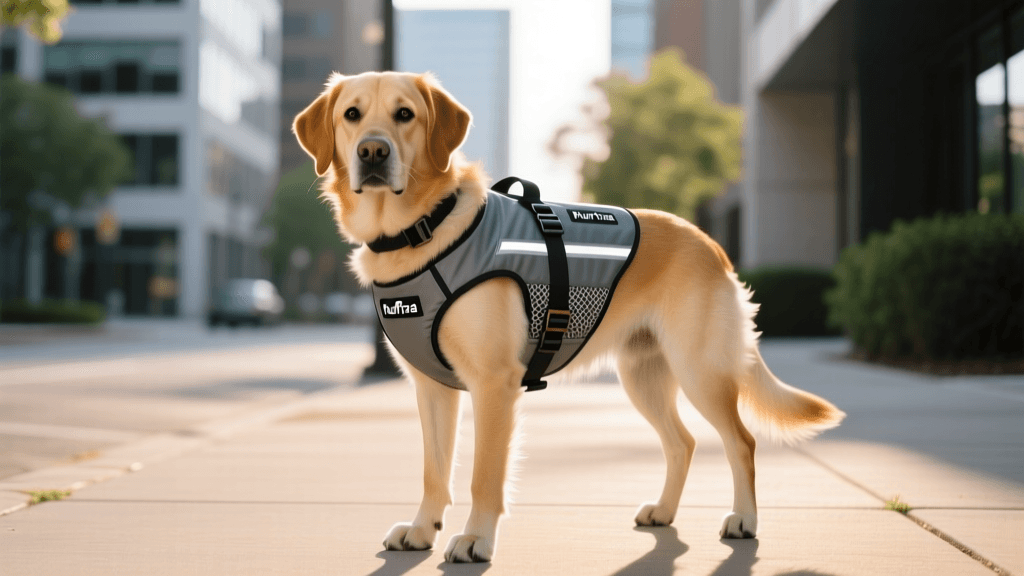
The Ruffwear Swamp Cooler Evap remains the gold standard for working dog organizations in 2026. Its three-layer construction features a dry outer layer that reflects solar radiation, a middle absorbent layer that stores water, and an inner mesh layer that transfers cooling directly to the dog's core. Crucially for service dogs, it features a zipper opening that allows it to be worn seamlessly over most standard working harnesses and mobility pull-harnesses without interfering with the handle or D-rings. The side-release buckles make it incredibly easy to don and doff during rapid transit in and out of air-conditioned vehicles.
Hurtta Cooling Vest
Originating from Finland but engineered for global summers, the Hurtta Cooling Vest utilizes a highly efficient Houndtex fabric that requires less water to activate but provides a more intense initial cooling shock. It is exceptionally lightweight, making it a favorite for high-drive detection dogs who might be encumbered by heavier gear. However, its belly coverage is slightly less comprehensive than the Ruffwear, meaning handlers in extreme desert climates may need to re-wet the vest more frequently during extended outdoor deployments.
Comprehensive Field Protocol for Working Dog Teams
Gear alone is insufficient to prevent heat-related illnesses. In 2026, leading veterinary sports medicine specialists recommend a strict three-phase protocol for handlers operating in temperatures exceeding 75°F (24°C).
Phase 1: Pre-Shift Preparation
Hydration begins 24 hours before the working shift. Ensure the dog has unrestricted access to fresh water. One hour before deployment, fully saturate the evaporative cooling vest in cool (not ice-cold) water, wring out the excess, and secure it onto the dog. Allow the dog to acclimate to the sensation of the wet vest while performing light obedience exercises in the shade. This pre-cooling lowers the baseline core temperature before physical exertion begins.
Phase 2: Active Shift Monitoring and Hydration
During the shift, enforce mandatory 10-minute shade breaks every 45 minutes. Offer water in small, frequent volumes rather than allowing the dog to gulp large amounts, which can lead to gastric dilatation-volvulus (bloat). In 2026, many working dog programs have integrated veterinary-formulated hydration supplements, such as Purina Pro Plan Veterinary Supplements Hydra Care, into their field kits. These liquid supplements encourage water intake and replace essential electrolytes lost through heavy panting and salivation without the high sugar content found in human sports drinks.
Phase 3: Post-Shift Recovery
Once the shift concludes, remove the cooling vest to prevent the dog from becoming chilled once their metabolic rate drops. Wipe the dog down with a dry, cool towel. Continue to offer small amounts of water and allow the dog to rest in a climate-controlled environment with ambient airflow. Monitor the dog's gum color and respiratory rate for at least two hours post-shift to ensure their core temperature has stabilized safely below 102.5°F (39.2°C).
Paw Pad Protection on Hot 2026 Pavements
Thermoregulation is only half the battle; contact burns from asphalt and concrete are a severe threat to working dogs navigating urban environments. In direct summer sunlight, asphalt temperatures can easily exceed 140°F (60°C), causing severe blistering and permanent tissue damage to a dog's paw pads. Handlers must strictly adhere to the "Seven-Second Rule": place the back of your bare hand against the pavement for seven full seconds. If it is too hot for your skin, it is catastrophically hot for your dog's paws.
When working on hot surfaces is unavoidable, handlers must apply a high-quality paw wax, such as Musher's Secret, prior to the shift. This creates a semi-permeable barrier that protects against thermal burns and abrasive concrete while still allowing the paws to sweat naturally. Alternatively, canine-specific working boots with Vibram soles, like the Ruffwear Polar Trex (adapted for summer use by removing the fleece liners), provide ultimate physical protection, though they require extensive prior conditioning to ensure the dog's gait and balance are not compromised during mobility tasks.
Conclusion
The dedication of working and service dogs is unparalleled, but their willingness to work through discomfort places the burden of environmental safety squarely on the handler's shoulders. As we navigate the extreme heat waves of 2026, relying on outdated methods like ice baths or simply hoping for the best is no longer acceptable. By investing in advanced evaporative cooling technology like the Ruffwear Swamp Cooler Evap, implementing rigorous hydration protocols with veterinary-grade electrolytes, and maintaining vigilant awareness of thermal fatigue signs, handlers can ensure their canine partners remain safe, healthy, and capable of performing their life-changing duties regardless of the rising mercury.
anouk-beaumont
All our authors care for dogs every day — read more of their work on the authors page.